
The Balsam raspberry is considered an easy-to-grow crop that can withstand extreme weather conditions. It ripens mid-early and produces high yields. Its distinctive aroma and flavor are similar to those of wild forest raspberries. To avoid disappointment, carefully consider all aspects of planting and subsequent care.
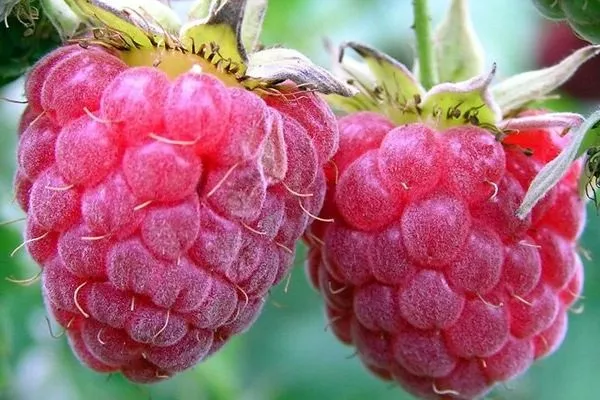
Breeding history
This variety was developed at the Russian Scientific Research Institute of Horticulture (VSTISP). The scientific community achieved breakthrough by combining the qualities of the Newburgh and Bulgarian Rubin varieties in a single plant.
In 1982, this new hybrid was submitted for testing as part of state variety trials. After a long wait lasting 11 years, the Balsam raspberry finally received official recognition and was added to the state register of varieties. Credit for this successful development goes to the outstanding scientist and academician of the Russian Academy of Agricultural Sciences I.V. Kazakov.
Introduction to the variety
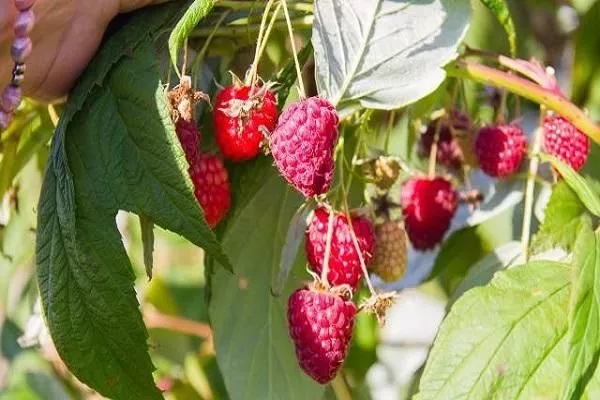
This non-everbearing variety is renowned for its large fruits and fairly tall bushes. It is resistant to almost all diseases and pests, which is why it is loved by gardeners across the country.
Bush, shoots, flowers and leaves
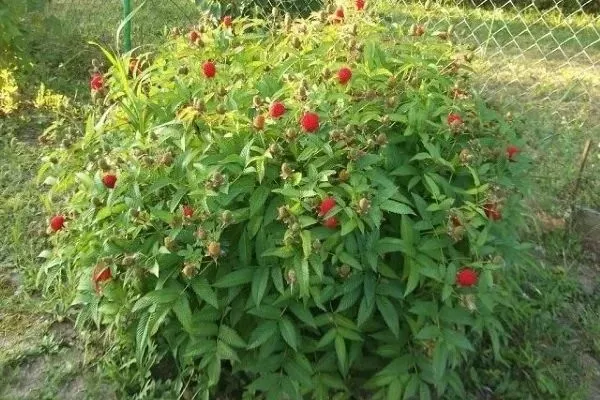
The bush's appearance is identical to all raspberry varieties—upright branches but a spreading crown. The height of the bush varies from 170 to 180 cm, sometimes growing higher. The shoots are strong yet flexible (hence the bush's spreading habit), covered with a few thorns.
The bark has a waxy coating—green in the first year of growth, then turning brown. The root system is strong and well-developed, allowing the bush to produce approximately 15-20 shoots per linear meter.
The leaves are medium-sized, with a wrinkled, pubescent surface and patterns on the outer side. The color is bright green, but lighter on the underside. The flowers are small and snow-white—up to 20 mm in diameter—and are gathered in single inflorescences.
Fruit
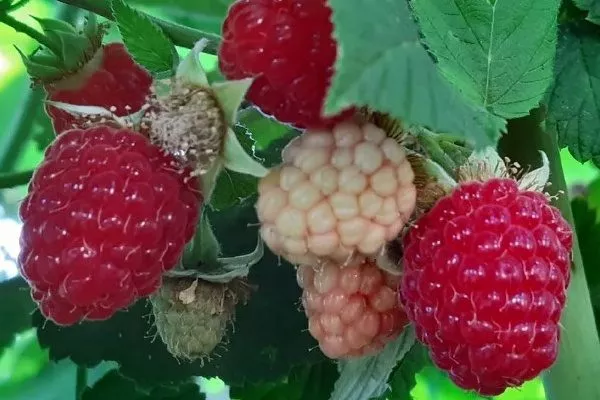
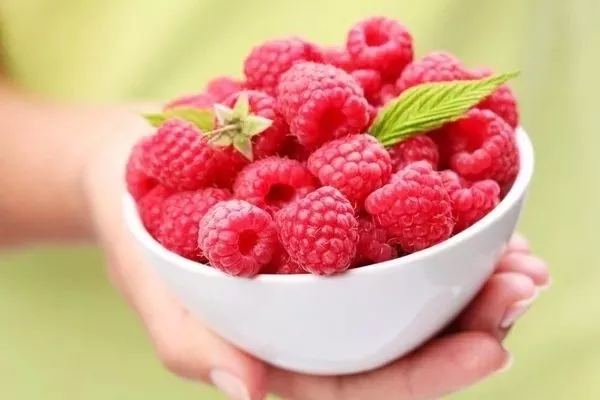
Balsam berries are round and broadly conical. Their weight varies from 2.5 to 3.5 g. Other varietal characteristics:
- color - dark crimson with a purple tint;
- pulp – dense, but juicy;
- attachment to the stalk – strong, so the berries do not fall off on their own;
- aroma – clearly expressed;
- surface – without gloss.
When to harvest, yield
The Balsam variety is not everbearing, meaning it produces a harvest once a year. The berries reach maturity around June, and the harvest period continues until early July.
A distinctive feature of this variety is its high yield: up to 2.5-2.9 kg of raspberries can be harvested from a single bush, while on commercial plantations, this figure reaches 6 to 8 tons per hectare. Balsam is highly transportable, ensuring its shape and appearance are preserved during transportation.
Useful qualities of raspberries
Raspberries contain many substances beneficial for the human body, including:
- carbohydrates and sugar – 8-11 g;
- water content – 75-86 g;
- fiber;
- vitamins B, C, A, K, E;
- minerals and organic acids.
Due to its unique properties, the plant is used in folk medicine and dietary nutrition to strengthen the immune system and prevent various diseases. Raspberries possess healing properties that positively impact health:
- It can be useful for arterial hypertension, anemia and digestive problems.
- The use of raspberries is recommended to stimulate urination, for bronchitis and inflammation of the larynx.
- Effective in fighting colds and helps restore the nervous system thanks to its copper content.
- Strengthens the immune system and protects the body from various infections.
Growing regions
Breeding research was conducted at the Kokinsky base in the Bryansk region. This region can be considered the most favorable for Balsam, ideal for cultivation in central and southern Russia.
Frost resistance, pollination
Scientists have developed a high resistance to winter frosts in the Balsam variety. The raspberry can withstand cold periods and thrives even in drought conditions. Pollination occurs naturally, with the help of bees.
Planting Balsam raspberries
Proper planting will ensure progressive fruiting and accelerate the acclimatization of seedlings. Please note the following:
- When preparing a site for your raspberry patch, keep in mind that each bush needs room to develop a wide crown. Plant no more than 10 seedlings per square meter.
- Give preference to areas that receive sufficient sunlight or are in light shade, avoid dark, shady places with frequent drafts.
- Impatiens won't produce rich harvests if grown in low-lying areas with excess moisture, or in poor or heavy soils. Before planting, be sure to improve the soil by adding peat, sand, compost, and small branches to ensure aeration.
- Don't forget to install trellises to support the growing shoots.
- When choosing seedlings, pay attention to their quality: plants from trusted nurseries and retail chains with a healthy root system and the presence of living buds, shoots, and leaves are preferred.
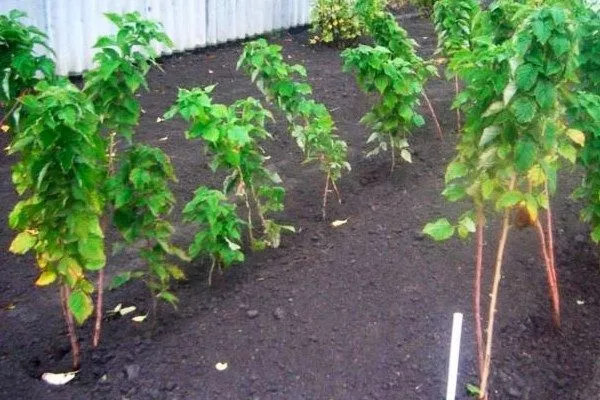
Algorithm for planting young raspberry seedlings Balsam
Once you have prepared your beds, follow the steps in this step-by-step procedure:
- Immerse the seedling in a growth stimulator solution for 15-30 minutes.
- Dig planting holes 90-110 cm apart from adjacent bushes and 190-200 cm between rows. The hole size should be 30-35 cm by 50-55 cm.
- Fill with drainage mixture.
- Mix the soil with 180-200 g of superphosphate and 40-50 g of potassium in any form.
- Place the seedling in the hole, leaving the root collar slightly above the soil level.
- Distribute the roots evenly, cover with substrate, and compact lightly.
Caring for young raspberries
Raspberry care not only ensures regular and abundant harvests but also strengthens the plant's health, ensuring its longevity. Particularly important for this variety are:
- Trimmings. The following steps are performed in the process:
- remove faded shoots;
- Reduce the number of weak and redundant branches to optimize bush density;
- Cut stems at a height of 80-100 cm to stimulate the growth of secondary branches.
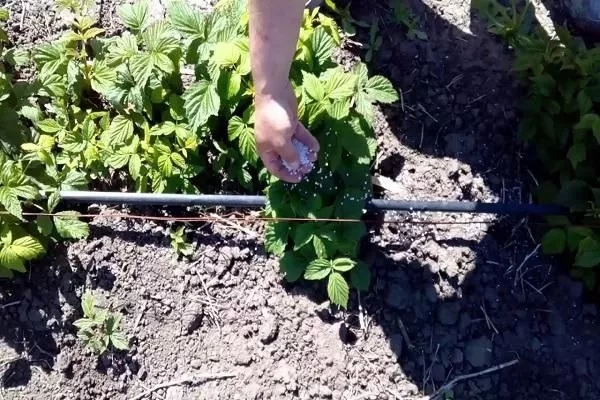
- Fertilizers. To maintain healthy raspberries, it's important to provide them with adequate nutrition. Fertilize sparingly, otherwise it can harm the plant. Specific features:
- During soil preparation, it is recommended to use organic mixtures – humus or compost in the following ratio: 5 kg of organic matter per bush or 10 kg per 1 square meter of planting area.
- When using mineral fertilizers containing potassium, phosphorus and calcium elements, strictly follow the instructions on the packaging.
- During the growing season, generously fertilize the soil around the bush with humus mulch, forming a layer 5-10 cm thick.
- In the absence of organic fertilizers, nitrogen fertilizers such as urea or saltpeter can be used. Apply 2 tablespoons per 9-10 liters of water. Spray this solution per square meter.
- Watering. For fruit bushes, it is especially important to maintain high humidity at two key points:
- during the period of intensive foliage development, when the plant actively absorbs moisture from the soil;
- during the period of formation and ripening of fruits.
Pre-winter preparation
Raspberries are highly frost-resistant, but to successfully survive the winter cold, prepare them for wintering already in the summer:
- At the end of the fruiting season, trim the branches of the bush almost to the ground.
- To strengthen the bush, use compounds rich in calcium, phosphorus and other important microelements.
- Mulch the surface of the soil with compost.
- After applying fertilizer, loosen the soil slightly.
In the Leningrad and Moscow regions, raspberries can survive the winter without additional cover.
Diseases and pests
Balsam is resistant to most diseases and pests, but without proper agricultural practices, plants may be susceptible to disease. The garden may also be infested by various insects:
- Bright and juicy raspberries attract the raspberry beetle. Mechanical methods are used to control them: loosening the soil and removing damaged parts of the bush. Protect raspberries from the pest by treating them with special products such as Iskra or Intavir.
- Spider mites are the second most common pest, caused by poor care. Their presence can be detected by the fine webbing on the leaves, which becomes visible in spring. As a preventative measure, clear away infected leaves, remove weeds, and spray with fungicides.
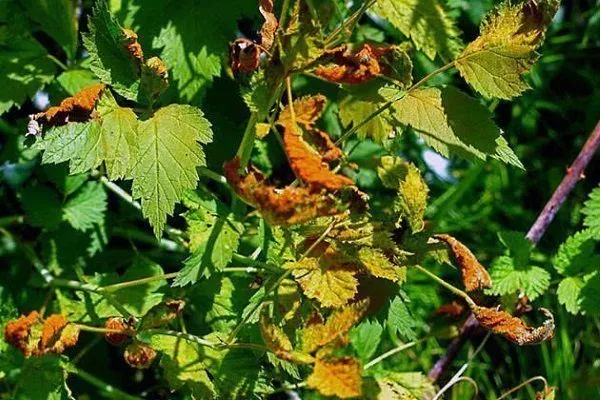
- Rusty spots on young shoots indicate purple spot. Bordeaux mixture is an effective remedy against this condition.
Reproduction
One of the fastest methods for growing a raspberry bush is dividing the plant. In this case, the root system is cut into sections after digging.
Other techniques:
- Cleavage method. Remove woody shoots from the roots or adventitious buds. Another option is to use a one-year-old shoot growing 90-110 cm from the main bush. This should be dug up in the fall.
- Propagation by cuttings. In the spring, when the green branches reach a length of 10 to 20 cm, they should be carefully cut, divided into cuttings, rooted, and after a few months planted in a permanent location.
Pros and cons of the variety
The Balsam variety has won the hearts of gardeners due to its many advantages, which are manifested in the following:
Flaws:
This berry is excellent for fresh eating, freezing, cooking, and canning. It's important to maintain optimal soil moisture, avoiding excess water. Growing conditions are limited.
Reviews
A selective raspberry variety called Balsam is ideally suited for cultivation in Russian soils. This variety is frost-resistant and can withstand extreme temperature fluctuations, ensuring rapid and trouble-free development.