
The "Babie Leto" raspberry is a creation of Russian breeders and belongs to the group of everbearing varieties with excellent fruiting performance. It is considered an easy-to-grow variety, with small-sized berries that retain their shelf life for a long time. This makes it suitable for commercial applications.
History of selection
In the mid-1970s, renowned breeder I. V. Kazakov introduced the everbearing raspberry variety "Babye Leto" to the world. The varieties "Novost Kuzmina" and "Kostinbrodskaya" contributed to its creation.
This perennial bush is considered one of the first representatives of remontant raspberry varieties developed in its homeland.
Introduction to the variety
Indian Summer is common in central and northwestern Russia. Gardeners successfully cultivate it in the Volga region and the Urals. Using film-based structures, it can also be grown in more northern regions, including Siberia.
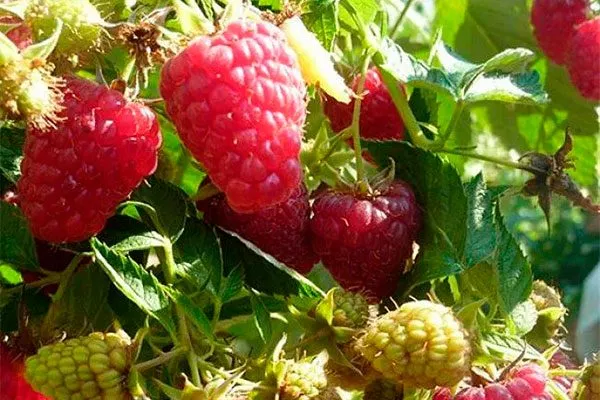
Description of the plant and fruits
Before purchasing a seedling, be sure to familiarize yourself with its key characteristics. The Indian Summer variety has the following:
- Bush and branches. This variety is distinguished by a spreading bush, reaching a height of 100-160 cm. It consists of 6-10 strong shoots, up to 0.6 cm in diameter, which are greenish in color and erect. The branches are thorny and densely branched.

The surface is covered with a waxy coating. Young shoots are pinkish, while fruiting shoots are greenish. The density of the shoots is approximately 12-17 units per square meter. - Leaves. The leaf blade is slightly slippery and medium-sized. It is green, with a silvery sheen on the underside. The leaves are pubescent, but veins and wrinkles are clearly visible.
- Flowers. They are completely white, medium-sized, collected in inflorescences consisting of 5-10 buds.
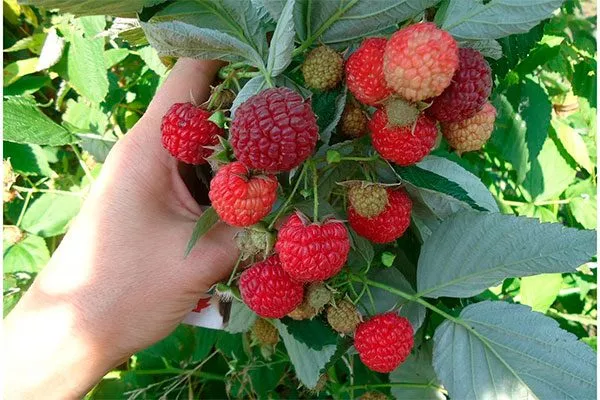
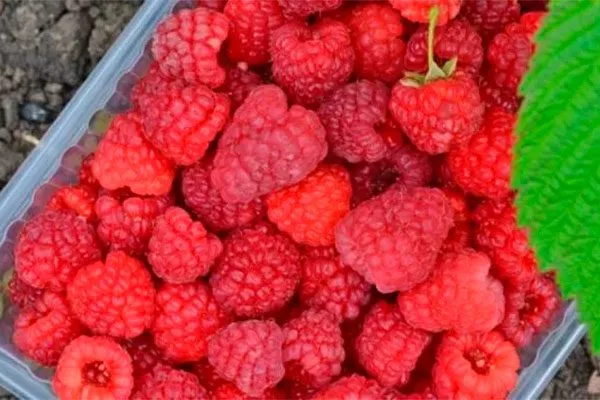
- Fruit. The berries are round-conical in shape and reddish-crimson in color. Each berry weighs between 2 and 4 grams. The flesh is juicy, with a delicate texture, yet firm. The seeds are almost imperceptible.
- Taste. Rich, sweet and sour, with a bright aroma of wild berries.
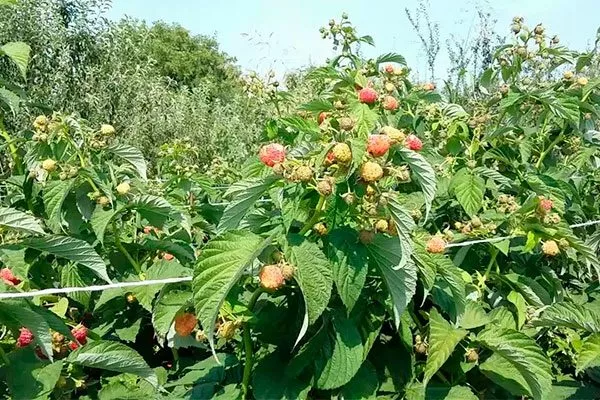
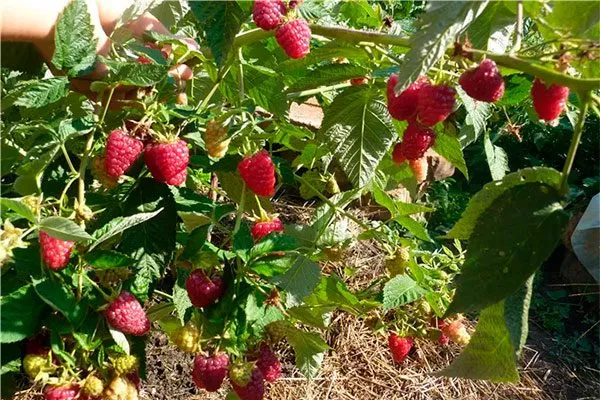
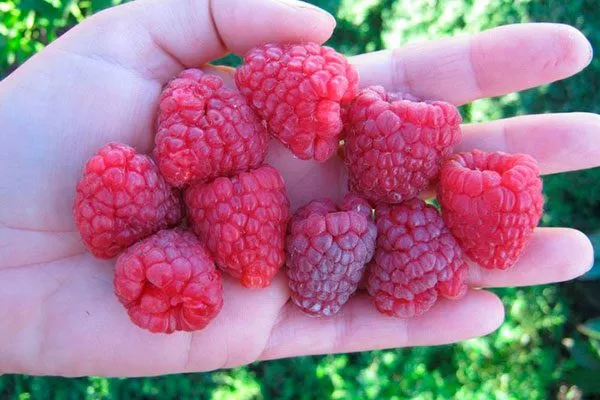
Characteristic properties
Indian Summer has a number of unique morphological characteristics:
- It is distinguished by its frost resistance – the bushes can withstand temperature fluctuations down to -30 degrees, as well as recurrent spring frosts.
- To pollinate the flowers, a special pollinator bush is not required, since the variety has bisexual buds, which ensures the transfer of pollen by insects.
- Raspberries' fruiting ability is reflected in their remontant nature, meaning they can produce fruit on shoots as early as the first year. Fruiting branches are located in the upper third of the stem, with the largest number of branches at the top of the bush.
- An adult bush, consisting of shoots from the current and previous years, is capable of producing two harvests per season: one at the end of summer and the second in the fall.
- The everbearing Babye Leto variety's yield peaks on two-year-old shoots in late July or early August. The onset of fruiting depends on the climate of the specific region where the raspberries are grown, with the harvest appearing earlier in the south.
- Fruiting of the current growth begins in September and continues until October, with ripe berries sometimes remaining on the bushes until the snowdrifts begin.
- Light frosts don't affect the fruit's flavor. A single mature bush can yield 2 to 3.5 kg of ripe berries.
How to store?
The fruits of this variety of raspberries are not suitable for long-term storage or transportation. It is recommended to store the harvest in a refrigerator for no more than three days. Harvested berries should be eaten or used in cooking immediately after picking. Raspberries are used to make jams, compotes, jellies, and preserves, which are distinguished by their vibrant raspberry hue and flavor.
Landing
During the summer season, soils with a high clay or sand content are preferable for growing raspberries, while their acidity should be close to neutral.
- ✓ Soil pH should be between 5.5-6.5 for optimal raspberry growth.
- ✓ The depth of groundwater should not exceed 1.5 meters to avoid root rot.
Raspberries thrive near apple and currant bushes. The growing site should be on a flat surface, avoiding low-lying areas and excessively elevated areas. It's important to ensure adequate sunlight.
Other important aspects of planting:
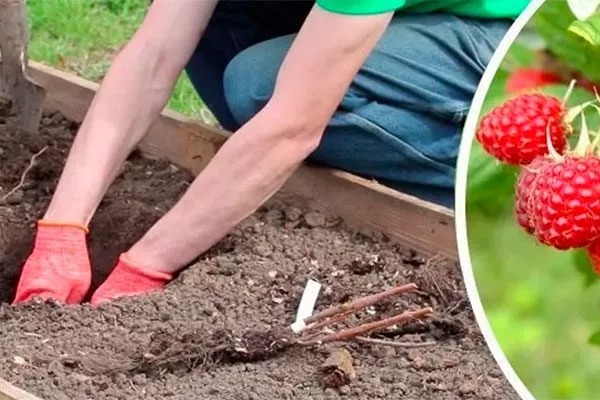
- If raspberry seedlings have an open root system, they should be planted in the fall, about a month before the soil freezes. Seedlings purchased in containers can be planted at any time of year.
- First, clear the soil of old roots and plant debris. Fifteen to 25 days before planting, add 18-22 kg of any organic matter, 45-55 g of superphosphate, and 3250-350 g of wood ash.
- When planting, maintain a distance of 0.7-110 cm between plants, and up to 200-250 cm between rows.
- Careful selection of seedlings is key to successfully growing raspberries. Experts recommend purchasing two-year-old plants grown in containers, as they adapt more quickly to a new location.
- Place the root collar at the same level as the surface of the beds, and carefully mulch around the roots with straw/hay/grass.
- Cut raspberry shoots to 40-45 cm in length.
There are several methods for planting raspberries, but only two are used for this honeycomb.
- The method of strip planting arrangement. Along the entire length of the plot, make trenches reaching a depth of 30-35 cm. Place seedlings in them at intervals of 50-60 cm.
This option also involves digging individual holes instead of trenches, with the same depth and spacing. A minimum of 150 cm should be left between raspberry rows to ensure ease of care and harvesting.
Along the edges, a support in the form of a trellis is installed to support the bushes. - Square-bush system. The raspberry plot is divided into squares with sides ranging from 100 to 150 cm. In each square, individual holes are made for planting the seedlings.
It is important to properly prepare the planting holes and carry out the entire procedure:
- Place a small amount of humus, dried grass clippings, and mineral fertilizer at the base of the hole or trench. You can also use liquid compost to moisten the hole.
- Fill the hole with soil from above.
- Place a seedling with a developed rhizome in the center of a prepared hole or trench and carefully fill it with soil up to the level of the root collar.
- Lightly compact the surface around the seedling to remove air bubbles from the root system.
- After planting, water the plants generously with warm water – approximately 1.5 liters per bush.
- Place straw mulch in a radius around the trunk to retain moisture.
- After watering, the soil around the bushes can be enriched with a nutrient solution of organic fertilizer TOR, which promotes successful adaptation and rapid rooting of plants.
Care tips
Many gardeners choose this berry variety because it doesn't require much attention: generally, it's enough to remove excess branches and provide the plant with water during dry periods.
Despite minimal care, raspberries can still produce a good harvest. However, to ensure the variety reaches its full potential, it requires some extra attention:
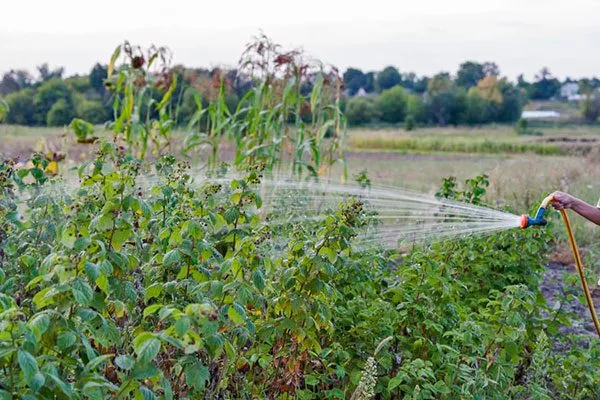
- Maintaining humidity. Raspberries don't tolerate drought. They require the most water during ovary ripening, immediately after flowering. It is recommended to water them once every 10-15 days, using approximately 12-13 liters per plant.
From August, when the berries begin to color, watering is stopped. - Top dressing. The everbearing variety requires regular feeding. Follow this fertilization schedule:
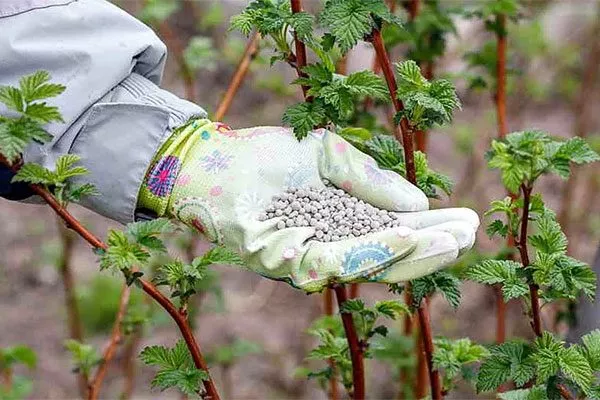
- Spring. Digging the surface of the soil with manure to a depth of 10 cm. Watering with uric acid (35-45 g per 10 l of water).
- Flowering period. Spray raspberries with a solution of complex mineral fertilizer with microelements. You can use Gumi-Omi or Gumat 7+. Spraying raspberries with a boric acid solution (10 g per 10 l) by the color of the flowers increases the number of ovaries.
- August. Mineral fertilizers (such as Hera or Fertika) are fully incorporated. Plants are watered using slurry and weed infusion.
- September-October. Wood ash is added to the tree trunk circle, approximately 250-350 g per 1 sq. m, after which the soil is loosened.
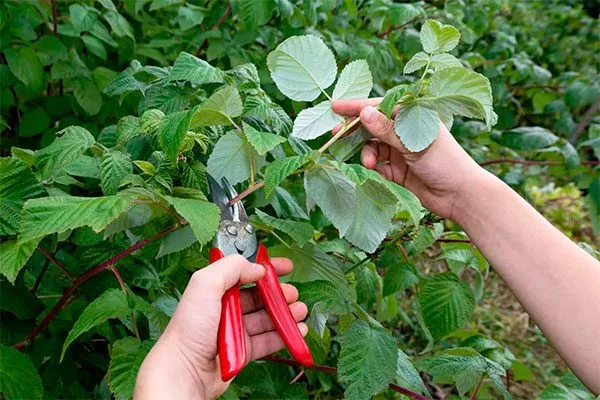
- Trimming. Peculiarities:
- Indian Summer can be grown as an annual crop, which is beneficial in areas with cool winters. The bush is formed from 7-8 shoots from the current year. In the fall, all stems that have yielded fruit are removed at the base. In the spring, the raspberry begins new growth, producing a crop by fall.
- To obtain two harvests per year, the bush must contain shoots from both the previous and current years. Typically, 2-4 two-year-old stems and 3-5 new shoots are left. In the spring, the previous year's shoots are shortened by 12-16 cm to stimulate the formation of more fruiting branches. Excess vegetation is removed throughout the summer.
Preparing for winter
Preparing raspberries for winter includes the following steps:
- removal of diseased and worn-out shoots;
- collection of old mulch that is no longer effective;
- treating bushes with special preparations containing copper or iron to prevent the spread of infections;
- bending the trunks of bushes to the ground surface and fixing them in this position;
- protective covering of raspberry bushes (if snow cover is insufficient) using spunbond, straw, bags or spruce branches.
Diseases and pests
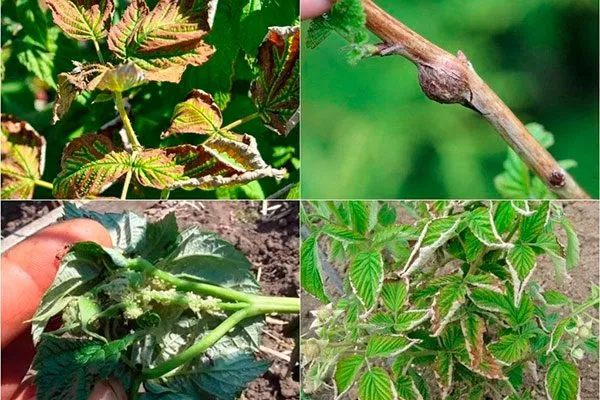
In summer, when humidity is higher, raspberries are susceptible to fungal diseases such as leaf spot and rust. These diseases are most common in bushes with dense canopies and those over-fertilized with nitrogen.
The key symptoms of such are:
- yellowing and dying of foliage;
- formation of reddish-brown spots on leaves and shoots;
- fruit rot.
To treat affected bushes, use the following products: Topaz, Skor, Bordeaux mixture (during the period when there is no risk of damaging the fruit).
In addition, raspberries are threatened by insect pests:
- aphid;
- spider mites;
- raspberry bugs.
These insects feed on plant sap, weakening it. They can be seen congregating on young shoots and the undersides of leaves. To protect against pests, spray with insecticides and biological agents:
- Actellik;
- Inta Virom;
- Aktaroy;
- Bitoxybacillin;
- Fitoverm.
Reproduction
There are several propagation methods to increase the number of Indian Summer Raspberries:
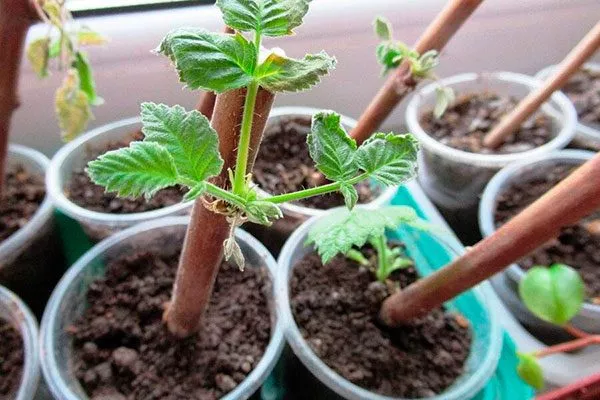
- The first is stem cuttings. Young shoots 5-7 cm long are taken in June and rooted in small plastic containers. The shoots require regular ventilation, watering, and fertilizing. By autumn, the finished cuttings can be transplanted to their permanent location.
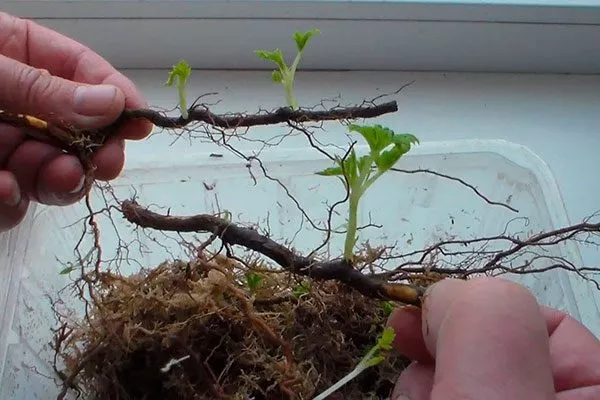
- The second is root cuttings. The rhizomes are dug up after the end of the season and divided into 10-15-centimeter sections. Each section is planted in its designated location, then watered and mulched, and a protective covering is applied. The covering is removed in the spring, and replanting takes place in the fall.
- The third is the separation of the bush and the root system. The bush is dug up and divided into the required number of segments, preserving the roots and shoots. The stems are shortened to 40-50 cm. The resulting fragments are installed in their permanent locations.
What are the advantages and disadvantages?
Among the undoubted advantages of the Indian Summer raspberry are:
Gardeners' reviews
For half a century, the Babye Leto variety has impressed with its ease of cultivation and excellent flavor. Although this everbearing raspberry is inferior to modern varieties in yield and berry size, its unpretentiousness and tolerance to growing conditions continue to be valued not only by gardeners but also by large farmers.