
The Atlant raspberry is an ideal choice for those who want to enjoy abundant harvests of delicious and aromatic berries. This variety boasts beautiful, large fruits and demonstrates high tolerance to adverse conditions. Following the care and propagation recommendations will allow you to enjoy growing it for many years to come.
Who developed the variety and when?
Developed by breeder I.V. Kazakov and a team of specialists, this variety was obtained in 2010 and by 2015 it was included in the State Register of Russia.
Features of the variety
The Atlant raspberry is deservedly considered one of the best everbearing varieties developed in our country. It boasts numerous positive qualities, making it a successful grower for both novice and experienced gardeners.
Botanical description
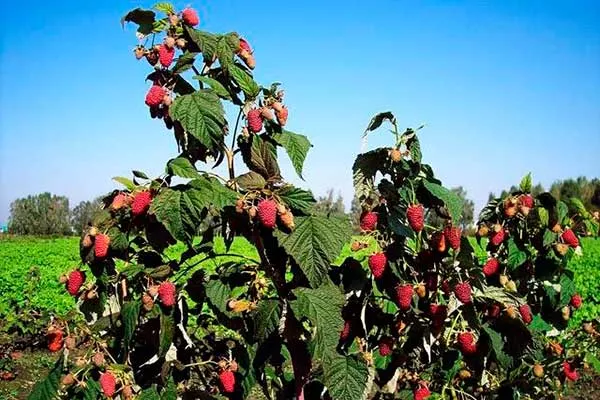
Characterized by vigorous yet compact bushes ranging in height from 140 to 160 cm, the plants form medium-sized, upright shoots that do not require staking due to their strength and resilience.
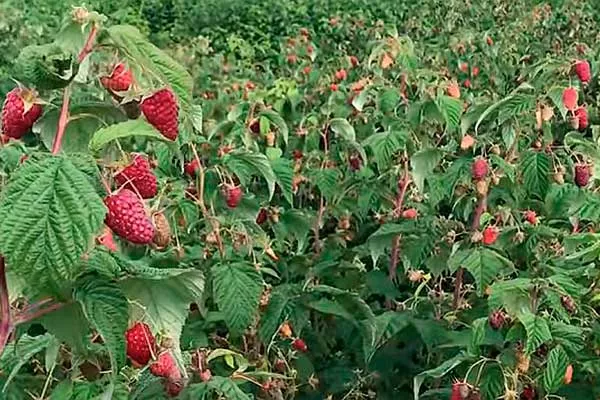
The fruiting portion of the stem is occupied by short, sparse spines, mostly located at the base of the shoot. The leaves are large, dark green, and wrinkled.
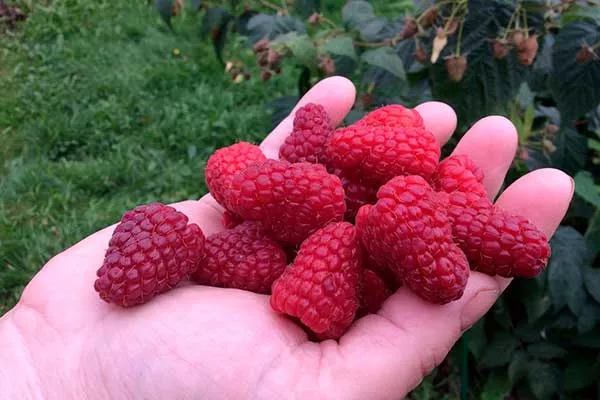
Distinctive features of berries:
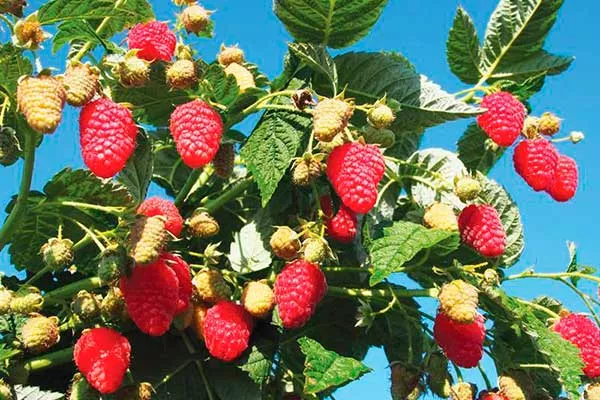
- Large, painted in a rich dark red color.
- They have a conical configuration and a dense structure.
- The quality remains high even in adverse weather conditions.
- Their length exceeds 3 cm, and their weight ranges from 5 to 5.5 g, sometimes reaching 8 g.
- The taste is pleasant, balanced, aromatic and sweet-sour.
Ripening time and yield
An attractive feature of this cultivar is that it bears fruit twice per season. The first harvest ripens in July or late August, and the second in the first half of September. A single bush can produce up to 2.5 kg of delicious berries in a single harvest.
Regions for cultivation
Suitable for growing in various regions of Russia, but reveals its advantages most fully in warm areas.
Features of cultivation
Following raspberry planting guidelines is key to proper development and abundant fruiting. There are several ways to plant raspberries:
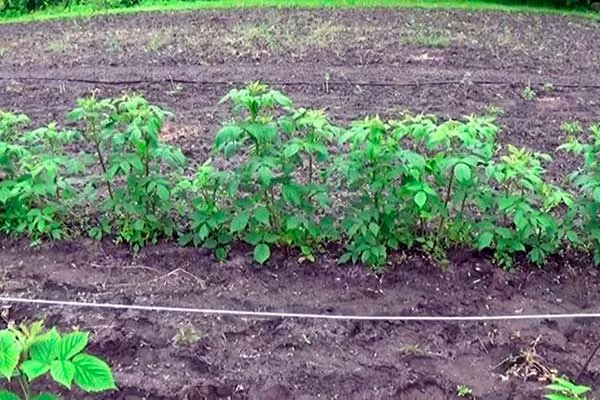
- In the trenches. Space the trenches 1.5 m apart. Space individual plants 80-90 cm apart.
- Nests. Place 2-3 seedlings in a hole measuring 40x40x35 cm. This will result in a vigorous plant with increased yield.
- Curtains. Plant raspberries in groups. In a 130x130 cm square, space 2-3 seedlings 60-70 cm apart.
- Triangle. Plant 3 seedlings at the corners of the figure with sides of 50 cm.
Selecting a site and preparing the soil
The plant can grow in the same location for up to 12 years, so choose wisely. Place it in full sun or in an area that receives light shade during the day. The location should be protected from drafts.
If the groundwater level is approximately 1.5 meters, the root system will thrive. The plant prefers loamy or semi-sandy soil.
Soil quality characteristics:
- Nutritional value. For planting, add 10-20 kg of humus or compost per 1 sq. m, 50-60 g of superphosphate and potassium sulfate.
- Low or neutral acidity. The required indicators can be achieved by adding lime, dolomite flour or wood ash to the soil.
- Looseness and water permeability. In heavy soils, add coarse river sand – 10-20 kg per 1 sq. m.
- ✓ The pH level should be between 5.5-6.5 for optimal absorption of nutrients.
- ✓ The organic matter content of the soil should be at least 4% to maintain moisture and nutritional value.
Trimming
Although the Atlant raspberry is a remontant variety, the breeders recommend pruning the shoots to ground level in the fall to ensure a bountiful harvest next year. No bush shaping is required.
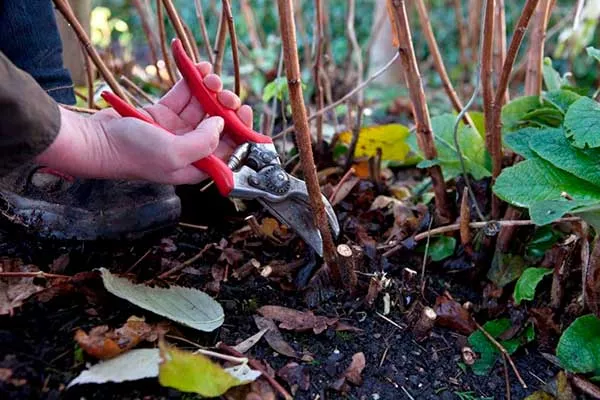
If you're leaving shoots, trim off the tops and dead branches. Summer pruning consists of removing diseased, broken branches, and basal shoots. The plant doesn't produce many suckers, so these can be left to expand the raspberry patch in the fall.
Watering and fertilizing
It requires regular watering during hot weather, but stop during rainy season and harvest. If you skip watering, the plant will survive, but the berries will be small and unripe. Therefore, during dry periods, water every 3-4 days.
The volume of water should be sufficient to infiltrate to a depth of 35 cm. Large raspberry farms use drip irrigation.
Also carry out the following agricultural practices:
- Cover the spaces between the rows with mulch.
- During prolonged rainfall, dig drainage channels between rows.
- In late fall, after pruning the shoots, mulch the soil with humus or compost. If you weren't able to do this in winter, repeat the procedure in early spring.
- During active growth, raspberries respond well to liquid nitrogen fertilizer based on a weed infusion or diluted manure. During the budding stage, use complex foliar fertilizers, such as Agricol or Fertik, to enrich the plants with potassium and micronutrients.
You can sprinkle wood ash around the roots before each watering. Avoid nitrogen fertilization in summer.
- In early spring, apply nitrogen fertilizer to stimulate shoot growth.
- During the budding period, use potassium-phosphorus fertilizers to improve the quality of the berries.
- After harvesting, apply organic fertilizer to restore the soil.
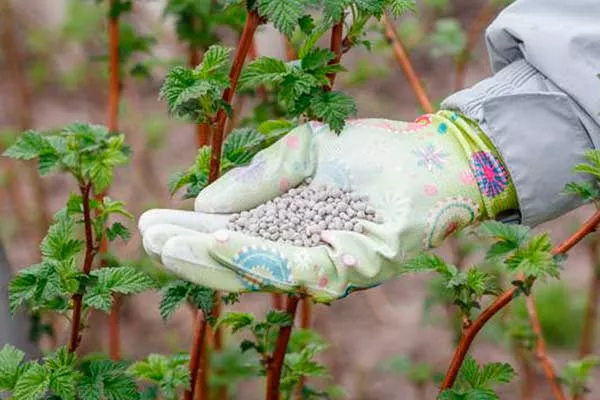
When the soil is depleted, dig trenches around the bushes to apply superphosphate. Place the granules in these trenches and cover them with a layer of soil. Then, water the raspberry patch thoroughly.
Frost resistance and preparation for winter
In regions with mild winters, such as most of the Krasnodar Krai, Stavropol Krai, and the North Caucasus Republic, the Atlant hybrid raspberry does not require shelter. However, it is sensitive to early frosts.
In cold regions, the plant can withstand severe frosts, provided the shoots are completely cut back in the fall. The soil should then be mulched with well-rotted manure, which enriches it with micronutrients and protects the roots from freezing. New shoots will appear in the spring.
Possible diseases and pests, ways to get rid of them
The crop is characterized by high yields and resistance to pests and diseases. Gardeners note that it is rarely attacked by pests in their gardens. However, to minimize the risk of pest and disease damage, preventative measures are recommended:
- Protection from stem flies. Spray the bush with Actellic - 15 ml per 10 liters of water
- Prevention of fungal infections. Irrigate with a solution of ammonium sulfate - 4 g per 1 liter of water.
- Prevention of purple spot. In early spring, spray the shoots with Rubigan – 4 ml per 10 liters of water.
Perform preventative treatment with Bordeaux mixture three times:
- before bud break (3% solution);
- during the budding period (1% solution);
- after harvesting.
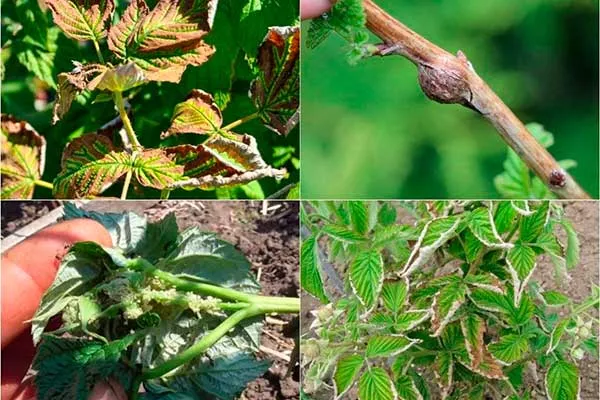
If a plant is affected by raspberry gall midge, chemical treatments won't help. Remove and burn damaged branches, and remove fallen leaves. To prevent disease, plant raspberries in suitable soil and provide adequate light. Fertilizing and fertilizing will help support the plant's immunity.
The crop is virtually disease-resistant. It is resistant to bushy stunt virus, fruit and root rot, and leaf spot, and has moderate immunity to fungal infections.
Reproduction
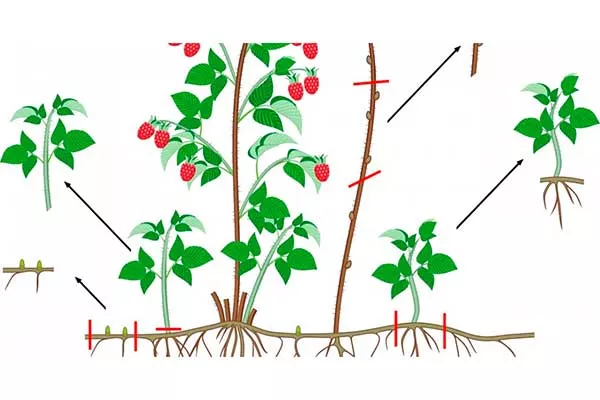
The everbearing raspberry "Atlant," like the regular variety, is a root sucker plant. It can be propagated in several ways:
- Young shoots. In the fall, dig up the shoot with its own root system and plant it in a designated location. Few shoots will form in the first few years, so other propagation methods may be necessary.
- Green cuttings. Prepare the apical cuttings of the current year's shoots and root them in greenhouses.
- By layering. In June, bend down the strong shoots, pin them to the ground, and cover them with fertile soil. By autumn, roots will form at the point of contact with the ground.
- By division. In autumn, dig up the mother bush, divide it into several parts and plant it.
Advantages and disadvantages
Before planting a crop, it's important to study its pros and cons. Atlant has many advantages:
Gardeners consider the following disadvantages: the possibility of pest attack, a decrease in the size of the berries due to a lack of moisture, and softening due to excess moisture.
Reviews
Atlant is one of the most promising everbearing raspberry varieties, gaining popularity among gardeners due to its excellent characteristics. It combines high yields, disease and pest resistance, and excellent berry flavor. Proper care is essential to ensure large fruit harvests throughout the season.