
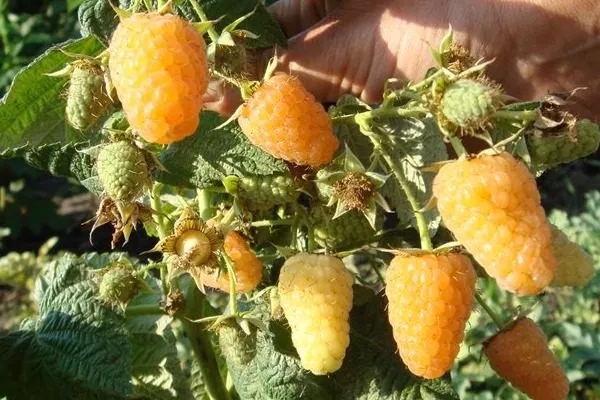
Anna raspberry belongs to a group of yellow-fruited varieties, which are especially recommended for children, pregnant women, and people with allergies. This is due to its low content of red anthocyanins, which can cause allergic reactions. This early-ripening variety has excellent taste and excellent nutritional qualities.
History of selection
A unique yellow-berry raspberry variety known as the Anna cultivar was developed in the United States. Due to the lack of information about the specific breeders responsible for its development, this variety is considered the result of folk breeding.
The developers ensured that the Anna raspberry was easy to grow, which led to its widespread distribution.
Introduction to the variety
Anna is a remontant variety, meaning it can bear fruit several times per season. It ripens early and begins producing berries as early as June.
Where can it be cultivated?
This raspberry variety is ideal for growing in a variety of Russian climates, including areas with moderately cold winters. It is successfully cultivated in both the southern and central regions of the country, the Urals, and Siberia. However, in cooler regions, it is recommended to protect the bushes from winter frosts using spruce branches or special agrofil.
Description of the plant
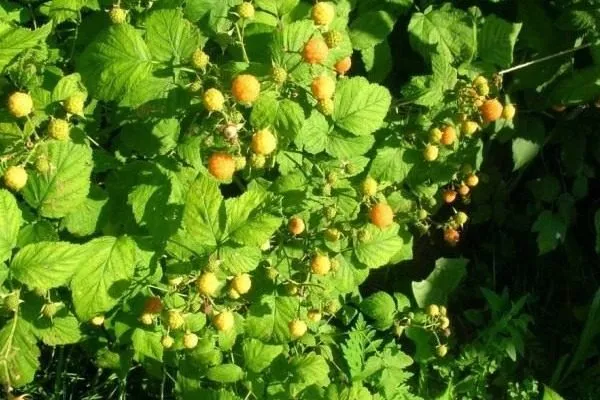
To understand the Anna raspberry, carefully examine its appearance, which is as follows:
- Bush and branches. The shrub is characterized by its compactness and low stature, reaching a maximum height of 175-180 cm. The plant is not prone to excessive spreading. It only requires careful support with a trellis to prevent the branches from collapsing under the weight of the harvest.
One of the cultivar's key characteristics is the lack of numerous thorns on its stems. These are not only few in number but also sparsely spaced, making the bush easier to care for. - Leaves. The leaves of this raspberry are remarkable for their unique shape—they are pointed and resemble curls. On young shoots, the leaves are light green.
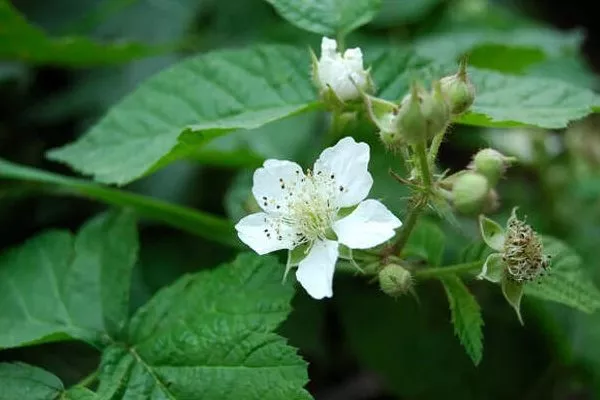
- Flowers. The buds, when in bloom, are noticeable from afar due to their considerable size. They are adorned with the vibrant colors typical of this species.
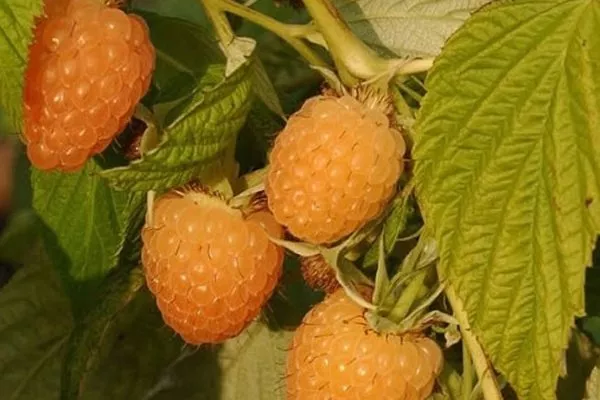
- Fruit. The berries are characterized by a refined flavor and rich aroma. They are especially firm and have a flavor reminiscent of banana. Raspberries contain many beneficial elements that have a beneficial effect on health. These berries are large, weighing from 5 to 7.5 grams, with a blunt top.
They have a perfectly smooth appearance and a light yellowish color. The berries don't soften or crush, ensuring easy transport. The seeds are tightly bound, allowing the fruit to remain intact even after full ripening.
These berries are excellent for fresh consumption, as well as for canning and freezing. - Bones. The seeds of this raspberry variety are almost invisible when eaten, which makes them even more enjoyable to consume.
Frost resistance
The bushes are distinguished by impeccable frost resistance, making them suitable for growing in cool climates and northern regions. This variety is also drought-tolerant and prefers sunny locations. In shade, the raspberry will produce a modest harvest.
Pollination
Pollination of the Anna raspberry variety does not require special measures, since it is self-pollinating.
Type and period of fruiting
The Anna variety is characterized by a prolonged fruiting period, which can last for several months. The berries form at the top of the bushes and practically cover their tops.
Productivity
The yield of this variety is significant - with proper care, one bush can produce up to 3.8-4.1 kg of berries.
Storage of the harvest
This variety is noted for its excellent shelf life. Even when fully ripe, the berries retain their qualities for excellent shelf life. They are firmly attached to the drupe, retain their juiciness, and do not stick together.
Transporting these berries over long distances doesn't pose a risk of them becoming soggy. Long-term storage is possible both in the refrigerator and in a cool, dark place.
Landing rules
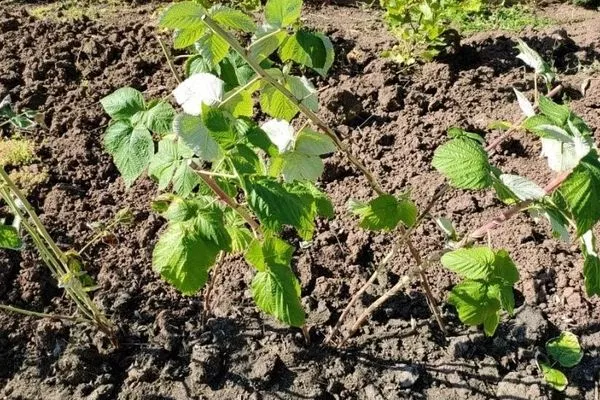
Planting Anna raspberries is straightforward and requires no special cultivation skills—there are no deviations from standard planting practices. Key points to consider for this raspberry:
- Anna prefers sunny areas where she can grow and produce fruit with the best characteristics.
- Raspberries need full daylight, at least 7-8 hours a day, to grow and produce fruit properly.
- The planting site should be protected from drafts. Avoid waterlogging to prevent the plants from rotting.
- The soil should be loamy or sandy, without excessive moisture. Neutral or slightly acidic soils are preferred. Avoid overly alkaline soils. If the substrate becomes acidic, calcium hydroxide (lime) is recommended, but in small concentrations.
- When planting raspberry bushes, ensure 60-65 cm of space between plants in a row and the same amount diagonally. If planting in multiple rows, the distance between them should be 100 to 160 cm.
- To plant seedlings, it is necessary to dig holes deep enough so that the rhizome is completely covered with soil.
- After planting, water the area and mulch.
Growing this raspberry is carried out using two main methods:
- The first method involves care similar to that for regular summer raspberries, when two-year-old shoots that have already produced fruit are removed.
- The second method is more suitable for remontant varieties and involves autumn pruning of the bush almost to the ground.
Due to its remontant nature, the Anna variety has unique properties and can be grown using both the first and second methods.
Care tips
To ensure your raspberries continue to delight you with their harvest, you should follow simple but important care rules:
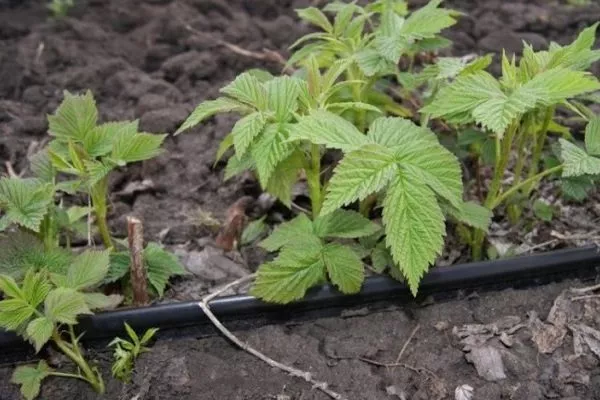
- Moisturizing. The Anna raspberry is drought-resistant but still requires regular watering, especially during hot periods. Particular attention should be paid to watering during the flowering and fruiting stages.
- Nutrition. During spring and fall, seedlings require additional nutrition. Organic fertilizers, such as compost or herbal infusions, are ideal. In summer, mineral fertilizers containing nitrogen, potassium, phosphorus, and other salts can be used.
- Cleanliness. It is necessary to carefully monitor the condition of the bushes, regularly removing weeds that can take away nutrients from the raspberries.
- Formation of bushes. After winter, the bushes require pruning. It's necessary to remove old and damaged branches, as well as young shoots that could crowd the space, depriving the raspberries of essential resources.
- Strengthening supportRaspberry Anna requires the installation of supporting structures, such as trellises, taut wires, or other materials between the rows of bushes.
Overall, caring for the Anna raspberry requires little effort. Thanks to the thornless stems, all work will be simple and painless.
Diseases and pests
Anna is highly resistant to various diseases. Particularly noteworthy is its resistance to root rot, which affects many other varieties of this plant. Furthermore, Anna is resistant to powdery mildew and brown spot.
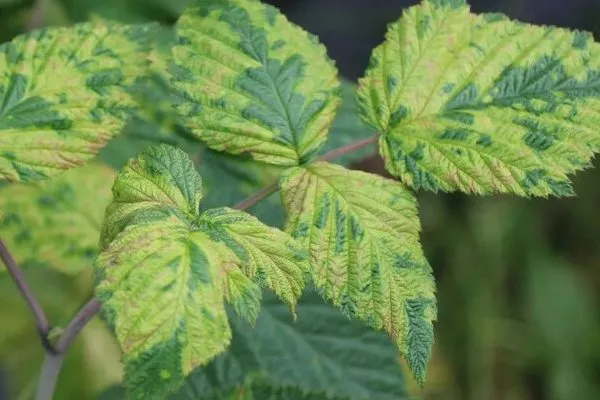
However, the possibility of verticillium wilt, a disease that affects young plant shoots, cannot be ruled out.
- When infected, raspberry leaves lose their green color, turning yellowish-green and eventually drying up.
- In such cases, dark spots may appear on the shoots, which leads to cracking of the bark.
- This disease often appears in particularly hot summer conditions.
- Plants affected by verticillium wilt cannot be treated, so the bushes should be destroyed immediately.
- To prevent this disease, it is recommended to treat raspberry bushes with Fitosporin in early spring.
This variety is vulnerable to insect attack:
- wireworm;
- imago larvae;
- May beetle;
- mole crickets.
Methods of reproduction
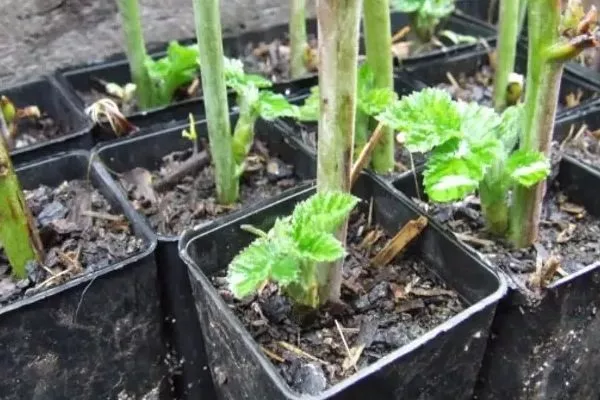
It is recommended to propagate beech raspberries by pruning already rooted shoots. These shoots can be pulled out and replanted elsewhere.
Due to the large number of offshoots, propagation of this raspberry variety is not only quick but also easy. Young roots of this variety are highly viable and easily adapt to new locations, developing new roots.
The best time to propagate is mid- to late March. This will give the roots time to establish, and most importantly, there should be no frost.
Pros and cons
This raspberry has a number of advantages, among which it is worth highlighting:
The disadvantages of this variety include:
Gardeners' reviews
The Anna raspberry is suitable for both private garden plots and commercial production. It is easy to transport, allowing it to be shipped from one region to another. The Anna variety can be grown in a wide range of climates in Russia, including the northern regions.