
The Italian raspberry Amira is renowned for its large fruits with an exquisite flavor and rich aroma. This variety was developed over two decades ago and boasts increased winter hardiness and disease resistance, making it ideal for cultivation in Russia's diverse climates.
History of the variety's appearance
The Amira variety was developed in 2000 at the Italian agricultural base Berryplant, where breeders used the Tulameen and Polka varieties as a basis. Initially known as BP 1, it became known commercially as Amira.
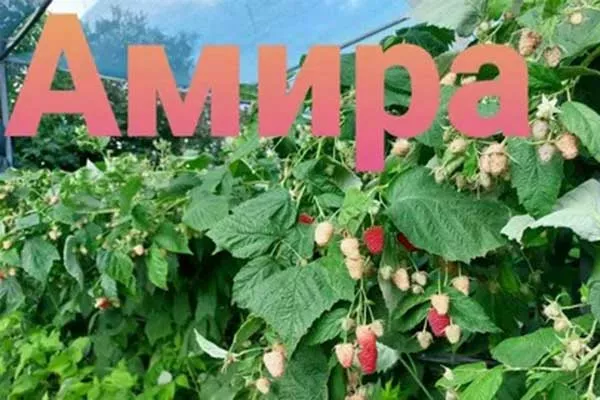
The taste of Amira's berries was warmly received by both professional tasters and ordinary consumers, leading to its rapid spread across Europe and then throughout the world. It was imported to Russia in 2001, and has since been successfully cloned in many domestic nurseries.
Description
The Amira variety is popular among gardening enthusiasts and professional farmers. Its large berries can be found on store shelves throughout the country, with the exception of the northern regions.
Features of bushes and branches
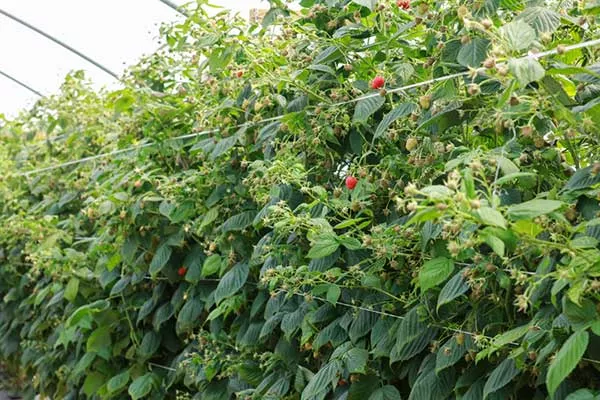
Everbearing bushes do not exceed 200 cm in height and have a compact crown, which promotes better illumination of the shoots, which in turn increases productivity.
Main varietal characteristics:
- The variety is distinguished by its strong brown stems, bright green leaves and an abundance of thorns on two-year-old branches, which requires caution during harvesting.
- The main shoots of the plant do not exceed 7-8 mm in diameter and consist of three or four woody trunks with a root system.
- In the second year of life, two or three additional shoots are formed, which gradually replace the old ones.
- The minimum height of a bush of this variety is 170 cm.
- The crown of the bush is of moderate size, its branches begin to appear at a height of 30-40 cm from the ground surface, the width of the crown does not exceed 60-70 cm in the summer months and is densely covered with leaves.
The branches of the bush can be divided into two types:
- Annual shoots, graceful and thin, with a green tint, on which buds form in the spring, promoting flowering.
- Two-year-old shoots, covered with bark, become thicker and new green one-year-old shoots are formed along their entire length at the nodes.
Leaves of the variety
The leaves are elongated, smooth and wrinkle-free, surrounded by distinctly serrated edges, with prominent veins and sharp tips. With age, the leaves begin to curve upward, creating a firm arch with a constant radius.
Other indicators:
- The leaves are light green in colour, without much saturation, but on the reverse side they take on a pale, almost white hue.
- The length of the leaf blade reaches from 60 to 70 mm, and the width – from 30 to 40 mm.
- The leaf profile is not uniform, widening in the middle and tapering towards the ends.
- The feather-like hairs on the leaves are barely noticeable, they are located only on the back side and disappear over time (as the leaves grow and the fruits ripen).
Flowers
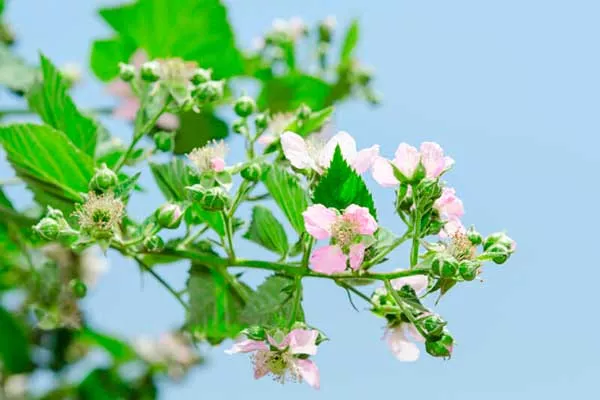
They consist of a bud formed by a pistil, a floral disk, anthers, and petals. The outer parts of the flower are decorated with a smooth rim of rounded petal tips.
- Peculiarities:
- The thin pistil core is colored in yellow-brown tones, the petals are a soft pink color, reminiscent of pale beige shades, and the flower disk is light green.
- The floral disc is wide, covers all the anthers and bases of the petals, has a light green color and resembles a hemisphere in shape.
- The anthers are thin, their length does not exceed 5-10 mm, they are white with brown tips.
- The diameter of the flower reaches 10-15 mm, the radius of curvature of the petals is up to 20 mm, and the width of the flower disk ranges from 5 to 7 mm.
- The petals are white with a pink tint and barely noticeable brown spots, concentrated closer to the anthers. The petals are teardrop-shaped, with a radial tip and a narrow base attached to the pistil. The petals can be either straight or slightly curved in the center.
Fruit
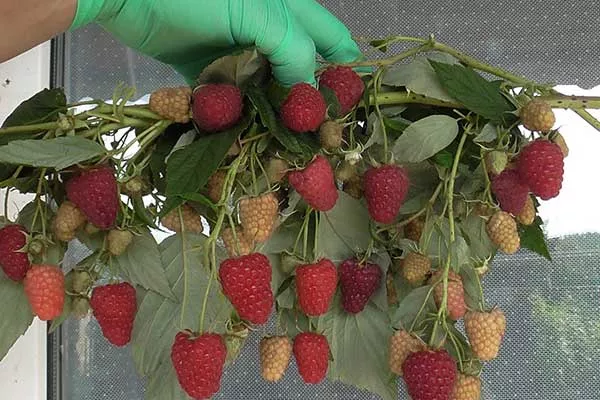
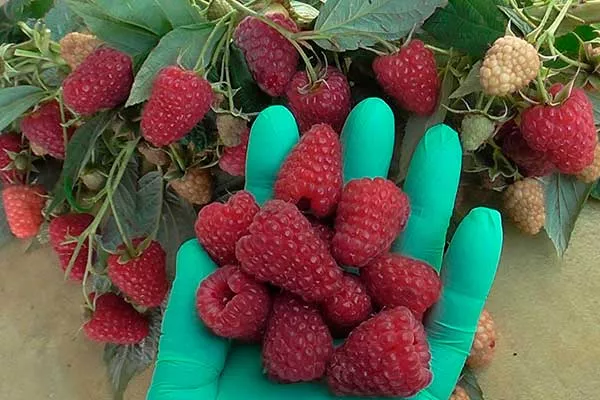
The drupes of this variety have regular, beautiful shapes and are moderately hairy, holding well to the receptacle after ripening. A single head can produce 10 to 20 large fruits.
There are also other qualities:
- The berries ripen sequentially, allowing the gardener to harvest every couple of days, thereby reducing the strain of the fruit's weight on younger shoots.
- The length of the berries reaches 13-16 mm, the diameter is 8-11 mm, and after harvesting, the internal hole has a size of up to 3-4 mm, the thickness of the drupes with pulp and peel ranges from 2 to 3 mm.
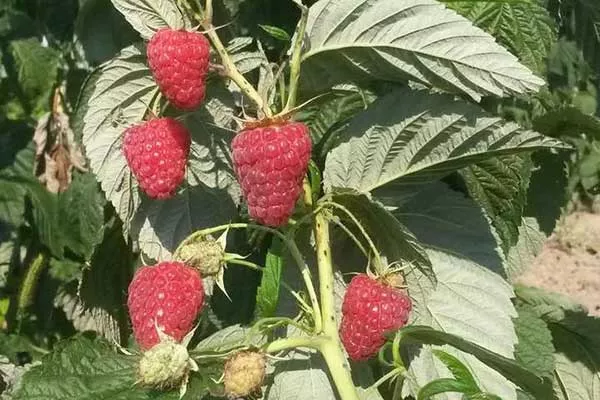
- The weight of the berries of this variety after full ripening is more than 6-9 g.
- The shape of the berries is regular, resembling a cone with a slightly pointed radial tip.
- The berries are a rich red colour, without any hint of burgundy, which distinguishes them from local varieties of everbearing raspberries.
- The aroma and flavor are sweet when harvested on time, with minimal acidity. In cooler regions of the country, the flavor may change slightly and lose its richness due to a lack of warmth and sunlight.
Chemical composition:
- Fructose: content reaches 15%-17%.
- Pectin: does not exceed 0.9%.
- When fully ripe, it contains up to 2% citric and malic acids.
- Fiber – up to 4-5%.
- Proteins: no more than 0.7-0.8%.
- Fats: mainly in seeds, up to 0.3-0.5%.
- Carbohydrates: Natural fruit sugars range from 4.5% to 6%.
Bones
The seeds are small in size and have a soft skin. They are saturated with essential oils in quantities of 15% to 20%, which gives the fruits a bright and unique aroma.
This variety, which complies with EU standards for all food and agricultural products, has a low tannin content in its seeds. This means that even when consumed in large quantities, the berries do not cause fever, diarrhea, or gastrointestinal upset.
Characteristics
The Amira variety is a remontant raspberry species, distinguished by its unique morphology and many positive characteristics, which makes it distinct from other representatives of this genus of garden crops.
Everbearing means continuous fruiting. This variety is capable of producing abundant berry crops on both young and older plants. The fruits typically ripen twice a year—in summer and before the onset of cold weather.
Resistance to frost, drought and rain
The Amira raspberry variety is particularly resistant to low temperatures. In winter, young shoots can survive temperatures as low as -26 degrees Celsius. However, to ensure the full development of young bushes, protective covering is recommended.
Amira is drought-tolerant, but prolonged moisture stress can reduce berry size. At high temperatures, the berries are not susceptible to scorching or burning. With heavy rainfall and excess soil moisture, the berries retain their quality, do not become watery, and remain sweet.
Pollination
Amira is self-fertile. Like most raspberry varieties that are capable of self-pollination, it does not require insects for pollination, as the fruits ripen even on isolated bushes. However, under such conditions, the yield may be small, and the berries may not achieve optimal development.
If bees are involved in the process, this leads to increased productivity and more complete berry growth. The ideal pollinators for this variety are Amira's prototypes, Polka and Tulameen.
Varieties such as Eurasia and Elegant are particularly successful for cross-pollination. They significantly increase frost resistance and impart a distinctive aroma and flavor to the berries, which is especially valuable in the climate of central Russia.
The subtleties of fruiting and ripening
Amir raspberry bushes delight with their blossoms twice a year, and just three weeks later, the first fruits begin to form on the climbing branches, which reach maturity in three to four weeks.
Other aspects:
- The first harvest occurs in July, and the second in the autumn months of September or October.
- In the northern regions of our country, the first harvest of Amira raspberries ripens by the end of July, while the second may be threatened by frosts that occur in early autumn.
- Fruiting occurs in stages: some flowers produce the first green berries, which then reach maturity, while others continue to grow.
This process allows the plant to distribute nutrients equally, which promotes full fruit development and ensures superior flavor in every berry in the crop.
Productivity
With proper care, both young and mature bushes can produce twice a year. A single plant can yield up to 2.5 kg of berries with normal care.
By correctly and consistently using farming technologies, replacing clay soils with more fertile black soil and installing a drip irrigation system, each plant can increase its productivity to 3-3.5 kg of berries per harvest.
Regions for cultivation
Amira was initially developed for cultivation in southern European countries, especially in areas adjacent to the Mediterranean Sea, where temperatures never drop below freezing.
But thanks to the variety's inheritance of its ancestors' best traits, it became suitable for gardening in a wide range of climates. This allowed gardeners to successfully cultivate Amira in all regions of Russia.
Over the past twenty years, Russian breeders have also contributed to adapting the variety to our country's harsh winter conditions, which has led to further improvements in its frost resistance.
Storage of the harvest
Summer fruits retain their quality for 3-4 weeks, while autumn berries can remain fresh for up to a month and a half if stored in suitable conditions.
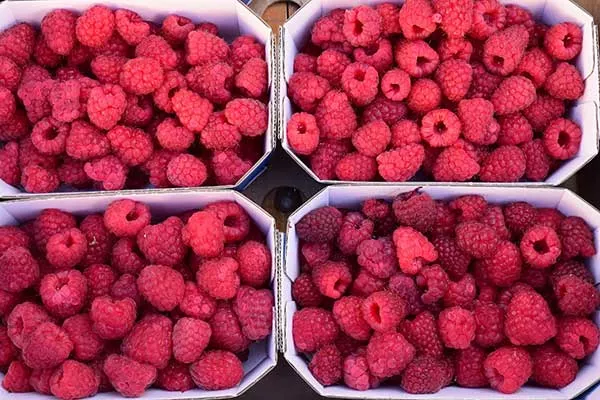
For best results, it is recommended to use refrigeration chambers with a temperature range of +5 to +8 degrees, a cellar with minimal lighting and ventilation.
When stored in a normal room, the shelf life is reduced to 2 weeks. Ideal conditions are a temperature of +5 to +15 degrees Celsius and humidity no higher than 75%.
To preserve the aroma and flavor of Amira raspberries over the winter, there are several effective methods:
- Freezing. Before freezing, rinse and dry the berries thoroughly. Then, spread them evenly in a single layer on a baking sheet and freeze for several hours. Once frozen, transfer the berries to freezer-safe plastic bags or containers.
- Canning. This method will allow you to preserve Amir raspberries in the form of sweet jam, compote or preserves.
- Drying. This is a great way to turn Amir's raspberries into delicious and healthy dried fruit for the winter. The process involves washing and drying the berries, spreading them evenly on a baking sheet, and drying them in the oven at 50-60 degrees Celsius (122-140 degrees Fahrenheit) for several hours.
Once the process is complete, the berries should be completely dried and ready for long-term storage. They can then be used in compotes, sauces, and other dishes.
Landing rules
To achieve the desired fertility and abundant fruit harvest, farmers must carefully follow established recommendations regarding the selection and purchase of seedlings and their planting in an area optimal for this garden crop.
- ✓ The optimal soil acidity for the Amira variety should be within the range of 5.5-6.5 pH.
- ✓ The distance between bushes when planting should be at least 1 meter to ensure sufficient aeration and lighting.
How to choose the right planting material?
First, carefully inspect the bush's trunk: it should be smooth and free of damage or disease. But there are other criteria:
- Purchase seedlings with two or three woody and strong shoots.
- Seedlings can be either one-year-old or two-year-old. The former are less expensive but require more careful care to produce a harvest in the first year. The latter are more expensive but adapt better and promise a harvest in the first year after planting.
- The root system should be developed, have no traces of cutting and contain at least four to six taproots with a length of at least 30 cm.
- It is best to choose bushes without leaves, as they often fall off after planting, which can prevent a bountiful harvest in the first year.
Place
Amira prefers elevated areas that receive continuous sunlight throughout the day.
When choosing a planting site near a fence, it is preferable to use a chain-link fence.
The soil in the planting area should have moderate moisture.
Time for disembarkation
It is recommended to transplant plants to a new environment before the first winter frosts, preferably in October, between the 1st and 15th of the month. It is important to wrap the seedlings for the winter to protect them from frost, despite the high winter hardiness of this variety. This way, the first fruits will appear in the summer.
Planting can be done in March, once the snow has completely melted and the average daily temperature has risen above 5°C. In these conditions, it's important to select two-year-old seedlings first, and after planting, pay close attention to watering and fertilizing them so that the first flower buds can appear on the new shoots within a couple of months.
Algorithm of actions
To successfully plant a bush, you need to follow simple instructions:
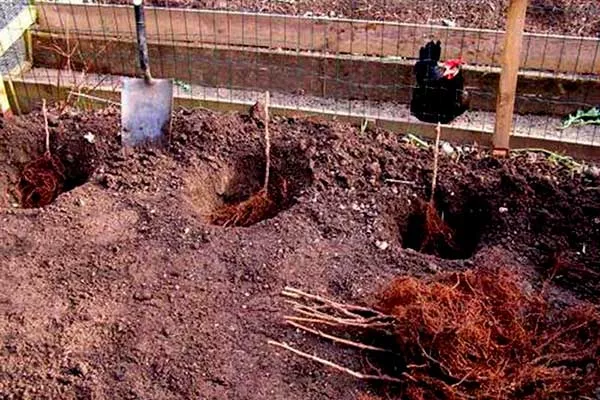
- Dig a hole 45-55 cm deep and 40 to 60 cm wide.
- Then mix humus or manure with water in equal proportions and pour it into the hole.
- Fill halfway with fertile soil and create a mound.
- Place a long support rod at the bottom.
- Place the seedlings on a mound and spread the roots out to the sides.
- Attach it to a support rod, then evenly fill it with loose soil mixed with humus, manure and other fertilizers.
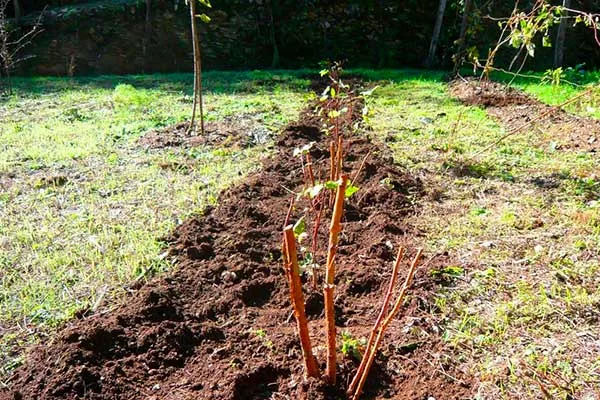
After planting, it is necessary to thoroughly water the plant, then repeat the procedure daily for 2-3 weeks until the bush takes root and the first shoots grow.
Further care
To achieve good results in growing raspberries and get two harvests per season, it is necessary to carefully care for the plants, following a strict technological scheme.
Trimming
Dry raspberry shoots and leaves must be removed promptly. The following steps are also important:
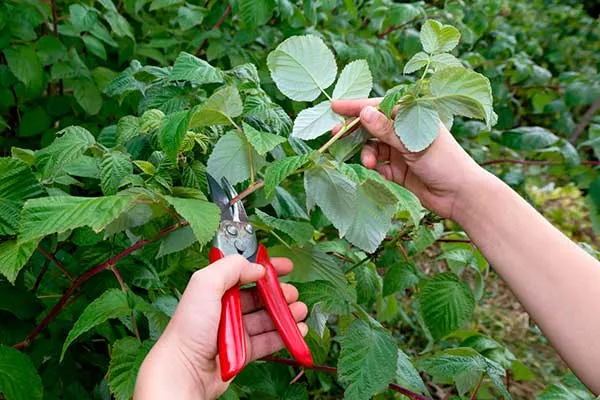
- Every spring, prune all new shoots 5 to 10 cm from the base of the bush to prevent them from growing upward and ensure adequate nutrition for future berries. It is recommended not to prune young shoots during the first year of the bush's life.
- In the second year, after the winter period, shorten all young branches by 10 cm, which will promote the rapid appearance of new shoots, leaves, flowers and, ultimately, berries.
- Cut off the tips of old shoots by 5-8 cm to stimulate bud development and accelerate foliage growth.
Watering
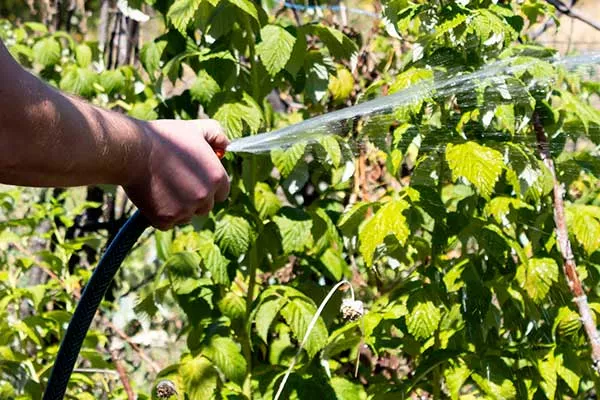
It is recommended to use a drip irrigation system, which occurs automatically through a structure of tubes or manually with a hose, directing water directly to the roots.
Rules:
- For one bush, use 15-20 liters of water, previously settled and warm.
- In case of heavy rain, there is no need to water the raspberries, and the next soil moistening should be carried out when it dries to a depth of at least 50 cm.
- On hot summer days, provide automatic drip humidification.
- In spring, when watering, low-concentration organic fertilizers should be added to the water.
Top dressing
Among the most effective feeding methods is the use of fermented cow slurry, diluted with water at a ratio of 1:10. The recommended dosage is 1.5-2 liters.
| Feeding method | Periodicity | Efficiency |
|---|---|---|
| Fermented cow slurry | 3 times per season | High |
| Dry nitroammophoska | 1 time in spring | Average |
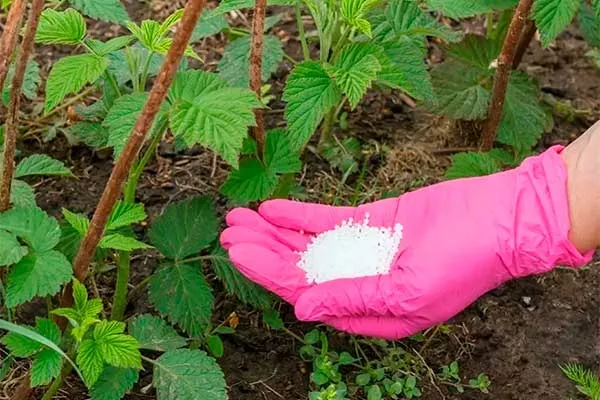
Organic fertilizers are typically applied no more than three times during the growing season. In spring, dry nitroammophoska is preferred, spreading 30 to 50 g per square meter.
Mulching
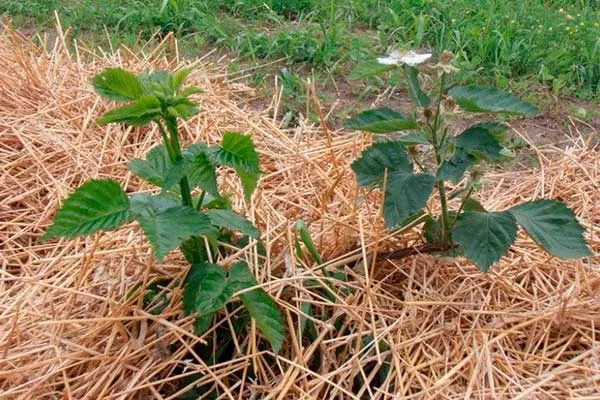
For this type of raspberry, it is essential to mulch, which should begin immediately after the seedlings are planted, as well as in the spring.
Subtleties:
- The thickness of the mulch layer should be small or medium to prevent the formation of steam from the wet soil layer and not to interfere with the free development of young raspberry shoots.
- For mulching, use chopped cereal stubble or natural wood sawdust, which should be mixed with the soil for 30-40 days.
- If the area has predominantly clay soils, apply mulch with the addition of cow manure.
Preparing for winter
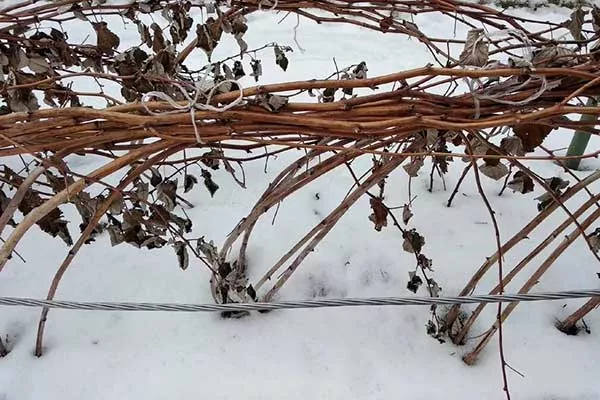
In southern regions, Amira doesn't require winter protection. In cooler climates, peat, pine needles, and agrofibre are used to protect the plants. Recommendations:
- Before covering the bushes, remove them from their supports and lay them on the ground. If the raspberries were cut down to ground level, mulch is recommended to retain the root system's warmth.
- At the end of autumn, when the weather gets cold, it is necessary to trim the stems and clear the area of leaves and debris.
- Everbearing raspberry varieties have a unique feature: they accumulate most of their nutrients in the above-ground parts, which remain over the winter. To increase yield next year, prune raspberries after the first snow falls.
Reproduction
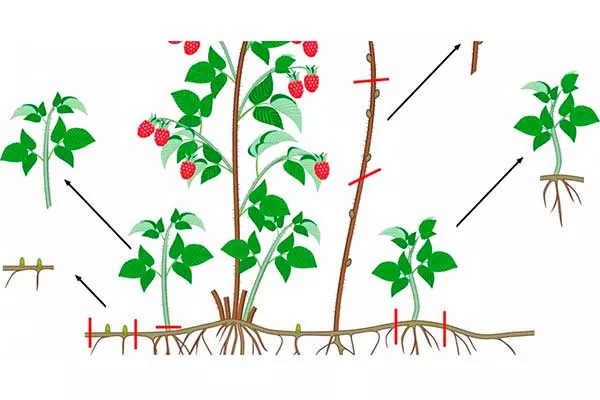
Amira has a high reproductive capacity due to its vigorous shoot growth. One of the key propagation approaches is cuttings. This process involves cutting shoots from both the above-ground and underground parts of the plant:
- To obtain root cuttings, In the fall, cut off no more than a quarter of the root, then root cuttings up to 15 cm long and cover them for the winter. By the following fall, these cuttings will have grown into mature seedlings.
- For propagation by stem cuttings Cut healthy branches with three buds in the fall, store them in the cellar over the winter and root them in the spring.
Other methods:
- Bush division method This method is rarely used for this variety, as it requires experience in root management to successfully divide the bush and prevent disease or dieback. New bushes should be planted immediately in a pre-prepared location.
- Reproduction by offspring This is the simplest method, but the Amira variety rarely produces root suckers. If they do appear, they can be transplanted.
Diseases and pests
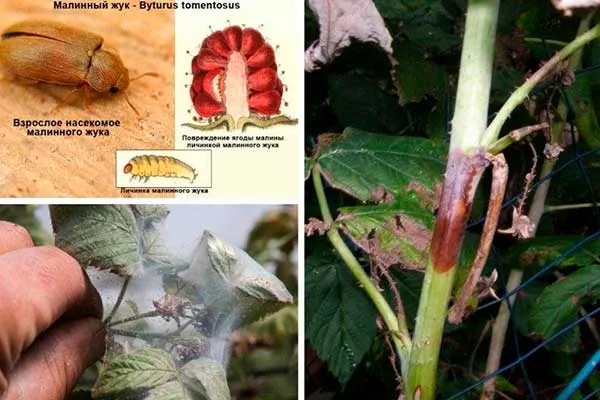
Despite excellent resistance, problems may arise under unfavorable conditions:
- Mottling of leaves – For treatment, Anabasine sulfate is used, which is dissolved in water and sprayed on the leaves using a dispenser.
- Chlorosis – requires immediate correction, as well as removal of affected leaves and shoots, since the loss of chlorophyll is a contagious process.
- Powdery mildew - prevented by using fungicides.
- Gray rot - You should temporarily stop watering, as this disease develops in conditions of high humidity and temperature.
Prevention
To prevent the development of powdery mildew, rot and other diseases in raspberries, the following measures should be taken:
- in spring, carry out fungicide treatment;
- remove wilted leaves at the end of the season;
- immediately remove branches and shoots affected by diseases;
- properly regulate the irrigation system.
Fungicides are used as preventative and therapeutic agents, among which the following can be distinguished:
- Bordeaux mixture;
- Fast;
- Profit;
- Tattoo;
- Abiga-Peak and others.
It's equally important to regularly inspect Amir raspberry bushes for pests such as aphids, raspberry beetles, spider mites, leaf rollers, etc. If pests are detected, treatment with insecticides is necessary, including:
- Biotlin;
- Confidor;
- Inta-Vir;
- Agravertin and others.
Spraying of seedlings should be carried out in the morning or evening hours, when there is no wind or precipitation.
Positive and negative qualities
The Amira everbearing raspberry variety is generating significant interest among both gardening enthusiasts and commercial berry growers. This is due to its wide range of advantages:
Reviews
The Amira variety produces large, appetizing berries with a rich red color. Harvesting occurs in the second half of summer and early fall due to its everbearing nature. A distinctive feature of this raspberry is that the autumn harvest often exceeds the summer one.