
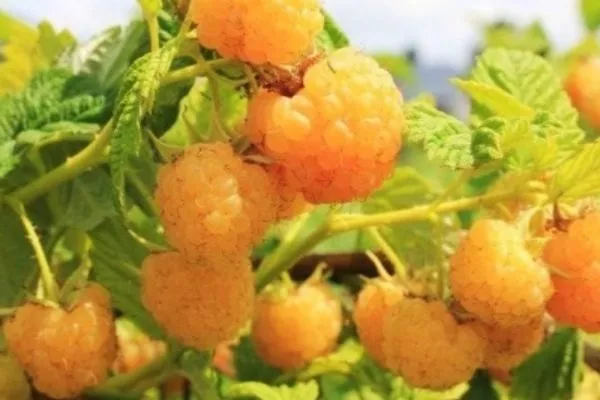
Apricot is unique yellow raspberry variety, named for its distinctive flavor and color, reminiscent of apricots. This everbearing variety is a true rarity. A distinctive feature of yellow raspberries is their low pigment content, making them safe for consumption by infants and pregnant women, eliminating the risk of allergic reactions.
Introduction to the variety
This variety of berries, with their vibrant amber-gold coloring, is the result of years of breeding by scientists from the Russian Academy of Agricultural Sciences, including Evdokimenko and Kazakov. This variety was created 25 years ago, but only recently gained popularity.
In 2004, it was registered in the State Register of Breeding Achievements. It is most actively cultivated in the central regions of Russia.
Bushes
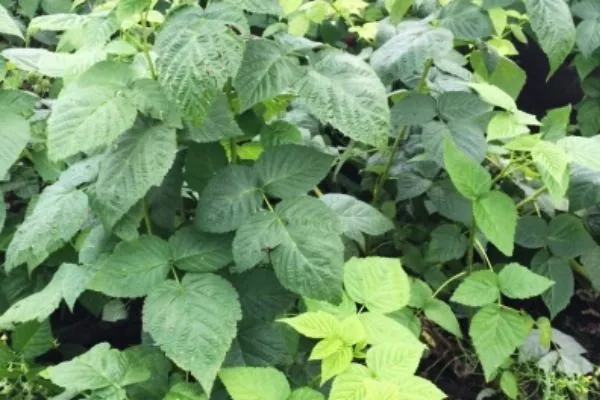
According to gardeners, Apricot raspberry bushes are characterized by medium growth strength and weak spreading:
- The two-year-old shoot has a light brown or beige tone, and the upright one has several thorns at the base that point downwards.
- During the year, the bush produces up to 5-6 new stems, distinguished by good branching.
- Young shoots have a light green hue and are covered with a light waxy coating.
- The leaves of this variety are small, wrinkled, without pubescence, and small sharp protrusions can be seen along the edges of the leaflets.
Berries
This raspberry variety is characterized by its moderate size and pleasing snow-white color with a contrasting bright yellow center. Characteristic features:
- Almost every flower head produces fruit.
- The shape of the berries resembles a cone with a rounded top.
- When the fruits reach maturity, they acquire an apricot hue with a light fluff.
- The average weight of one berry is about 2.5-3.5 g.
- The pulp has a delicate sweet and sour flavor with a moderate aroma. Consumers rate the variety's flavor at a four out of five.
Beneficial properties
Yellow raspberries are used in traditional medicine due to their rich malic and citric acids, sugars (glucose, fructose, sucrose), fiber, and minerals, including iron, calcium, cobalt, magnesium, copper, and potassium. Anti-inflammatory medications are made from the berries and leaves. Leaf decoctions help treat food poisoning and intestinal dysfunction.
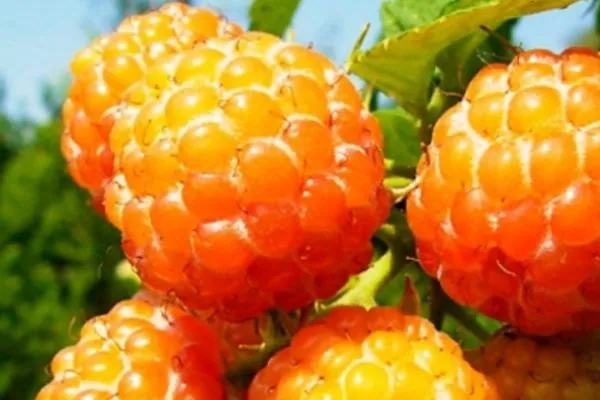
It's worth emphasizing that yellow raspberries have unique qualities compared to red ones. First of all, they are free of dyes, making them safe to eat and non-allergenic. The berries' chemical composition is also noteworthy:
- sugar content varies from 10.2 to 10.4%;
- ascorbic acid is present in an amount of 1.3-1.4% or 36 mg/g.
When ripe, the yield
Apricot raspberries boast one of the most abundant yields among yellow varieties. A single plant can produce up to 2–3.5 kg of fruit per season. The first ripe berries appear in August. The fruiting period is long and can last until the first frosts in November, when 70–90% of the crop is ripe.
Advantages and disadvantages
This raspberry variety is highly productive: with proper care, a single bush can yield up to 3 kg of bright orange berries. But these aren't its only positive qualities—the variety has other advantages as well.
Reproduction
To grow new Apricot raspberry bushes, you can use various methods:
- through shoots;
- through root suckers;
- through green cuttings.
Landing features
The Apricot raspberry variety, despite its resilience, still requires basic care. This includes transplanting to new locations.
- ✓ The optimal soil pH level for Apricot raspberries should be within 5.5-6.5.
- ✓ The distance between bushes when planting should be at least 0.7-1 m, and between rows - 1.5-2 m.
Preparing the garden bed
For raspberries to bloom and bear fruit, they need a bright spot. It's recommended to plant them in a north-south orientation so each plant receives full sunlight from dawn to dusk.
Find a location where the groundwater level isn't too high, otherwise the root system will be damaged. Apricot raspberries prefer fertile, light soil, so enrich it with organic and mineral fertilizers before planting. For 1 square meter, add:
- 10-12 kg of compost or humus;
- 400-600 g of wood ash;
- 40-50 g of phosphorus fertilizers.
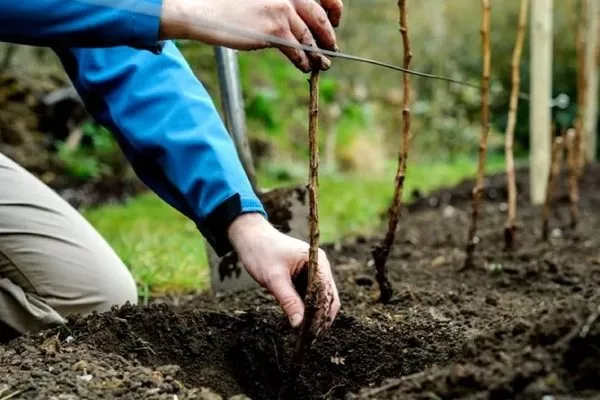
Before planting, thoroughly dig over the beds and remove weeds, removing their root debris. Then, proceed as follows:
- Dig trenches or holes for planting. These should be at least 60-65 cm deep and 5-7 cm wider than the root system.
- Be sure to place drainage from stones, old branches or driftwood at the base of the hole.
Preparing seedlings
To successfully grow raspberries, it's important to select healthy seedlings without damage to the root system. Ideally, a shoot should have at least 5-7 buds. You can use mother plants in your area as a source of planting material, or you can purchase them from reputable suppliers.
Before planting, remove all dead branches and roots, soak them in a solution of Kornevin, sodium humate, or simply soak them in wood ash, which will promote better rooting of the seedling.
Landing rules
Raspberries of this variety can be planted at any time of year, but experience shows that autumn plantings promise a richer harvest the following season. Planting tips:
- Before planting the Apricot raspberry variety, thoroughly water the prepared holes or trenches.
- Once the water has soaked in, create a mound in the center and place the plant on it. The root system should be distributed around the mound and pointed downward.
- Then cover the plant with substrate and compact it lightly to eliminate air bubbles around the roots.
- Pour 20 liters of water onto each plant.
- Once the water has completely absorbed, cover the surface with mulch. This not only retains moisture but also warms the root system.
Care
Raspberries respond well to standard care procedures such as regular watering, mulching, soil refreshment, bush training and nutrition: this is standard practice.
Watering
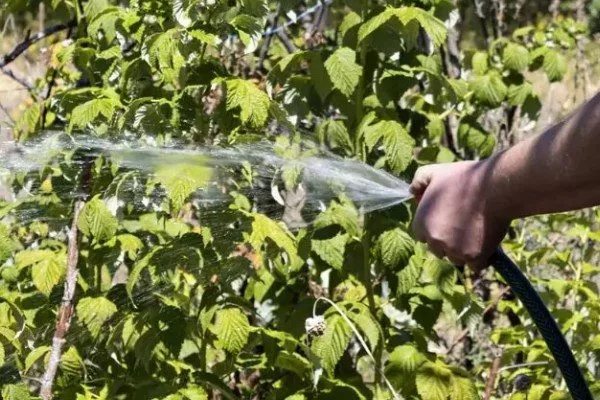
The Apricot Raspberry variety promises impressive yields with frequent and abundant watering. However, avoid allowing water to accumulate, as this can lead to root diseases and attract pests.
The following recommendations must be followed:
- During rainy periods, watering of Apricot Raspberry is not required.
- In dry summer conditions, a one-time but abundant watering will be sufficient – once every 1.5-2 weeks.
- To moisten the soil, use 20-30 liters of water per bush.
- After watering, cover the soil with mulch, which will help reduce the rate of moisture evaporation.
- Before harvesting in the fall, perform a final moisture-replenishing watering to replenish moisture.
To prevent water from accumulating in the soil when planting bushes, many gardeners create drainage at the bottom of the hole using gravel or wood chips.
Pruning and mulching
A prerequisite for obtaining a bountiful harvest from healthy raspberry bushes is regular pruning:
- In spring, sanitary pruning is necessary, during which frozen, broken and damaged shoots are removed.
- In early spring, shorten the tops of the shoots by 17-19 cm to encourage the growth of fruiting branches.
- Before winter, remove young, non-woody stems and shoots from previous years. Young shoots won't survive the winter, and older shoots won't bear fruit, as their productivity declines in the third year.
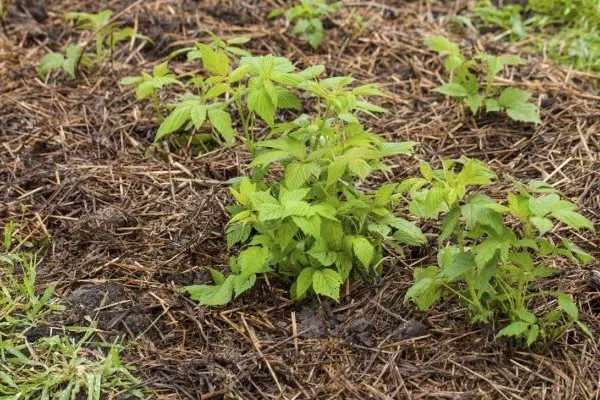
Be sure to apply mulch, as it serves several important functions:
- provides the soil with the necessary elements;
- prevents rapid evaporation of moisture;
- prevents the spread of weeds;
- serves as insulation in winter.
Humus and peat mats are used for fertilization and moisture retention. Peat and sawdust are also used for weed and frost protection.
Garter
To keep the bush upright, it needs to be secured, as it can lean over during heavy fruiting. Stake stakes are installed at the edge of each row, with strong wire stretched between them. The wire is secured in two places on each shoot.
Top dressing
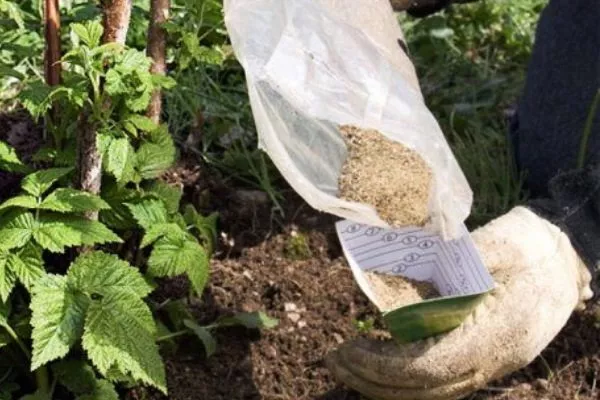
- Apply nitrogen fertilizer in early spring to stimulate growth.
- During the flowering period, use complex mineral fertilizers.
- After harvesting, apply potassium-phosphorus fertilizers to strengthen the plant's immunity.
Apricot raspberries produce two harvests per season, which causes rapid soil depletion, so they require periodic fertilizing:
- In the first year after planting, raspberries are not fertilized, since the fertilizer introduced into the hole is sufficient for healthy growth of the bush and formation of the harvest.
- During the first half of the growing season, nitrogen-based fertilizers are used to stimulate flowering and fruiting. These include urea, a 1:20 solution of bird droppings, or mullein (1:10). This same fertilizer is repeated before the second flowering.
- In early spring, complex mineral fertilizing is carried out using wood dust, potassium sulfate and superphosphate.
- After the autumn harvest, potassium-phosphorus mixtures are added to strengthen the plant's immunity.
Pests and diseases
According to the variety's characteristics, Apricot raspberries are resistant to diseases and insect pests. However, preventative measures should be taken. To strengthen the tree's immunity, it is necessary to:
- Clear the soil of weeds and loosen it to deprive pests of shelter.
- Trim off excess shoots to prevent bushes from becoming crowded and to ensure free air flow between them.
- All cut raspberry branches should be destroyed by burning, even if no pathogens or pests were observed on them.
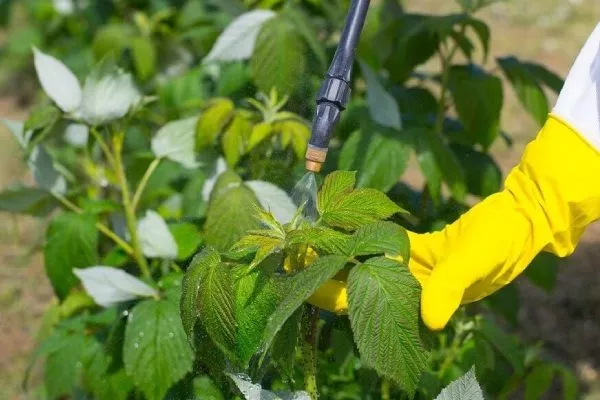
- Carry out preventive treatments of soil and plants with specialized products before the flowering period begins.
Gardeners' reviews
Growing the Apricot raspberry variety with its bright yellow berries doesn't require much effort; it's only important to follow the proper growing practices. Before the onset of cold weather, it's recommended to simply cover the bushes with soil. The remaining care is standard. The berries are distinguished by their excellent flavor and regular shape. They are popular not only with consumers but also with gardeners.