
The Yubileiny gooseberry produces delicious berries that delight with their beneficial properties and unique flavor. This variety is known for its abundant harvest and possesses a number of positive qualities that make it a favorite choice for gardeners. Proper care is essential to ensure large, high-quality berries.
Who developed the variety and when?
This hybrid was developed by M. Kashichkina, a Russian breeder, by crossing the Bedford Yellow and Houghton varieties. In 1965, it was officially registered and recommended for cultivation in the Central Black Earth Region.
Appearance of the bush
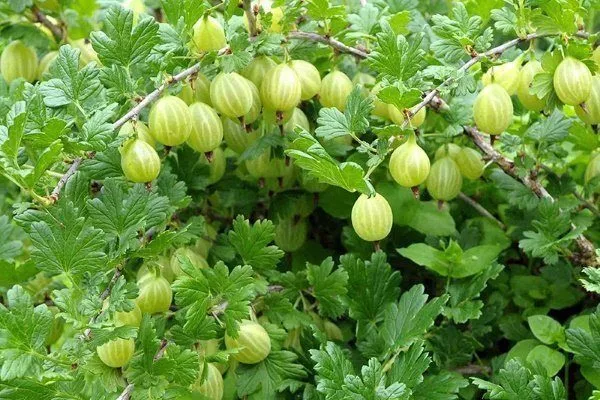
Gooseberry Jubilee reaches a height of up to 1.5 m. Characteristic features:
- The stems have a curved shape, covered with sharp thorns of a multi-layered structure, sometimes covering the entire surface of the bush.
- The buds of the bush are dark in color.
- The leaves are medium-sized, dark green, and consist of 5 lobes with serrated edges and a thin petiole.
Berries and their taste qualities
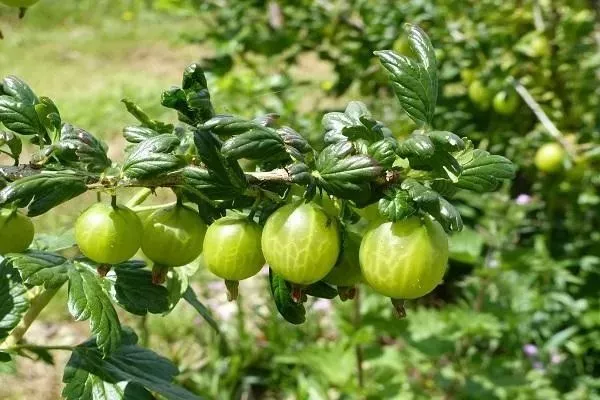
The fruits are quite large, round or oval, each weighing between 4 and 5.4 g. They have an amber hue and contain numerous seeds. The flavor is sweet and sour. The berries received high marks from tasters—4 out of 5. They make excellent compotes and jams with a golden hue.
Ripening period and yield
The Yubileiny gooseberry is a mid-season variety, harvested in the second half of July. The first fruits begin to appear 2-3 years after planting. With proper cultivation, the plant produces abundant harvests. A single bush can yield up to 4.2 kg of fruit, and 1 hectare can yield over 14 tons.
Drought resistance, frost resistance
It has fairly good winter hardiness, but young shrubs can freeze in very harsh winters. However, Yubileyny tolerates periods of thaw without noticeable problems. Its drought tolerance is low.
Advantages and disadvantages
The Jubilee gooseberry has its advantages and disadvantages. Among the advantages of growing it are the following:
Among the disadvantages of the crop, gardeners note the presence of thorns, which can complicate the harvesting process.
Subtleties of planting
Gooseberries thrive in well-lit locations, as this plant thrives on sunlight. The more sunlight, the larger and sweeter the berries become.
Helpful tips:
- Avoid swampy lowlands and proximity to groundwater and currants, as the bush does not grow well in such conditions.
- The soil should have a neutral acidity level, be loose, breathable and fertile.
- The ideal age for planting seedlings is considered to be 2-3 years with a root system of at least 20 cm.
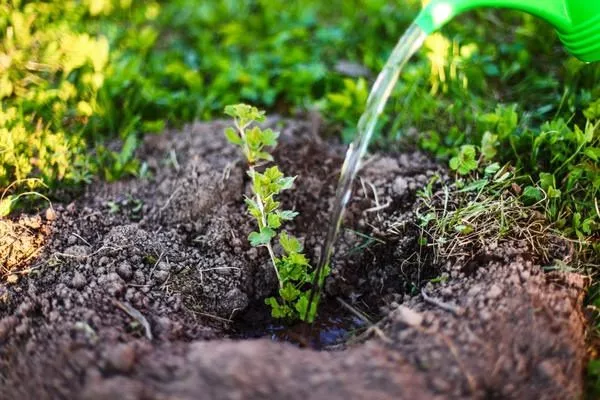
- The best time to plant is in the fall, 1-1.5 months before the onset of cold weather. This will give the seedling a chance to take root, grow strong, and survive the winter, ready to begin the growing season in the spring. Spring planting is possible, but the seedling will need time to adapt.
The optimal planting hole size is 40 x 40 cm or slightly larger. After digging the hole, fill it 1/3 full with a mixture of soil, peat, and rotted manure. Add organic fertilizers (humus, compost, bird droppings), superphosphate, potassium salt, and wood ash to the remaining soil.
Care and cultivation
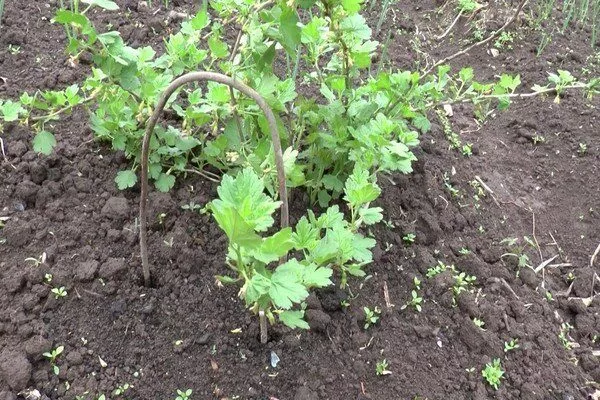
The Yubileiny gooseberry variety, although self-fertile, always shows improved yields with cross-pollination. It thrives even better when planted alongside other varieties blooming at the same time. Caring for the bush consists of standard procedures:
- Loosening and fertilizing the soil.
- Weeding and mulching to maintain moisture and control weeds.
- Preventive measures to protect against diseases and pests.
- Sanitary and formative pruning to maintain the shape of the bush and improve ventilation.
Young plants, especially those in their first year, require regular watering, as their roots are not yet capable of extracting water from deep within the soil. Water mature plants no more than four times per season, especially during flowering, fruit ripening, after harvest, and in the fall before winter. During dry periods, watering is required more frequently.
Start fertilizing the plants starting in the third year after planting, provided the soil has been properly prepared. In the spring, plants require nitrogen fertilizer to stimulate growth. If the leaves are large and abundant, additional nitrogen may be unnecessary.
Features of pruning
Shrub formation begins in the first few years: remove some root shoots and trim back the main branches. After the third year, perform formative pruning to reduce the bush's density. Sanitary pruning is also important—this involves removing dry, damaged, and old shoots.
Diseases and pests
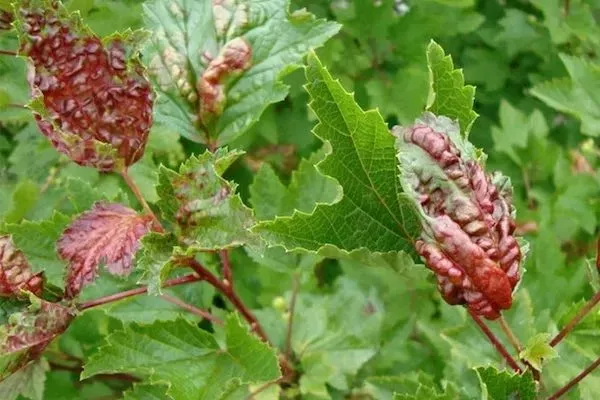
The Jubilee gooseberry is relatively resistant to powdery mildew and anthracnose. To prevent these diseases, spray the bushes with boiling water in early April.
Pests that can attack this crop include aphids and moths. To combat them, use ash infusion or special preparations applied to the plants in the spring and after flowering.
Features of reproduction
This variety is self-fertile, but the presence of a nearby pollinator positively impacts the yield and quality of the crop. To increase yield and improve berry quality, choose varieties with similar flowering times.
Gooseberries can be propagated in several ways:
- Cuttings. In early summer, cut mature shoots about 10-15 cm long. Remove the lower leaves and trim the tops. Plant the cuttings in moist sand or a sand-peat mixture to a depth of about 5-7 cm. After rooting, transplant the cuttings to their permanent location in open ground.
- By dividing the bush. In spring or fall, divide the bush into several pieces with a sharp garden knife. Each separated piece should have a well-developed root system and several shoots. These pieces can be transplanted to a new location.
- Seeds. Collect the seeds when the berries are ripening. Dry them and store them until spring. Sow them in prepared beds or containers. Once sprouts appear, transplant the seedlings to their permanent location.
Each of these methods has its own characteristics and requires certain conditions for successful propagation of gooseberries.
Reviews
The Yubileiny gooseberry boasts unique qualities, including a bountiful harvest, excellent berry flavor, comparative disease resistance, and low maintenance. These qualities make it an ideal choice for both experienced and novice gardeners.