
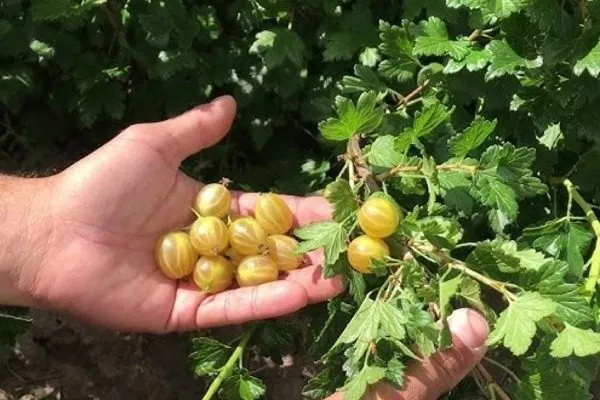
The Yantarny gooseberry is a variety popular among gardeners and summer residents due to its low maintenance and delicious berries that shimmer in the sun like amber beads. This remarkable gooseberry is delicious, productive, and easy to grow.
Breeding history
The Yantarny variety was developed by Russian breeders back in the 1950s. For a number of reasons, it was not registered in the State Register, but it has survived and is still grown in many nurseries. It is widely sold to gardeners both in Russia and abroad.
Description of the bush
The Amber gooseberry bushes are medium-sized, dense, and slightly spreading. The maximum plant height is 1.5 m. The bushes have fashionable shoots covered with single spines. The leaves are medium-sized, green, and serrated at the edges. The foliage is dense.
Description of berries
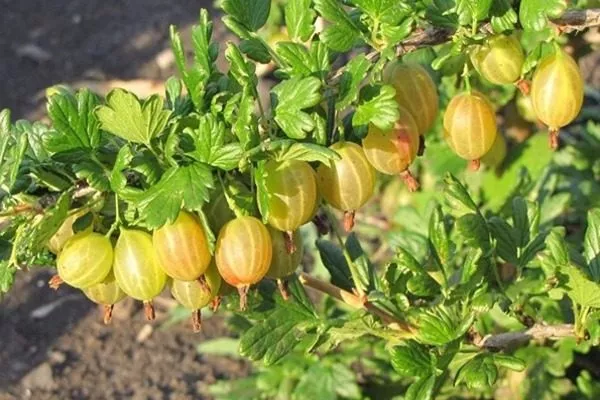
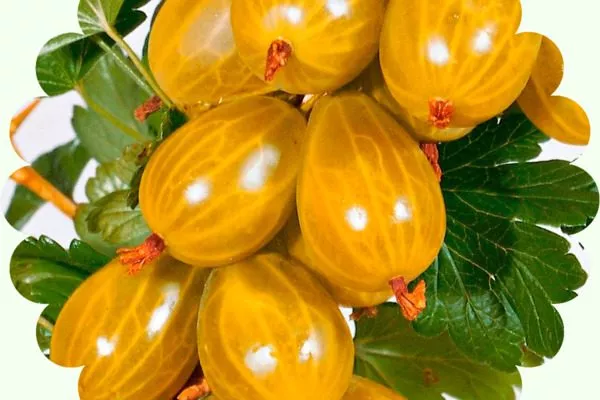
The berries are large, orange-yellow, oval-shaped, and slightly thickened at one end. Each berry weighs up to 5 g. The skin is dense, lightly veined, and slightly pubescent.
Taste and application
The fruits are juicy and sweet, with a rich honey aroma. The flavor has a slight acidity. The predominance of acidity or sweetness depends on the weather—in hot weather, the fruits are sweeter, while in rainy and cool summers, the berries are slightly tart.
This dessert variety is ideal for fresh consumption. It's a valuable food product. Amber gooseberries also make excellent jams, compotes, preserves, and marmalades. Thanks to their dense flesh, the berries can be preserved for winter. Gooseberry leaves make excellent vitamin-rich teas.
Characteristics
The Yantarny variety has good agronomic characteristics, allowing it to be successfully grown in a wide range of climatic conditions.
Specifications:
- Ripening period: early and mid-season.
- Average yield: 7-8 kg per bush.
- Maximum yield: 10.5 kg per bush.
- Winter hardiness: high, up to -40°C.
- Drought resistance: high.
- Fruiting period: end of June – beginning of July.
Resistance to diseases and pests
The variety has strong natural immunity and is resistant to most known diseases, including powdery mildew. The Yantarny gooseberry also demonstrates resistance to insect pests. Under unfavorable conditions, bushes can be attacked by gooseberry aphids.
Pros and cons
Before planting the Yantarny variety in your garden, it's helpful to evaluate it from all angles. Along with its advantages, this old variety also has a number of disadvantages, which are best learned in advance.
Pros:
Cons:
Landing features
To ensure the Yantarny gooseberry grows well and produces fruit, it's important to plant it correctly. It's essential to select a suitable location and high-quality planting material. It's equally important to plant it correctly, following the prescribed planting technique.
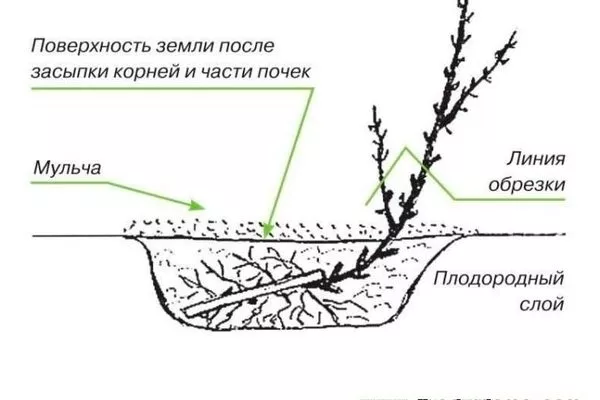
Landing features:
- The site should be well-lit, with fertile, breathable soil that is slightly acidic, neutral, or slightly alkaline. Drafts and strong north winds are avoided. The best location is along a south-facing wall or near a fence.
- The plot is prepared two weeks before planting. It is dug to the depth of a shovel blade and left loose.
- Planting can be done at any time except winter. However, the best time is late autumn. Space adjacent seedlings 1.5 m apart, and rows 2 m apart. The planting hole diameter is 50-55 cm.
How to care for the Amber gooseberry?
Proper care is the key to successful growth, development, and fruiting of gooseberries. Standard agricultural practices are used, but they should be adjusted based on weather conditions and seasonality.
Care features:
- Young bushes are watered twice a week with settled, sun-warmed water. The recommended watering rate is 10 liters per bush. During rainy weather, the plants are not watered. Water should be applied at the roots; overwatering should be avoided.
- Every year, gooseberry bushes are fed with compost mixed with wood ash in a 5:1 ratio. The resulting mixture is scattered around the tree trunks to a thickness of 2-3 cm.
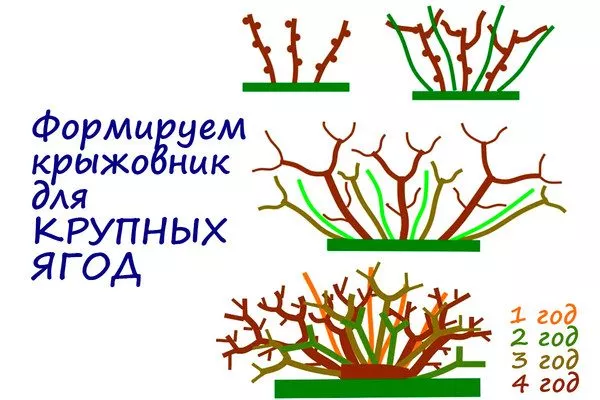
- In the first year after planting, the bush is trained. In the second and third years, two-year-old shoots are shortened by 50%. In the fourth year, the bush is thinned. At the same time, all dry and weakened branches are removed.
- For vigorous and spreading bushes, supports are installed—they are driven in around the bush's perimeter and tied with rope. For bushes planted along fences, trellises are stretched.
Reproduction
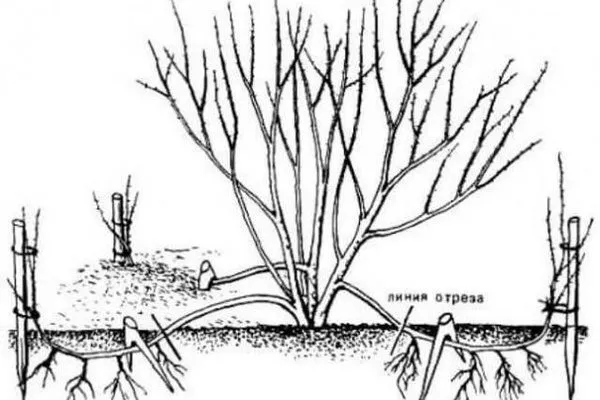
The Amber gooseberry is propagated in two ways: by cuttings or layering. Cuttings are taken from the current year's shoots. Cuttings allow for the production of a large number of high-quality seedlings.
How to prepare a bush for winter?
When the harvest is complete, the bushes are pruned (dry and broken branches are removed) and treated with Bordeaux mixture. The soil around the trunks is dug over, adding fertilizer as needed.
Pest and disease control
With proper care, amber gooseberries are virtually disease-free. They are very resistant to powdery mildew. Under unfavorable conditions, they are susceptible to rust or anthracnose. To prevent disease, it is recommended to treat the bushes with fungicides preemptively.
To repel pests, strongly scented herbs are planted near gooseberries. If pests do appear, they are most often aphids and sawflies. Fitoverm, Iskra, and other systemic fungicides can help control them.
Reviews
The Yantarny gooseberry has stood the test of time and proven its worth in practice. Despite its thorns, this delicious and easy-to-grow variety with amber-hued berries enjoys enduring popularity among our gardeners and homesteaders.