
The Ural Emerald gooseberry boasts not only excellent flavor and high yields, but also a remarkable ability to adapt to a variety of climates. It is frost-hardy, rarely susceptible to disease, and is successfully cultivated throughout the country. With proper care, you can grow a plant that produces abundant harvests.
History of selection
It was created by breeder V.S. Ilyin by crossing Samorodok and Pervenets Minusinsk. It was officially approved for use in 2000.
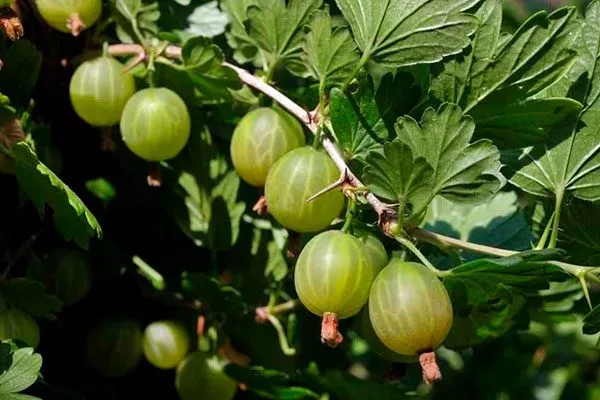
Description of the Ural Emerald gooseberry
Ural emerald is characterized by excellent varietal characteristics. It boasts the following distinctive features:
- Bushes – compact, medium-sized and branched, they do not take up much space on the site.
- Escapes – The young ones are colored green.
- Spikes – 7-9 mm long, located along the entire length of the branches, which requires careful collection of the fruits to avoid injury and damage to clothing.
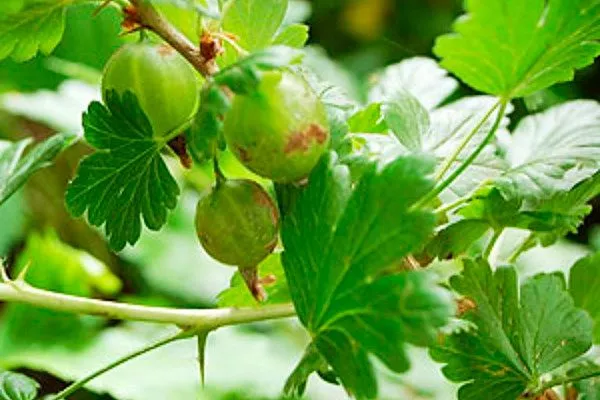
- Leaves - Dark green, 5-lobed, with wrinkled teeth and wavy edges. Specimens come in a variety of sizes: large, medium, and small.
- Inflorescences – large, matte pink, self-pollinating.
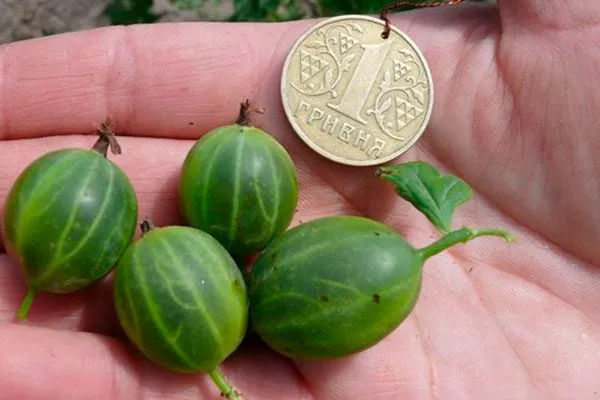
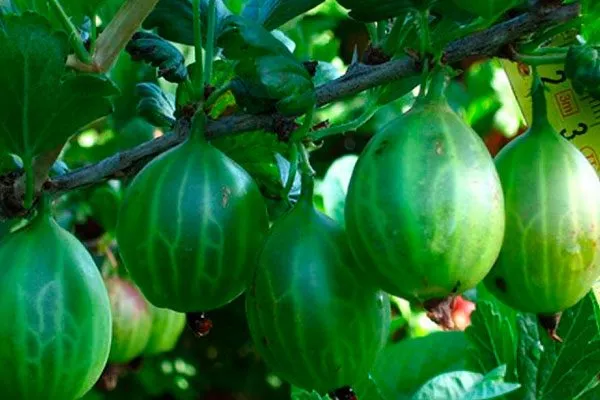
- Berries - Green, large and sweet, stored for up to 5 days in a cool place.
Taste qualities
The fruits have a sweet and sour taste. Their juicy pulp contains a moderate amount of seeds and has a balanced chemical composition:
- Sugar content: 9.3%.
- Titratable acidity: 2.2%.
- Ascorbic acid: 20.5 mg/100 g.
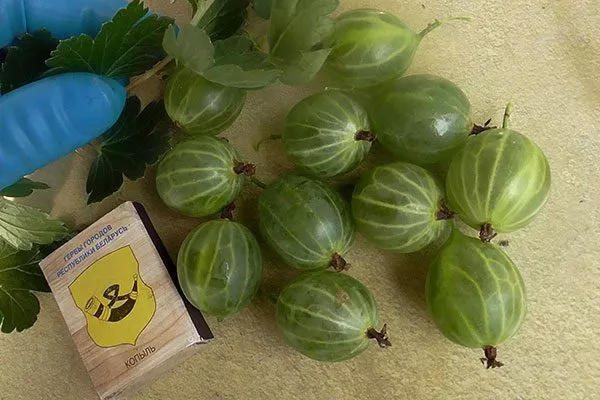
Berries are rich in vitamins (E, C, A), organic acids (malic, citric, etc.), carotene, pigments, macro- and microelements. They help with the following problems:
- gastrointestinal tract dysfunction;
- normalization of blood pressure and acceleration of metabolism;
- increasing hemoglobin levels, treatment of anemia and liver diseases;
- slowing down the development of cancer cells;
- use as a laxative and in the treatment of dermatological problems such as psoriasis.
Characteristics of the variety
This is an easy-to-grow plant that tolerates cold temperatures well. It is resistant to pests and common diseases.
Drought resistance, frost resistance
This plant was created by crossing frost-resistant varieties, allowing it to withstand temperatures as low as -35°C. In severe frosts, the plant may die without protection. It is not drought-resistant and requires constant watering throughout the growing season.
Productivity and fruiting
This is an early variety, harvested in early July, and a little earlier in southern regions. Fruiting begins 3-4 years after planting. With proper cultivation practices and rejuvenation, the plant can continue to bear fruit for up to 25 years.
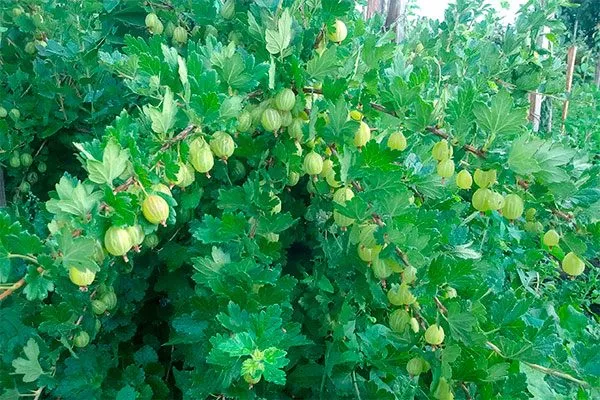
It demonstrates good yields—up to 7 tons per hectare in the central and southern regions. In the harsh Siberian regions, with proper care, bushes produce 2 to 5 kg of beautiful, healthy, and delicious berries.
Application of fruits
Its high energy value makes it best consumed fresh. Heat treatment can cause a 50% loss of vitamins and microelements. Jams and preserves are prepared, but they tend to be runny and have an unappealing gray-green color.
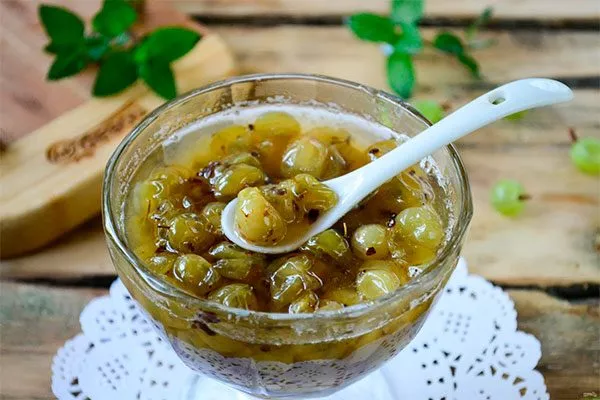
The crop is grown not only in home gardens but also on an industrial scale. At the technical ripeness stage, the berries last up to 10 days and withstand transportation well.
Growing regions
The crop is grown in the West Siberian and East Siberian regions, but it is suitable for cultivation in all regions of Russia.
Pollinator varieties
This is a self-pollinating species, so it does not require pollinator varieties.
Advantages and disadvantages of the variety
The Ural Emerald gooseberry fully meets all its stated characteristics. It has many positive qualities:
Rules for planting gooseberries
Growing the crop involves proper planting, regular watering, fertilizing, and weed control. Avoid planting in acidic or heavy soils or areas with stagnant water. Choose sunny locations for planting. Plants in shaded areas will produce fruit, but the quality of the harvest may be significantly lower.
Carry out planting according to the following scheme:
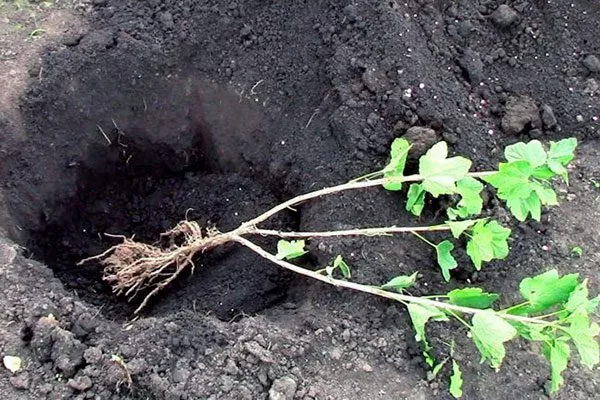
- Two weeks before planting, prepare a planting hole measuring approximately 50x50 cm. Remove the top layer of soil.
- Prepare a nutrient substrate by mixing the topsoil with 20 kg of compost, 250 g of superphosphate, and 40 g of potassium sulfate. Fill the bottom of the hole with this substrate, forming a mound.
- Spread the seedling roots evenly and cover them with nutrient-rich soil. Compact the soil and fill it in.
- Place mulch of humus or peat around the stem.
- ✓ Soil pH should be between 6.0-6.5 for optimal growth.
- ✓ The groundwater depth must be at least 1.5 m to prevent root rot.
Aftercare of gooseberries
To ensure a stable harvest, optimal care is essential. This includes the following measures:
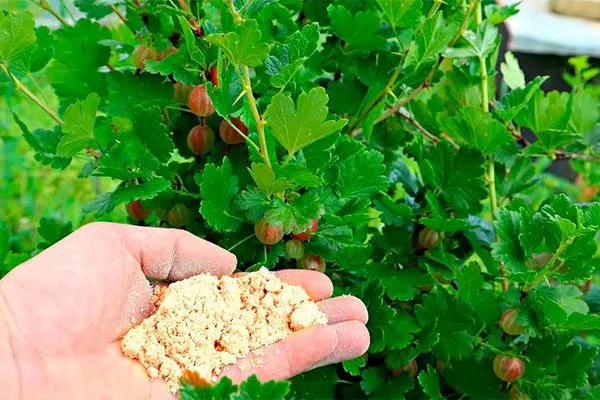
- Apply a nitrogen-rich fertilizer in the spring to encourage growth.

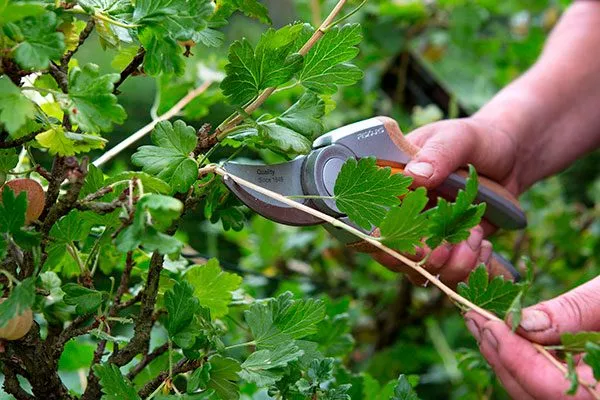
- Immediately after planting, prune 3-4 branches of the seedling to 5 buds. The following year, add 4 strong young shoots to the main crown, removing the rest. Repeat the same process in the third year. The resulting bush should have 10 branches forming the crown. Further shaping involves replacing old branches with new ones.
- The shoots hold ripe berries well, so garters are not required.
- Water throughout the entire growth period at least once every 7 days.
Diseases and pests, methods of control and prevention
Ural emerald is resistant to most diseases and pests, but they can occasionally affect it. It's important to address the problem promptly:
- Anthracnose. This disease manifests itself as light, glossy spots on the leaves that gradually turn brown. The leaves begin to dry out and fall off. To treat, apply a copper sulfate solution to the bushes every two weeks for two months.
- Septoria. This disease causes brown spots to appear on fruits and leaves, leading to foliage curling and wilting. To control the disease, use a solution of Nitrafen – apply the treatment immediately after symptoms are detected, then repeat after harvesting the berries.
- Aphid. Insects cause slow growth and leaf drop. To get rid of pests, use Actellic.
- ✓ The appearance of small, yellow spots on the leaves may indicate an aphid infestation.
- ✓ Sudden wilting of leaves without any apparent reason may be a sign of gooseberry sawfly activity.
Wintering
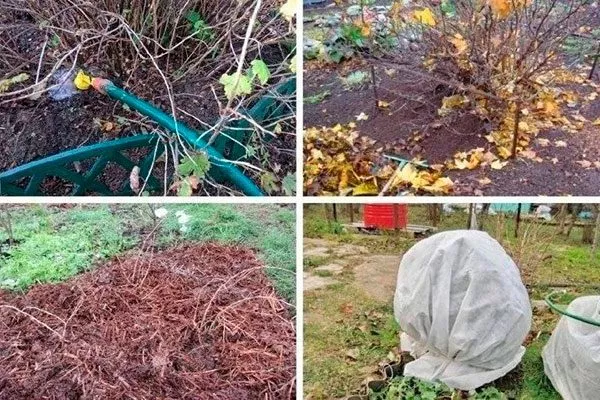
Before winter, carefully prepare your bushes. Follow these recommendations:
- Remove plant debris from the area.
- Dig up the ground.
- Carry out sanitary pruning, removing all broken and diseased branches.
- Treat the tree trunk area with a weak solution of potassium permanganate to prevent diseases.
- Pour 30 liters of water under each plant to ensure sufficient moisture for the root system.
- Mulch the soil with peat or humus. The mulch layer should be at least 10 cm thick to provide additional frost protection for the roots.
Reproduction
The plant can be propagated by two methods: cuttings and layering. To propagate using the first method, follow the instructions:
- After flowering, cut off the annual shoots and divide them into cuttings 15-20 cm long.
- Plant them in a box with moist soil and cover with a bottle or jar to create a greenhouse.
- After the leaves appear, transplant the cuttings to a permanent location.
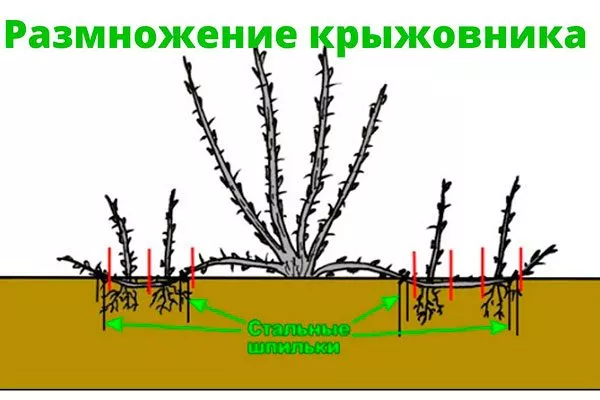
Propagation by layering is simple. Press a one- or two-year-old shoot into the ground and bury it. After a while, it will develop its own roots. Then separate the shoot from the main plant and replant it in a new location.
Growing features depending on the region
The plant thrives in northern regions, requiring only regular watering and fertilization. In southern regions, more careful care is needed, especially regarding watering. It's important to monitor soil moisture levels. If the top 10 cm or more of the soil is dry, the plants require irrigation.
Reviews
The Ural Emerald gooseberry is a source of delicious and healthy berries, a symbol of reliability and ease of cultivation. Flourishing in both northern and southern regions, this variety impresses with its frost resistance, productivity, and unique flavor. With proper care, you can achieve a plant with a strong immune system that produces high-quality fruit.