
The Ural Thornless gooseberry is a frost-hardy variety with large berries. It is prized not only for its smooth branches but also for the incredible sweetness of its fruit. Its large, sweet berries can be picked without scratching your hands.
History of creation
The variety was developed by an employee of the South Ural Research Institute of Fruit and Vegetable Growing and Potato Growing in 2000. To create the new gooseberry, two varieties were crossed: Uralskiy Zelyonyy (Ural Green) and Slaboshipovatyy-2. Author: V.S. Ilyin.
- ✓ The absence of thorns makes the variety especially convenient for harvesting and care.
- ✓ High frost resistance allows the variety to be grown in regions with harsh winters.
Description of the plant
The gooseberry bush is vigorous, reaching a height of 1.5 m. The branches are virtually thornless and vertical, with some side shoots growing at a vertical angle. The branch spread and density are moderate. The bark is yellow-gray. One-year-old branches are robust, green, and pubescent. The buds are light brown.
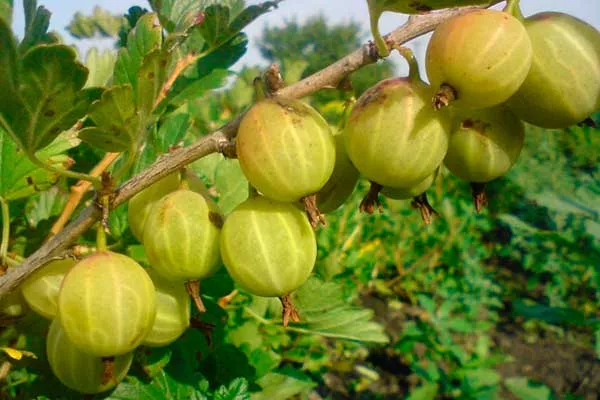
The leaves are glossy and trilobate, with the central lobe being more prominent. The color is dark green. The leaf blades are concave and wrinkled, with light veins clearly visible. The petioles reach 2 cm in length. The flowers are small, pinkish in color, which fades with age.
Description of fruits:
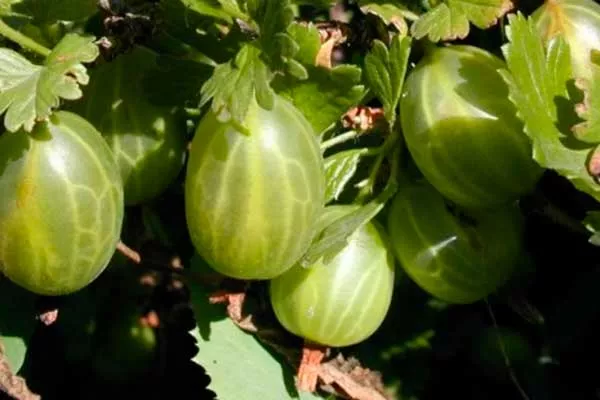
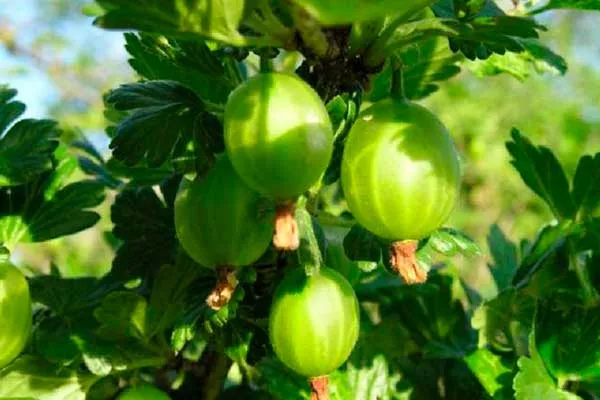
- Colour: bright green and yellow-green.
- The shape is oval.
- Weight: from 7 to 9 g.
- The surface is matte, without pubescence, with light veins.
- The skin is dense.
Taste and purpose of fruits
The berries have juicy and aromatic flesh, with a pleasantly sweet flavor and just a hint of tartness. However, the dense skin is more tart than the flesh.
The fruits contain many vitamins (especially A and C) and microelements (potassium, magnesium, copper and others).
Main characteristics
This self-fertile variety belongs to the mid-late ripening group. Its average yield is 7 kg per square meter.
Pros and cons
The Ural gooseberry is thornless, but it does offer many important advantages. This wonderful variety is well-loved by our gardeners and summer residents, but before planting it, it's helpful to familiarize yourself with both its advantages and disadvantages.
Landing features
To give a gooseberry seedling a good start, it's important to plant it correctly and at the right time. If you choose the wrong planting location or plant it incorrectly, it will grow and bear fruit poorly.
- ✓ The soil acidity level should be within the pH range of 6.0-6.5, which is optimal for gooseberries.
- ✓ The soil must be well drained to avoid water stagnation at the roots.
Landing features:
- Gooseberries will grow well in a well-lit location, protected from strong winds and drafts. The groundwater level should not be higher than 1.5 meters.
- Fruit trees, honeysuckle, and red currants are considered good neighbors for gooseberries. Plant at least 2 meters away from the trees. Black currants, grapes, and strawberries are not recommended for planting near gooseberries.
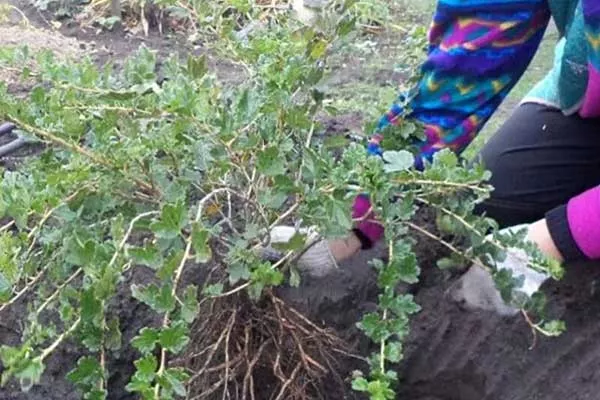
- For planting, use two-year-old seedlings 20-25 cm long. They should have well-developed roots and three to four healthy buds. Before planting, trim the branches back to approximately 10 cm, and soak the roots in moderately warm water for 24 hours. It's a good idea to add a growth stimulant.
- Planting holes are prepared 1-2 months in advance. They are approximately 50 cm deep and in diameter. Fertilizer mixed with soil and 5-6 kg of manure are added to the bottom. The distance between adjacent holes is 1-1.5 m, and between rows, 2-2.5 cm.
- Place the seedling in the hole and, carefully spreading the roots, fill them halfway with soil. Then pour in 5 liters of warm, settled water, and only then add the remaining soil. Water the seedling again. Cover the soil around the gooseberry with mulch, or even regular soil.
Care instructions
The Ural gooseberry requires regular care: it needs to be watered, fed, pruned, and undergo all other agricultural procedures.
How to care for gooseberries:
- A young, newly planted bush is watered approximately three times a week, applying 8 liters of water at the roots. Mature plants are watered less frequently, and during drought, the watering rate is doubled. In the fall, shortly before wintering, the bush is watered for the last time, applying 30-40 liters of water.
- Fertilizing begins in the second year after planting. In early spring, add 5-6 kg of manure, loosening the soil. Before flowering, add 5 liters of diluted cow manure to the roots. During the growing season, spray the bushes with complex fertilizers, performing foliar feeding. After harvesting, apply potassium-phosphorus compounds.
- Regularly loosen and weed the soil, removing weeds. Loosen the soil to a depth of no more than 8 cm, and keep the distance between rows at 15 cm.
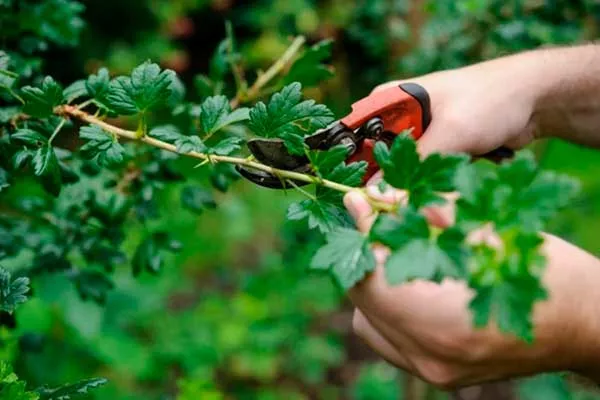
- In the spring, when the buds begin to swell, the bush undergoes sanitary pruning. All frozen, dry, and broken shoots are removed. In the fall, the pruning is repeated, removing suckers, damaged branches, and old shoots.
- When the bush reaches 10 years, pruning is carried out for rejuvenation, all branches are cut off, leaving shoots 10-15 cm high.
- A month or a month and a half before the onset of severe cold weather, the bush begins to be prepared for winter. In the south and center of the country, the Ural gooseberry is not covered, but in the north, it is covered with spruce branches.
Pest and disease control
The Ural thornless gooseberry has a fairly strong immune system, but under unfavorable conditions, it can be susceptible to fungal infections such as powdery mildew, septoria leaf spot, and anthracnose. Broad-spectrum fungicides such as Topaz and Fundazol are used to combat these diseases.
The most common pests that threaten gooseberries include leaf rollers, spider mites, fireworms, aphids, and leafhoppers. Folk remedies (garlic and tobacco infusions, soap solutions, etc.) are commonly used to control them. In severe attacks, insecticides (Aktara, Confidor-Extra, etc.) are used.
Harvesting and storage
Picking thornless gooseberries is easy, but it's recommended to do so in the morning, after the dew has cleared, or in the evening. The weather should be dry; gooseberries picked in the heat of the day or during rain spoil very quickly.
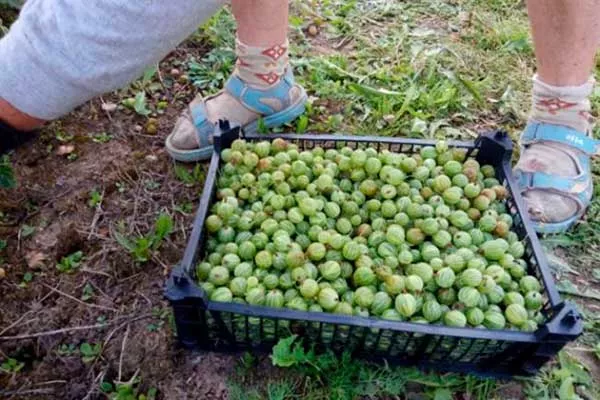
If you need to store gooseberries for a while, pick them slightly unripe, about 10 days before they're fully ripe. Then they can be safely stored in a cool place for about half a month. You can also freeze the berries, placing them in plastic bags first; in these conditions, they'll keep for up to four months.
Reviews
The thornless Ural gooseberry is an excellent choice not only for gardens and cottages in regions with short, cool summers, but also for any other region. This robust and hardy variety is ideal for all-purpose use and is sure to please anyone who prefers green gooseberries.