
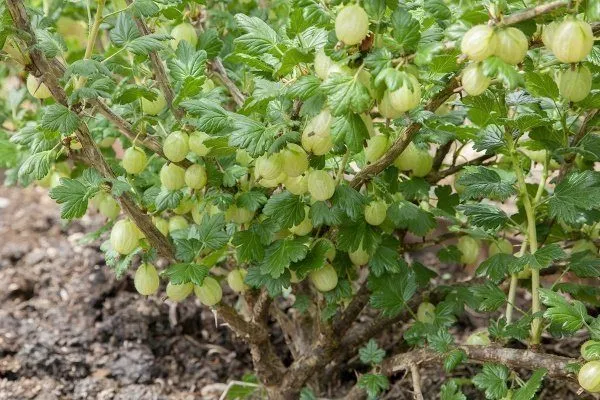
Proper gooseberry care in the fall ensures long-term fruiting, as it allows the plant to recuperate after harvest and prepare for winter dormancy. In addition to proper care, the bushes need to be provided with a favorable environment to prevent fungal and viral diseases. Read on to learn how to care for gooseberries in the fall.
Soil cultivation in autumn
To ensure optimal conditions for gooseberries before winter sets in, it's important to care for not only the bush itself but also the soil. Weeds and fallen leaves should be removed, and the soil should be dug, loosened, and mulched.
Removing leaves and weeds
The first thing to do is remove debris, as the root area accumulates leaves, as well as crushed and rotten berries. All debris should be collected and burned. Otherwise, fallen leaves and berries will become a breeding ground for diseases and fungi, as well as an excellent hiding place for pests.
Fallen leaves without signs of disease can be used as compost instead of burning.
In the fall, you should also weed under the bushes, as weeds rob the gooseberry root system of nutrients, deplete the soil, and increase humidity, which can promote the development of viruses. Chickweed and couch grass are common pests under gooseberry bushes.
Large weeds should be dug up with a spade, and then the soil should be cleared of accumulated debris with a rake. To avoid damaging the gooseberry roots, it's crucial to dig up the weed rhizomes rather than pull them out.
Experienced gardeners recommend leaving the above-ground portion of weeds in the space between rows around bushes and in the tree trunks, lightly chopped with a shovel. This green mass will act as a good fertilizer and keep the soil loose.
Digging and loosening
The soil under the gooseberry bush needs to be dug up to accomplish several tasks:
- destroy pests and spores of fungal diseases;
- prevent soil compaction, as this can lead to the plant roots experiencing oxygen deficiency, rising to the surface and freezing in winter;
- to restore the soil to a loose state after it has been compacted during harvesting.
Unlike spring digging, in the fall, the soil doesn't need to be broken up; it just needs to be turned over with a pitchfork. Loosening should be done carefully in the center of the bush and in the trunk circle, with the soil being dug to a depth of 5-7 cm. Along the perimeter and between rows, the soil can be dug to a depth of 12-15 cm.
Mulching and hilling
To protect the root system from upcoming frosts, maintain soil porosity, and improve its water-air balance, mulch the bushes after autumn treatment, and it is recommended to do this before frost sets in.
The following components can be used as mulch:
- peat;
- compost with dry leaves;
- rotted sawdust.
- ✓ The thickness of the mulch layer should be at least 10 cm for effective protection from frost.
- ✓ Using fresh sawdust can lead to soil acidification, so rotted sawdust is preferable.
The optimal mulch layer is 10-15 cm. In the spring, it should be removed, simultaneously eliminating overwintering pests. Afterward, the soil should be lightly loosened to ensure rapid warming.
If the bushes are heavily infested with moths, they should be hilled up to a height of 12 cm in the fall. In the spring, after flowering, the soil should be raked away from the perimeter of the crown to prevent the formation of roots that are undesirable for the plant.
Watering bushes in autumn
The bush should never be underwatered, as this threatens the budding shoots and the future harvest. Furthermore, the gooseberry branches can dry out in the cold if the plant overwinters with a dry root system.
Sufficient moisture reserves in the soil will protect shrubs from freezing during the winter.
If there was heavy rainfall in the fall, watering should be avoided, as overwatering is also undesirable for gooseberries. If the weather is dry and warm, water the plant at a rate of 3-6 buckets per bush. Apply water at the roots or in furrows. Water 2-3 days before digging to allow the soil to dry out.
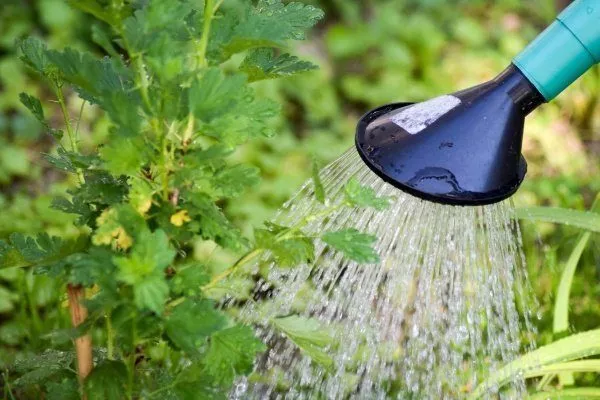
To prevent bushes from becoming infected with septoria, anthracnose, and powdery mildew, some gardeners resort to the following watering method:
- A small ditch is dug around the bush, along the perimeter of the crown.
- Add up to 30 liters of water to each bush in the trench. Gooseberries have a powerful root system that extends deep into the soil, so a significant amount of water is required to moisten the longest and most distant roots.
- The ditch is covered with a layer of earth after the water has been absorbed into the ground part.
After the flowers appear and before the fruit sets, you can use Ideal, a liquid fertilizer based on nitrophoska, to water the plant.
Rules and features of pruning bushes
Gooseberries are a berry bush, so they grow quickly, shade themselves, are more susceptible to disease, and produce less fruit. To prevent these consequences, fall pruning is recommended, as it promotes:
- improving the flow of sunlight and air to the branches located inside the bush;
- reducing the risk of developing diseases and damage by harmful insects;
- giving the bush the correct shape, so it will be easier to care for the plant.
However, it's important to understand that improper and untimely pruning will weaken the bush and reduce its yield. Therefore, after harvesting the berries, it's important to determine the optimal timing and procedures for this gardening procedure.
When to prune?
It is necessary to focus on pruning the bush in November, and this procedure is carried out in two periods:
- After harvestingSanitary pruning is carried out, during which dried and diseased branches are removed.
- After leaf fallRejuvenating and formative pruning is performed after the leaves have fallen, but before the cold weather sets in and sub-zero temperatures set in.
Autumn pruning involves leaving five strong, evenly spaced shoots. These should bear fruit next year.
What to cut?
It is necessary to trim:
- all branches affected by any disease, dried out and with visible damage;
- branches that are very low-growing (other shoots cast shadows on them, they experience a lack of nutrition and solar heat, and therefore do not produce a good harvest);
- branches with excessive crown thickening (they grow into the center or inside the plant itself and begin to get tangled with other branches);
- all old branches (five years old and older).
Young, weak growth with thin branches is pruned back to the largest bud. This bud should extend outward, not toward the inside of the bush.
There are also so-called "zero" shoots, which grow from the ground. If these are strong, they should be shortened by a quarter above the buds to promote optimal branching. Weak shoots should be completely pruned to prevent shading the crown. There should be no more than four shoots.
Correct pruning technique
It's best to prune an old gooseberry bush with a lopper or a pruning shear with long handles. Of course, you can also use regular pruning shears designed for cutting young branches, but you could prick yourself when using them, as the bush is thorny. To protect your hands, wear protective gloves, such as those used by a welder.
Using a pruning saw, cut all lower and old branches, as well as replacement shoots, to the base. Excess growth and competing branches should also be removed without stumps, in the immediate vicinity of the branching area. This means pruning the old branch all the way to the point where it branches off or new growth appears.
To more successfully shorten fragile young shoots, it is important to find a strong bud on the outer side and make a cut above it, indenting it by a centimeter.
Young shoots differ from older ones in that they are thinner and lighter in color. Older shoots, for example, are quite thick and dark brown, almost black. Consequently, as gooseberry branches age, they become thicker and darker.
- ✓ Branches older than five years are dark brown in color and significantly thicker than young ones.
- ✓ Young shoots should be cut to the largest bud facing outward on the bush.
The blogger shares tips and recommendations for pruning gooseberries in the video below:
Scheme of cultural formation by years
To obtain strong bushes and good harvests, it is advisable to follow a clear pruning scheme by year:
- immediately after planting the seedlings – all shoots are shortened, leaving 3-4 buds above the soil surface;
- in 1 year - all shoots are cut back to 4-5 buds, leaving several zero shoots (at the same time, sanitary treatment begins - diseased branches and those directed towards the center of the bush are removed);
- in 2 years – pinch off the zero shoots (by 1/4), and also shorten the growth on the skeletal branches;
- in 3-4 years – carry out all the same manipulations as in the previous period, not forgetting about sanitary pruning;
- in the 5th year and beyond - carry out sanitary pruning, and then rejuvenating pruning, completing the process with manipulations similar to those in the 2nd year.
Every year it is necessary to leave 2-3 new zero replacement shoots.
Formation of the trunk
The standard method of shaping the bush is also used, making it easier to care for. This method involves shaping the bush into a round shape with branches of varying ages. It's important to determine the height of the standard. A meter is considered standard, so the side shoots are trimmed to this height.
A soft tube, just over a meter long, is placed around the trunk to block light, and the bush is tied to a support for strength. Next, strong young branches are trimmed back by about half their length, and older branches (over 7 years old) are removed completely.
This method significantly saves space and allows for good lighting. However, only frost-hardy gooseberry varieties should be selected for this type of pruning, as tall bushes are less resistant to cold.
Autumn feeding
Gooseberries bear fruit abundantly, so they require intensive autumn feeding. This will prepare the bush for flower bud formation next year. The plant requires the following fertilizers:
- PhosphorusWhen there's a deficiency, leaves become spotted, shoots become thinner, and fruit buds develop poorly. Prolonged phosphorus deficiency reduces the plant's winter hardiness, causing it to grow more slowly, not branch, and fail to produce lateral shoots.
- PotassiumIts deficiency causes berries to become smaller and underdeveloped. Without potassium, leaves become striped and die. Furthermore, the plant has a hard time surviving the winter, which is extremely dangerous in northern regions.
- CompostIt's an organic matter that enriches the soil with nutrients. It consists of tops, weeds, and plant debris. It's applied until completely decomposed.
- AshIn addition to enriching the soil with potassium and phosphorus, it will also serve as a good preventative against diseases and parasites.
It is important to note that nitrogen fertilizers should not be used in the fall, as they will not benefit the plant and will be washed away by rain before spring.
So, when digging, the following fertilizers should be added to the soil under one bush:
- 6-12 kg of well-rotted organic matter;
- 20 g of potassium fertilizers (potassium sulfate);
- 30 g of phosphorus fertilizers (double superphosphate);
- 300 g of stove ash.
In early autumn, foliar feeding is also recommended for bushes older than three years. For example, spray the gooseberries with a solution of superphosphate (230 g) and potassium salt (120 g) per bucket of water.
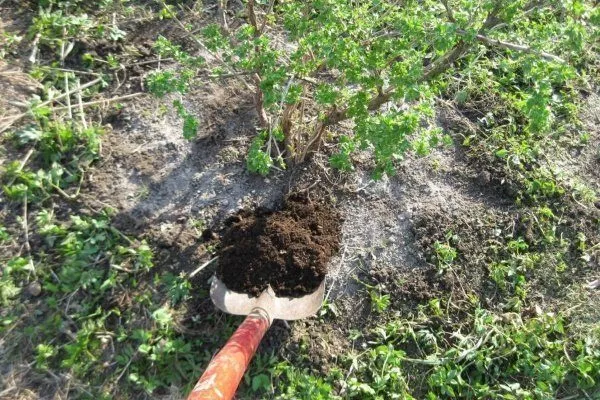
When frost is imminent, add peat or humus under each plant to further insulate the root system. The layer should be approximately 10 cm thick. This is enough to cover the inside of the bush and the area around it.
If there is no proper feeding in the fall, more nutrient fertilizers will have to be applied in the spring.
Winter preparation in different regions
Due to differences in climate conditions across different regions, winter preparation times vary. The intensity of maintenance also varies slightly. Here are the specifics of winter preparation in different regions:
- In the northern regions and the Siberian part of Russia, preparatory activities should begin as early as the first month of autumn, so that everything can be done before the cold weather sets in;
- in the southern regions, pay special attention to watering, especially if the summer is dry;
- In areas of central Russia with a predominance of acidic podzolic soils, pay special attention to fertilizing – increase the doses of organic and mineral fertilizers;
- In the Urals, northern regions and Siberia, for successful wintering, bend the branches of the bush and fix them in this position with pegs, and cover the gooseberries with snow or a special material;
- In northern regions, special attention should also be paid to timely fertilization of the soil, since a deficiency of basic nutrients can reduce the plant's immunity by the beginning of the winter period.
Experience has proven that the optimal way to preserve gooseberries is under a layer of snow. Therefore, in regions with particularly snowy winters, it's recommended to cover the plants with a layer of snow immediately after the first snowfall. If severe frosts strike, the branches can be protected by covering them with dry grass. This should be prepared as early as early September and partially preserved until the beginning of spring.
To protect against frost, branches can also be covered with a cardboard or plywood shield.
Pest control and disease prevention
Autumn is the time for mandatory treatment of the crop against diseases and pests. This promotes healthy growth of gooseberries and increases their yield. To achieve this, follow these steps:
- Treat bushes with a 3% ferrous sulfate solution after leaf fall to prevent fungal diseases. A 1-3% Bordeaux mixture can be used in the same manner.
- Treat the plant with a 5% solution of baking soda to successfully combat powdery mildew.
- Protect the plant from septoria leaf spot, anthracnose, and cup-shaped rust by treating the soil and the plant itself with copper oxychloride (40 g per 10 liters of water), a soap-and-copper emulsion, or an ash infusion. The foliage on the ground should be destroyed by fire.
- Protect the bush from aphids, moths, and sawflies by treating it with a solution of Malathion (20 g per 10 liters of water). Infusions of ash (1 kg per 10 liters of water), onion peels, finely chopped garlic, or potato tops are also suitable.
To prevent and promptly combat illnesses, you should stock up on the following remedies:
- Fitosporin;
- Topaz;
- Fundazol.
These products are recommended for treating shrubs both after harvest and before flowering. They are classified as complex fungicides and are used to protect plants from the most dangerous diseases—powdery mildew, anthracnose, and leaf rust, which can affect even young shoots.
Gardeners' mistakes
Incorrect gardening practices can lead to a poor harvest. Beginners often make the following mistakes:
- When preparing the soil for winter, digging the soil around the bush too deeply damages the plant's root system. Deep loosening of the soil around the roots is strictly prohibited.
- Over-pruning or neglecting this gardening practice can hinder fruiting and normal plant development. Autumn pruning should be performed annually, but strictly adhere to the guidelines outlined above.
Gooseberries are one of the most enduring crops in gardens and homesteads. With proper autumn care and appropriate treatments, you can reap a bountiful harvest of any berry each season. Remarkably, with proper care, a single crop can bear fruit for fifteen years.