
Komandor is a prominent thornless gooseberry variety, particularly popular among Russian gardeners. It boasts a pleasant sweet-and-sour flavor and high yields. In this article, we'll explore the variety's characteristics, its main advantages and disadvantages, and its growing techniques.
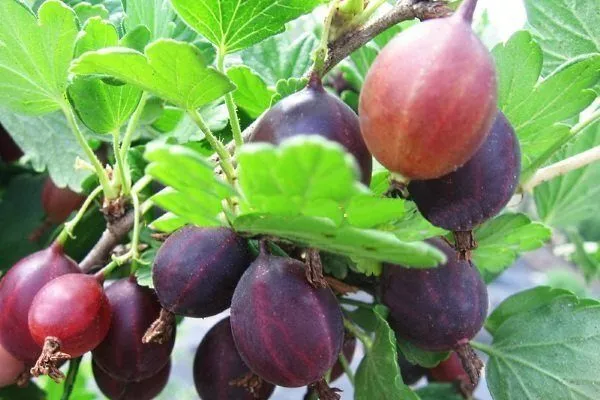
gooseberry variety "Commander"
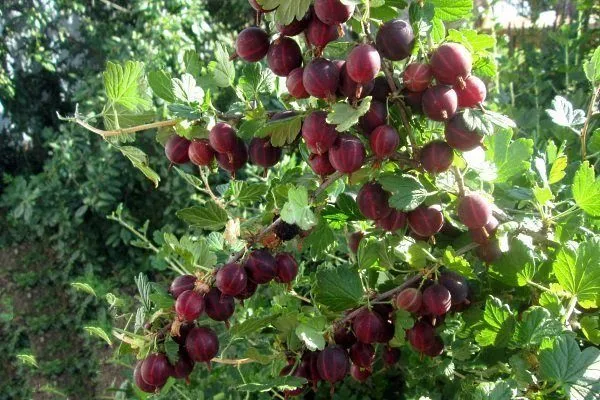
The 'Commander' gooseberry is popular with experienced gardeners because its thornless nature makes harvesting easier.
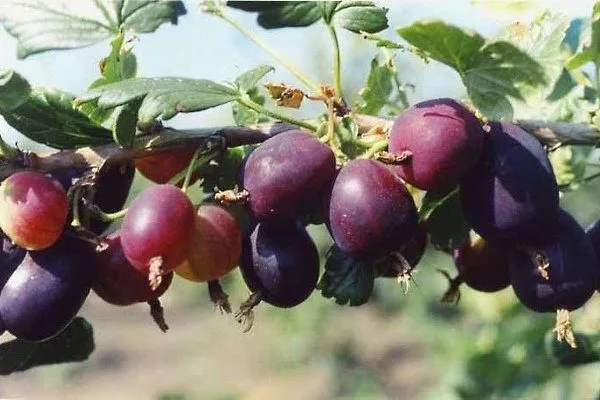
Ripe fruits of the "Commander" variety are aromatic and have excellent taste qualities.
Description of the gooseberry Komandor
The Komandor gooseberry is also known by the name Vladil, which it received from its creator, V. Ilyin. The variety was developed in 1995 by crossing the Chelyabinsky Zeleny (Green) and the Afrikanets (Afrikantz) varieties. This thornless, self-pollinating variety inherited its ancestors' winter hardiness, disease resistance, and excellent berry flavor.
The Komandor grape is recommended for cultivation in Central Russia, the Middle Volga region, West Siberia, and the Ural regions. It grows into a dense, compact bush with bright green foliage and almost black berries. Fruiting begins in late June and continues until August. The yield per mature bush is approximately 5-6 kg.
Characteristics of the variety
This gooseberry belongs to Group II varieties, being a hybrid. While considered a dessert variety, the Komandor's fruit flavor is still inferior to that of the "classic" Group I gooseberry varieties. The tasting committee awarded it 4.6 out of 5 possible points. Although the flavor of Komandor's berries falls short of the standard, this variety has remained popular for several decades due to its thornlessness and high yield.
Main characteristics of the hybrid:
- mid-early ripening period;
- bush density;
- absence of thorns;
- small berry size, no pubescence;
- resistance to fungi;
- low transportability.
Bush
The height of a mature bush usually does not exceed 1.5 meters. Young shoots are slightly curved, spreading slightly, and of medium thickness. Komandor is characterized by high density, which, without regular pruning, can lead to reduced yields and smaller berries.
The stems are hairless and acquire a pinkish tint when exposed to sunlight. Modified thorns may be present near the roots of the shoots, but they are soft and do not interfere with harvesting.
- ✓ The appearance of a pinkish tint on the stems when exposed to sunlight is normal for the Commander variety.
- ✓ Light green, slightly shiny leaves of a round shape with pointed teeth along the edges are a characteristic sign of a healthy bush.
The leaves on the bushes are large, light green, and slightly glossy. The leaf blades are rounded, with pointed teeth along the edges, and are dense. The buds are medium-sized, elongated, and pointed at the tip. Gooseberries bloom with yellowish-green flowers with a slight pinkish tint in the second half of May.
Berries
The main characteristic of this variety is the burgundy-brown color of the fruit, which becomes almost black by the end of ripening. Depending on cultivation practices, Komandor berries can be small or large. The average weight is 5-7 g. They are characterized by a regular round shape and uniformity, without pubescence.
The sugar content is around 13.1%, and the acidity is 3%. The pulp is sweet and sour, quite juicy, and burgundy in color. The berries have a subtle, pleasant aroma. The skin is tender, glossy, and easily split. The stalks are quite thin but strong. The seed sac is small, and the number of seeds per berry is average.
Productivity
The Komandor gooseberry variety boasts a high, stable yield throughout the plant's lifespan. With proper care and fertilizing, a mature plant can yield up to 8 kg of berries annually. Even if you neglect the plant, you can still get around 2 kg per season.
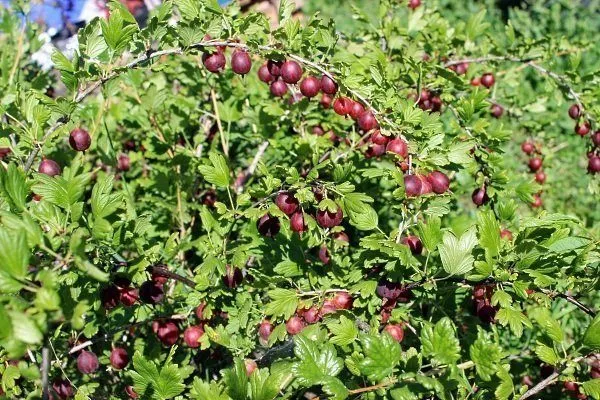
Komandor is a self-pollinating variety, so you won't need to plant other gooseberry bushes in your garden to get a harvest. However, experienced gardeners note that planting several Komandor bushes increases the yield by almost a third. If garden space is limited, you can solve this problem by planting the bush near neighboring gooseberry plantings.
Ripening period
Under favorable weather conditions, the first berries of this gooseberry variety can be enjoyed as early as early June. However, at this time, the berries have not yet developed sweetness, so they tend to taste too tart. The main harvest is usually collected in the second ten days of July.
If you plan to eat gooseberries fresh or use them for processing, it's best to wait until they're fully ripe. At this point, the berries turn a burgundy-brown color and acquire a distinctive sweetness. For storage, harvest the gooseberries in mid-June, a few weeks before they're fully ripe.
Transportability
This variety is notoriously difficult to transport. The thin skin easily cracks during transport, causing the berries to become deformed and leak juice. Losses can be minimized by packing the fruit in wide cardboard boxes, 3-4 deep. For transport, the harvest is picked at the technical maturity stage.
When harvesting, berries should be picked with the stems attached, as the delicate skin is easily damaged even by light pressure. To ensure easier transportation, avoid picking berries after rain or in the morning when there's dew. Wait until the berries are completely dry. This will not only protect them from damage during harvesting but also extend their shelf life.
Drought resistance and winter hardiness
Gooseberries are moisture-loving plants. During hot periods, until the berries appear, the bush should be watered daily, using at least 3 liters of water. Once the berries begin to turn brown, water the Komandor every other day.
If for some reason such frequent watering is not possible, the area around the bush's trunk should be mulched with hay or peat. This will prevent excessive moisture evaporation near the roots.
A significant advantage of the Komandor gooseberry over other varieties is its winter hardiness. During winter, the plant can withstand temperatures down to -30 degrees Celsius, making it suitable for cultivation in temperate climates.
Late blooming of flowers is also a big plus, since recurrent spring frosts will not damage the future harvest.
Resistance to diseases and pests
This variety is resistant to most common diseases. Powdery mildew, a problem that plagues all "classic" Group I varieties, is virtually unaffected by Komandor. The bushes are rarely affected by fungi, but proper preventative treatments reliably protect the plants from them.
Under unfavorable weather conditions, septoria leaf spot and columnar rust may occur. Mosaic disease is particularly dangerous, as there are currently no effective treatments. Commander is not susceptible to sawfly attacks, but can occasionally be attacked by aphids and gall midges.
Advantages and disadvantages of the variety
The Komandor is rightfully considered one of the best thornless gooseberry varieties, which is why it can be found in many garden plots across our country.
Its main advantages include:
- high productivity;
- ease of harvesting due to the absence of thorns;
- good frost resistance;
- pleasant taste;
- extended fruiting;
- resistance to powdery mildew;
- undemanding in care;
- versatility of using berries;
- compactness of the bush.
Another advantage is the fruit's unusual dark color. If you plan to grow gooseberries for sale, rest assured that the glossy black berries will attract buyers.
However, some of the crop's advantages also come with their own challenges. For example, the long fruiting period allows for harvesting throughout the summer. This is a definite plus. However, you'll also need to constantly monitor the ripeness of the berries and harvest them regularly before they fall off.
When planning to plant the Commander in your garden, it is useful to know not only the positive qualities of the hybrid, but also its disadvantages.
Gardeners highlight the following disadvantages of the variety:
- small size of berries;
- low transportability;
- short shelf life of the harvest;
- instability to spotting.
Landing features
To ensure gooseberries successfully establish themselves in their new location and begin bearing fruit quickly, it's essential to select a good seedling and plant it correctly. Purchase planting material only from reputable sellers or specialized nurseries. You may be sold an infected or damaged plant at the market.
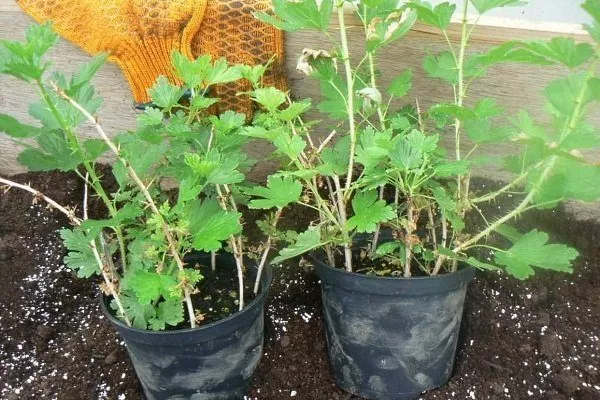
After purchasing a bare-root seedling, it's best to plant it as soon as possible to prevent it from drying out. The plastic bag and burlap (newspaper) wrapped around the roots should be removed immediately before planting.
Plants with a closed root system are planted together with a clod of soil. Before planting, containerized gooseberries should be kept outdoors in dappled shade for about a week to harden off.
Choosing a suitable location
The Komandor gooseberry variety requires a lot of light, so choose sunny, draft-free locations for planting. It can also be planted in dappled shade, but don't expect a good harvest. Insufficient light causes the berries to become smaller and tasteless.
Although the Commander loves moisture, areas with high groundwater levels are also unsuitable for planting. Excess moisture increases the risk of root rot, leading to the death of the plant. Gooseberries thrive best in loamy, sod-podzolic, or sandy loam soils.
Landing time
Experienced gardeners note that plants planted in the first weeks of October have the best survival rate. This allows the young roots to strengthen and grow, and the soil to compact and settle before the frost sets in.
Frosts arrive at different times in each region, so it's best to rely on weather conditions. In southern regions, planting can be delayed until early November, while in northern regions, it's best to move it to September.
Gooseberry bushes planted in the spring have a significantly lower survival rate. This is because the plant's roots thrive in cooler, above-zero soil temperatures. When planted in the spring, the root system grows slowly, and the plant suffers from nutritional deficiencies.
In spring, gooseberries are planted after the soil has thawed. This usually occurs in early to mid-April. It's important to plant the plant in its permanent location before it breaks dormancy. If you notice buds beginning to open on the seedling, it's best to postpone planting until fall.
Soil preparation
Plant Komandor seedlings in light, loose soil. You can improve the structure of heavier clay soil by digging in sand at a rate of 10 kg per square meter.
The procedure is carried out a week before planting the bushes:
- Prepare a hole 50x60 cm.
- Leave the top darker part of the soil to fill the seedling, and remove the lighter part.
- To ensure young gooseberries have enough nutrients to grow, the hole needs to be properly filled. Add half a bucket of compost, 100 grams of superphosphate, and a cup of ash, and mix well.
- ✓ The seedling planting depth should be at least 50 cm to ensure stability and proper development of the root system.
- ✓ The distance between bushes should take into account not only the planting pattern, but also the possibility of free access for maintenance and harvesting.
Planting diagram
Plant seedlings on a cloudy, windless day. Follow these steps:
- Place the seedling vertically in a pre-prepared hole and carefully cover it with the soil set aside during digging.
- Water generously with warm water.
- Mulch with peat and trim the seedling, leaving no more than 5 cm of the above-ground part.
Because the Komandor variety is compact, bushes are planted closely together. On commercial farms, gooseberries are planted in a 0.8 x 3 m pattern, while in garden plots, a spacing of 0.7 x 1.5 m is sufficient.
Do not plant bushes closer than recommended, as young shoots will intertwine with each other and create shade, which will negatively affect the quality of the berries.
Rules for caring for gooseberries
Gooseberries are not a fussy crop, so they don't require a lot of time spent on cultivation. Most of the work is done in spring and fall, as this is when pruning and preventative spraying are carried out.
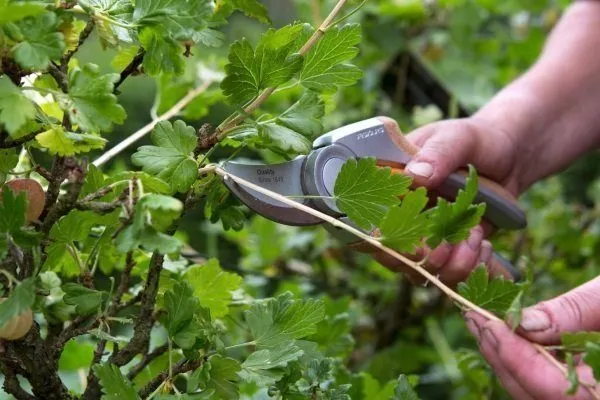
For active growth and good fruiting, the bush requires:
- regular watering;
- loosening the soil, removing weeds;
- competent feeding;
- soil mulching.
Watering
The Komandor berry doesn't tolerate drought well—leaves turn yellow, become smaller, and berries fall off. In the summer heat, gooseberries need to be watered daily; in cool weather, a couple of times a week. To determine the need for watering, observe the condition of the area around the trunk. If the soil beneath the bush is completely dry, the roots are also lacking moisture.
Reduce watering a couple of weeks before the fruit ripens, as excess moisture negatively impacts the flavor of the berries. After the main harvest, resume watering at the same rate. Regularly loosen the soil to prevent waterlogging in the root zone.
Support
The variety's high yield causes the lower branches to droop to the ground under the weight of the berries. The fruit becomes soiled and begins to rot from contact with damp soil.
The presence of supports will help avoid this problem:
- Old pipes, stakes or tall poles can serve as supports.
- At a height of 50-80 cm, tie a wire to them, and you will get a kind of vertical trellis.
- From each bush, tie 4-5 branches to the support at a distance of about 15 cm.
This design allows you to keep the berries on the lower branches clean.
Top dressing
For harmonious development, the Komandor gooseberry requires complete, balanced nutrition. In spring, berry bushes require energy for the development of young shoots and budding. Organic fertilizers such as rotted manure and compost are well suited for this purpose. They are applied to the soil between the bushes immediately after the snow melts.
At the beginning of May, it is better to feed the bushes with nitrogen-containing mineral fertilizers: urea, superphosphate, ammonium sulfate.
During the fruiting period, the bush expends a lot of energy, and its ability to resist disease declines. You can strengthen the Commander's immunity with autumn fertilizing. This is usually done at the end of September:
- Dig up the soil around the bushes and spread compost over the surface.
- Then add 100 g of potassium salt with the addition of wood ash (1 glass per bush).
- After applying fertilizer, loosen the soil and mulch.
Trimming
Pruning is carried out both in the fall and spring. Crown shaping should begin immediately after planting. Inspect the newly planted bush for broken, diseased, or weak shoots. If any are present, prune them. In the first year, up to four healthy buds should be left on the gooseberry. In the second to fourth year, the bush enters winter with five healthy shoots, which should be shortened by a third.
After 5 years, the Commander will be fully formed. From this point on, remove only damaged, dried, and non-fruiting shoots. Before winter dormancy, trim the remaining healthy branches, leaving 10 cm of above-ground growth.
Reproduction
The Komandor gooseberry can be easily propagated at home. There are three popular methods:
- cuttings – in June, long healthy cuttings are cut from young shoots and planted in fertile soil at an angle of 45 degrees;
- propagation by layering – 10-15 cm from the bush, make a hole in which a bent young shoot is placed, pinned down and covered with earth;
- dividing the bush – young bushes are carefully separated from the mother bush and transplanted to a new location.
Preparing for winter
An important step in caring for Commander bushes is preparing the gooseberry for winter:
- In late autumn, provide the plant with an adequate supply of water. To do this, pour up to 3 buckets of water under each bush and mulch the area around the trunk with soil. This moisture-replenishing watering will stimulate root growth and help the gooseberry survive frosts more easily.
- Be sure to feed the bushes with fertilizers high in phosphorus and potassium. Complex fertilizers with high nitrogen content are not recommended.
- Perform sanitary pruning, leaving only strong, healthy shoots.
- Thanks to its high winter hardiness, there is no need to cover the Komandor with agrospan or spunbond, but with the arrival of winter, it is advisable to throw as much snow as possible under the bush.
We recommend reading our article about How to care for gooseberries in the fall after harvesting.
Pest and disease control
The Commander is rarely affected by diseases or pests, but if this does happen, you need to correctly identify the problem and know how to deal with it.
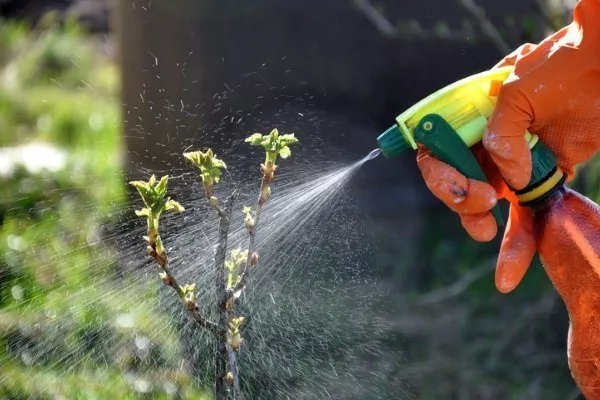
Below are listed the diseases that can occur in the hybrid and their main symptoms:
- stem drynesse – cracks in the bark, presence of fungal spores in them;
- septoria – grayish spots on the leaves;
- rust - orange and copper bumps on the underside of the leaves;
- gray mold – falling and rotting of berries, leaves and shoots;
- mosaic disease – wilting of leaves, appearance of pale green spots along the inner veins of the leaf blade.
Treatment of gooseberries:
- Stem damping-off and septoria leaf spot respond well to treatment with Bordeaux mixture. Prepare the solution according to the instructions and apply it to the affected plants before the leaves emerge.
- Copper oxychloride, which should be sprayed on gooseberries before flowering, will help get rid of rust.
- To cure a bush from gray mold, remove leaves and shoots affected by the disease from the bush.
- There is no cure for viral mosaic.
Almost all of these diseases arise from improper bush care. Careful selection of planting material, regular pruning, and weed removal are the best prevention of gooseberry diseases.
The hybrid can also be susceptible to certain pests. Below are some treatments that can help you combat them:
- aphid – Aktara, Actellic, treatment with laundry soap foam;
- geometer moth – Iskra, Actellik, chamomile infusion;
- spider mite – infusion of wormwood, Bankol, Sanmite;
- gall midge – Fufanon, Karbofos;
- glass case - Actellic, Iskra.
To prevent gooseberry pest infestations, use systemic and contact chemicals. Spray in the spring, targeting the green cone, and repeat after two weeks. Suitable products include Karbofos, Aktara, and Actellic.
Reviews
The thornless Komandor gooseberry is renowned for its productivity and frost resistance. The skin is thin and tart, while the flesh is juicy and sweet and sour. Regular pruning keeps the berries from becoming smaller. Due to poor shelf life, ripe fruits are recommended to be consumed immediately.