
The Northern Captain gooseberry can survive and thrive even in the most adverse conditions. It tolerates harsh climates, boasts excellent varietal characteristics, strong immunity, and a pleasant berry flavor. With proper care, you can grow a crop that will delight you with abundant harvests for many years to come.
History of variety selection
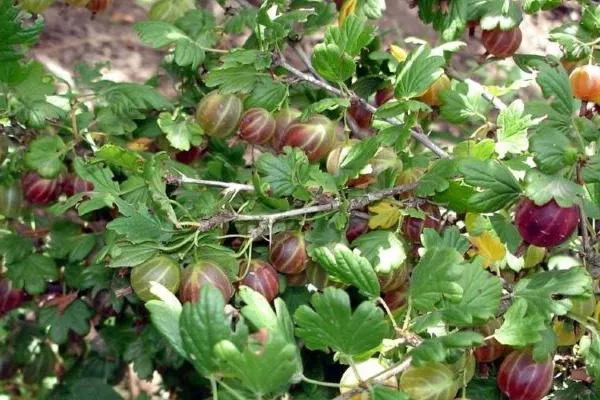
It was developed at the All-Russian Scientific Research Institute of Gooseberries and Vegetables under the guidance of experienced breeder I.V. Popova. To produce a high-yielding, high-quality gooseberry, the Pink-2 variety and variety No. 310-24 were used. In 2007, it was officially approved for cultivation. Since then, the crop has quickly gained immense popularity.
Description of the Northern Captain gooseberry
Forms tall, dense bushes. Young green shoots arch under the weight of the harvest, while mature branches become woody and take on a gray tint. Other distinctive features:
- Stems – They are heavily branched and pubescent. Mature branches bear short spines up to 7 mm long, while young shoots lack them. The spines are thin, straight, and solitary, most often appearing at the base of the branches. The overall degree of spine cover is considered low.
- Leaves - Large, glossy, three-lobed, and pubescent, the leaf blades are rich green and slightly wrinkled.
- Flowers – large, greenish, collected 2-3 in a brush, each petal has a reddish border along the edge.
Characteristics of berries:
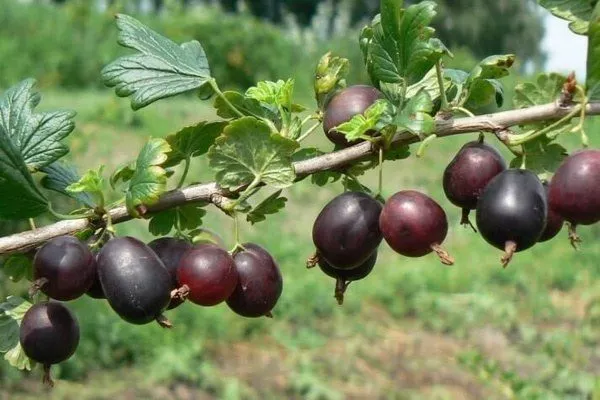
- the size is uniform, the weight fluctuates between 3.5-4 g;
- the color varies from dark red to deep burgundy and black;
- the veins stand out in a light shade;
- the skin is thick and covered with a waxy coating;
- the seeds are small.
Characteristics of the variety
The crop is distinguished by its high ability to restore lost shoots and frost-resistant roots. Yields are stable and remain consistent with proper care.
Drought resistance, frost resistance
The bushes generally tolerate winters well, with temperatures down to -30°C. In northwestern Russia, where winters are frosty and windy, and snow cover is unstable, gooseberries require hilling and mulching, but additional cover for the above-ground parts is not required.
It can tolerate slight soil drying, but its roots are shallow, and prolonged drought can cause partial death. It's important to prevent the roots from drying out during the fruiting period, as lack of water during these periods can cause the berries to shrink.
Productivity and fruiting
This is a typical mid-late variety. Full ripeness is typically achieved by mid-summer. The plant is self-fertile, so it can produce abundant harvests even without other plants nearby.
The crop is often grown not only in private gardens but also on an industrial scale. A single plant can yield up to 10 kg of fruit. When grown on an industrial scale, the average yield is 16.2-26.6 centners per hectare.
Application of fruits
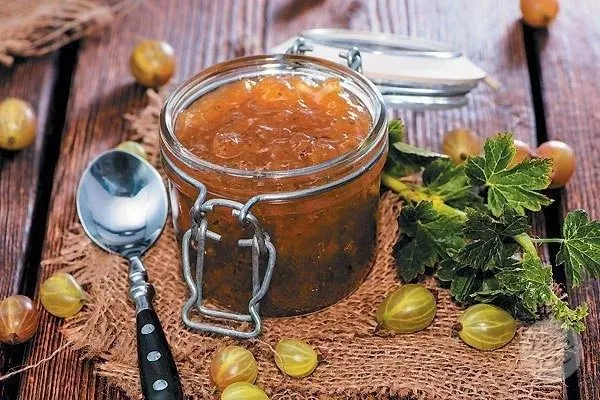
In food production, it is used to make wine, pulpy juices, and natural dyes. At home, the berries are used to make jams, jellies, marmalades, compotes, and liqueurs, and to preserve desserts for the winter.
Thanks to their thick skin and natural preservatives, the fruits have a long shelf life and are highly transportable. They are considered an industrial crop.
Growing regions
Zoned for northwestern Russia, it can be expected to perform well in regions with less severe climates, such as the Volga region or the North Caucasus. These areas are prone to unforeseen problems that could impact growth and yield.
Advantages and disadvantages of the variety
The main advantage of this variety over other cultivars is its resilience and resistance to adverse conditions. Other notable advantages include:
Among the disadvantages, gardeners sometimes highlight:
Rules for planting gooseberries
To preserve all varietal characteristics and ensure consistent harvests for years to come, it's important to plant the seedling correctly. Follow these guidelines:
- Recommended timeframes. It's best to plant young plants in the fall, timing the planting so that there's at least a month before the onset of sustained cold weather. This will allow the roots to adapt before the frost and begin growing earlier.
In spring, it is difficult to choose the right time for planting so that young shoots are not damaged by recurrent frosts. - Choosing a suitable location. Choose sunny spots in the garden. The plant should be well protected from cold winds by tall buildings, fences, or dense plantings.
- Soil and conditions. The plant is easy on soil, but it shouldn't be too heavy, depleted, or acidic. A high water table and stagnant moisture from snowmelt are undesirable.
- Selection and preparation of planting material. A healthy varietal seedling must meet the following criteria: age – 2 years, roots are woody, shoots are healthy and flexible.
If the roots dry out during transportation, soak the seedlings in water overnight. To improve survival, add growth stimulants to the water. - Site preparation. Start by weeding, digging, and adding essential nutrients to the soil. Lime or dolomite flour should be added to acidic soils. To improve the permeability of heavy soils, add sand, peat, and compost.
Planting sequence:
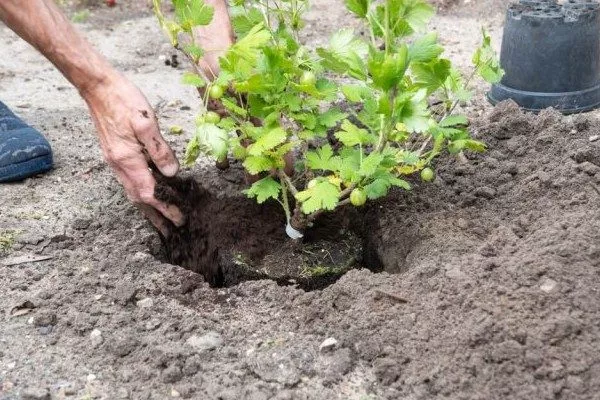
- Prepare a hole measuring 50x50 cm.
- Fill half the hole with fertile soil mixture.
- Place the seedling at the bottom of the hole and spread out the roots, gradually adding soil.
- Tamp lightly.
- Water the seedling generously, waiting for the soil to settle completely.
- Check the root collar height: for Northern Captain, it should be 6-8 cm deep. Adjust the planting depth if necessary.
After planting, mulch the soil around the gooseberries and perform the first pruning. Shorten all shoots to 5-6 living buds.
Aftercare of gooseberries
To ensure the bush develops well and produces a stable harvest, proper care is essential. This includes the following agricultural practices:
- Watering. In northwestern Russia, the plant usually doesn't require additional watering due to sufficient natural precipitation. In spring, the plant awakens early and uses meltwater for growth.
During rainy summer periods, do not water the gooseberry, but if there is insufficient rainfall, water it once a week, adding 10-15 liters of water, preventing the roots from drying out. - Top dressing. For the first two years, the fertilizer applied to the soil during planting is sufficient. Subsequently, feed the bushes regularly in the spring using a mixture of 10 kg of rotted manure, 80 g of superphosphate, 40 g of saltpeter, and 20 g of potassium chloride.
- Loosening. During rainy years, care may be limited to weeding and removing debris. The roots are shallow, so loosen only the top layer of soil after each rain or watering, removing stones, branches, and other debris.
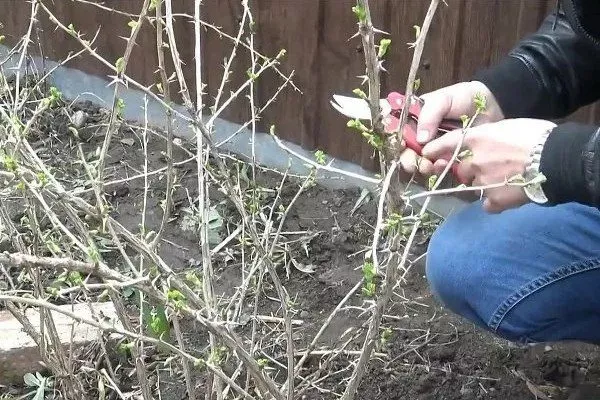
- Trimming. Regular pruning is important, as new shoots thicken the crown each year. From the second to fourth year, perform formative pruning, cutting back mature branches by half and removing crooked, dead, or weak branches.
Starting in the fifth year, leave 20-25 shoots aged 3 to 6 years. Prune in the fall, after the leaves have fallen.
Compliance with these principles will allow you to maintain fruiting for more than 20 years.
Diseases and pests, methods of control and prevention
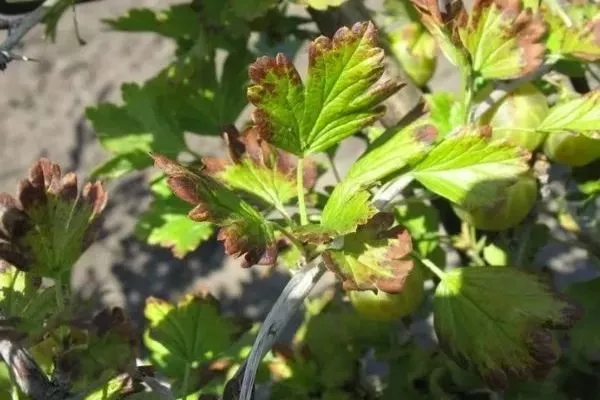
It's a hardy berry crop, so it's not susceptible to diseases or pests. Timely preventative measures are sufficient for successful cultivation.
After pruning, burn fallen leaves and removed shoots outside the area. This will help prevent insects and bacteria from successfully overwintering and damaging the plantings next season.
Preventive measures include the following:
- In spring, before the buds swell, water the branches with hot water from a watering can.
- Twice a season, before flowering and after harvesting, treat each bush and the soil beneath them with a solution of Fitosporin-M according to the instructions on the package.
- Remove branches, leaves and other debris promptly.
- Plant mint, tomatoes, or wormwood nearby, as these plants repel insects.
Reproduction methods and lifespan
The crop is propagated by various vegetative methods. Three methods are the most effective:
- Dividing the bush. This method is used when transplanting an adult plant to a new location. The planting procedures are similar to those used for young seedlings.
- Cuttings. Cut shoots up to 15 cm long in early summer and plant them in the ground or a container with fertile soil. Care for them throughout the season, watering and loosening the soil regularly. After roots appear, in early fall, transplant the cuttings into a prepared hole.
- Layers. This is the simplest method. In the spring, dig a small trench under the bush and insert the cutting into it. Keep the soil around the stem moist. Roots will appear by summer, and then the cuttings can be transplanted to their permanent location.
You can increase the number of seedlings in your garden by using one of the propagation methods.
Reviews
Severny Kapitan is a popular variety for growing in harsh climates. Disease resistance, high productivity, and excellent flavor make gooseberries an excellent choice for both beginner and experienced gardeners. Proper care is essential for abundant harvests.