
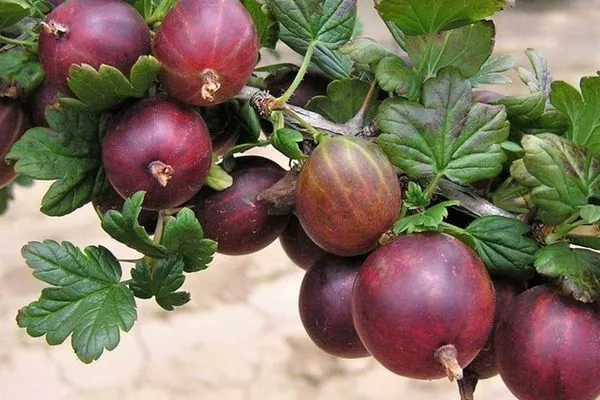
The Serenade gooseberry is characterized by large fruits, good productivity, and drought and frost resistance. It is virtually thornless, making it easy to care for and harvest. The berries are juicy and firm, with a sweet and tart flavor and an attractive skin tone. This variety is self-fertile and resistant to powdery mildew, a characteristic particularly prized by gardeners in various regions.
History of origin and distribution
By crossing the Captivator 0-271 gooseberry, distinguished by its richly colored fruit and high yield, with a thornless variety noted for its good winter hardiness and lack of thorns, breeders at the I.V. Michurin All-Russian Research Institute of Horticulture developed the new Serenada variety.
You can find other varieties of gooseberries, recognized by domestic gardeners as some of the best, here. Here.
Appearance of bushes
This variety is characterized by vigorous growth: the height of the bushes reaches 100-150 cm. The main differences of the variety:
- the plant is slightly spreading, with a moderately dense crown;
- shoots are light green, erect, slightly covered with thorns;
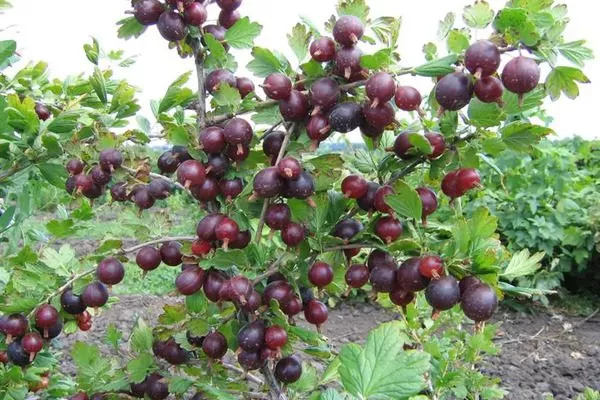
- a few soft thorns are located only in the lower part of the branches and are directed perpendicular to the stem;
- inflorescences form one or two medium-sized flowers, colored in a pale shade;
- the leaves are large, green, without pubescence, with a matte surface and slight wrinkling;
- The leaf blade is straight or slightly concave, consisting of three or five lobes separated by deep notches.
Description of fruits
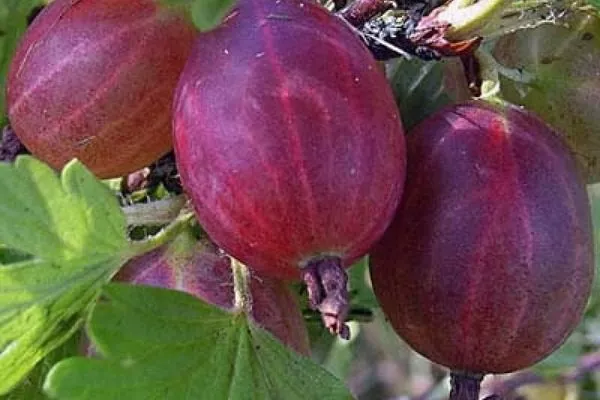
The berries are medium to large, weighing from 4 to 6.1 g. They are dark red in color, with pinkish, slightly branched veins and a slight waxy coating.
Distinguishing characteristics:
- their elongated conical shape makes them resemble a small pear;
- under the dense skin of medium thickness lies juicy and elastic pulp;
- the skin is smooth, without pubescence, with barely noticeable veins;
- the taste is sweet and sour;
- the number of seeds in the fruits is insignificant.
Application areas
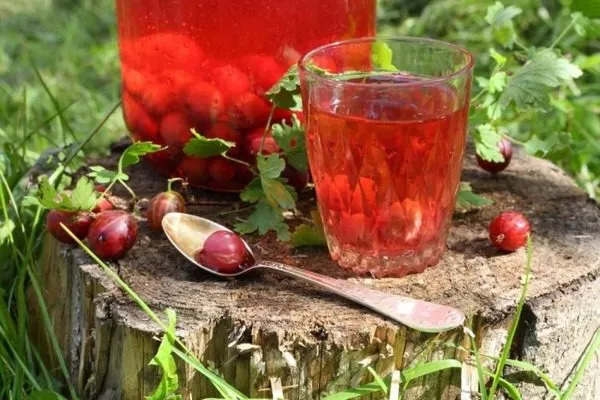
Serenade berries are eaten fresh as a dessert and are also processed into juices, wine, marmalade, and confectionery fillings. Unripe berries are suitable for jams, preserves, and compotes. Their distinctive color makes them a beautiful garnish for desserts and other dishes.

Not only the fruits, rich in vitamins and microelements, but also other parts of the plant are valuable. The berries have an astringent effect, the seeds and roots have a laxative effect, and the leaves are known for their diaphoretic, expectorant, and sedative properties.
The beneficial properties of gooseberries are used:
- in folk medicine – Decoctions of berries are used as a mild laxative, infusions of leaves relieve the symptoms of arthritis and osteochondrosis, and tincture of fruits acts as a diuretic and choleretic agent;
- in cosmetology – Vitamin C from the pulp improves complexion and brightens the skin, and decoctions from the green parts strengthen hair;
- in dietary nutrition – Gooseberries are low in calories (44 kcal per 100 g) and help normalize metabolism.
Characteristics
The Serenada variety is self-fertile and doesn't require neighboring plants for pollination. Thanks to the active work of bees, it pollinates well and is considered one of the most productive honey plants. The yield increases even more when planted with other gooseberry bushes.
Other positive qualities:
- The crop has average productivity. One bush yields approximately 3.6 kg of berries, and one hectare yields 12 tons.
- It belongs to the varieties with late ripening periods – the crop is ready for harvesting in August.
- Woody shoots tolerate harsh winters well, withstanding temperatures down to -35°C. Fruit buds are also highly frost-resistant, withstanding temperatures down to -30°C without harming the future harvest.

- The plant has good drought tolerance, which is especially important during hot periods when watering is delayed. However, during the flowering and fruiting phases, the bush requires additional moisture to ensure a full harvest.
- This variety exhibits resistance to powdery mildew, considered one of the most dangerous gooseberry diseases. This characteristic significantly reduces the risk of crop loss and makes plant maintenance easier.
Advantages and disadvantages compared to other varieties and hybrids
The crop is valued for its many virtues. Among the main advantages, gardeners note:
No significant flaws have been identified with this variety. The only thing worth noting is the plant's sensitivity to sudden temperature changes during flowering, which is typical for most gooseberry varieties.
Growing technology
For full development and consistent fruiting, gooseberry bushes require optimal growing conditions. It's important to adhere to certain requirements.
You will find maximum details about planting and growing berry crops Here.
Optimal conditions
Serenada prefers sunny, well-lit locations. In the shade, yields are significantly reduced, the berries become smaller and don't accumulate sufficient sugar, resulting in a weakened variety.
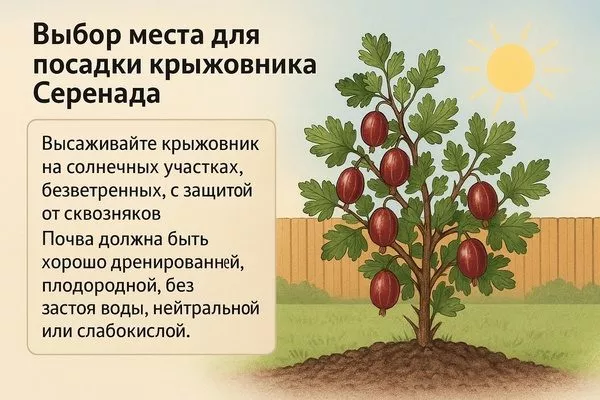
Basic requirements:
- The plant does not tolerate waterlogged areas well—if the groundwater level is high, the roots begin to rot and the shoots quickly dry out. Therefore, when planting, it's best to avoid low-lying areas with high humidity and cold air, as these conditions favor the development of fungal diseases.
- The bushes develop best on loose soils with good water and air permeability and a neutral or slightly acidic reaction.
Planting times and rules
The best time to plant gooseberries is mid-September. During this period, the seedlings take root better and survive the winter successfully. Experienced gardeners recommend following these guidelines:
- Place the cutting in the soil at an air temperature of +8…+10°C.
- Choose a strong 1-2 year old seedling with a developed root system and partially woody shoots.
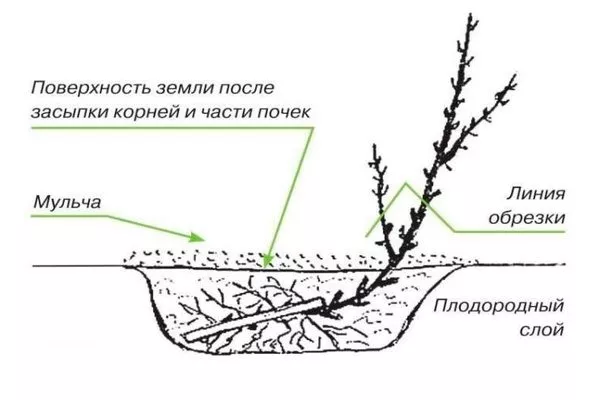
Step-by-step algorithm:
- Before planting, soak the plant for 1-2 hours in a solution of Epin or Heteroauxin to stimulate root formation and growth.
- Dig a planting hole measuring 50x50 cm.
- Remove the top layer of soil and mix it with fertilizer: 5 kg of organic matter, 40 g of potassium sulfate, and 40 g of superphosphate. For clay soil, add 5 kg of sand.
- Partially fill the hole with the prepared soil mixture and form a hill.
- Place the seedling in the center, spreading the roots to the sides.
- Fill the remaining soil in layers, compacting it thoroughly to avoid voids.
- Deepen the growing point 7 cm below the soil level.
- After planting, water the plant generously – up to 10 liters of water.
- Shorten the shoots, leaving a length of 50-60 cm with 5-7 buds.
Further care
Water gooseberries as the soil dries out, making sure to moisten the area around the trunk. Using sprinkler irrigation makes the plant more susceptible to disease.
Helpful tips:
- Although Serenade is drought-resistant, constant soil drying out is unacceptable, as this will result in small and sour fruits. Water each plant 3-4 times per season with 20 liters of warm, settled water.
- To maintain good growth, regularly loosen and dig the soil. If this isn't possible, mulch the area around the tree trunk with organic materials such as peat, straw, etc., which helps retain moisture and suppress weed growth.

As a high-yielding variety, Serenade requires annual fertilizing, especially in poor soils. In spring, apply the following fertilizer per bush:
- 10 kg of humus or compost;
- 60 g Superphosphate;
- 40 g ammonium nitrate;
- 20 g of potassium chloride.
Perform the first pruning in the spring, shaping the bush and establishing fruiting branches. Leave 4-6 of the strongest shoots from the base, and remove the rest.
At 9-10 years of age, rejuvenate the bush by completely removing old woody shoots and leaving only young vegetative buds at the root. You can find more details about gooseberry varieties and fall pruning guidelines here. Here.
Possible problems, diseases, pests
The Serenada variety is resistant to powdery mildew. However, it can sometimes be affected by other fungal and viral diseases:
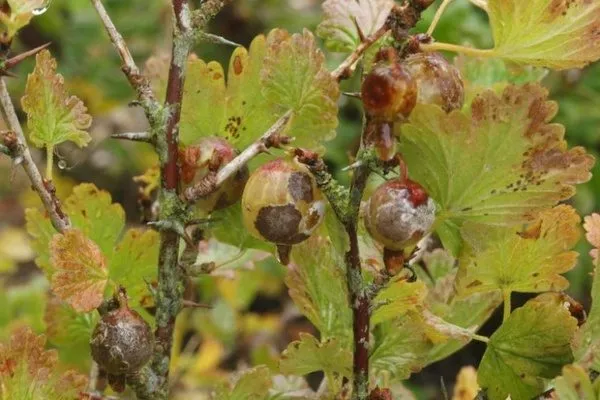
- Anthracnose. It appears as small dark brown spots on leaves, petioles, and young shoots. The spots grow and merge, causing the leaf to dry out and fall off. For prevention and treatment, spray the plant with Nitrofen or copper sulfate.
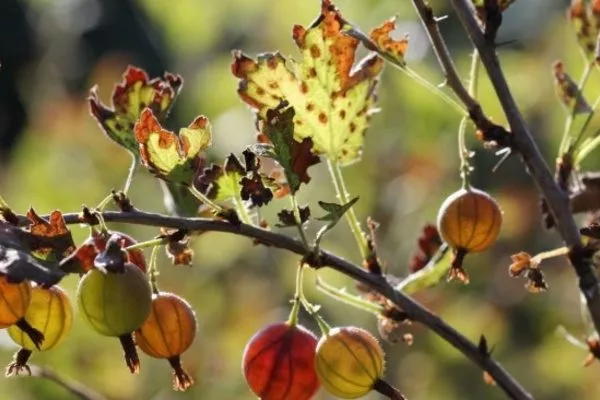
- Rust. Characterized by the appearance of rusty spots with yellow spore pads on leaves and ovaries, and less commonly on shoots. The infection is visible on the underside of leaves and against the green ovaries. Affected leaves dry out prematurely and fall off, while the fruits remain underdeveloped and fall off. Eventually, the plant dies.
To control the disease, treat the bush with the biological preparation Gamair (2 tablets per 10 liters of water).
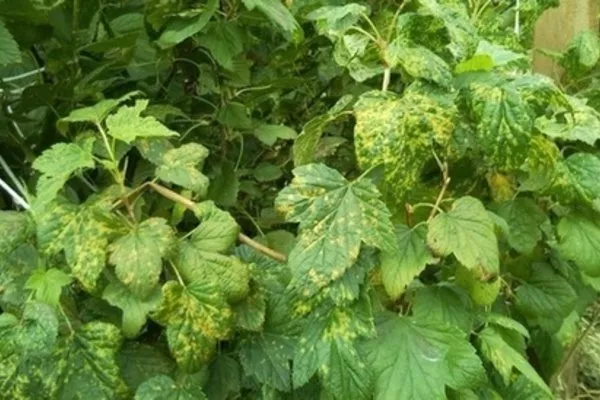
- Viral mosaic. It is transmitted by insects such as aphids, whiteflies, and mites. Infected plants develop a yellow-green mosaic pattern along the veins on their leaves. Plants become stunted, bear fruit poorly, and the leaves wrinkle and shrink.
Viral diseases are not curable – uproot and destroy infected plants.
Wintering
To protect gooseberries from pests and fungal diseases that can overwinter on the plant and in the soil, thoroughly clear the area around the trunk of fallen leaves and fruit. Then treat the bushes with fungicides and insecticides, then water them thoroughly and cover with fresh mulch.
Mature specimens with woody shoots are usually frost-resistant, but they are sometimes damaged by rodents. To prevent this, tie the bush into a bundle, cover it with lutrasil and spruce branches, and sprinkle the edges with soil and a layer of snow.
Reproduction
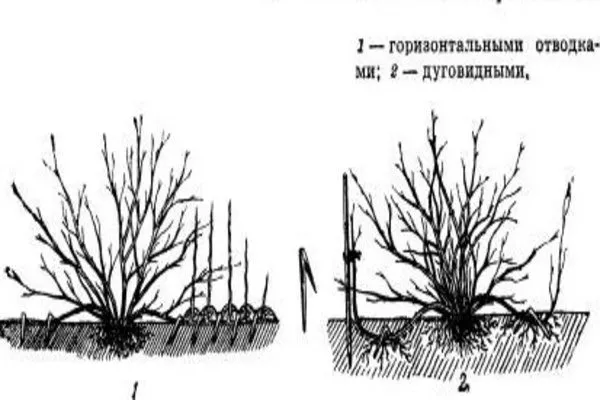
Propagating gooseberries by seed is not preferred due to its high labor intensity and the late onset of fruiting—the first berries appear only 4-5 years after planting. For low-thorn varieties, the following are considered optimal propagation methods:
- dividing the mother bush in half;
- horizontal layers from 3-4 year old bushes;
- vertical layers used for intensive rejuvenation;
- cuttings using semi-mature woody cuttings.
 To obtain a plant with high varietal purity, it is recommended to purchase the first seedling from a specialized nursery.
Growing features depending on the region
The large-fruited gooseberry, Serenada, was developed by breeders specifically for cultivation in the Central Black Earth Region. The soil, climate, and potential temperature fluctuations were taken into account.
The climate here is characterized by mild winters and moderately warm summers: average January temperatures are around -12°C, and July temperatures are +18°C. Since the region is located in the steppe zone with a humidity coefficient below 1, droughts are possible. Despite this, the crop thrives and produces abundant harvests.
Similar varieties
Based on morphological characteristics, this variety has several similar cultivars. The following analogues are popular.
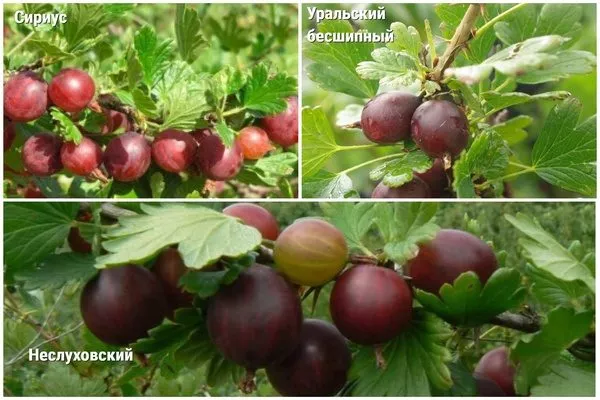
- Sirius. A mid-season variety popular among gardeners due to its low thorn production. The bush is upright, heavily branched, and medium-dense, reaching a height of approximately 1 m. Thorns are rare and primarily on the lower portions of the shoots.
Yields vary depending on weather conditions and average 3.5 kg per bush per season. The berries are round, dark red, with a dense, smooth skin, weighing approximately 4.3 g. The variety is self-fertile. - Ural thornless. The bushes are medium-sized, spreading, with soft green, slightly wrinkled, hairless foliage. They are almost completely thornless. During flowering, large crimson inflorescences, 12-14 mm in size, form on the fruiting branches.
A mature bush can produce up to 7-8 kg of berries per season. The fruits are large, oval-shaped, with thick skin and a pleasant dessert flavor. - Neslukhovsky. The plants reach a height of up to 2 m, with a compact, sparse crown. The shoots bear both single and double spines. The berries are dark in color—burgundy, purple, or dark blue—and are densely packed on the branches. They weigh between 4 and 6 g. The main advantage of this variety is its high-quality flavor: the flesh is juicy, sweet, and aromatic.
Reviews
The Serenada gooseberry combines excellent flavor with ease of cultivation. High frost and drought resistance, low thorn production, and good transportability make this variety versatile and popular. With proper and comprehensive care, a stable harvest is guaranteed, even in challenging climates.