
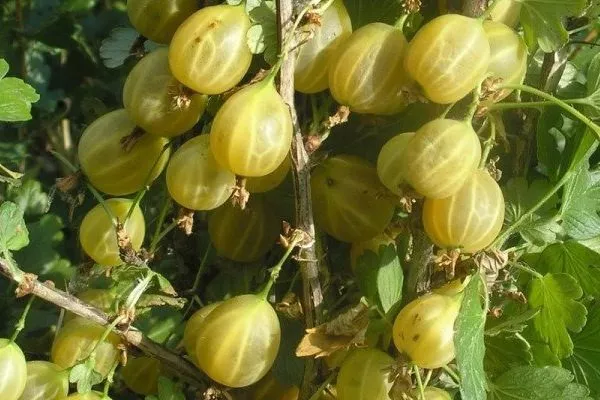
"Russian Yellow" is the name of a mid-season gooseberry variety long known to Russian gardeners. It is loved for its unusual amber color, pleasant flavor, excellent shelf life, winter hardiness, and resistance to powdery mildew.
History of the variety's development
This berry variety was developed in 1970. It was bred by K. D. Sergeeva, an employee of the Michurin Research Institute. To create the Russian Yellow, she crossed Kareless with Houghton, Curry, Oregon, and Shtambov. Since 1974, this yellow-fruited gooseberry variety has been listed in the Russian Federation State Register.
Appearance of the bush
Plants of this variety are medium-sized and spreading. They are distinguished from other garden varieties by the following characteristics:
- height: 1-1.2 m;
- vigorous growth of young shoots: thick, long, green (with age their color becomes brown with a gray tint);
- small number of spikes: straight, light-colored, located in the lower part of the branches;
- foliage: medium-sized, green, rounded with a jagged edge, smooth;
- inflorescences: not very large, pale pink.
Berries and their taste qualities
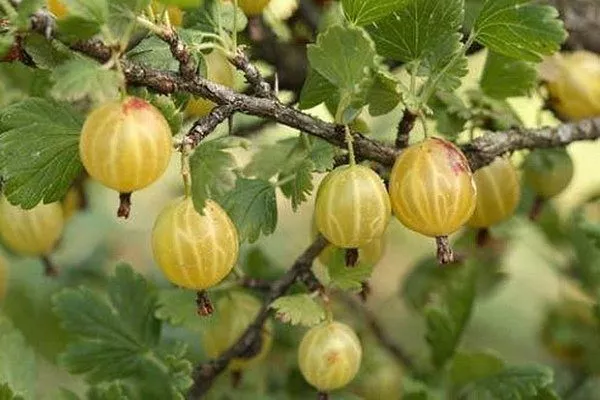
The distinctive appearance of the fruit is the cultivar's signature feature. They are distinguished by the unusual skin color, which gives the gooseberry variety its name. The berries have the following characteristics:
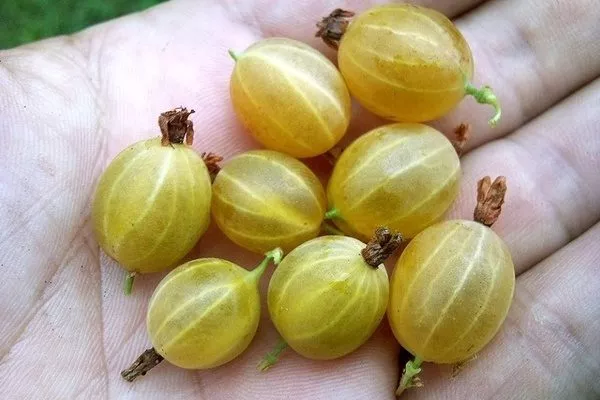
- weight - 4.2-6g;
- round-oval shape;
- amber-yellow skin color: not very thick, strong, with clearly visible light veins, covered with a layer of waxy coating;
- jelly-like pulp, which contains a small amount of seeds.
The content of substances in gooseberry pulp that determine its taste is as follows:
- sugars - 9.3%;
- titratable acids - 2.1%;
- vitamin C - from 12 to 32 mg per 100 g of product.
Characteristics
The yellow-fruited variety of the garden crop has many excellent characteristics that make it attractive to gardeners engaged in home and commercial cultivation of gooseberries.
Ripening period and yield
Russian yellow bushes bloom in the second half of April. Flowers may appear as late as May. The berries ripen mid-season. Fruits appear on the branches in the last week of July.
The yield indicators of the variety are above average:
- 4-5 kg – yields 1 adult plant;
- 13,800 kg – harvested by farmers growing the variety on an industrial scale from 1 hectare of gooseberry planting.
This berry variety is renowned for its long lifespan. Its bushes bear fruit for 10-17 years after planting in the garden. The fruits tend to cling firmly to the branches, not cracking or falling off even when overripe. They hang on the shoots, maintaining their attractive appearance and juiciness, for three weeks.
Temperature resistance
Russian Yellow is a frost-hardy variety of gooseberry. It can withstand temperatures down to -30°C during the winter months.
The variety shows the best results when grown in the climatic conditions of the following regions of the Russian Federation:
- North-West;
- Ural.
Moisture and drought resistance
This variety is known for its drought tolerance. However, its bushes respond well to regular watering, which is essential for abundant fruiting. However, they do not tolerate excess moisture.
Application areas
Gooseberries are used not only in cooking but also in folk medicine. Fresh, they offer numerous health benefits. This delicacy is a powerful natural remedy that increases vitality, strengthens the immune system, and detoxifies the body from radionuclides.
Housewives use them for culinary purposes as follows:
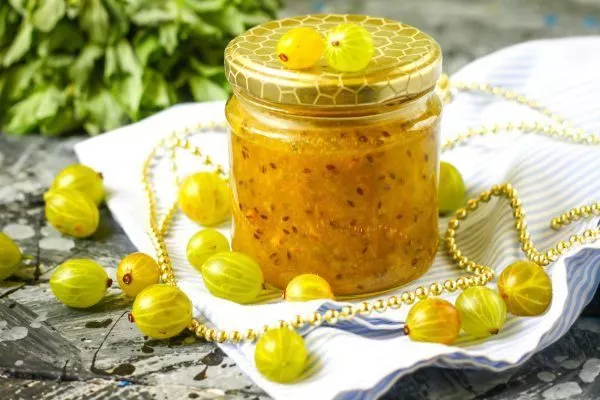
- they cook jam, jelly, marmalade, preserves, compote;
- make juice, wine, tincture;
- frozen for the winter;
- canned.
Pollinator varieties
The variety is self-fertile. It doesn't require other pollinators for pollination. However, when paired with another gooseberry variety of the same ripening period, its productivity increases significantly, increasing the number of fruit ovaries. The best companion for it is Krasnoslavyansky.
Growing conditions
To ensure that Russian Yellow bushes bear fruit abundantly and produce large, tasty berries, create favorable growing conditions for them in your area:
- Select a sunny area for planting gooseberries, not in a lowland where it can be too damp and cold;
- the place should be well protected from gusty winds and drafts;
- no tall trees, dense bushes, or buildings within a radius of 1.5 m.
This variety isn't particularly demanding when it comes to soil. Its plants thrive in acidic, slightly acidic, and neutral soils. Both loam and sandy loam are suitable. They grow best in loose, fertile soil.
Landing features
The Russian Yellow variety will delight you with abundant fruit if you plant several bushes in your garden. Plant this berry in groups, following this pattern:
- the distance between bushes is 2-3 m;
- the distance between rows is 3-4 m.
Perform this procedure in the fall (late September or early October). Make sure to complete it before frost. If you prefer spring planting, hurry before the buds swell.
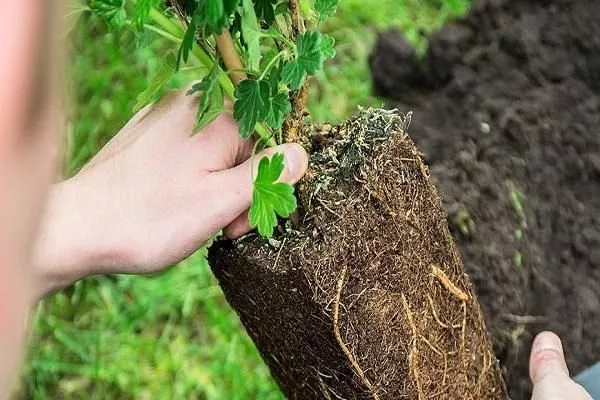
Plant gooseberry bushes, following the algorithm of actions:
- Dig holes 0.4 to 0.7 m deep.
- Add organic matter mixed with peat and the top layer of fertile soil.
- Place the seedling in the central part of the hole.
- Straighten out its roots.
- Cover them with soil, deepening the root collar by 5-7 cm.
- Compact the soil under the bush.
- Water the seedling.
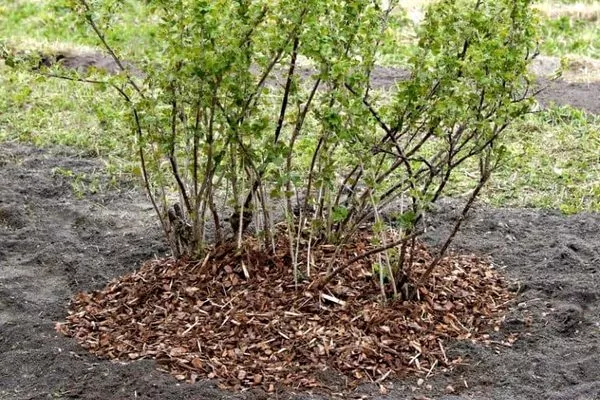
- Mulch the tree trunk circle with sawdust or peat.
Care instructions
To ensure that this variety of gooseberry bushes bear fruit intensively and produce large, tasty berries, provide them with proper care, which includes the following procedures:
- WateringWater the planting regularly and moderately (once every 7-10 days), especially during fruit set and ripening. Perform a moisture-replenishing watering before winter.
- Fertilizing bushesStarting from the third year of life, annually in the fall, feed the Russian yellow planting with compost or humus (3-4 kg per 1 sq. m), superphosphate (40 g), wood ash (50 g).
In the spring, use nitrogen-containing fertilizers every year - ammonium nitrate (80 g per 1 bush).
After the bushes have flowered and during the period of fruit set, use liquid organic matter such as a mullein solution (1:10). - TrimmingPerform this procedure in early spring before bud break or in October. Do this annually. Prune back five-year-old branches with weak growth (less than 15 cm) completely, removing drooping shoots. Perform sanitary pruning, removing diseased, dry, and damaged branches.
- WeedingRemove weeds from under gooseberry bushes as needed to prevent them from depriving the berry crop of nutrients and moisture.
- LooseningCarry out this procedure every time after rain and irrigation of plants to avoid the formation of a dense soil crust that does not allow air to reach the roots.
Reproduction
Propagate this yellow-fruited variety using the most optimal method—layering. Follow the procedure step by step:
- In spring, select strong one- or two-year-old shoots free of disease and pest damage.
- Bend them down to the ground and plant them 2-3 cm deep. Experienced gardeners place the shoots in pre-dug furrows (10 cm deep) and cover them with soil. As the young shoots develop, they will need to be replenished with soil from time to time.
- Fix the shoots with staples.
- Keep the soil moist.
- After the shoots emerge and reach 7-10 cm in height, add a nutritious soil mixture. To make the soil, combine garden soil with well-rotted manure.
- Transplant the seedlings to a new location at the end of the season.
Preparing for winter
The Russian Yellow gooseberry is a winter-hardy crop. Only young bushes require shelter. Use lutrasil and spruce branches as covering material. In winters with little snow, provide insulation for mature bushes by hilling them up.
Pest and disease control
This variety exhibits resistance to powdery mildew when grown properly. However, its bushes require mandatory preventative treatment against infections and pests. Use the following products:
- FitovermTo prepare a solution, take 2 ml of the preparation and water (1 liter). Use it to water the soil and spray the shrub in the spring immediately after the buds open. The recommended application rate is 1.5 liters per plant.
- KarbofosApply the solution to the gooseberry planting immediately after the harvest. Dissolve the product in water (75 g per 10 l) before use.
With insufficient or improper care and unfavorable weather conditions, the Russian Yellow gooseberry is susceptible to diseases:
- Powdery mildewAn infected bush will develop a whitish coating on its branches, foliage, and fruit. Treat the planting with an ash solution (1:3) with a small amount of laundry soap (40 g). Fitosporin-M will also help save the berry bush.
- AnthracnoseWhen a garden crop is infected with the disease, brown and russet spots appear on leaf blades, stems, and branches, and the foliage falls off. The growth of the infected shrub is stunted, and its yield declines.
If symptoms of anthracnose appear, treat the gooseberries with a solution of colloidal sulfur (80 g per 10 l) or Bordeaux mixture. - SeptoriaBrown spots appear on the green parts of the plant and on its fruits, turning white over time. If symptoms appear, treat the shrub with Nitrafen (300 g per 10 liters of water) or copper sulfate.
The berry crop is also susceptible to insect attacks:
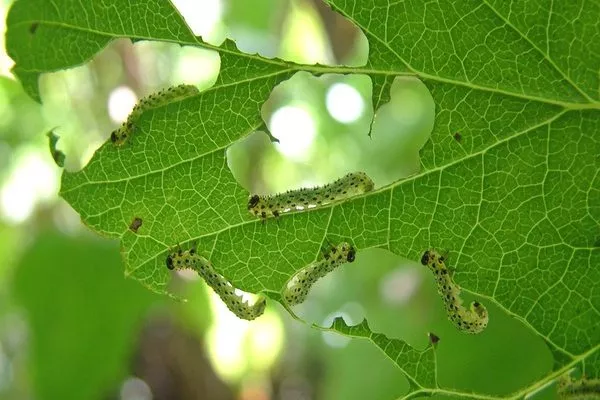
- Gooseberry sawflyIf the bush is infested, the pest will destroy the foliage and cause the berries to become smaller. Spray the plants with an infusion of tomato tops, adding shavings of laundry soap.
- Shoot aphidThe parasite is present at the tips of the shoots. The insect sucks the sap from the leaves. Treat the shrub with Iskra or Fufanon.
- Spider miteWhen the bush is infested, young leaves are damaged, webbing appears, and the foliage curls and falls off. Spray the planting with an infusion of tobacco, garlic, wormwood, and onion peel. Use insecticides if the infestation is severe.
Pros and cons
Russian Yellow is loved by gardeners for its excellent characteristics, such as:
The variety has few disadvantages:
Reviews
Russian Yellow is a gooseberry variety with many positive characteristics. It is a favorite among gardeners across the country. This berry variety is also suitable for commercial cultivation due to its marketability and transportability.