
The Orpheus gooseberry is a popular winter-hardy variety, highly valued by Russian gardeners. It attracts berry lovers with its tasty, large berries, high yield, and low maintenance.
History of creation
The Orpheus variety was developed in the Tambov region at the Michurin All-Russian Research Institute of Horticulture. The Orpheus gooseberry was developed by breeders E. Yu. Koveshnikova and K. D. Sergeeva. The variety is equally suitable for commercial and home garden cultivation.
The variety has been undergoing testing since 2012, but this hasn't stopped gardeners from growing it. Moreover, Orpheus is widespread not only in Russia but also in neighboring countries.
Description of the plant
The Orpheus variety grows with medium-spreading, medium-sized bushes, reaching a height of 0.7-0.8 m. Young shoots are straight and light green, while woody shoots are thick and light-colored. The branches are covered with straight, short to medium-sized thorns, but they are few in number. They are located only at the base of the shoots.
The leaves are green, five-lobed, loose and small, with a faint sheen and a wrinkled texture. The flowers are brightly colored, gathered in two-flowered inflorescences.
Description of fruits
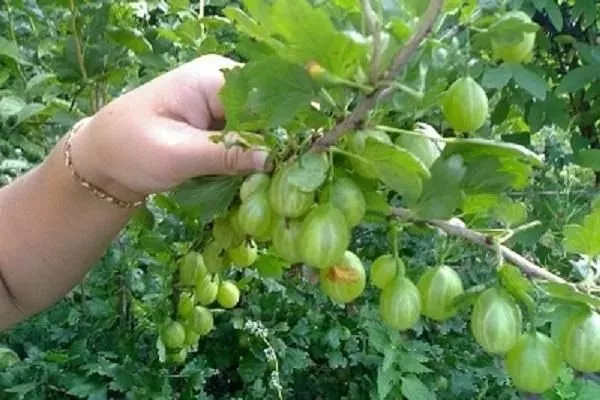
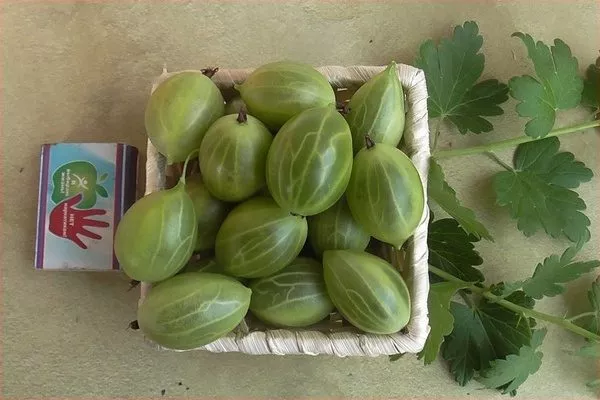
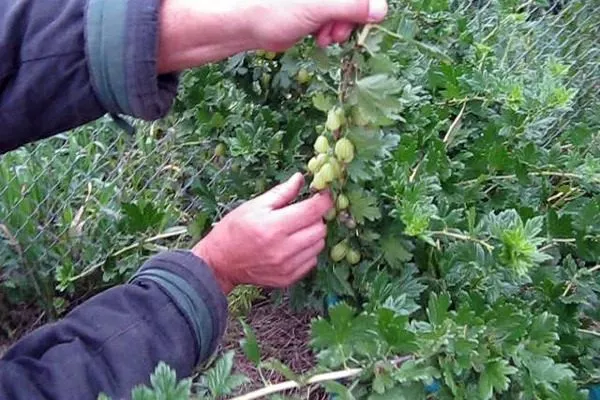
The Orpheus gooseberry produces very large fruits. Their average weight is 7 g, with a maximum of 11 g. Their shape is pear-shaped or elongated-oval. The color is yellow-green, the skin is smooth, glabrous, or with a slight glandular pubescence. The seed count is average.
The taste of berries
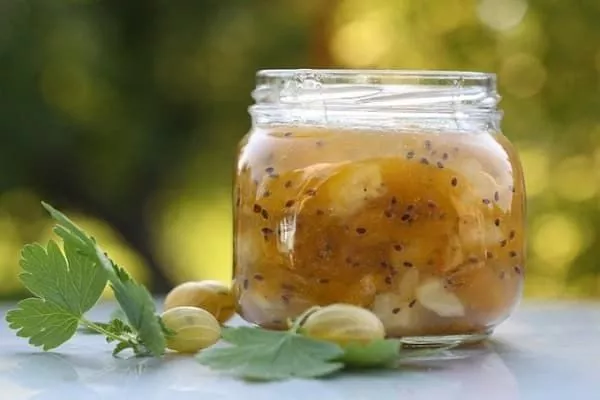
The berries have a sweet and sour taste, with a vibrant aroma. They have a characteristic gooseberry aftertaste. The tasting score is 4.5-4.8. They contain 12.3% dry matter, 9.1% sugars, and 36 mg of vitamin C. They are suitable for dietary nutrition, as well as for creating a wide variety of culinary delights and preserves.
Ripening and yield
The Orpheus gooseberry is a mid-season variety, beginning to bear fruit in the second year after planting. When grown commercially, the yield is 120-140 centners per hectare. Hobbyists can harvest approximately 4 kg of gooseberries per bush.
Pros and cons
Before planting the green Orpheus variety on your plot, it is useful to evaluate all its advantages and disadvantages.
Pros:
Cons:
Planting nuances
The yield of the Orpheus gooseberry, its growth, and development are directly affected by planting. It's important not only to follow the proper planting techniques, but also to choose the right location and seedlings, and to plant them at the right time.
Landing features:
- A sunny site is preferable, but light partial shade is preferable for the south. Deep shade is contraindicated.
- The soil should be loose, light, and permeable. The plant does not tolerate overwatering, so marshy or low-lying areas are unsuitable.
- Planting is done in spring - in regions with harsh winters, or in autumn, 1.5 months before the onset of frost.
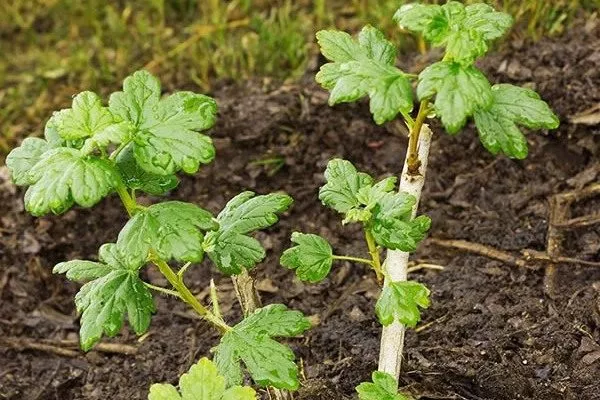
- For planting, select seedlings aged 1-2 years. The roots should be at least 20 cm long. Before planting, inspect the root system of the seedlings, remove any dead shoots, and trim the tops. Soak the roots in a sodium humate solution for 24 hours.
- The seedlings are placed in the dug holes at an angle. The distance between adjacent plants is 1.5 m, and between rows, 2 m.
Care Features
Achieving maximum yield and excellent berry flavor requires proper care. The crop requires watering, fertilizing, and pruning.
Care features:
- Water as needed, checking the soil for moisture—if it crumbles like sand in your hands, the bushes need moisture. It's especially important to water the bushes during fruit formation and ripening. The recommended watering rate is 20-25 liters. Avoid allowing the soil to dry out, and don't rely solely on rainwater.
- In summer, it's best to fertilize the bushes with organic matter, such as a 1:10 solution of mullein and water, or 1:20 bird droppings. In autumn, apply a mixture of mineral fertilizers, such as urea, potassium, and superphosphate.
- After watering, the soil around the tree trunks is loosened. Only the top layer of soil is worked to avoid damaging the surface roots. Loosening is essential as it prevents the formation of a soil crust, which impedes oxygen access to the roots.
- Weeding is carried out in parallel with loosening the soil. Weeds not only absorb nutrients but also serve as breeding grounds for a variety of insects. Using chemicals to control weeds is not recommended, as this will negatively impact the taste and composition of the fruit.
- Pruning is done in the spring; the first three years are crucial for the bush's development. Before planting, the seedling's shoots are shortened to five buds. After a year, weak basal shoots are removed, leaving no more than three. This ensures abundant branching and increases the yield. On a three-year-old plant, all young shoots are pruned, the crown is thinned to prevent crowding, and any frozen branches are removed.

Pest and disease control
The variety is resistant to many berry diseases, including powdery mildew, leaf spot, and various fungal infections. However, preventative treatments are essential, as under unfavorable conditions, there is a risk of infection.
To combat pests, you can use spring hot water dousings (85…87°C) and cover the soil with roofing felt (until the end of flowering). Various fungicides are also used: before the sap begins to flow, spray the bushes with a 1% solution of Bordeaux mixture.
The most dangerous pests are shoot aphids and moths. Aphids can also be controlled with a solution of soap and wood ash. Cover the treated bushes with agrofibre or polyethylene. The film is removed in mid-June, once the insects have left the soil.
Harvesting and storage
If gooseberries are harvested for processing, the berries begin to be picked when they reach the size specified by the variety. If the berries are intended for fresh consumption, they are harvested when they reach consumer (full) ripeness.
Fully ripened fruits are stored at room temperature for no more than two days, but in the same container in which they were picked. Berries picked at the technical ripeness stage are better suited for transportation.
Reviews
The Orpheus gooseberry is considered one of the best green-fruited varieties for good reason. It has everything a gardener expects from this crop: excellent flavor, large fruits, consistent yield, and resilience to any challenge.