
Contrary to popular belief, gooseberries are susceptible to disease and are vulnerable to parasites, so every gardener needs to know how to combat pests and diseases that affect this berry crop.
Gooseberry diseases and their treatment
How do you know when it's time to treat your bush? Let's look at the main problems with this plant and how to solve them.
Sphaerotheca (American powdery mildew)
The most common gooseberry disease. All parts of the plant are affected. Powdery mildew-resistant varieties are affected, but less frequently.
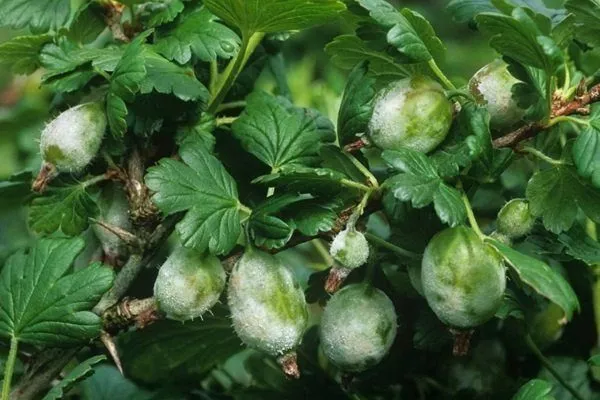
Powdery mildew can appear at any time during the growing season. Shoots and leaves become covered with a whitish coating. Initially, it rubs off easily, but then becomes increasingly dense, spreading to ovaries and berries, and spreading quite quickly.
Old powdery mildew lesions appear as dark felt-like material.
Affected shoots become deformed and dry out, leaves curl, berries stop growing and rot right on the bush or fall off.
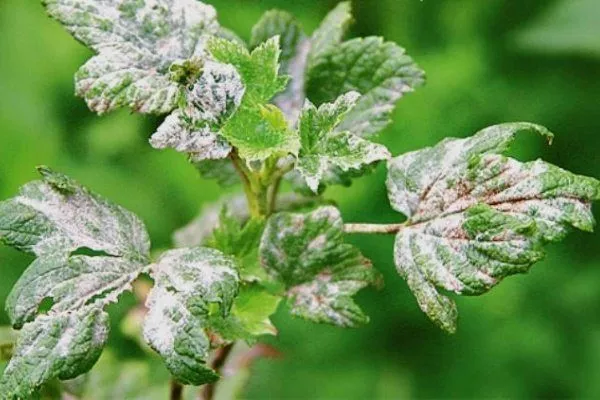
The disease is caused by fungi of the genus Sphaerotheca, which thrive in warm, humid weather. Powdery mildew can be prevented by loosely planting bushes, regularly pruning old branches, thinning the crown, moderate watering, and removing plant debris from under the bushes.
If powdery mildew has already appeared on the bush, then at the beginning of the process, when individual fruits and leaves are affected, they can be carefully cut off and burned. If the infection spreads, the plant should be immediately treated with fungicides—products that kill the fungus.
- ✓ The air temperature during processing should not be lower than +10°C and not higher than +25°C for most preparations.
- ✓ Air humidity should not exceed 70% to avoid the product running off the leaves.
Be sure to check the hazard class and conditions of use of any product before purchasing it. For example, if there's an apiary nearby, you shouldn't use substances harmful to bees.
The general rule for treatments is to complete them at least two weeks before harvest. But what if fungus attacks just before harvest? There are folk remedies that can slow the fungus's growth.
For example, dissolve a teaspoon of soda and 50-60 g of grated tar or antibacterial soap in a bucket of water and thoroughly treat all the bushes.
If left untreated, affected bushes will die within 2-3 years. Moreover, the disease will spread.
Once the coating turns gray, the spores are ripe and ready to disperse. The next generation of fungi will fall along with the leaves, infecting the soil, and making powdery mildew control much more difficult.
This disease is dangerous not only for gooseberries but for all varieties of currants. Therefore, if you had to resort to traditional methods before harvesting, be sure to treat the affected plants with fungicides immediately after the berries are picked.
Scab (gray rot)
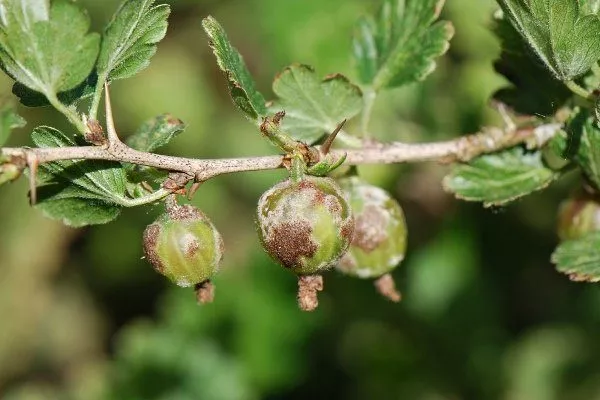
Scab affects fruits and leaves. Irregular, brown lesions appear, initially small and later coalescing. The disease is caused by the fungus Botrytis cinerea Pers. It thrives in high humidity. In hot weather, the mycelium dies, and the dead leaf parts crack and fall off.
In favorable conditions for the fungus, a grayish-smoky coating appears on the diseased foliage: these are the parts of the fungus where spores are produced. The diseased berries rot, but despite this, they show little or no color change. These fruits subsequently fall off or dry out.
The routes of infection, preventive measures and treatment are the same as for powdery mildew.
Rust
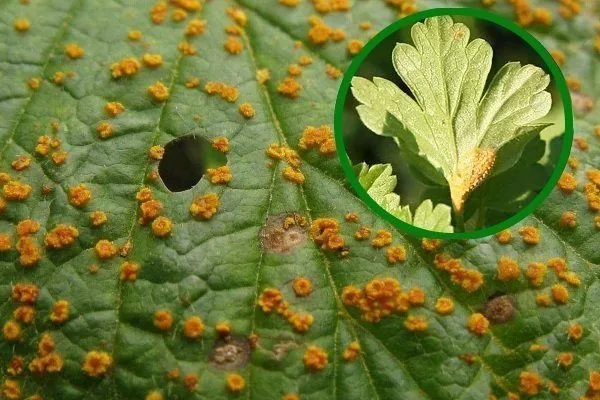
Mycosis begins with orange swellings on the underside of the leaf (goblet rust, caused by the fungus Puccinia ribesii caricis) or small yellow spots on the upper surface of the leaf (columnar rust, caused by Cronatrium ribicola). Despite the similarity of symptoms, these fungi are distantly related.
Cup-leaf rust overwinters on sedge, so the disease is more common in lowlands. The fungus becomes active in May and early June. Diseased leaves and ovaries fall off, and the plant appears healthy for the rest of the growing season.
Columnar rust overwinters on Siberian cedar and white pine. Affected trees can be identified by the presence of bark tumors—spore sites. On cultivated shrubs, this type of rust appears in midsummer.
Yellow spots on affected leaves turn brown, and bright orange bumps appear on the undersides of the leaves, which later develop into columns. Once the spores mature and disperse, the diseased foliage falls off.
Both diseases don't kill cultivated plants, but they significantly reduce their yield. The life cycle of rust fungi means there's a natural outbreak near your plants, which is likely impossible to eradicate.
The fungus infects plant debris under cultivated bushes with its spores.
Rust prevention measures are the same as for powdery mildew, but after obvious signs of the disease, fungicides should be applied 3-4 times the following season:
- at the beginning of the growing season;
- during bud formation;
- after flowering;
- if the disease continues to manifest itself after harvesting.
If you have cup rust, mow down any sedge growing in or near your dacha. If you have columnar rust, contact the forestry department responsible for the affected conifers.
Anthracnose
Gooseberry anthracnose is caused by the fungus Pseudopeziza ribis f.grossularia. The disease begins at the end of flowering and peaks in July and August.
On leaves, the fungus appears as angular-rounded spots about 1 mm in diameter, which merge to form larger spots. The center of the spot gradually becomes black and shiny, and then light-colored bumps—fruiting bodies—appear in this area.
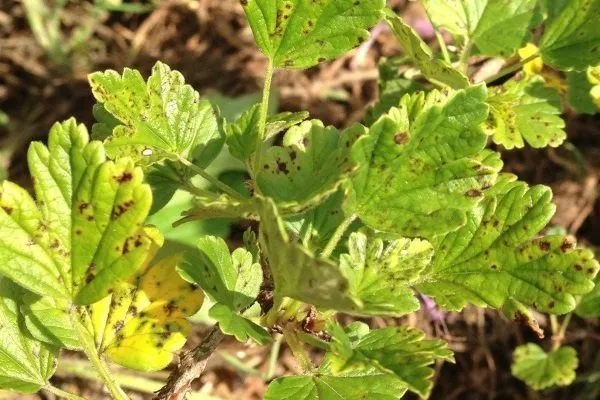
Lesions on leaf petioles, peduncles and berries appear as small brown ulcers.
The mycelium grows between plant cells, where it overwinters. In the spring, it produces spores, which disperse within a month. Optimal conditions: high humidity, temperatures of 21 to 25°C for sporulation, and 5 to 30°C for mycelium growth.
The disease reduces yield by 75% in the first season and by 80% the following year. The frost resistance of the bushes is significantly reduced, and more than half of the branches can die.
Preventive measures are standard: treatment with copper-containing fungicides from the appearance of the first leaves until the bush enters a dormant state.
Septoria (white spot)
The fungus Septoria ribis Desm. primarily attacks leaves. Round, gray spots with a dark border appear on them. Dark spots then develop on the spots—the fruiting bodies of the fungus.
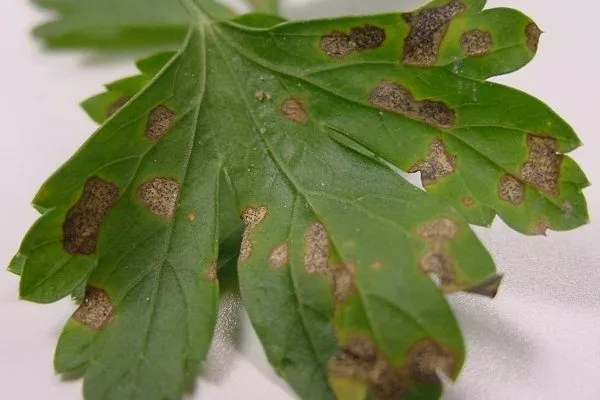
After this, the diseased leaves dry out, curl, crumble, and eventually fall off. Thus, by summer, the bush loses almost all its foliage.
Prevention and treatment measures are the same as for powdery mildew. Furthermore, resistance to the disease is reduced if plants lack manganese, copper, zinc, and boron. Therefore, if the disease appears in the area, it's worth fertilizing gooseberries and currants, which are also susceptible to septoria.
Verticillium (wilt)
The causative agent of the disease is the fungus Verticillium dahliae. Wilt is a mycosis that affects virtually all plant species. Fungi are usually more species-specific.
This fungus is normally a saprophyte (feeding on dead plant parts). However, if the plant's roots are damaged by careless tilling or pests, or if a freshly cut branch touches the ground, the fungus can enter the living plant and begin clogging its blood vessels, poisoning the host with its waste products.
The fungus itself cannot reproduce inside a living plant. The only way for it to produce offspring is to kill the host.
Diseased and young plants are primarily affected; healthy plants are able to resist wilt. Interestingly, symptoms of the disease can manifest in a specific part of the plant, such as a branch. The yield of plants affected by wilt is sharply reduced, and the shoots that grow to replace the dead ones are sterile.
In diseased gooseberry bushes, leaves turn yellow and dry out, and growth slows. Up to a third of the bushes may die, while the remaining ones will experience reduced yields. The plant may spontaneously recover from wilt.
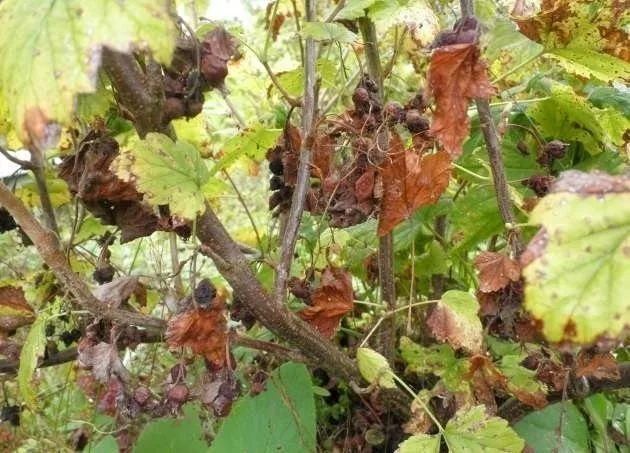
Vertilicium spores are frost-resistant and can survive in the soil for up to 10 years, awaiting favorable conditions. The optimal temperature for germination is +20…+23°C, humidity 70-80%, and pH 6-7.
Mosaic
Mosaic is a viral infection. The leaves of affected bushes develop a yellow pattern along the veins. At the same time, the plants stop growing, new leaves are small and wrinkled, and fruit production is virtually nonexistent.
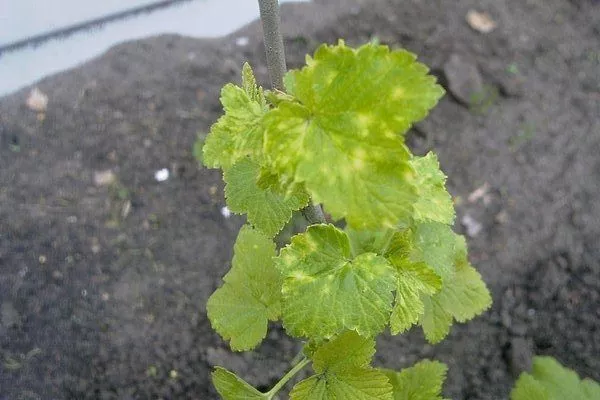
The disease is incurable. Affected plants are uprooted and burned. It is transmitted by aphids, so the primary preventative measure is treatment for this parasite.
Gooseberry pests and their control
Gooseberry pests can be very diverse. Read more about them and how to control them below.
Spider mite
When a barely noticeable web appears on the underside of the leaves, which becomes clearly visible if you pour water over the leaf, it means that a spider mite has settled on the gooseberry.
These mites feed by sucking the sap from leaves. A whitish spot appears at the puncture site. It's small at first, then grows. The leaves dry up and fall off. Bushes affected by mites lose productivity and frost resistance.
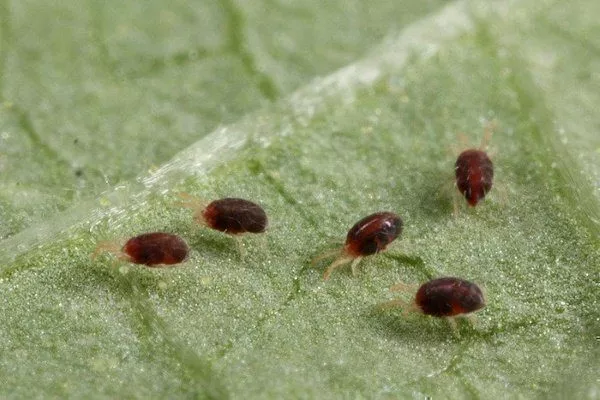
It's best to treat spider mites before fruit set, otherwise the harvest will be inedible. Insect repellents won't work; acaricides (anti-mite agents) are needed. You'll need to apply the treatment two, or possibly three times.
If many leaves are affected, treatments should be carried out with different products; there's a risk that the mites will become accustomed to the same product. Spray the bushes at intervals of 7-10 days, no longer.
The preparations have almost no effect on tick eggs, and the second treatment must be carried out when new ticks have hatched from the eggs already laid, but have not yet had time to leave their offspring.
Currant bud mite
The bud mite begins reproducing when the buds swell (where eggs are laid) and finishes reproducing when the ovaries form. The mite reproduces rapidly, producing several generations per season, each inhabiting new buds.
The affected buds resemble cabbage heads, approximately 1 cm in diameter. As a result, leaves and young shoots on the affected bushes develop abnormally, the plant cannot photosynthesize properly, and its yield drops to almost zero.
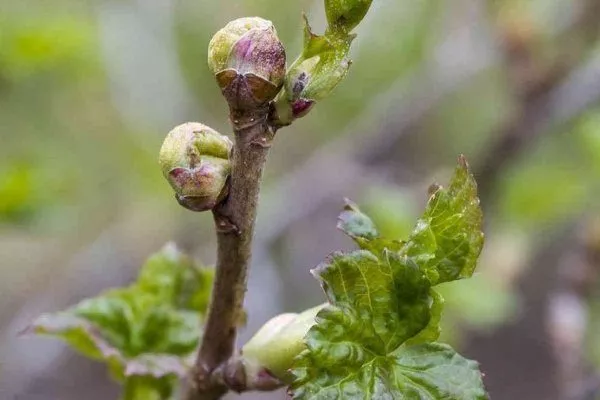
Spider mites also transmit the mosaic virus. Control measures:
- In early spring or late fall, when the buds are dormant, tie the branches of the bushes and pour boiling water over the gooseberries. Incidentally, this will increase the gooseberry's resistance to powdery mildew.
- If the damage is minor, you can pluck all the diseased buds from the bush and burn them. This is done in the fall.
- In severe cases of infestation, the bush is completely pruned ("down to the stump"), taking care not to lose a single bud, and the branches are burned. After this, it's best to treat garden tools with acaricides.
- You can choose an acaricide that meets the specific needs of your bush. It can be either pure or effective against insects as well.
- If you plan to root cuttings, treat them with a 24-hour brew: take 10 g of black tea per 10 liters of water, let it sit for 24 hours, then immerse the cuttings in the brew for 3 hours.
Colloidal sulfur, which many recommend as an effective acaricide, should not be used on gooseberries, as it may cause leaves to fall off.
Gooseberry moth
Green caterpillars with black heads, measuring just 12 mm, feed on both gooseberries and currants. The moth pupae overwinter in the topsoil and hatch when the gooseberries are in bloom. The moths lay eggs first in the flowers, then on the ovaries.
The first caterpillars consume the flowers, while the later generation consumes the seeds and pulp of the fruit. Damaged berries darken, then rot or dry out. Where the caterpillar has settled, the branch will be covered in a clearly visible web.
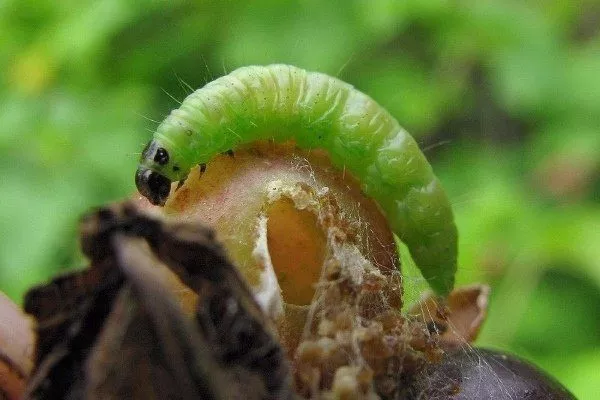
By mid-June, the caterpillars transform into pupae and prepare for winter right under the bush. Destroying them is easy: just thoroughly loosen the soil under the bush just before frost. Alternatively, you can hill or mulch the bushes in late autumn to prevent the butterflies from emerging in the spring.
To prevent moth infestation, spray gooseberries during flowering and fruit set with a soap-ash solution, or decoctions of onion, tansy, and yarrow. Planting tomatoes near the bushes will also repel caterpillars.
If only a few berries are affected, remove the caterpillars by hand. If the bush is heavily infested, industrial insecticides can be used, but make sure they are safe for use during fruit set and ripening. Pheromone traps are effective against all types of caterpillars.
Gooseberry sawfly and gooseberry moth
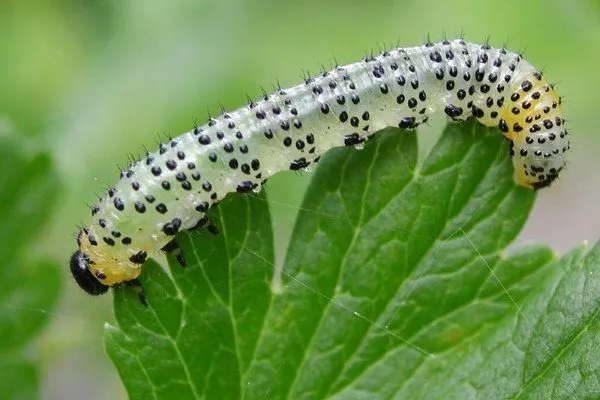
The sawfly's body is bluish-green with black spots. Geometrid moths are more noticeable: bright yellow with black stripes and spots, reaching 3-4 cm in length.
Both species feed on leaves and, if they reproduce, can almost completely strip a bush of its leaves in just a week. Control methods are the same as for the gooseberry moth.
Glass-box
If a bush's shoots suddenly begin to wilt, and a black spot is clearly visible on the cut of the dead branch, the branch has been killed by a glasswing. This wasp-like butterfly feeds on gooseberries as an adult, laying its eggs in cracks at the tips of branches or near buds.
Upon hatching, the caterpillar moves along the core of the branch to its base. Branch death due to glasswings occurs immediately after flowering. If this occurs, immediately cut the branch to the base and burn it.
This butterfly can be introduced into your garden via planting material. While you can avoid this, you can't avoid your neighbors' glasswings. Therefore, you should remove bird cherry trees, which attract these butterflies, and plant elderberries, which repel them.
Like other butterflies, glasswings dislike the scent of tomatoes, calendula, onions, garlic, marigolds, and nasturtiums. They rely on scent, and all of these plants provide excellent camouflage for their target plants.
Treatment of bushes is carried out by pruning: in cases of significant damage, trim to the stump; in other cases, trim to the cut without a black spot in the core. Coat the cuts with garden pitch.
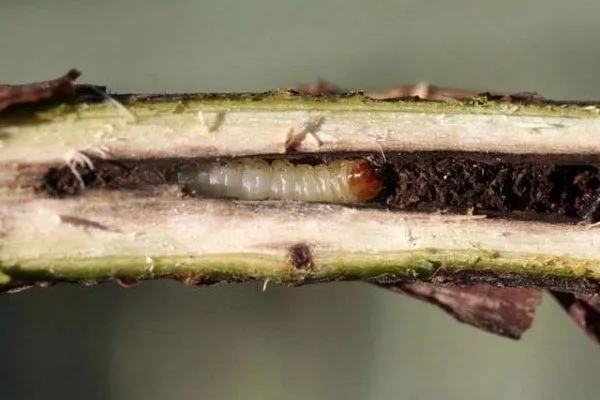
In May and June, loosen the soil under the bushes once a week with ash and tobacco dust; this should prevent the caterpillars from pupating. Treat gooseberries, currants, and raspberries with insecticides as soon as the first leaves appear, and repeat the treatment 10-14 days later. It's important to spray all three crops, as the glassworm's life is closely linked to each of them.
Aphid
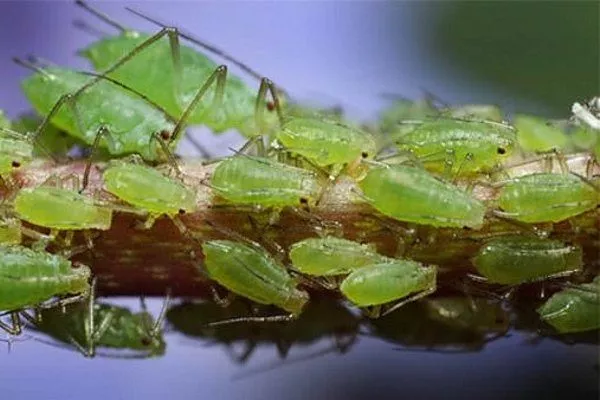
This well-known sucking insect feeds on plant sap, causing shoots and leaves to deform. This is usually the first sign of aphid infestation on gooseberries; the colony itself is only noticeable once it has reached gigantic proportions.
In this case, you'll need to use insecticides. If aphids have just begun to colonize the bush, simply cut off the affected shoots and burn them.
Aphids not only reduce plant yields, they can also transmit incurable viral diseases of gooseberries. Ants also bring aphids to the garden. Therefore, no matter how much you feel sorry for these hardworking insects, if aphids appear, anthills will have to be removed from the garden.
During the gooseberry fruiting period, you can restrain the growth of aphid colonies using a soap solution (250 g per bucket of water).
Gall midges
These are tiny insects, only 3 mm long, similar to mosquitoes. Among the many species of these insects, some are beneficial, such as those that eat aphids. But there are also pests, and gooseberries and currants are affected by three such species: shoot-borne, flower-borne, and leaf-borne.
It's almost impossible to spot the gall midges themselves, but the results of their activity are striking: drying branches, dried or curled leaves at the ends of branches, drying ovaries - all of this will not escape the attention of an experienced gardener.
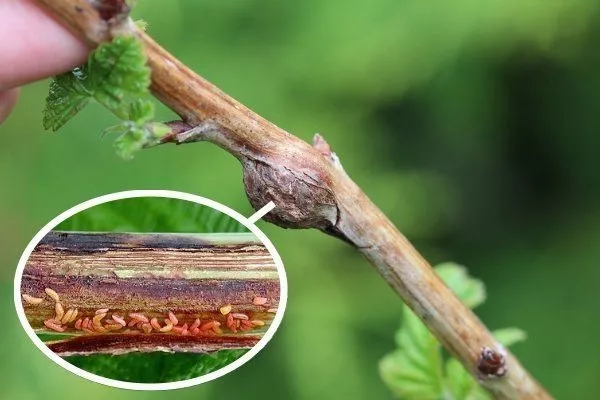
Gall midges are controlled in the same way as caterpillars. One particular method that works well is tomato tops soaked for 24 hours with laundry soap (5 kg of tops and 250 g of soap per 10 liters of water).
The bushes are treated with the infusion 2-3 times every few days. Furthermore, gall midges dislike the scent of mint, so it's a good idea to plant it near bushes even without signs of infestation, which will be an excellent preventative measure.
Gooseberry treatment for prevention
There are four types of preventative treatments for gooseberries: spring, fall, regular, and pre-planting. Together, these treatments provide maximum protection against various diseases.
Choose a site for planting gooseberries that hasn't previously been used for either gooseberries or currants, as they share too many common diseases and pests. It should be an open area, but not a low-lying area. The bushes should be spaced loosely.
Consider planting tomatoes nearby or creating a flower garden, depending on the purpose of your property. A flower garden offers creative possibilities, combined with practicality: many ornamental plants repel pests.
Avoid overcrowding: regular pruning will not only protect the plant from pests but also increase yield. Be sure to treat cuts with garden pitch, which will protect the plant from many pests and diseases.
Regular mulching Loosening the soil will help eliminate the pupae of harmful butterflies. The mulch should be replaced once a month, and the soil should be loosened at the same time.
In summer, it's a good idea to treat bushes with a soap solution (250 g of soap per bucket of water). Soap is also added to most mixtures, infusions, and decoctions used in traditional gardening: in these mixtures, the soap is responsible for fixing the active ingredients to the leaves, as if gluing them, but only until the first rain.
Spring
Spring is an excellent time to prevent gooseberry diseases. While the snow is still fresh and the buds are just beginning to open, scald the bushes with boiling water—this is an excellent preventative against spider mites and fungi.
A little later, treat the bushes with Bordeaux mixture at a 3% concentration to protect against fungal infections. Repeat the treatment after the bushes have finished flowering, but dilute the copper sulfate and lime at a 1% concentration.
In early spring, while the snow still lies, it's best to check again for any remaining leaf mold. Choose a time between the thaw and the next spring frost and loosen the soil again. At the very least, disturb it. This will increase the likelihood of completely eliminating the larvae of unwanted insects from the area: most pupae do not tolerate frost well.
- Cleaning and burning all fallen leaves and plant debris under bushes.
- Deep loosening of the soil to a depth of 15-20 cm to destroy overwintering pests.
- Mulching with humus in a layer of 5-7 cm to protect the roots from frost and enrich the soil.
Autumn
After harvesting, spray the bushes again with 1% Bordeaux mixture. In late fall, remove all fallen leaves and other plant debris from under the bushes and burn it, then loosen the soil and mulch with humus. If you suspect bud mites may have infested the bushes, douse them with boiling water again.
We recommend reading the article about How to care for gooseberries in the fall after harvesting.
Autumn is a great time to prune gooseberries. Don't spare the older branches, as these are where the bark is most likely to crack and the wood is more attractive to pests.
In spring, new branches are removed, and in summer, those that are in the way. Autumn is the time for a "general cleanup" of the bushes. Pruning to the stump is a drastic measure, but justified. A completely renewed, healthy bush will reward the gardener with a bountiful harvest.
It's essential to monitor the health of your gooseberry bush. Identifying pests and diseases early will make dealing with them much easier.