
The Krasnoslavyansky gooseberry is considered by many to be one of the best dessert varieties. It is prized for the exquisite flavor of its purple berries and its high frost resistance. Let's learn how to plant and grow this fruitful variety.
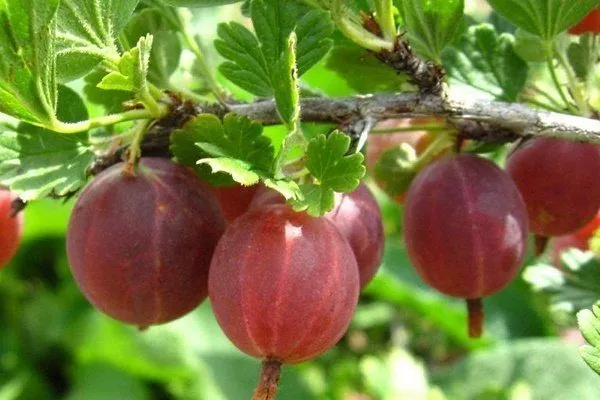
gooseberry variety "Krasnoslavyansky"
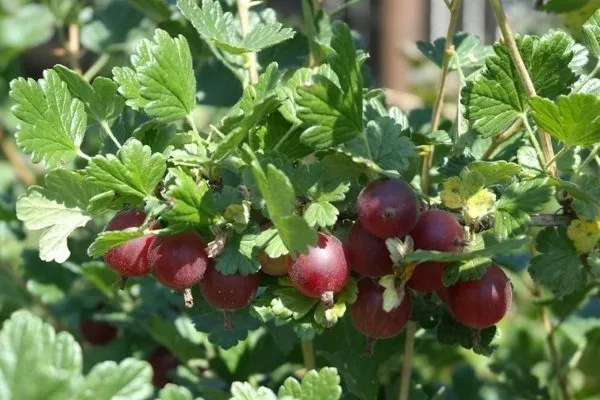
Gooseberries "Krasnoslavyansky" are sweet, with tender and juicy pulp
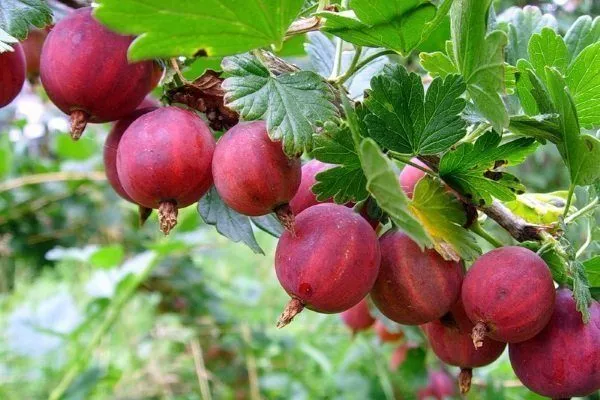
The Krasnoslavyansky variety is very productive and unpretentious
History of the variety's development
The Krasnoslavyansky gooseberry was created by breeders at the Leningrad Fruit and Vegetable Experimental Station. The new hybrid was added to the State Register in 1992. The new variety was recommended for cultivation in the Central Region.
Description of the Krasnoslavyansky gooseberry bush and berries
Brief botanical description of the Krasnoslavyansky gooseberry:
- Bushes. Medium-sized and gently spreading. Height: up to 1.5 m. The shoots are medium thick, unevenly colored—brown at the base, turning green further down. They have numerous thorns—thick needles evenly distributed along the entire length of the shoots.
- Leaves. Small, round, deep green, matte with a slight sheen. The underside is pubescent.
- Flowers. Medium-sized, bell-shaped. Color: pale yellow. Racemes: single- and double-flowered. The plant has both male and female flowers.
- Fruit. Large, weighing 6-7 g, they turn dark red when ripe. The berries are aromatic, sweet and sour. Tasting score: 4.9 out of 5. The fruit is round or oval in shape and densely covered with hairs.
Pros and cons
Advantages of the Krasnoslavyansky variety:
- high yield;
- good immunity;
- early fruit bearing;
- undemanding to care;
- tasty and beautiful berries;
- It is easily transported without losing its marketable appearance.
The variety has few disadvantages, but for many gardeners they can become a serious obstacle:
- strong thorniness of shoots;
- moderate susceptibility to fungal diseases;
- rapid shedding of ripe berries.
Characteristics
The Krasnoslavyansky variety is prized not only for its berry flavor but also for its excellent agronomic characteristics. Let's learn more about this early-ripening variety.
Usage
The berries are eaten fresh, as well as used in compotes, jams, and preserves. Ripe berries make excellent fillings for baked goods and sauces for meat and fish dishes. Krasnoslavyansky berries can be dried; when dried, they are very similar to raisins.
Ripening and harvesting times
Krasnoslavyansky is a mid-season variety. Ripening is uniform, and the berries are ready for harvest in late July or early August. Krasnoslavyansky berries tend to fall off quickly once ripe, so harvesting should be done immediately.
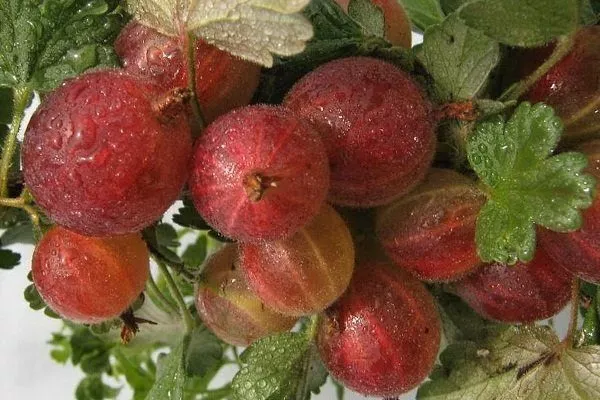
The variety is early-bearing—the first harvest begins just two years after planting. Although it's small, Krasnoslavyansky gradually increases its yield. Peak productivity occurs at eight years of age. After that, yields decline. To prolong fruiting, rejuvenating pruning is used.
Productivity
Full harvests are collected from bushes aged six years and older. A mature plant yields 6-8 kg of berries. Up to 200 centners of gooseberries can be harvested per hectare.
Shelf life and transportability
Berries have thin skins, but this doesn't prevent them from transporting safely. The key to successful transportation is stacking the berries in thin layers. Fully ripe berries can be stored for no more than two days. They can be stored in the refrigerator for much longer—up to 10 days.
If long-distance transportation is required, the fruits are picked unripe – this way they will better withstand the journey.
Climate and growing regions
This variety, characterized by good winter hardiness and drought tolerance, as well as resistance to temperature fluctuations, adapts well to the climate of most regions of Russia. Krasnoslavyansky grows and produces fruit well in the Central, Central, Central Black Earth, and Northwestern regions.
Resistance to diseases and pests
This variety is fairly resistant to common berry diseases, including their main scourge, powdery mildew. It also has good resistance to anthracnose and white spot. It is susceptible to pests common to gooseberries, such as the gooseberry moth, the looper, and the gooseberry aphid.
Standard preventative measures help combat diseases and pests: removing fallen leaves, pruning the bush, loosening the soil, and maintaining normal soil moisture.
Drought resistance and winter hardiness
The variety tolerates drought well, provided it receives spring irrigation to replenish moisture. Any crop can withstand prolonged droughts, with consequences for the harvest, but Krasnoslavyansky gooseberry easily tolerates short-term droughts. The maximum frost this variety can withstand without cover is -37°C.
Growing conditions
Requirements of the Krasnoslavyansky gooseberry for light, soil and planting site:
- Gooseberries thrive in virtually any soil. However, they produce high yields only in fertile, well-fertilized soils. Acidic, highly podzolized soils are an exception—they are unsuitable for gooseberries. Acidic soils are limed in two stages—before and after planting.
- Choose a site with good lighting. Partial shade is acceptable, but shaded areas are unsuitable for gooseberries. In the shade, the shoots grow upward, become thin, and the berries become small.
- The site should be free of drafts. Gooseberries are best planted on slopes, elevated areas, and flat areas. Lowlands are unsuitable.
- It is preferable to plant bushes near fences.
- The groundwater level should be at least 1.5 meters. Excessive soil moisture causes shoots to freeze. High groundwater levels lead to the death of the root system and the entire plant.
Landing features
Krasnoslavyansky gooseberry is planted using standard techniques for this crop. The main thing is to consider the size of the bushes and soil requirements.
Landing dates and location
The Krasnoslavyansky gooseberry can be planted in spring or fall. However, the best time to plant this variety is considered to be early fall – seedlings can be planted from September to mid-October. Later planting is not recommended, as the seedlings may not have time to take root before the frost sets in.
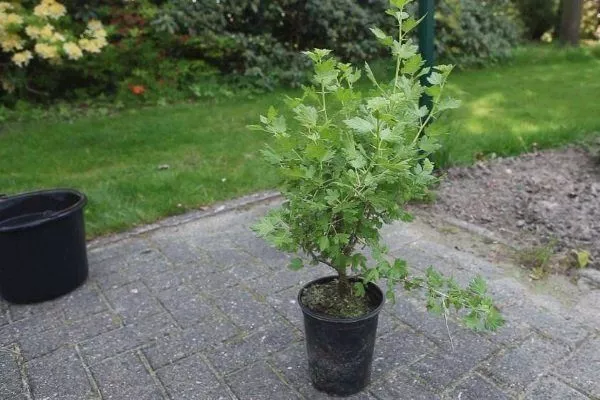
The distance between gooseberry bushes and trees should be at least 3 m. It is not recommended to plant gooseberries near stone fruit crops, as this will negatively impact yield.
Site preparation
Prepare the planting site in advance. If gooseberries are planted in the fall, fertilize them no later than 1.5-2 months beforehand. Spring planting is easier—all fertilizer is applied in the fall. To create favorable conditions for the seedling, properly prepare the hole and the site.
The procedure for preparing the site and planting hole:
- Spread compost over the area – approximately 10 kg per 1 sq. m.
- Dig the area to a depth of a shovel blade.
- Prepare the soil mixture you'll be filling the hole with. The soil mixture should consist of:
- fertile soil layer dug out when digging a hole (10-15 cm);
- a bucket of peat;
- 2 buckets of humus;
- 200 g superphosphate;
- 250 g of wood ash.
- Dig holes for the seedlings. The holes should be 50-60 cm deep and 45 cm wide. Place a drainage layer—rocks, crushed stone, etc.—at the bottom.
- Fill the hole with potting soil and pour 2 buckets of water on top. Now wait until planting time.
When digging holes for gooseberries, keep in mind that this variety produces medium-sized bushes. The optimal distance between bushes is 2 m.
Selection of seedlings
Purchase planting material from specialized nurseries or their stores. Signs of a suitable seedling:
- Age – 1-2 years.
- A closed root system is preferable to an open one. Seedlings with a closed root system tolerate transplanting better and establish themselves more quickly.
- Number of shoots: 2-3. Height: up to 45 cm. There should be no leaves on the shoots.
- The bark is even, smooth, without signs of mechanical damage or disease.
- The seedling should have three skeletal roots. The rhizome length is 15 cm.
- ✓ Check the root system for fungal diseases that are not visible during a cursory examination.
- ✓ Make sure the seedlings were grown in conditions similar to yours for best adaptation.
Try to keep the roots of the seedlings exposed to air as little as possible; if they dry out, this will negatively affect the health of the plant.
Step-by-step planting process
The procedure for planting gooseberry seedlings:
- Soak the seedling in water an hour before planting. Immediately before planting, dip the roots in a manure-clay slurry.
- Trim all damaged and weak branches from the seedling. When planting, prune each seedling back to 4-5 buds.
- Rake a mound of soil onto the soil mixture poured into the hole – you will place the roots of the seedling on it.
- Place the seedling in the hole. Position it at a slight angle. Spread out its roots. When planting, bury the root collar 5-7 cm deep. If the soil is light, bury it even deeper—8-10 cm.
- Cover the roots with soil, shaking the seedling occasionally to fill the voids. Tamp the soil down.
- Water the seedlings with 15-20 liters of water for each.
- Mulch the tree trunk circle with sawdust, straw, peat or humus.
Care instructions
The beauty of any gooseberry is that it doesn't require a lot of attention. This unpretentious crop requires minimal care. The key is the timeliness of the measures taken; there are few of them, but each one is important for both the yield and the plant's health.
Read more about How to care for gooseberries in the fall after harvesting.
Support
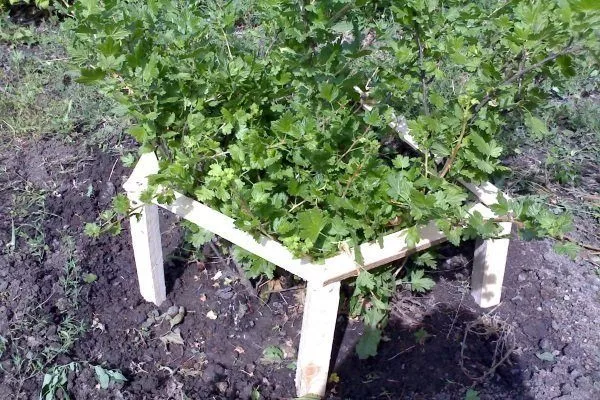
Without support, gooseberry branches bend all the way to the ground, which creates discomfort and negatively impacts the quality of the berries. To keep the branches off the ground, install special supports—available at gardening stores. Alternatively, you can make your own supports—from plastic or metal tubes, wooden blocks, or any other suitable material.
Advantages of using supports on gooseberry bushes:
- the plant becomes more compact and neat;
- prevents branches from lodging;
- branches do not break under the weight of snow or in the wind;
- the berries don't get dirty from the soil;
- Maintenance is simplified – weeding, loosening, watering.
Top dressing
Gooseberries need to be fertilized annually – the soil's nutritional value directly impacts their yield. Fertilizing schedule:
- In early spring, potassium sulfate is scattered around the tree trunk circle – 15 g per 1 sq. m.
- After harvesting the berries, water the bush with a nutrient mixture. One bucket is enough for 1 square meter. The mixture consists of:
- 10 g urea;
- 8 g potassium sulfate;
- 20 g superphosphate;
- 10 liters of mullein (solution 1:10) or bird droppings (1:20).
Instead of a nutrient mixture, you can use a regular complex fertilizer. Fertilizing begins 2-3 years after planting.
Pruning bushes
The Krasnoslavyansky gooseberry is best suited to classic bush training. Here are the pruning instructions and principles:
- In the first year of life, each shoot is cut by a third, leaving 4-5 buds.
- After selecting 3-4 of the strongest basal shoots, cut out all the others. Also remove all branches growing inward or toward the ground.
- In the second year, the current year's shoots are again pruned by a third, leaving 6-8 strong basal shoots.
- By the third year, the bush should have 10-18 branches of varying ages. The bush is pruned in the same way as the previous year.
- By the 5th to 7th year, the bush has 16-20 branches. It's time for thinning. All branches older than 5-6 years are pruned—they are easily distinguished by their color, which is darker than the others. The remaining pruning techniques are repeated.
Gooseberries are recommended to be pruned in the fall. In spring, pruning should be done early, before the buds open. This can result in the plant being exposed to subsequent frosts after pruning, which can cause damage.
Pruning is done annually. If gooseberries are not pruned, the berries will be small.
Mature bushes are subject to rejuvenation pruning: two-thirds of the shoots are removed, cutting them down to the roots. Only the strongest branches are left. All branches can be removed, leaving a 15 cm stump. Properly pruned gooseberries can prolong their fruiting period to 15 years.
Watering
Gooseberries are drought-tolerant crops, but there are periods when they absolutely need moisture. Watering schedule:
- formation of young shoots – from the 2nd decade of May to the 1st decade of June;
- formation and ripening of fruits – 2nd and 3rd decades of June;
- pre-winter watering – from the 3rd decade of September to the 2nd decade of October.
If autumn is rainy, pre-winter watering may be omitted. The watering rate is determined by the age of the bush. Each bush requires 2-6 buckets of water. The watering depth should be 35-40 cm, and during recharge watering, 60-70 cm.
The best watering method is drip irrigation. Alternatively, use the trench method, digging shallow trenches 40 cm from the bush's branches. The trenches are 10-15 cm deep. After the soil has absorbed, the tree trunks are mulched. You can read more about the principles of soil mulching here. here.
Reproduction
The Krasnoslavyansky variety can be propagated by any of the following methods:
- By layering. Gooseberries can be propagated by horizontal, arching, or vertical layering. One- or two-year-old shoots are used for layering. To encourage bud development, the tops are pinched.
- Branches. This method is used when propagating bushes older than five years. A strong branch is selected and separated along with some of the roots.
- By dividing the bush. This method is mainly used for bushes over 10 years old. The bush is dug up and divided into sections.
- By cuttings. This method allows for obtaining a large amount of planting material. Woody cuttings are obtained from shoots growing from the base. The cuttings are taken from bushes no older than 10 years.
Preparing for winter
The Krasnoslavyansky variety is frost-hardy and tolerates harsh winters well. However, this doesn't mean the plant doesn't need winterization. Here's how:
- Collect and burn fallen leaves.
- Avoid using fallen leaves as mulch, as they may harbor overwintering pests.
- Spray the bush with a 1% Bordeaux mixture solution. Water the soil with a potassium permanganate solution (1.5 g of potassium permanganate per 10 liters).
- Trim off all broken, damaged and dry branches.
- Add fertilizer to the soil and dig it to a depth of 10 cm.
- Sprinkle the tree trunk circle with peat – a layer of 10-15 cm.
- If winter is snowy, cover the bushes with snow. If there's no snow, cover the bushes with agrospan, spunbond, or other covering material.
Pest and disease control
The Krasnoslavyansky variety has a relatively high immunity, but under unfavorable conditions and without preventative measures, this gooseberry can be affected by common berry diseases. The most dangerous diseases for the Krasnoslavyansky variety are listed in Table 1, and the most dangerous pests are listed in Table 2.
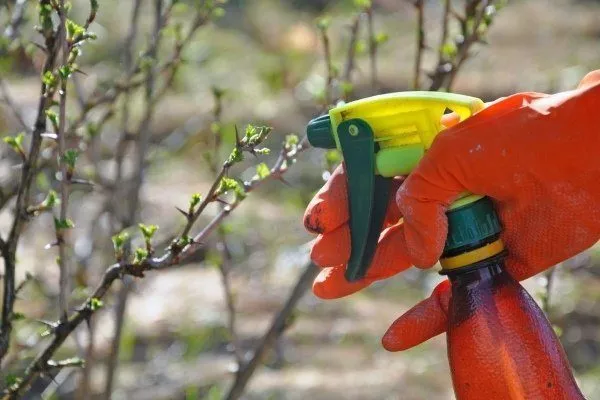
Table 1
| Diseases | Symptoms | How to fight? | Prevention |
| American powdery mildew | Leaves, shoots, and berries become covered with a white coating. Over time, it darkens, and the berries dry out and fall off, the leaves curl and die, and the shoots become deformed. | Before the buds open, spray the bushes with a solution of ferrous sulfate (30 g per bucket of water).
During the growing season, spray with Topaz (2 ml per bucket of water). | Compliance with agricultural technology.
Moderate use of nitrogen fertilizers. Cleaning up fallen leaves. |
| Anthracnose | Dark spots appear on the leaves. The leaves curl. | Before bud break, spray with 1% Bordeaux mixture.
10 days after picking the berries, repeat spraying. | Avoiding over-watering of the soil.
Collection of fallen leaves. |
| White spot | Gray spots with a dark brown border appear on the leaves. Over time, the spots turn white. The spots also appear on the berries, which dry out and fall off. | Before the buds open, spray the bushes and soil with Nitrafen (300 g per 10 l).
Spraying is repeated 10 days after harvesting the berries. | Prevents bush thickening.
Fallen leaves are collected and burned. |
Table 2
| Pests | Damage caused | How to fight? | Prevention |
| Gooseberry aphid | They suck the sap from the leaves. Leaves and shoots become deformed, curl, and die. | Before bud break – Nitrafen (300 g per 10 l).
During blooming – Karbofos (60 g per 10 l). | Compliance with basic agricultural technology rules. |
| Gooseberry moth | They damage the berries. As they ripen, they dry out, entangled in webbing. | Before flowering, spray with a solution of iron sulfate (30 g per 10 liters of water).
Collection and destruction of spider web nests. After flowering, spray with Metaphos (10 ml per bucket of water). | Loosening the soil under the bush.
Hilling up the bushes and mulching with peat or compost. The layer thickness is 10 cm. Remove the mulch immediately after flowering. |
Harvesting and storage
Harvesting begins in late July. The berries are placed in wooden or plastic containers for storage or transportation. If the gooseberries are to be transported long distances, they are picked unripe and stored in containers up to 5 liters. Ripe gooseberries are stored in containers up to 2 liters.
Gooseberries are stored in the refrigerator. They can be frozen or dried. At temperatures between 1 and 4°C and 85% humidity, they can be stored for up to 4 days. Unripe fruits can be stored longer – up to 8 days.
Only fresh gooseberries are frozen. Frozen fruits have a shelf life of 3-5 months. The berries are dried in drying cabinets. Dried gooseberries are very similar to raisins. Dried fruits can be stored for up to 2 months at temperatures between 0 and 1°C, and at lower temperatures, the shelf life can be extended to six months.
Birds love the Krasnoslavyansky gooseberry, so cover the bush with netting shortly before ripening. Just make sure the netting doesn't touch the branches.
Reviews of Krasnoslavyansky gooseberries
The Krasnoslavyansky variety is considered one of the best for good reason – it's delicious and makes excellent preserves. This gooseberry is suitable for commercial cultivation, and even a novice can master its cultivation techniques.