
The Kolobok gooseberry is a high-yielding, mid-season variety. Its popularity stems from its low thorn count and fragrant, sweet berries.
This article will explain the pros and cons of this variety, the specifics of agricultural practices, and methods for combating the most common gooseberry diseases and pests.
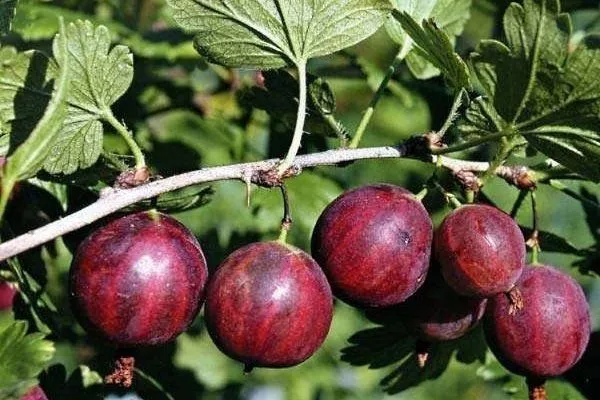
Gooseberry variety "Kolobok"
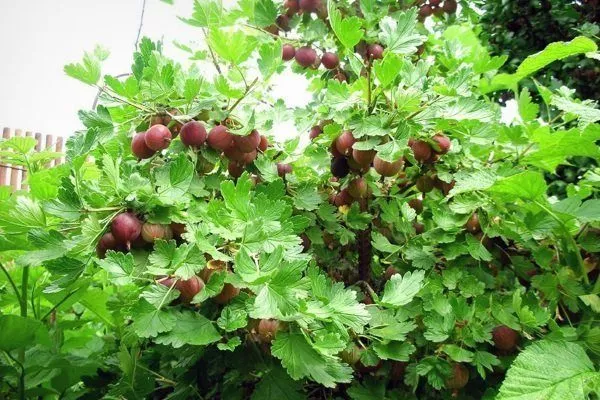
The gooseberry bush "Kolobok" is covered with numerous shoots, practically devoid of thorns
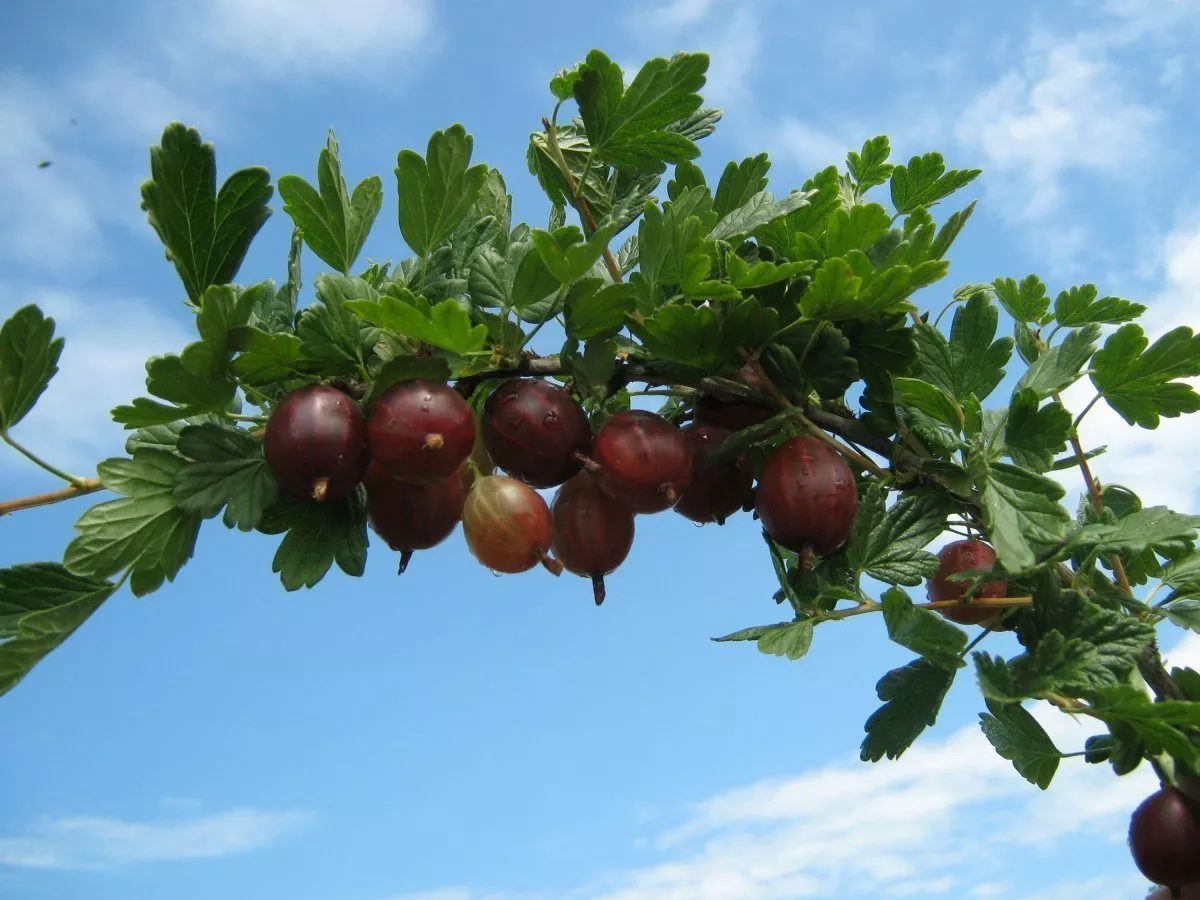
The characteristic pleasant taste gave the Kolobok variety a tasting score of 4.5 points out of a possible 5.
A Brief History
In 1977, at the All-Russian Scientific Research Institute of Gooseberry and Vegetable Growing, I. Popova conducted trials to develop a new mid-early table gooseberry variety that could be grown both in Central Russia and in the northern regions of its central zone.
The breeder based her design on two popular varieties at the time: Smena and Pink 2. The resulting hybrid inherited all the best qualities of its ancestors: low thorniness, large fruit, and resistance to powdery mildew.
In 1988, Kolobok was added to the State Register. The variety immediately became popular among both summer residents and professional gardeners. Kolobok is recommended for cultivation in Eastern Siberia and other regions of Russia:
- Volga-Vyatka;
- Central;
- Central Black Earth.
Some gardeners successfully grow the crop in more northern regions, covering it with spunbond for the winter. However, in this case, there remains a risk of frost damage due to sudden temperature fluctuations.
Appearance of the Kolobok gooseberry variety
Gooseberry Kolobok is a vigorous bush with beautiful large leaves.
Flowering begins in late April, when the bush is covered with medium-sized, light-green flowers edged in pink. The shoots are vigorous, and the crown is dense.
During the fruiting season, the lower branches literally lie flat on the ground, which promotes berry rotting and complicates harvesting. The variety is weakly thorned—single short thorns are visible at the nodes on the lower stems.
Bush
The plant typically reaches a height of 1-1.5 m. The shrub is spreading, with branches strongly curved toward the ground. The shoots are dark green and pubescent.
The first 2-3 years after planting, Kolobok grows quite intensively, then the growth rate slows down.
Gooseberry leaves are large, smooth, and have smooth edges. Petioles are short but thick. Buds are large and dark brown.
Kolobok has a high tillering density, so for successful fruiting the bush requires regular pruning.
Berries
The main advantage of the Kolobok is its dark red, sweet berries. They range from medium-sized (up to 3 g) to large (5-8 g).
The fruits are round-oval in shape and have a rich waxy coating. When fully ripe, they remain firm for a long time and separate easily from the branches during harvest. The skin is medium-thick and does not crack when pressed.
The pulp is juicy, sweet, and slightly tart. Each berry contains 18-20 medium-sized seeds.
See below for a review of one of the most famous gooseberry varieties, "Kolobok":
The variety is considered a table variety, but the tasting committee rated Kolobok's taste at 4.5 points out of a possible 5.
Pros and cons
A significant advantage of Kolobok over other mid-season varieties is its early maturity—the plant begins bearing fruit in the second or third year. With proper planting and care, gooseberries can bear fruit in the same location for 25-30 years.
Other advantages of the Kolobok variety include:
- frost resistance;
- extended fruiting period;
- medium and large fruit size;
- disease resistance;
- good transportability;
- presentable appearance;
- weakly prickly.
The variety is undemanding in terms of agricultural practices, so it can be successfully grown even by inexperienced gardeners. The disadvantages of Kolobok include:
- tendency to crown thickening;
- spreading of the bush;
- instability to sudden changes in air temperature.
Preparing for landing
Preparation of the plot for gooseberry planting begins 2-3 months in advance. A crucial step is removing weeds, especially couch grass. This can be done either manually or with herbicides.
To increase soil fertility, apply organic fertilizers at a rate of 2-3 kg per 1 sq. m.
Areas with poor soil are additionally fertilized with 50 g of superphosphate, 20 g of potassium chloride and 25-30 g of urea per 1 sq. m.
To improve aeration, add river sand. After applying fertilizer, the area should be dug deeply and watered.
Read useful information about How to properly plant and grow gooseberries.
Plot
Gooseberries thrive in sandy, sandy loam, loamy, and even clayey soil. However, they do not tolerate acidic, waterlogged, or cold soil at all. The optimal soil pH is 6.
- ✓ The optimal soil pH level should be strictly within 6.0-6.5 to ensure maximum yield.
- ✓ The depth of groundwater should not exceed 1.5 m to prevent rotting of the root system.
Avoid planting shrubs in areas with high groundwater levels, as excess moisture will cause root rot and kill the gooseberry.
Gooseberries are sun-loving crops, so choose a sunny location for planting, not under a tree canopy. Even in dappled shade, Kolobok grows tall, and the berries lose their sweetness and become smaller.
It is not recommended to plant the shrub in very open areas, as drafts and strong winds can significantly damage the plant.
It's not recommended to plant Kolobok in a plot previously occupied by currants or raspberries. Fungal spores or berry pest eggs remaining in the soil will damage the young bushes. The best predecessors to gooseberries are row crops and vegetable crops.
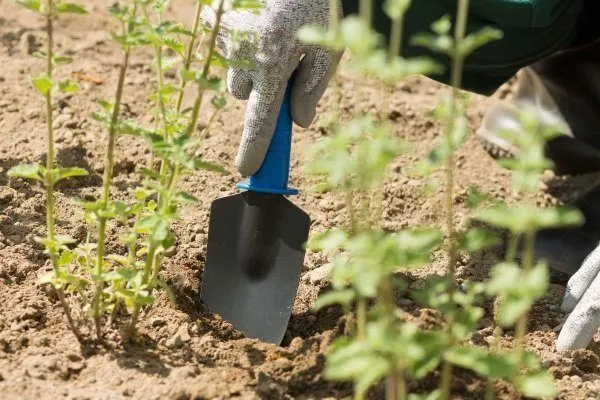
Season
Autumn is the best time to plant gooseberries. Plant the bushes 2-3 weeks before the first frost to allow the roots time to establish and grow.
Kolobok can be planted in the spring, but it should be done immediately after the weather warms up, before the buds begin to grow. In this case, the planting hole should be prepared in the fall.
When planting gooseberries in spring, be sure to treat their roots with a rooting biostimulant, such as Epin or Zircon. The plants are planted at an angle, and the shoots are pruned, leaving three to four buds.
Planting material
For planting, choose 1- or 2-year-old seedlings with 3-4 healthy shoots. The root system should be well-developed and not dry out.
If you're buying a bare-root plant, wrap it thoroughly in a damp cloth. It's a good idea to have the seller soak the roots in a clay slurry before selling.
Seedlings in containers are transported strictly vertically.
Correct landing of the "Kolobok"
To provide the bush with the nutrition it needs to develop in a new location, prepare 6 kg of compost, 200 g of superphosphate and 1 glass of ash before starting work.
The technology for planting gooseberries is as follows:
- Dig a hole measuring 50x50 cm. Remove the bottom layer of soil and set the top layer aside for filling the seedling.
- Fill the hole 2/3 full with the reserved fertile soil and add the prepared fertilizer. Mix well.
- Place the seedling vertically in the hole, spreading out the roots. Fill with the remaining soil so that the root collar is buried 5-7 cm deep.
- Compact the soil, creating a ridge around the hole. Water the plant at a rate of 10 liters per bush.
- Mulch the soil with humus.
- If you plant gooseberries in spring, cut back the shoots, leaving 3-4 buds.
Care tips
To ensure a bountiful harvest of delicious berries year after year, Kolobok requires sufficient attention. If cultivation practices are not followed, the yield will decrease by a third, and the fruits will lose their sweetness and flavor.
We recommend reading the article about How to care for gooseberries in the fall after harvesting.
Shrub care includes:
- sufficient watering;
- regular feeding;
- pruning;
- preventive spraying;
- protection from freezing.
Watering
Gooseberry Kolobok loves moderate watering and easily tolerates temporary lack of moisture.
It's essential to water the bushes during flowering, active growth of young shoots, and during berry formation. However, be careful not to allow water to stagnate around the roots, as this increases the risk of fungal diseases.
To ensure your gooseberries survive the winter well, be sure to water them in the fall to replenish their moisture. This should be done before the first frost in October-November. Apply 40-50 liters of water under each bush.
Trimming
Kolobok is prone to crown thickening, so it requires regular thinning of shoots.
The following spring, after planting, all weak and frost-damaged branches are removed. After harvesting, the bush is shaped: the shoots are trimmed back to half their length, so that the topmost bud grows inward.
In the second or third year, in the fall, only the eight most vigorous shoots are left on the bush and shortened by half. By the fourth year, the bush is considered fully formed.
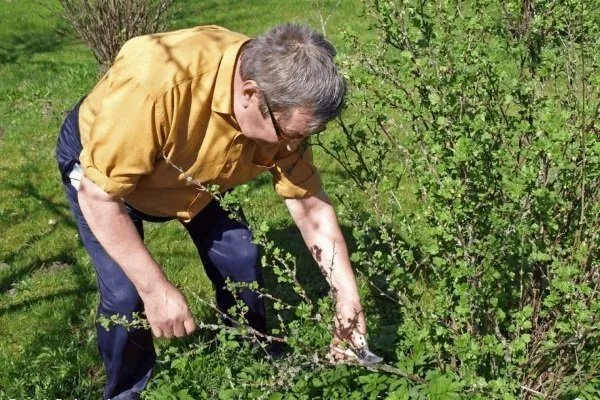
Next, you should cut out only weak and diseased shoots, as well as branches that grow inward and thicken the crown.
Spraying
Kolobok is a disease-resistant variety that rarely experiences pest attacks. However, if not properly cared for, the plant's immunity weakens, requiring additional protection.
Preventative spraying begins in mid-March. Both biological and chemical products are used for this purpose.
To prevent fungal and bacterial diseases, as well as aphids and mites, use:
- fitoverm;
- trichodermin;
- copper sulfate;
- one percent Bordeaux mixture;
- malathion.
All medications are used according to the instructions.
Weeding and loosening
In October, cultivate the tree trunks. First, lightly moisten the soil under the bushes. Remove weeds and dig over the area.
Be careful when working directly near the bushes, as the fibrous roots of gooseberries are located right at the surface.
Fertilizing and mulching
If the gooseberry planting was carried out according to the instructions, then the bushes will not need additional feeding for the next 3 years.
- In spring, before the growing season begins, apply 30 g of ammonium nitrate under each bush.
- In summer, during the period of berry formation, feed the bushes with a solution of mullein (1:10) at the rate of 5 liters per bush.
- In the fall, after harvesting, apply 50 g of superphosphate and 30 g of potassium salt under each bush.
In the 4th year, before the autumn digging of the area under the bush, add:
- half a bucket of compost;
- 40-50 g of superphosphate;
- 20 g potassium sulfate;
- 20 g ammonium sulfate.
After applying fertilizer and digging, the bush is watered again and mulchUse peat, humus or rotted manure as mulch.
Preparing for winter
Kolobok is quite frost-hardy and can withstand temperatures down to -24 degrees Celsius. However, sudden thaws and sharp daily temperature fluctuations can seriously damage the bushes.
In central Russia, it's advisable to cover Kolobok with spunbond or any other covering material. For convenience, before covering, gather the branches into a bundle and tie them in the middle.
Diseases and pests
Powdery mildew, the gooseberry's main enemy, is practically not a problem for Kolobok.
Occasionally, bushes are affected by cup rust. The disease manifests itself as bright orange swellings on leaves and shoots, which eventually burst. The shoots become twisted and die off by winter.
The disease can be prevented by spraying the bush with 90% copper oxychloride immediately after flowering.
Kolobok is susceptible to pests such as aphids and geometer moths. If you notice pests on the leaves, treat the bushes with Decis, Fufanon, or Karbofos according to the instructions before and after flowering.
Reproduction
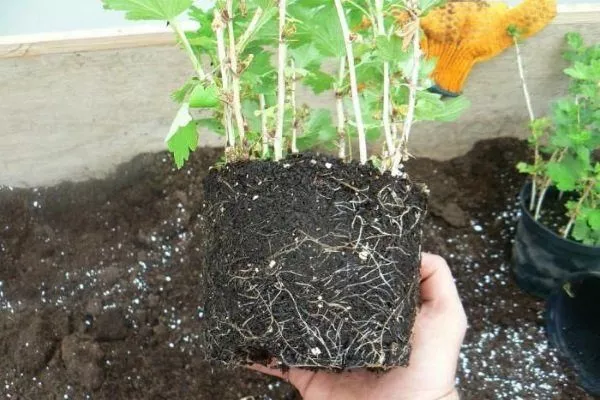
Gooseberries can be propagated in several ways:
- By layering. Make a hole under the bush. Select a strong side shoot from the mother bush and bend it down, placing it at the bottom of the hole. Secure it with staples and cover with soil.
- Cuttings. Cut several one-year-old shoots and cut them into 8-10 cm cuttings. Place the cuttings in a rooting stimulator and plant them in a greenhouse in moist, fertile soil at a 45-degree angle.
- By dividing the bush. The mother plant is dug up and 2-3 side shoots are separated, along with a portion of the rhizome. The new plant is immediately planted, and the branches are shortened by 1/3.
Kolobok is easy to propagate at home using any of the methods described. This work is best done in the fall, after the harvest.
Productivity
If the summer is dry and warm, gooseberries are harvested starting in the second ten days of July. During this period, the berries turn a burgundy color and increase in sugar content.
During the rainy season, the fruits are picked from the bushes when they begin to turn pink, as the skin cracks due to excess moisture.
With proper care, a bush can yield approximately 10 kg of large berries per season. At temperatures between 0 and 1°C, gooseberries can be stored for up to 2 months.
Kolobok fruits contain 9% sugars, 2.7% acids and 25 mg/100 g vitamin C.
This variety is suitable for both fresh consumption and for processing into jams and preserves.
Varieties similar to Kolobok
| Name | Yield (kg per bush) | Berry size (g) | Disease resistance |
|---|---|---|---|
| Kolobok | 10 | 5-8 | High |
| African | 8 | 4-6 | Average |
| Lights of Krasnodar | 7 | 3-5 | High |
| Chernomor | 9 | 4-7 | High |
Most often, Kolobok is compared to a thornless variety AfricanThe fruits of the second variety are considered to be sweeter, but it is highly susceptible to anthracnose.
Competitors also include Lights of Krasnodar And ChernomorTheir berries are no less tasty, but compared to Kolobok's, they are significantly smaller.
Reviews of Kolobok gooseberries from gardeners
This mid-early variety has received many positive reviews from summer residents and gardeners throughout Russia: