
To preserve the decorative appearance and productivity of gooseberries, prune old and diseased branches and young shoots correctly and promptly. Otherwise, the crown of this perennial plant becomes dense, the bush becomes diseased, produces sour berries, and may even die. Now is the time to learn the rules and secrets of gooseberry pruning in the fall.
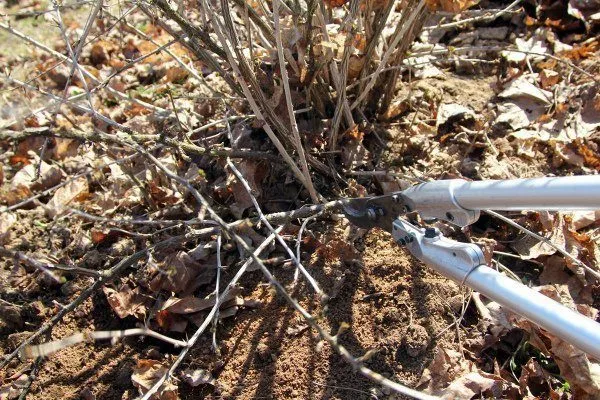
When to prune gooseberries?
Gooseberry pruning is an important procedure if a gardener is concerned about a high yield. Pruning can be done in summer, spring, and fall, but each season has its own nuances:
- In the springPruning is done in early March, before the first buds appear (in the first ten days). If this rule is not followed, the bush will not bear fruit at all that year. Prune gooseberries when the last snow has melted, night frosts have ended, and the weather is improving.
- In autumn. If spring pruning is missed, the bush can be shaped in the fall. The key is to finish pruning before the first frosts (late October - early November). This time of year has its advantages. For example, you can prune all broken, diseased, dry, and simply unnecessary branches down to the base. In the spring, all that's left is to make minor trimmings, which won't affect fruiting.
- In summer. During this period, pruning gooseberries is necessary to preserve them and increase yield. Remove young shoots to a height of seven leaves, and carefully trim off any stems that are not fully developed. These stems consume a lot of the plant's energy, preventing the berries from ripening and leaving them sour.
- ✓ Consider the air temperature: pruning should be carried out at a temperature of at least +5°C to avoid damage to plant tissue.
- ✓ Pay attention to the moon phase: pruning during the waning moon promotes better wound healing.
Whether gooseberries are pruned in fall, summer, or spring, large cuts must be treated with garden pitch. Otherwise, the plant's immunity is weakened, and it may become diseased or die. In summer, minor trimming is done without drastic interventions.
Why is it necessary to prune gooseberries?
Over the course of several years, gooseberries produce 50 to 70 new shoots, which only serve to thicken the bush's crown. As a result, the plant doesn't receive sufficient light, heat, and oxygen, increasing the risk of fungal infection. To avoid ruining the gooseberry, it's important to prune it promptly.
Other reasons for planned pruning of gooseberries in autumn:
- damage caused by insects that often infest dense tree crowns;
- increasing crop yields;
- ornamental type of shrub;
- simplification of gooseberry care;
- sanitization;
- preparing for landing;
- better warming of the root system.
Carry out autumn pruning only after the leaves have fallen. New shoots may still appear in September, but they die before they have time to harden. In the second half of October, remove old and diseased stems, and leave crown shaping until early spring.
It is obviously easier to care for a thinned plant than to wade through thorns and thickets in search of useful berries.
Types of gooseberry pruning
There are two types of bush training: pre-planting and rejuvenation. The first involves planting seedlings, while the second involves rejuvenating a perennial plant to increase yield. Both procedures have distinctive characteristics and are equally beneficial for gooseberries.
Pre-boarding
To ensure good growth and fruiting after planting, gooseberries need to be pruned. Remove weak, deformed, and lifeless shoots, and shorten the remaining shoots to four buds (or two buds for weak plants). Before planting, perform a thorough pruning to increase fruitfulness and vitality.
The main goal of pre-planting pruning of gooseberries is to strengthen the root system and set the pace of growth and fruiting of the young plant.
Rejuvenating
This procedure is necessary for mature plants if the gardener notices a rapid decline in yield. The optimal age for rejuvenating gooseberry pruning is 8 years and older. Prune the bush annually after harvest. Several options are available:
- In late autumn, remove a third of all shoots, completely eliminating any horizontal root suckers that drain the soil of water and nutrients. Trim any young shoots from the soil to no more than 20 cm.
- To avoid cutting down the entire gooseberry bush, trim its crown so that the maximum length of each stem does not exceed 15-20 cm. Be sure to remove basal shoots and diseased stems.
Experienced gardeners claim that after rejuvenation, plants that had previously been fruitless for several years begin to bear fruit. Moreover, this is an excellent preventative measure for many diseases and pests of gooseberries.
What do you need for work?
Even a professional can't prune gooseberries without gardening tools. It's important not to damage the plant or injure yourself.
For the planned procedure you will need:
- thick rubber gloves;
- pruning shears;
- garden saw;
- lopper;
- garden shears;
- paint/chalk;
- garden var;
- robe with long sleeves.
- ✓ Use safety glasses to prevent eye injuries from thorns.
- ✓ Using a backpack sprayer to treat cuts with an antiseptic accelerates healing.
Choose pruning shears with single- or double-sided sharpening. It's important to sharpen the blade well, otherwise the stems will break rather than cut.
Garden tools must be sterilized after use. Important criteria when choosing such equipment include quality materials, rubberized handles, ease of use, and a long service life. Otherwise, you'll have to buy garden tools every season.
To learn how to prune gooseberries using hedge trimmers, watch the following video:
Which shoots need to be cut?
The first rule: don't cut off anything that seems unsightly or unnecessary. This is especially true for novice gardeners. Such drastic methods cause severe stress to the plant, and it stops bearing fruit. After pruning, a third of the crown should remain, otherwise the gooseberry will die.
To give the bush an aesthetic appearance, the following must be removed:
- black, dry branches:
- damaged, diseased shoots;
- competing shoots;
- branches located inside the bush;
- horizontal growth;
- basal shoots.
Visually inspect the bush and remove all its weak spots, but don't overdo it with pruning. Removing more than half the crown will kill the plant. The exception is when the gooseberry is being rejuvenated this way.
Step-by-step instructions for pruning gooseberries
Make it a rule to prune mature gooseberries in spring and fall, carefully choosing the right time for this task. Below is a classic rejuvenating procedure:
- Select the central branch and cut it to minimum length.
- Remove the lateral shoots coming from it.
- Cut off branches that you have observed not producing fruit.
- Be sure to remove horizontal root shoots.
- Don't touch old branches with young shoots yet.
Pruning basal shoots is a separate issue. The gooseberry variety plays a decisive role. Some take three years to form a crown, while others take five. Therefore, first remove diseased and lifeless shoots, then those that hinder growth and create shade.
For information on how to prune gooseberries quickly, correctly, and for a good harvest, watch the following video:
Methods of bush formation
To properly remove branches and preserve the harvest, decide on a bush training method. There are several options, including:
- standard;
- trellis;
- classical.
Each method has its advantages, but years of gardening experience show that the richest harvests come from traditional bush training. Gooseberries are tasty, sweet, and large.
Other methods also have their advantages. For example, the standard method saves space in the garden, and installing trellises simplifies the harvesting process. The choice, in any case, remains with the gardener who decides to caring for gooseberries in autumn.
Standard gooseberry
In this case, the pruned gooseberry bush resembles a small tree, characterized by its compact size and taking up little space in the garden. The height of the renewed plant does not exceed 1 m. The stages of shaping such a bush are:
- Select the strongest, most massive shoot from the central part of the bush.
- Remove the remaining branches at the root.
- Dig a metal pipe or stick into the ground nearby (this will be a support).
- Attach the central shoot to the support, without pressing down on the plant.
- Next spring, remove the top to encourage the bush to spread out.
- Cut last year’s shoots in half, leaving 4-5 of the young ones.
- In autumn, remove old, dried and diseased branches.
- As they appear, uproot the basal shoots, which take away all the strength of the plant.
With this type of pruning, the bush-tree produces good fruit, and all branches receive sufficient light and oxygen. The disadvantages of this method include the gooseberry's short lifespan, poor frost resistance, and weak immunity. On average, such a dwarf tree will live no more than 12 years.
Gooseberries on a trellis
In this case, a trellis is used to trim the bush. This is a special device consisting of vertical poles and wire stretched between them in three tiers – at heights of 50, 80, and 100 cm from the ground. A novice gardener should follow these steps:
- Plant seedlings in 1 row at a distance of 100 cm from each other.
- Dig metal pipes between the bushes.
- Connect the stakes with wire in 3 tiers at the distance specified above.
- As the shoots grow, tie them to the tiers of the trellis with thin thread.
- Remove excess branches and get rid of root shoots.
- Every year, shorten last year's shoots by a third.
- Tie up fresh stems 4-5 at a time.
This makes it easier for young branches to grow, ensuring unimpeded access to oxygen and light. Furthermore, harvesting from trellises is much easier, as you won't get injured by thorns or have to break off resilient shoots.
The classic method of shaping gooseberries
In this case, the natural shape of the crown remains unchanged, and gooseberry pruning is performed for preventative and decorative purposes. The sequence of actions is as follows:
- Year of planting. Remove diseased and lifeless branches, shorten the seedlings to 3-4 buds in height.
- 1 year. Leave three healthy shoots, which will form the crown of the bush. First, trim off a third of the top.
- 2 years. Remove last year's branches and basal shoots. Cut back young stems (up to 4) that appear closer to fall by half, otherwise they will freeze and die.
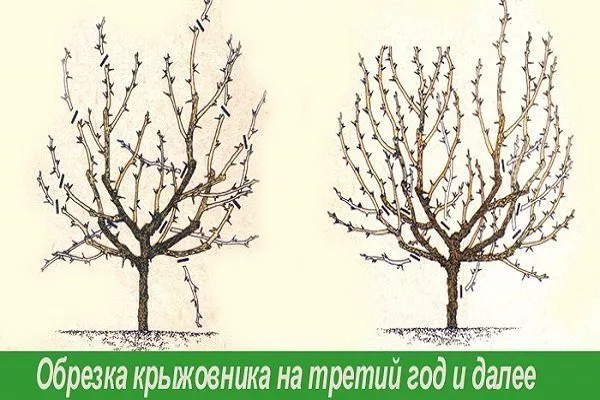
- 3 year. The crown of the bush is already formed (up to 12 branches), so simply remove weak, deformed, dry and old branches, be sure to get rid of horizontal basal shoots, leaving 3 young shoots.
- 4th year. Trim last year's branches by 5 cm, continue to remove basal shoots, and remove a third of the lateral shoots.
- 5 and subsequent years. Make sure that the gooseberry crown does not become too dense and remove lateral shoots in a timely manner.
A mature plant aged 7-8 years has up to 22-24 branches of varying ages that produce fruit well. Gradually remove old, dried, and damaged shoots to rejuvenate the gooseberry bush.
Caring for gooseberries after pruning
Even proper pruning of gooseberries can be stressful for the plant. To create an aesthetically pleasing crown and maintain the bush's fruitfulness, follow these valuable tips from experienced gardeners:
- Treat large cuts with garden pitch, urea solution or crushed activated carbon.
- Fertilize the plant immediately after pruning. Use a specialized fertilizer or a mixture of 15 kg of humus, 40 g of potassium, and 200 g of superphosphate.
- Water the gooseberries. Add about two full buckets of room-temperature water under each bush.
- Since the bushes are weakened after pruning, spray them with Bordeaux mixture. This is a good preventative against harmful insects.
- Use leaf compost, mulch, or a layer of peat to insulate the root system and prepare the plant for the upcoming cold weather and winter.
If pests threaten, use fungicides. The most effective include Flint Star, Coronet, Antrakop, Infinito, and Teldor. For prevention, spray not only the plant but also the soil beneath it. Instructions are included on the packaging.
Common mistakes gardeners make when pruning gooseberries
Beginner gardeners often make mistakes when pruning gooseberries, expecting a bountiful harvest. However, they either don't produce any fruit at all, or their flavor leaves much to be desired. The most common mistakes made by novice gardeners are:
- Violation of pruning deadlines. In spring, the period of budding is considered forbidden, in autumn – the first frosts and cold weather.
- Unconscious removal of branches. It may seem that this will make it look more beautiful, but in reality the plant suffers and dies.
- Removing the entire crown when rejuvenating a shrub. A global error can lead to the death of the bush.
- Cutting off annual shoots on which young shoots have already appeared. Gooseberry fruiting declines for more than one season.
If the plant's leaves are falling off, this is a sign of disease. Powdery mildew is one of the triggers. You can examine the underside of the leaf to detect harmful moths. Treatment of the diseased plant should begin immediately.
Helpful tips
To avoid mistakes and prune your shrubs correctly, follow these valuable tips:
- If the plant is overgrown, don't delay pruning the bush, otherwise the gooseberry won't bear fruit. If the branches are intertwined, the fruit will be small and sour.
- Cut branches at an angle. Straight cuts encourage young shoots to grow inward, reducing gooseberry yield.
- For the first 2 years, do not carry out radical pruning of the bush, only shorten the newly emerging shoots by half.
- Make sure that an overgrown shrub doesn't root spontaneously by layering. Otherwise, the yield will decrease and the mother plant will become depleted.
- Cut no more than a third of the branches per season; more radical pruning will harm the perennial plant.
- If the harvest is poor, cut the stem down to the lateral branches with young shoots.
- Be sure to collect and burn dry branches to minimize the risk of fungal infection.
Gooseberries are easy to care for, but neglecting them isn't recommended. Maintain the crown, remove diseased and dead shoots, and follow preventative measures. Remember that proper care determines the yield and health of this perennial plant.