
The Invicta gooseberry is a popular variety that produces a high yield. Its high demand is due to its early ripening period. This variety is considered a classic because the branches have thorns, but they are not too close together, so they present little problem for gardeners.
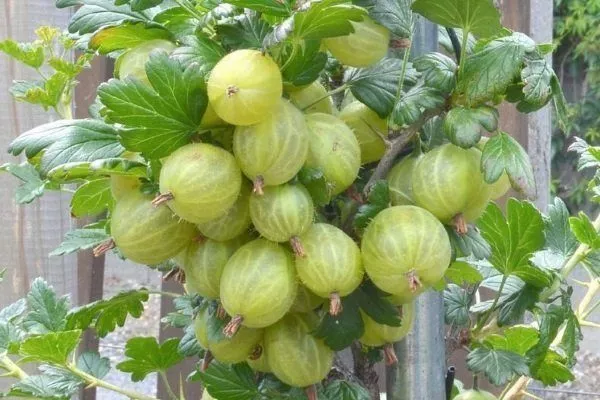
Gooseberry variety "Invicta"
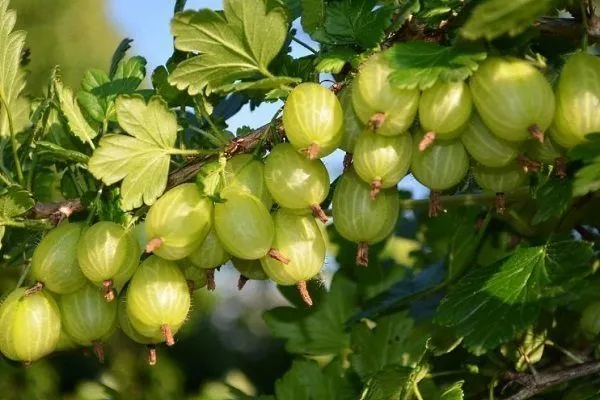
Invicta gooseberries are juicy and aromatic, with a characteristic sweetness in the taste
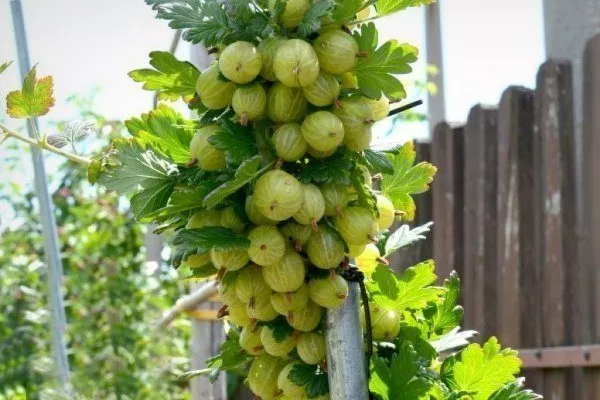
The Invicta variety is easy to care for and produces a high yield.
When and how was the variety developed?
The Invicta gooseberry has become one of the most widespread and sought-after varieties in Europe. It was developed in the UK, where it is still grown commercially today.
During the creation of the variety, such gooseberry varieties as Winhams, Resistant, and Kipsake were crossed, from which it received its best characteristics.
Description of the Invicta gooseberry
This gooseberry variety has a number of characteristics that have made it so popular among gardeners. Its most important advantage is that it produces a large harvest and requires little care.
Bushes
The bushes can reach 120-150 cm in height, grow quickly, and have a spreading crown. The stems are not too thick, straight, and the thorns are large but spaced well apart.
The foliage is medium-sized, dark green, glabrous, and glossy. A distinctive feature of these bushes is their rapid growth, which is important to remember when planting Invicta.
Berries
The berries are one of the main advantages of this gooseberry variety. The fruits are large, averaging about 7 g in weight, and resemble a small plum in shape. Larger berries, weighing up to 12 g, can also be found.
The fruit is slightly oblong but symmetrical, no more than 2.7 cm long, and has a beautiful yellow-green hue. When fully ripe, it takes on an amber hue.
The skin is thin and firm, with a light layer of fuzz on the surface. The flesh has a pleasant sweet and sour taste and a delicate aroma. The fruit is a unique storehouse of valuable minerals and vitamins. It contains approximately 13% sugars, citric and malic acids, and pectin.
Features of the Invicta variety
The main features of the described variety are considered to be a high level of resistance to dry days and various external negative influences.
Resistance to diseases and pests
Invicta is highly resistant not only to powdery mildew but also to other diseases common to berry bushes. If basic growing conditions are not met (such as when the plant is planted in very wet soil), the risk of developing this dangerous disease increases severalfold.
Gardeners note that the described gooseberry variety is rarely attacked by various pests.
Drought and frost resistance
Although gooseberries are considered a moisture-loving shrub, standing water can kill the plant. Therefore, during prolonged dry periods, generous watering is required.
Invicta thrives in fairly low temperatures, easily surviving temperatures down to -40°C. Sudden temperature fluctuations pose no danger to this species.
Ripening period and yield
With proper care, a single bush can yield approximately 7 kg of large, aromatic berries. Fruiting begins in late June and lasts until early September. After planting a young plant, the first harvest can be collected in 2-3 years. Berries appear not only on perennial but also on annual stems. With proper care, the bush maintains its high productivity for 10-12 years.
A brief overview of the Inquita gooseberry is presented in the following video:
Taste qualities
The fruits of the described gooseberry variety have excellent taste qualities, which is why they are very popular:
- the pulp is quite juicy, with a delicate aroma;
- the skin is thin and tender;
- Berries have a universal purpose.
Transportability and storage
Despite the berries' very thin and soft skin, they transport well. The fruits are very tasty and juicy and can be eaten fresh or frozen, which significantly extends their shelf life.
Using berries
The fruits of this gooseberry variety are considered versatile and can be eaten at virtually any stage of ripeness. Unripe fruits can be used to make compotes and jams. Fully ripe and juicy fruits are eaten fresh, used as an interesting filling for baked goods, or used in various sauces.
Advantages and disadvantages of the variety
This type of gooseberry has many positive qualities, which include:
- high and stable yield, which is maintained for 10 years;
- the fruits are large, with a pleasant taste, thin skin and delicate aroma;
- the berries are large, have stable transportability and good shelf life;
- fruits of general purpose;
- the bushes are undemanding in care and tolerate short-term drought well;
- has good resistance to diseases and pests.
Disadvantages include the presence of large thorns. Extended periods of drought can lead to the death of the plant.
Peculiarities of choosing seedlings
If you purchase a seedling with an open root system, you need to pay attention to the following:
- the length of the roots is not less than 14-18 cm;
- the number of main roots is not less than 2 pcs.;
- the length of the above-ground part is approximately 35 cm;
- number of stems – 1-2 pcs.;
- there should be no visible signs of mechanical damage on the plants;
- choose a plant without leaves;
- the buds must remain closed.
When purchasing a container-grown plant, the age of the plant doesn't really matter. Seedlings can be stored in this way for a long time, as long as the soil is moistened regularly.
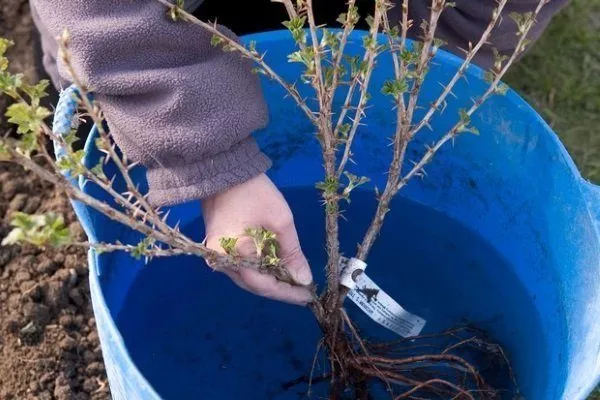
To obtain high-quality and completely healthy planting material, you should purchase plants exclusively from stores or nurseries that specialize in garden plants.
Growing conditions
A properly selected planting site and consistent care will help you harvest large, flavorful berries every year. Light levels aren't particularly important, as this variety thrives and produces fruit in a wide range of lighting conditions.
Excellent results will be achieved not only when grown in open sunny areas, but also in shaded areas. Planting the seedling in partial shade is an excellent choice.
Be especially careful when choosing soil—it should be fertile and well-drained. Sandy loam or loamy soil are good options. The plant dislikes standing water and is not recommended for planting in low-lying areas where rainwater can accumulate.
The planting site must be reliably protected from drafts and strong winds.
Planting times and patterns
Gooseberries can be planted not only in spring but also in autumn. The latter option is preferable, as slightly above-zero temperatures create ideal conditions for the roots to strengthen and establish themselves in their new location. Over the winter, the soil around the seedlings hardens, the roots become stronger, and adaptation occurs more quickly in the spring.
Good results will also be achieved with spring planting. In this case, the procedure should be carried out between the time the buds begin to swell and the soil thaws. Late planting significantly reduces the seedling's survival rate in its new location.
If you stick to the calendar, the ideal time is early March or early September, before frost sets in. If planting in the fall, you need to prepare the site several months in advance. If planting in the spring, all preparatory work is done in the fall.
Read the article about How to properly plant and grow gooseberries.
Planting instructions
Planting of the Invicta gooseberry seedling is carried out according to the following scheme:
- First, prepare a hole for planting with the following dimensions: 50x50x50 cm.
- Leave a gap of at least 1.5 m between plants and 1 m between rows.
- Before planting, apply fertilizer: mullein (10 g), superphosphate (180 g), potassium salt (40 g), and crushed limestone (250 g). Mix the fertilizer thoroughly with the soil.
- When planting in heavy and rich soil, add peat (2-3 buckets).
- Check the root collar of the plant, but do not deepen it more than 5 cm during planting.
- Plant the seedlings vertically, do not allow them to tilt.
- Compact the soil and water the bush generously – about 5 liters of water per plant.
Invicta grows into a large, voluminous bush, so it's essential to provide supports about 160 cm high. Then, stretch a cord across these supports at 90 and 140 cm. Tie the long gooseberry stems to the cord.
Features of seasonal care
Once planted, the bushes require proper and regular care. It's important to remember that gooseberries require different care depending on the season and growing conditions.
Watering
This garden crop easily tolerates short periods of drought. To reap a bountiful harvest of large, juicy berries, regular watering is required. Ensure the soil is moist to a depth of at least 40 cm when watering.
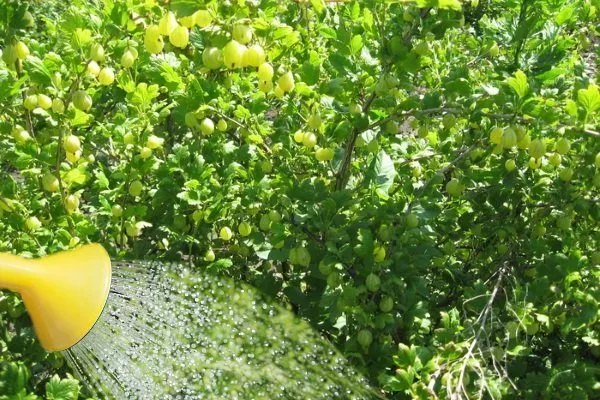
It's best to water with warm, settled water. Avoid getting water on the leaves; water as close to the ground as possible. Watering is essential at the following stages:
- During the formation of stems and ovaries – the end of May or the beginning of June.
- During the period of beginning of fruit ripening.
- In September, as it is necessary to prepare the root system of the fruits for the coming winter.
Taking into account the size and age of the gooseberry, one bush will often require approximately 2-3 buckets of water.
Soil care
To ensure high fruit production, constant and proper soil care is required. Simply follow these recommendations:
- Loosen and dig the soil to improve moisture and air permeability. Use a shovel for digging, and a garden fork for loosening, as this requires more delicate work.
- Remove weeds regularly, as dense vegetation near the bush leads to increased air humidity. This can lead to the development of dangerous fungal diseases.
- Don't forget about the benefits mulching, as this procedure helps retain optimal soil moisture and prevent it from drying out. Sawdust, dried straw, hay, or peat are ideal mulches.
- Weed and loosen the soil at least once a month.
The roots of the bush are located very close to the surface, so loosening should be done as carefully and delicately as possible, but no deeper than 8 cm.
Top dressing
Fertilizing should be done at least twice a year, with the frequency directly dependent on the soil's fertility. The first application of fertilizer is done after the flowering period to increase yield. The second application is done as the shrub prepares for the upcoming winter.
For the first feeding, use organic matter. Manure or cow dung will work well. Dilute with water at a ratio of 1:20 or 1:10. For every square meter of area, use 10 liters of manure solution and 5 liters of manure. To make applying the fertilizer easier, make shallow furrows near the bush and pour the prepared solution into them. Once the fertilizer has been absorbed, cover the furrows with a layer of soil.
After harvesting, use mineral fertilizers: urea (10 g), potassium sulfate (10 g) and superphosphate (20 g) per 10 liters of water.
Use nitrogen fertilizers in the spring to promote rapid foliage growth. Prepare a mixture of ammonium nitrate (40 g) and 10 liters of water. Apply the solution with a watering can, ensuring it reaches both the trunk and shoots. Then, be sure to cover the soil with a layer of ash (1 cup per plant) and loosen the soil.
Trimming
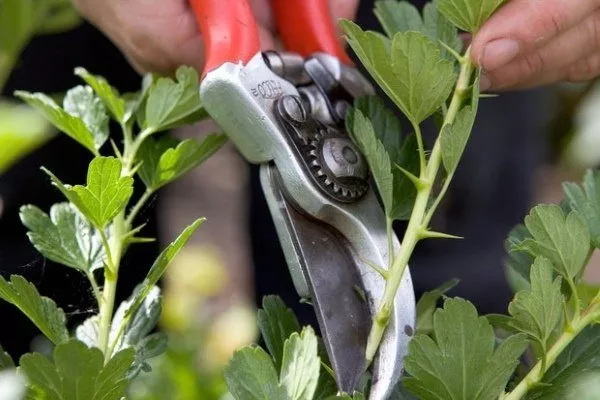
Pruning should be performed throughout the shrub's life. This is done twice a year—in spring and fall. For young shrubs under three years old, trim back all skeletal branches by half and remove almost all root suckers.
Bushes aged four years and older require the removal of all defective branches—those that are dried out, weakened, growing incorrectly, or damaged. Avoid overcrowding, as this will reduce yield. Remove branches older than five years, as they rarely produce berries.
- ✓ Branches older than 5 years practically do not bear fruit and should be removed first.
- ✓ Summer pruning of the tops of branches increases fruiting, leaving at least 5-6 leaves.
After all the leaves have fallen in the fall, prune again. In the spring, do this before the buds begin to open. To increase fruiting, summer pruning is recommended – trim the tops of the branches so that at least 5-6 leaves remain.
We recommend that you also read the article about How to care for gooseberries in spring.
Protection from winter cold
This variety easily tolerates cold temperatures and even severe frosts. However, it's important to carry out some simple preparatory work to help the bush successfully survive the coming winter:
- Cut off all dry, intertwined, damaged branches and those lying on the ground, collect fallen leaves.
- Water the root well and loosen the soil.
- Before frost, be sure to mulch the plant to prevent frostbite on the root system. Peat or compost is an excellent mulch option, applied in a layer of at least 10 cm.
- You can additionally insulate the roots with snow – the layer should be at least 10 cm.
- In winters with little snow and severe frosts, additionally use covering material to protect the root system of the bush.
Avoid using cut branches or plant leaves as mulch, as they may harbor pests or disease agents. Burning all fallen leaves and pruned branches is recommended to eliminate potential disease sources.
Reviews of the Invicta variety
The Invicta gooseberry variety is considered one of the highest quality and easiest to grow. Its fruits have excellent flavor, the plant produces a bountiful harvest, and requires little care. Even an inexperienced gardener can grow this berry crop.