
Galatea is a mid-season gooseberry variety. Domestic gardeners love it for its dessert-like flavor and large fruit size, increased winter hardiness, and resistance to powdery mildew and leaf spot.
Who developed the variety and when?
Galatea is a new variety of Russian breeding, developed in 2016. It was developed by researchers at the Michurin Federal Scientific Center:
- K. D. Sergeeva;
- E. Yu. Koveshnikova;
- N. V. Minaeva;
- N. V. Khromov.
To develop this variety of gooseberry, breeders crossed the Prune variety with the Yubilyar variety.
Appearance of the bush
Plants are characterized by the following distinctive features:
- medium height;
- low spreading;
- medium branching;
- straight shoots with a light green color and a small number of thorns;
- single spines, thin, light-colored;
- leaves: five-lobed, medium-sized, dense, green, with a matte, slightly wrinkled surface;
- inflorescences are two-flowered, brightly colored.
Berries and their taste qualities
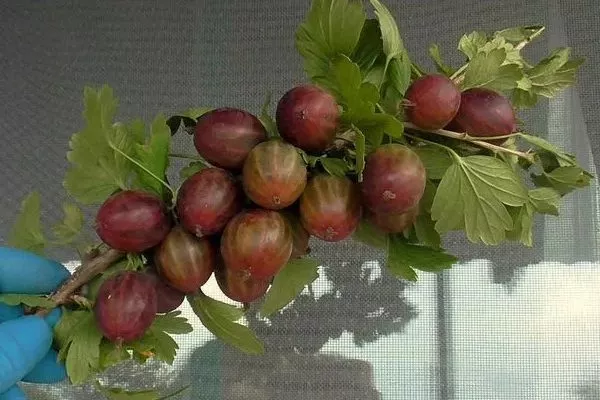
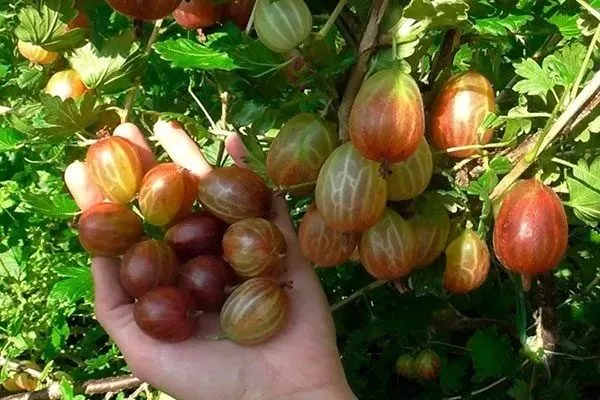
Galatea is a large-fruited berry variety. Its yield is marketable and of excellent quality. The berries have the following characteristics:
- weight - from 6 to 12 g;
- rounded shape;
- skin is dark red in color;
- juicy, fleshy pulp in which the presence of seeds is practically not felt.
Ripening period and yield
Galatea is a mid-season gooseberry variety. Its berries begin to ripen in July. The variety's yield is directly dependent on growing conditions:
- 2 kg from 1 bush with insufficient care;
- A six-year-old bush yields 4.2 kg if it is provided with proper watering and intensive feeding.
Growing regions
The variety was developed in the Tambov region and is tailored to its climate. According to gardeners, it is suitable for growing in gardens in the following regions of the country:
- Central Black Earth;
- Central.
Galatea bushes are frost-hardy, surviving temperatures down to -35°C with heavy snow cover. They overwinter successfully in temperate climates.
This variety can also be grown in the southern regions of Russia. It is distinguished by its drought resistance. Berries grown in warm climates lack acidity. They are much sweeter than gooseberries grown in colder climates.
Care and cultivation
Choose two-year-old bushes for planting. Inspect them carefully before purchasing:
- the roots of the seedling must be free from damage, breaks and tears, and overgrown;
- the aboveground part is developed, consisting of 2-3 shoots.
The best time to buy gooseberries is autumn (mid-September). Plant the bush immediately after purchase. Before planting, dip the roots in a clay slurry.
Choose a suitable location in the garden for berry crops:
- with good lighting;
- without stagnant moisture.
Prepare it for planting gooseberries:
- align;
- dig the soil to the depth of a shovel blade;
- add 4-5 kg of rotted manure and 300 g of ash to it.
Prepare planting holes, leaving a distance of 2 meters between them. The dimensions (diameter and depth) of each hole should be 30% larger than the seedling's root system. Line the bottom of the hole with expanded clay or broken brick. Add a mixture of garden soil, humus, and wood ash.
Plant Galatea step by step:
- Pour 10 liters of warm, settled water into the hole.
- Place the seedling. Spread out its roots, directing them downward and sideways.
- Cover them with soil, deepening the root collar by 2-3 cm.
- Compact the soil.
- Water the plant. Consumption: 10 liters per plant.
- Mulch the tree trunk circle with peat.
If you prefer spring planting, begin before the buds open. Perform this procedure in late April.
To ensure abundant harvests, provide your gooseberries with proper care. This includes the following:
- WateringWater the plants at least once a week, using 10 liters of water per seedling. Mature gooseberries require more moisture—30-40 liters. Stop watering before harvesting.
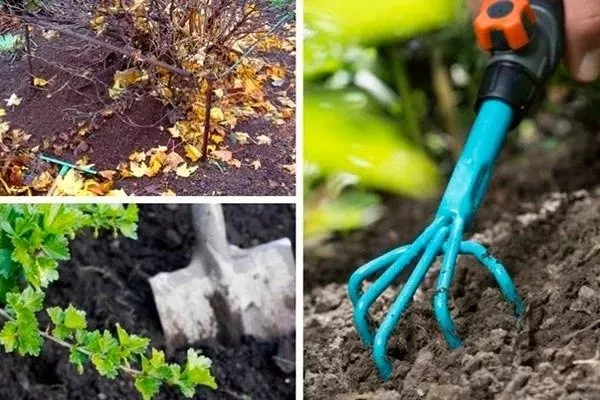
- LooseningLoosen the soil under the bush gently to avoid damaging the roots. Weed while loosening the soil.
- Trimming. Avoid heavy pruning immediately after planting. Remove only broken, diseased, and dead branches.
- Protecting crops from diseases and pestsIn the spring, before the buds open, treat the bushes with Bordeaux mixture (2% concentration). Repeat the treatment after flowering.
- Top dressingWhen the leaves begin to bloom on the bush, fertilize it with a solution of nitrophoska (30 g per 10 l) with the addition of urea (1 tbsp.).
When the gooseberry bushes bloom, water them with potassium sulfate dissolved in water (20 g per 10 l). When fruit sets, use a potassium humate solution (200 ml per 10 l), enriched with nitrophoska (15 g).
In late September, fertilize the planting with double superphosphate (22 g) and potassium sulfate (80 g). In October, fertilize the bush with mullein.
Advantages and disadvantages
Galatea is popular with gardeners due to its advantages:
The disadvantage of this variety is that the taste of the fruit depends on climatic conditions.
Review of reviews
Galatea is a frost- and drought-resistant variety that produces a bountiful harvest. Before planting gooseberries, learn the proper care instructions to ensure abundant fruiting. Maintain proper soil moisture levels to prevent fungal infections.