
Both novice and experienced gardeners can plant Finik gooseberries in their gardens. This crop is prized for its high yield and large berries.
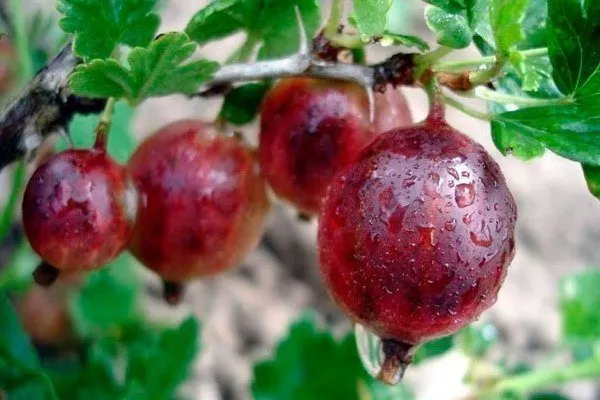
gooseberry variety "Date"
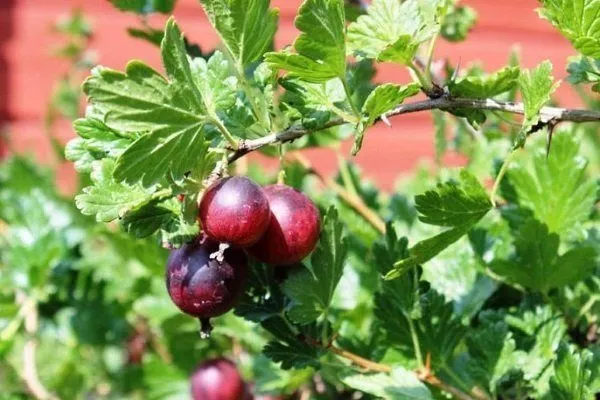
Gooseberry "Finik" is the most popular variety in the horticultural and industrial markets
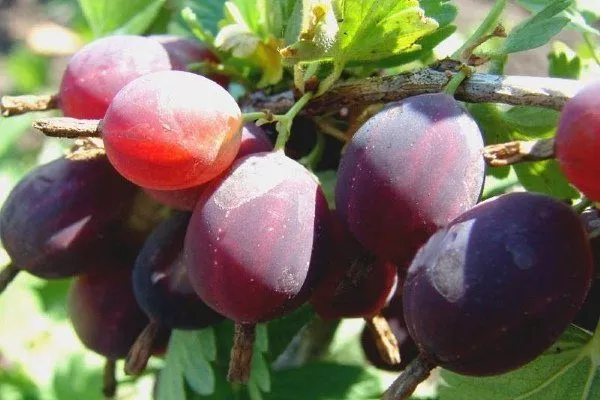
Thanks to their dense surface, the berries of the Finik gooseberry remain fresh for a long time after being picked and easily withstand long-distance transportation.
History of variety selection
The Finik gooseberry is a truly long-lived plant; the first mentions of the plant can be found in prehistoric times. In the 13th century, French breeders began to seriously cultivate the shrub, achieving significant breakthroughs in England in the 19th century.
The "Land of Mists" provided favorable conditions for the Phoenix to grow and develop. From that time on, the shrub began to occupy a leading position among all representatives of this crop in Europe. Some time later, breeders brought it to America.
However, not everything was rosy. Powdery mildew and spheroteca spores were brought to Europe from America. After the pests appeared, the Finik gooseberry died. Over time, an improved variety was developed. It is a hybrid of European and wild American crops. The improved Finik variety is disease-resistant, and it is this variety that will be discussed in this article.
- ✓ High drought resistance due to deep root system.
- ✓ Requires sunlight to achieve maximum yield.
Description and characteristics of the Finik gooseberry variety
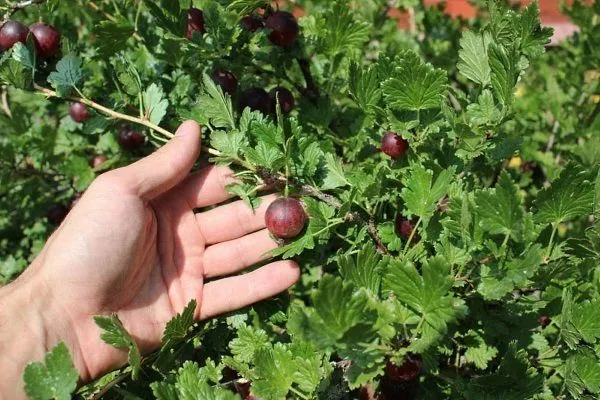
Date palms are characterized by tall (up to 2 m) spreading bushes. The shoots are straight or slightly curved, depending on the plant's location. They are covered with single spines, except at the tips. Gooseberries have strong roots that extend more than 2 m into the ground.
The leaves are large and green. The flowers are small with small white-green petals, often single. The bush produces ripe fruits, each weighing up to 20 g. The berries are oval or round and green.
Gooseberry Finik is also popularly called Goliath.
Bush
The branches are wide, long, and strong. The foliage grows very quickly. The plant is tall; with proper care and planting, it can reach 2 meters, and sometimes even taller. The stems are covered with strong thorns, a large number of which are observed on mature stems.
Leaves and peduncles
The plant's foliage is a vibrant green, glossy with rounded tips, and medium in size. The flower stalks are small and not heavily pubescent.
Berries
With intensive care, a single berry can weigh up to 20 g. Gooseberries grown in a sunny area boast almost black fruits. The berries are pear-shaped, but round, pubescent berries are also available.
The standard berry color is light brown or burgundy. The flesh is green with a small number of seeds. The berries have a tart flavor and a high sugar content—9%. A strong aroma can be detected even when picked from the branches.
Productivity
A productive berry is the result of regular care. Pruning and fertilizing are the key steps to ensure a bountiful harvest. Gardeners claim that a single bush can yield up to 8 kg of berries. Everything depends on the growing conditions.
Drought and frost resistance
This crop is characterized by high resistance to cold and sudden temperature changes. Date palms can survive temperatures as low as -35 degrees Celsius. Regarding drought tolerance, the variety is not affected by heat and scorching sun, thanks to its strong roots.
Advantages and disadvantages
Not everyone likes the Finik gooseberry, and some consider it unsuitable for garden cultivation. Let's consider the pros and cons.
Benefits of the Finik gooseberry:
- frost-resistant and drought-resistant;
- brings a good harvest;
- the berries do not become smaller even after ten years of fruiting;
- The fruits can be transported and stored for a long time.
Disadvantages of gooseberries:
- too much spreading of branches, takes up a lot of space on the site;
- difficult care;
- late ripening period;
- The shrub is susceptible to infection by American powdery mildew.
Growing gooseberries Finik
This crop is quite demanding when it comes to planting. It doesn't do well next to currants and can't grow too close to other shrubs. The distance between plants should be at least 1.5-2 meters. Excessively wide roots spread not only in depth but also in width. Crowded shrubs lead to reduced yields and increased susceptibility to disease.
- ✓ The depth of the root system requires the preparation of a hole of at least 60 cm to provide sufficient space for growth.
- ✓ The distance between bushes should be at least 2.5 m to prevent competition for nutrients.
Planting dates
Planting can be done in spring or fall, depending on the regional climate. Almost all gardeners prefer planting in the fall, as the bush will establish itself over the winter and its roots will become stronger. Date palms need to survive lower temperatures to ensure faster growth and development in the spring.
Autumn planting period: mid-September to October. Time this carefully; there should be at least 14 days before the first frost.
During spring planting, it's important to plant gooseberries before the buds open and the sap begins to flow. In almost all regions, this occurs in March; seedlings aren't planted in the following months.
During spring planting, the survival rate of seedlings is significantly lower.
Choosing a suitable location
Powdery mildew is the plant's main enemy, but its occurrence can be prevented by choosing the right planting location. A sunny spot protected from drafts and wind is ideal. Avoid planting the plant close to a body of water; shady areas will prevent the seedling from taking root.
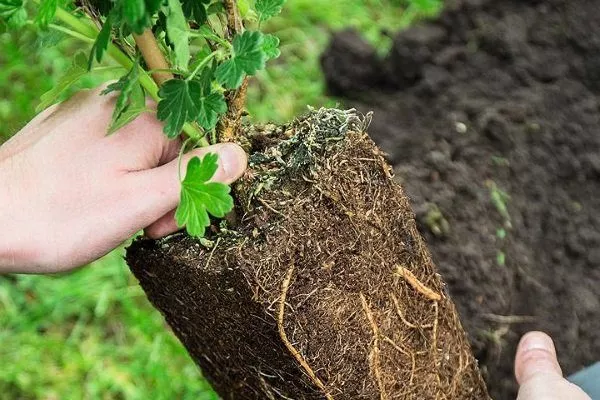
The Finik gooseberry is large in size and has branched roots, so the area for its cultivation must be wide.
Overwatering the soil negatively impacts the root system, so avoid planting close to the ground. Plant seedlings in loamy and sandy loam soils with neutral or slightly acidic pH. The soil should contain beneficial elements, be loose, and allow for rapid aeration.
Soil preparation
Dolomite flour and lime should be added to the soil if the acidity level is too high. Dolomite flour helps disinfect the soil and rid it of harmful microbes and insect larvae.
Organic matter and mineral fertilizers are added to the holes. After planting, the root zone should be mulched with compost. The first fruits can be obtained at three years of age, or after four years in northern regions.
Planting diagram
If planted correctly, the crop will grow strong, healthy and fruitful.
Algorithm for planting gooseberry Finik:
- Dig the soil to a depth of 20 cm beforehand. Clear away any grass and debris, and be sure to remove any couch grass.
- Apply fertilizer (proportions for 1 sq. m): 8 kg of manure, 2 kg of fertilizer with potassium, 5 kg of nutritional components with phosphorus.
- Dig a hole 50 cm deep and 40 x 40 cm in size.
- Divide the soil that's on the surface into two equal piles. Leave the hole in this position for 14 days.
- Consider the size of the gooseberry; the distance between plants should be at least 2 m.
- Soak the seedlings in a root growth promoter. Begin planting.
- Find the root collar of the bush; the soil layer should cover it by 8 cm during planting.
- Place the seedlings vertically, straightening out the root system.
- Make a soil mixture: 1 bucket of compost, 200 g of superphosphate, and 2 g of potassium fertilizer. Mix this with the soil from one pile and cover the roots with it. Place the infertile soil from the second pile on top.
- Compact the soil slightly and water the plant at a rate of 10 liters per bush.
- Mulch the ground sawdust.
The plant remains planted for the winter. Care for the seedling begins in the spring. If the winter is too cold and there is no snow, the plant is additionally insulated with agrofibre.
Caring for the Finik gooseberry
Caring for berry bushes doesn't differ much. The main steps are fertilizing, soil maintenance, regular pruning, and pest control.
We recommend that you obtain information (from our article) about How to care for gooseberries in the fall after harvesting.
Watering
The Finik gooseberry can survive without moisture for long periods, but this advantage shouldn't be taken advantage of too often. Don't allow the soil surface to dry out completely. Overwatering the roots is also detrimental to the shrub.
Determining soil moisture is easy: take a handful of soil in your hand. It's fine if it's slightly damp, crumbles quickly, but not sticky. Regular, proper watering will help grow a strong and fruitful bush. Watering should be done twice a month, depending on the climate in which the bush grows.
The soil should be moist to a depth of 0.4 m. A long hole 0.2 m deep is dug around the plant's roots at a distance of 0.3 m. Add 3-5 buckets of water. The amount depends directly on the plant's age and size. Use water at room temperature.
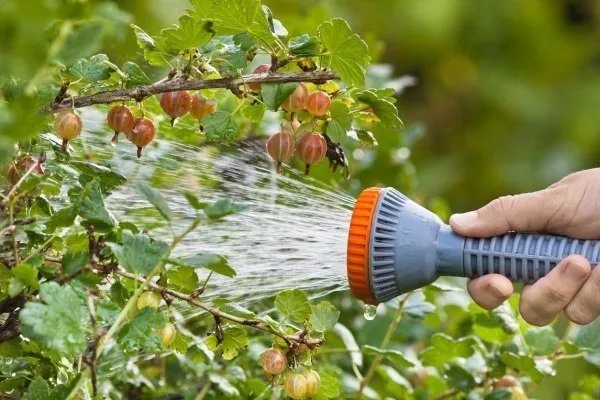
Watering is carried out:
- during the period of formation of shoots and ovaries;
- at the time of berry formation;
- during the harvest ripening period.
Supports
The shrub's branches are quite long and require support. Metal or plastic pipes are best, but wooden beams and pickets can also be used. Four posts, approximately 60 cm high, are driven in around the perimeter of the plant, and pipes or planks are attached to them horizontally. Drive them deep enough to support the weight of the sturdy plant.
Be careful - the supports should not damage the root system of the gooseberry.
Top dressing
Basic rules for applying fertilizers:
- If a large amount of fertilizer was used during planting, then there is no need to add potassium or phosphorus for the next three years.
- In the first three years after planting gooseberries, nitrogen fertilizers are added (first half of May).
- From the 2nd year, you can add: 10 kg of mullein, 50 g of ammonium nitrate, 150 g of wood ash and 80 g of superphosphate.
- In the summer, add organic matter. To do this, mix 1 part chicken manure with 3 parts water. Let this mixture sit, then dilute it with water again in a 1:10 ratio and pour it under the plant.
Trimming
To ensure the Date Palm produces a large number of berries and maintains vigor, annual pruning is necessary. The best time is early spring, before the sap begins to flow. This can also be done in the fall after the berries have been harvested.
Basic tips for pruning the Finik gooseberry:
- In the first year, remove all weak branches, leaving up to four strong buds on the shoots, and trimming off the tops. By this time, the plant should have six developed shoots.
- Starting in the second year, prune all weak shoots and damaged branches. Shorten last year's shoots by one-third.
- During the summer, quickly remove shoots damaged by insects or diseases.
- The highest yield comes from branches in their 7th and 8th year of life, but the bush must have shoots of different ages, otherwise the yield will vary from year to year.
- As soon as the bush reaches 10 years, prune all old branches that do not bear berries.
Mulching and loosening the soil
To ensure a bountiful harvest, the soil should be dug over to a depth of 15 cm each fall. However, this should be done carefully to avoid damaging the root system. In the spring, the soil should be loosened to a depth of 10 cm, and around the roots, to a depth of 7 cm. Peat or compost is best used as mulch. These materials help retain moisture in the soil.
Preparing for winter
The first thing to do is remove all old leaves and debris from around the gooseberry's trunk. Remove the debris from the garden plot and bury it or burn it. The latter option is preferable, as it kills any pests. Next, prune the old branches in the fall. This will help the gooseberry renew its shoots and increase its harvest next year.
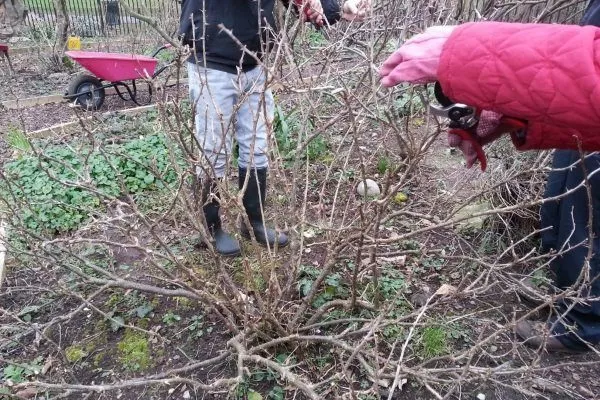
Gooseberries are considered frost-hardy, so if you live in southern regions, there's no need to cover the plant for the winter. However, northern winds and frosts are harsher, so if you're planting in colder areas, covering is essential. Agrofibre is used as a covering material; it provides excellent winter protection.
Resistance to diseases and pests
As mentioned earlier, the ancestor of the current Finik gooseberry succumbed to spheroteka and powdery mildew. While breeders have created a variety with stronger immunity, there are still concerns about infection from these diseases.
Protecting garden crops is quite simple: you can treat them with Bordeaux mixture or another disinfectant. This procedure is best performed after harvesting.
For prevention, you can use the following chemicals: Fitosporin, Topaz, and Fundazol. These are complex treatments that will protect gooseberries from dangerous diseases and pests. You can also spray at the beginning of flowering.
Gardeners' reviews
The Finik gooseberry variety is an easy-to-grow berry. Proper care will help the plant grow and develop faster, be resistant to pests and insects, and produce a bountiful harvest each year.