
Black Negus is the name of a retro gooseberry variety that's still popular today. Gardeners love it for its resistance to spheroteka and other berry diseases, its frost resistance, and its ability to withstand adverse weather conditions. Although it can't boast high yields or large fruits, its berries are delicious and healthy.
Origin
The cultivar of gooseberry (Agrus) emerged in the 1920s. It was developed by the All-Russian Research Institute under the direction of I. Michurin as a variety resistant to American powdery mildew (Spheroteca). To obtain it, the scientist crossed the following species:
- large-fruited variety Anibut;
- Gooseberry (Ribes succirubrum).
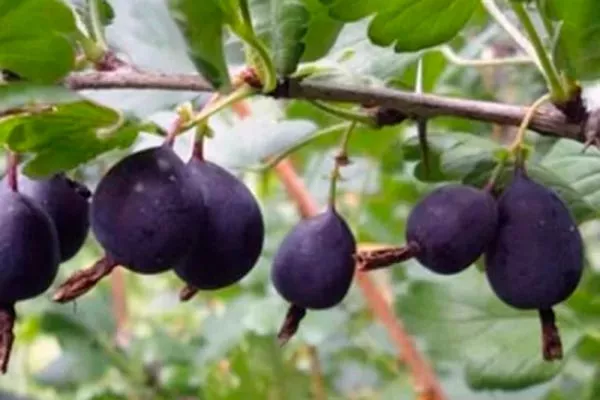
The breeder was dissatisfied with the results: the variety had small fruits and was heavily thorny. Michurin planned to improve it, but Black Negus gained popularity among gardeners. The plan to improve its characteristics remained unrealized. The variety was never added to the state register.
Description of the variety
Modern breeders focus their efforts on improving flavor when developing new gooseberry varieties, but in the first half of the last century, scientists' primary goal was to develop varieties with strong immunity and good survival in challenging climates. Black Negus is such a variety.
Bush and branches
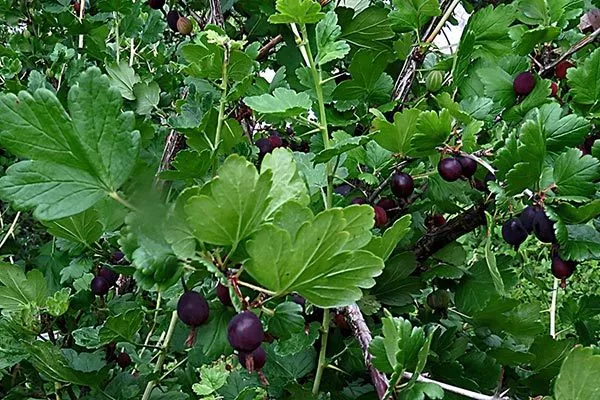
Plants of this variety are vigorous and spreading. They have the following external characteristics:
- "height" - 1.5-2 m;
- voluminous spherical crown;
- its diameter is up to 3 m;
- shoots: strong, thick, arched, heavily thorny (long thorns abundantly cover the branch, have very sharp and somewhat curved ends, and can be double or triple).
Leaves
The foliage covering the Black Negus gooseberry bush is large and bright green. It has the following characteristics:
- 3 or 5 blades (the central blade rises above the side blades);
- small inter-blade notches;
- serrated edge;
- slightly wrinkled surface with pubescence on it.
Flowers, fruits and seeds
In mid-May, flowers bloom on the bushes of the cultivar. They are medium-sized, each consisting of 1-2 inflorescences.
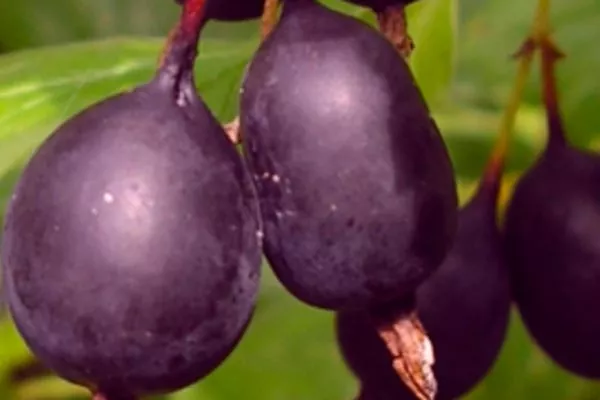
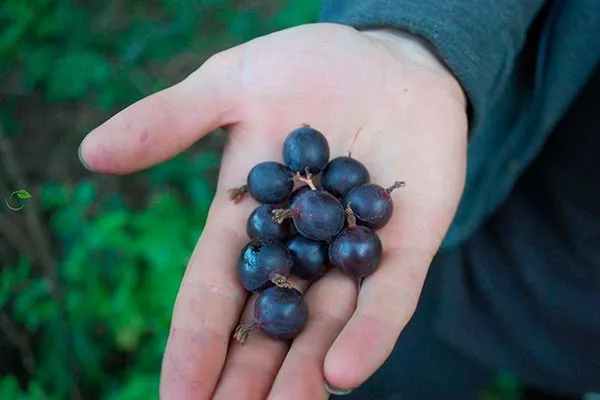
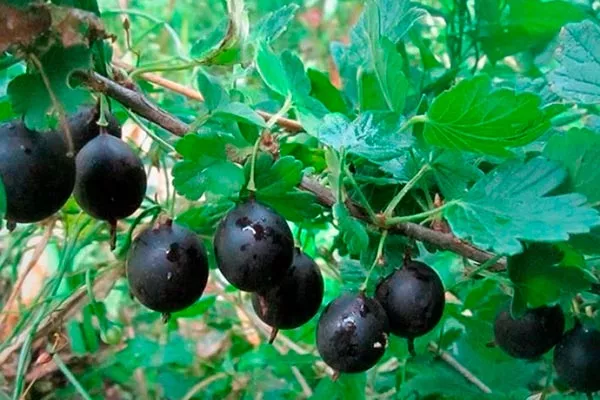
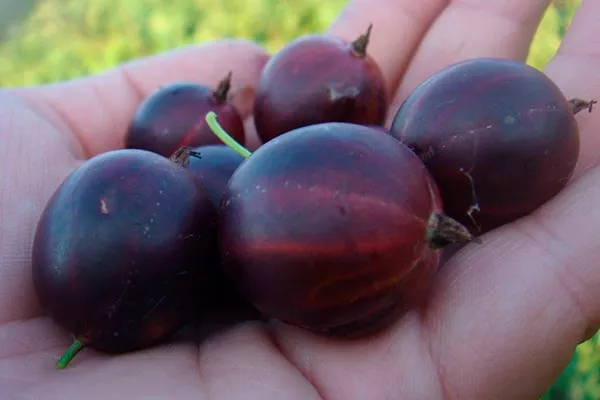
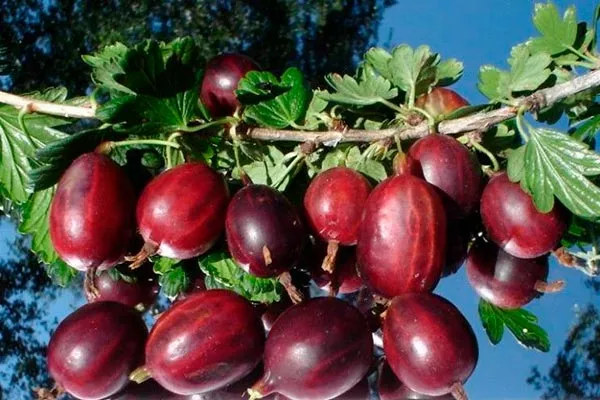
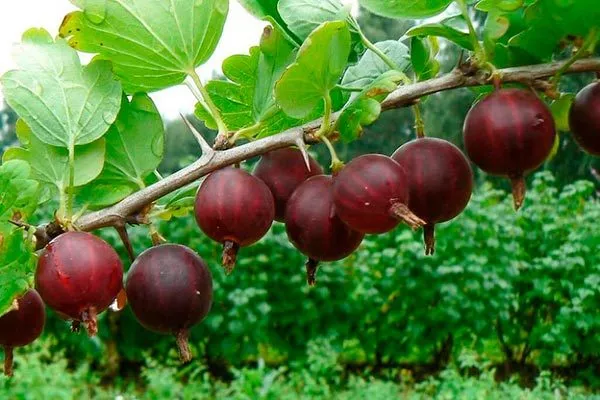
Black Negus berries are small in size and have the following characteristics:
- weight - 2.5 g (with enhanced agricultural technology they can grow larger - up to 3.5-5 g);
- somewhat elongated pear-shaped;
- skin: glossy, thin but strong, not rough, dark purple (almost black) in color, with a bluish bloom, without pubescence;
- pulp: dense, juicy, red, with small seeds in it.
The fruits don't fall from the bush even when overripe. They remain hanging on the branches until late autumn. Thanks to their tough skin, the berries don't crack, store well, and are transported over long distances.
Application and beneficial properties
Agrus, bred by Michurin over 100 years ago, produces a versatile harvest. It is eaten fresh and used in home cooking.
It has many healing properties, which explains the use of berries in folk medicine.
Culinary uses
Black Negus fruits are most often eaten fresh, as they are quite tasty, juicy, and aromatic. They are also suitable for making delicacies:
- jam;
- jam;
- jelly;
- marmalade.

Housewives also make compotes, wines and liqueurs from them, and use them as pie filling. Unripe berries are also used to make a Caucasian sauce for meat dishes, adding garlic and parsley for a piquant flavor. The fruits are also suitable for canning and freezing.
Medical indicators
Thanks to its rich chemical composition, the Black Negus harvest has many medicinal properties. Its berries are a storehouse of vitamins and minerals:
- A, C, E, group B (in particular folic acid), P, D;
- calcium, manganese, potassium, iodine, iron, copper, zinc.
They also contain pectin, flavonoids (in particular anthocyanins, which are powerful antioxidants), organic acids (malic and citric), glucose and fructose.
By eating fresh gooseberries, you will experience many healing effects:
- strengthening the immune system;
- stimulation of metabolism;
- strengthening the nervous system;
- increasing brain activity (berries are useful for those engaged in mental work and scientific work, schoolchildren, students);
- removal of waste, toxins, and radioactive substances from the body;
- relief of inflammation;
- accelerating recovery after illness;
- toning the body;
- increasing stress resistance;
- maintenance of the reproductive system;
- preventing the development of cancerous tumors;
- improvement of vision and skin condition;
- normalization of blood pressure;
- reduction of bad cholesterol levels in the blood;
- strengthening the walls of blood vessels;
- good for the heart and gastrointestinal tract;
- solution to the problem of constipation;
- restoration of intestinal microflora (getting rid of dysbacteriosis).
Gooseberries are beneficial for pregnant women, people living in areas with poor environmental conditions, and workers in hazardous industries. They neutralize radiation. Eating them is an excellent preventative for anemia, cancer, thrombosis, heart attack, and stroke.
Black Negus berries also have contraindications for including them in the daily diet:
- tendency to allergies (there is a risk of developing severe reactions such as Quincke's edema);
- individual intolerance to the product;
- stomach ulcer;
- gastritis (especially with increased acidity of gastric juice);
- colitis;
- enteritis;
- other gastrointestinal diseases that are in a state of exacerbation;
- pancreatitis;
- cholecystitis.
Nursing mothers, infants, and people with diabetes should consume berries with caution. This also applies to those with gastrointestinal diseases in remission. It is safer for them to eat jam made from the berries rather than fresh ones.
Gooseberries should not be combined with milk. This combination can cause bloating and severe diarrhea. Gooseberries can be eaten with fermented milk products, particularly cottage cheese, both fresh and in jam form. This combination will not cause any unwanted side effects.
Characteristics of the Black Negus gooseberry
In addition to strong immunity and the ability to quickly adapt to adverse weather, the variety has many other qualities valuable to gardeners.
Taste qualities
Black Negus berries, though small, are delicious. Their flesh is sweet and sour, very aromatic and juicy. It tastes like grapes. It's a true summer dessert. The tasting score for this vintage variety is 4.63-4.74 out of 5.
Drought resistance, frost resistance
This variety of berry crop is renowned for its good drought tolerance and winter hardiness:
- it tolerates the cold season well with air temperatures dropping to -25°C;
- not afraid of recurrent spring frosts;
- does not freeze even in a harsh winter (according to scientists’ observations, Black Negus bushes were not damaged by severe frosts in 1985-1986 in Michurinsk).
Fruiting, remontancy, yield
Michurin's creation is not a remontant variety. It produces fruit only once a year and is self-pollinated. It begins bearing fruit quickly—in the second or third year after planting. The berries begin to ripen on the bush by mid-July. Gardeners harvest the fruit until the end of August. Its productive lifespan is 18-20 years.
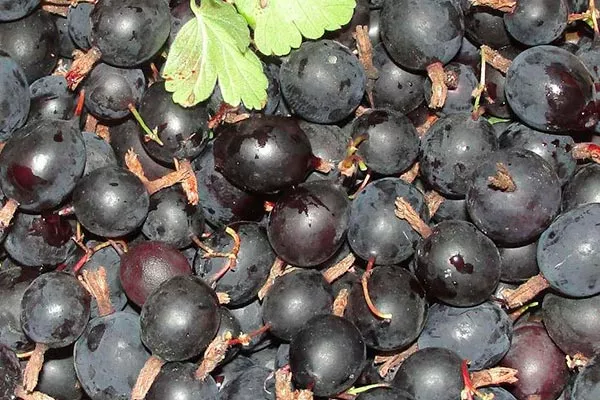
The yield of the Black Negus is not high compared to modern varieties and hybrids. Gardeners consider it average for a berry crop. Gooseberry productivity indicators are as follows:
- 3.5 kg/bush is the minimum amount of berries that can be obtained when growing this variety;
- 6.8 kg is the average yield of an adult plant;
- 8 kg is the maximum productivity that can be achieved with enhanced agricultural technology;
- 12,000 kg/1 ha is the yield indicator when cultivating a retro variety on an industrial scale.
Where can it be grown?
The Agrus varietal variety is most widespread in the Moscow, Leningrad, and Pskov regions of the country. It is successfully grown almost everywhere.
Cultivation methods
In addition to the traditional bush method of growing gooseberry bushes, gardeners also use other techniques, such as standard cultivation and trellis cultivation. Sometimes, the plant is also used to create hedges.
Forming gooseberries on a standard
This growing method is considered fashionable and progressive. It allows the bush to be raised above ground level, giving it the appearance of being supported by a stand. Gardeners create standard plants in two ways:
- cutting off excess branches;
- by grafting onto a hardy related plant with strong roots.
A distinctive feature of a standard tree is the presence of a single central branch extending from the ground to the base of the first skeletal branch. A bush formed using this method resembles a small tree. Gardeners give Black Negus a standard form by forcing 3-5 shoots.
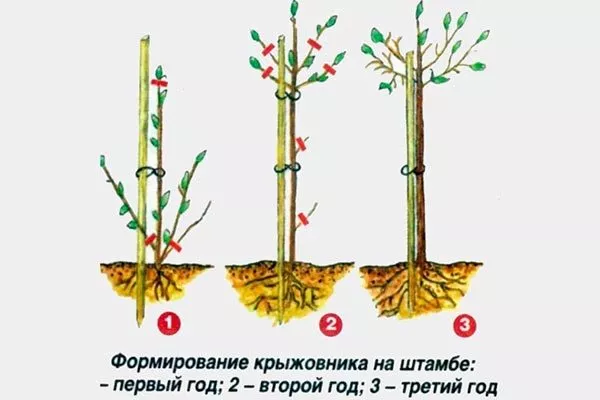
Grow Black Negus using the standard method, following the rules:
- leave 1 strong vertical branch for growth;
- at the 1.5 m mark, bud 5 buds;
- remove everything below (you will need to get rid of lower shoots, buds, and thorns);
- regularly remove root suckers;
- provide support for the plant;
- shape its crown into a spherical form;
- prune the central shoot minimally, and the side shoots more strongly;
- In October, shorten branches that have not yet become woody.
Growing on trellises
If you're growing many Black Negus bushes in a single row, consider using a trellis to support them. Keep in mind that the distance between seedlings in this cultivation method should be 0.6-1 m.
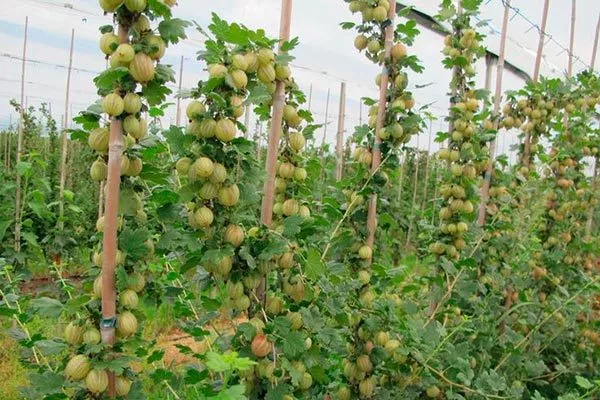
Vertical cultivation of gooseberries offers many advantages:
- provides more uniform and abundant illumination of branches;
- helps the berries ripen more evenly;
- improves the quality of the harvest (the fruits become larger and their flesh becomes sweeter);
- reduces the risk of berry crops being damaged by fungi.
Use wooden, metal, or plastic posts as trellises. You'll need two posts, each 2 meters high. Drive them into the trellises at the edges of the row. Stretch three rows of wire between them. Secure the branches of the bushes to the trellises, aligning them vertically. It's best to fan the shoots out on the wire supports.
Hedge
Experienced gardeners use the thorny nature of Black Negus bushes to their advantage – they use them to create a hedge along the edge of their garden plots, which would become an insurmountable barrier to uninvited guests.
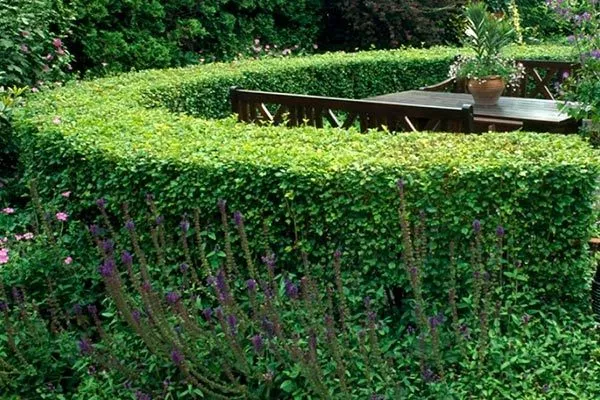
To create a hedge with sharp spines, plant gooseberries in rows 0.4-0.6 m apart.
Planting young seedlings on the site
If you're planning to grow Black Negus agus in your garden, familiarize yourself with the planting guidelines. Adherence to these guidelines will determine the survival rate and future development of your seedlings.
Time and planting pattern
Gardeners plant gooseberry bushes at different times:
- in spring, before the buds open;
- in autumn (4-6 weeks before the onset of cold weather).
In regions with a temperate climate and in the Moscow region, autumn planting, carried out in the second half of September, is preferable.
Experienced gardeners plant bushes of a varietal variety, following the following pattern:
- the distance between plants in a row is 1.5 m;
- row spacing is 1.5-2 m.
Choosing a landing site
To ensure gooseberries grow well and bear fruit abundantly in your garden, select a location for planting that meets the following requirements:
- sunny or in light shade;
- windless, protected from drafts;
- not located in a lowland with water close to the surface of the earth (when grown in a marshy area, the berry crop gets sick because its roots rot);
- with light and loose soil, rich in humus, loamy or sandy loam, slightly acidic or neutral (with a pH of 6).
Site preparation
Prepare the area you'll be growing Black Negus for planting several weeks or even months in advance. Follow these steps:
- remove fallen leaves, weeds and other plant debris and take them outside the area;
- dig up the soil, remove weed roots;
- To increase soil fertility, enrich it with fertilizers: compost or humus, superphosphate, potassium composition, wood ash;
- Add river sand or rotted sawdust to the soil if it is heavy.
Berry seedlings also require pre-planting preparation. This involves the following procedures:
- soaking the lower part of the plant in water to saturate its tissues with moisture;
- treatment with Kornevin, Heteroauxin or Zircon to stimulate root formation;
- shortening the roots by 2-3 cm (carry out this manipulation immediately before planting the gooseberries to stimulate the development of the underground part of the bush).
The landing process
Plant Black Negus seedlings in your garden plot by following these steps:
- Dig planting holes. Make them 0.5 x 0.5 x 0.5 m in size.
- Water the holes generously.
- Place the seedling in the center of the hole and spread out its roots.
- Cover them with a mixture of garden soil and rotted manure. Deepen the root collar of the plant by 5-6 cm.
- Compact the soil under the gooseberries.
- Water again. Use 5-7 liters of water per plant.
- The next day, loosen the soil in the area around the tree trunk and mulch it with peat or hay.
- Prune the seedling, leaving no more than 5 buds on each shoot.
- ✓ For optimal growth and fruiting of the Black Negus gooseberry, it is necessary to ensure soil pH in the range of 6.0-6.5, which is critical for the absorption of nutrients.
- ✓ The distance between bushes should be at least 1.5 m to ensure sufficient ventilation and reduce the risk of fungal diseases.
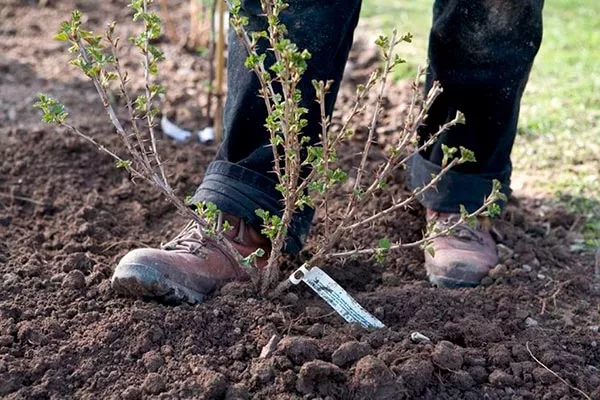
When planting gooseberry bushes, maintain at least 1.5 meters between them. For optimal light exposure, orient the row north to south.
Fundamentals of agricultural technology
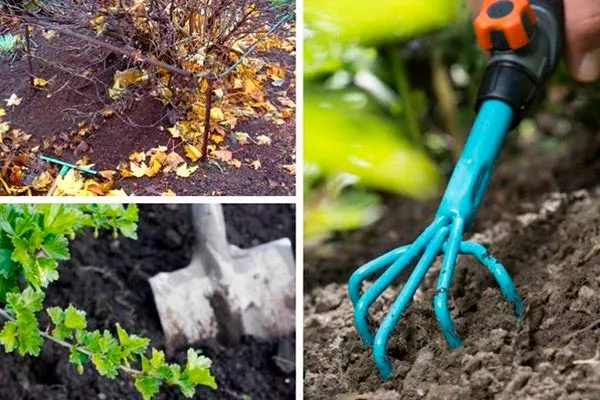
The Black Negus variety is easy to grow. Gardeners love it for its simple cultivation techniques. To minimize the effort required to care for the berry bushes, replace loosening the soil and weeding with mulching.
Watering
Gooseberries require regular watering, every 30 days. Avoid overwatering the soil. Stagnant water can cause root rot. In hot and dry weather, increase watering to 4-5 times per season.
Be sure to water the plants at the following times:
- immediately after the bushes bloom (in the central regions, gooseberries open their buds in the second half of May or at the beginning of June);
- during the berry ripening period;
- after removing the fruits from the branches;
- after pruning the bush in October to increase its winter hardiness.
Water the gooseberry bushes generously. Use at least 10 liters of water per bush. Apply water at the roots, avoiding drips on the foliage. Avoid using cold water, as this can increase the risk of disease. Use warm, settled water.
After watering your gooseberry bushes, don't be lazy about mulching them. Use organic matter for this purpose:
- compost;
- humus.
Top dressing
To ensure abundant fruiting of berry crops, fertilize them in two stages:
- in the spring, before the buds open;
- after picking the berries.
In spring, apply nitrogen compounds: ammonium nitrate (50 g/plant) and urea (30 g/plant). These stimulate the growth of green mass. Granular compounds can be scattered over melting snow. This ensures faster nutrient delivery to the roots.
In the fall, apply fertilizers rich in potassium and phosphorus. Superphosphate and potassium sulfate are the best mineral fertilizers.
Trimming
Prune gooseberry bushes in early spring and autumn before wintering, following the general rules:
- remove branches from plants: dried out, affected by diseases and pests, weak, broken, old (more than 5 years);
- Leave 3 branches of each age on the fruiting bush: two-, three-, four- and five-year-olds.
Wintering
The Black Negus gooseberry is frost-resistant. Its bushes require no winter protection. Preparing them for the cold season involves the following steps:
- clearing the soil under bushes from plant debris: fallen leaves, fruits, weeds;
- abundant moisture-recharging watering (the water consumption rate is 20 liters per 1 plant), which increases the heat capacity of the garden soil and promotes its slower freezing;
- digging the soil in the tree trunk circle (processing depth - 1/2 of a shovel blade);
- mulching it with organic materials;
- pruning gooseberry plantations.
Reproduction
Gardeners propagate Black Negus in a variety of ways. Choose the one that you find most convenient and best suited to the climate in your region.
By cuttings
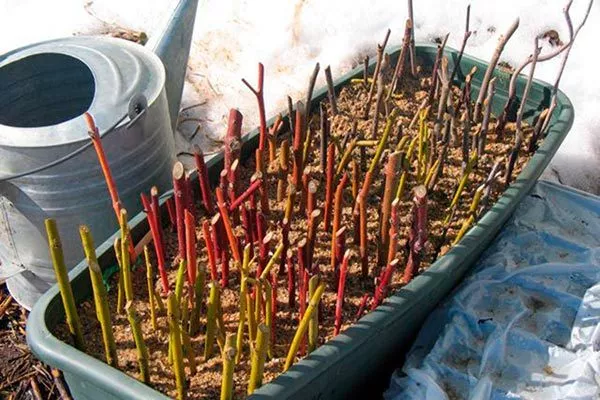
To obtain a large amount of planting material, propagate gooseberries using cuttings. Do this in the spring. Follow these steps:
- Select last year's shoots from the bush. They should be 12-15 cm long and have 3-4 buds.
- Cut them back before they bloom;
- Immediately plant the cuttings in soil, covering each one with a plastic bottle. You can also pre-germinate them in containers of water.
After a year, the resulting seedlings can be transplanted to a permanent location in your garden.
By dividing the bush
To implement this method of obtaining new plants, follow the step-by-step instructions:
- Choose a mature, strong, and healthy gooseberry bush from your garden. Ideally, it should be 4 years or older.
- Dig it out carefully.
- Divide the plant into 2-3 parts. Each part should have strong roots.
- Plant the divisions in separate planting holes in the same way as if you were planting material purchased from a nursery.
| Method | Time until the first harvest | Percentage of successful rooting |
|---|---|---|
| Cuttings | 2 years | 70-80% |
| By dividing the bush | 1 year | 90-95% |
| Layering | 2 years | 85-90% |
The most favorable period for propagating Black Negus by dividing the bush is mid-March. Make sure to carry out this procedure before the gooseberry's sap begins to flow.
Layering
To obtain seedlings, you'll need to bend the bush shoots down to the soil and bury them. This is best done in early spring. If the cuttings successfully root, you'll have high-quality planting material ready for transplanting to a permanent location in May of the following year.
shoots
When cultivating Black Negus, gardeners must constantly prune root suckers to prevent the bush from becoming overgrown. These suckers can also be used to produce new plants.
Follow the step-by-step instructions:
- Carefully dig up the soil under the root shoots.
- Separate them from the main root with pruning shears.
- Plant the cuttings in a new location.
The best time to propagate gooseberries by manipulating shoots is May or the end of August.
Diseases and pests
Black Negus is a variety renowned for its robust immunity. Its bushes demonstrate good resistance to spheroteka and other berry diseases. They are rarely attacked by pests.
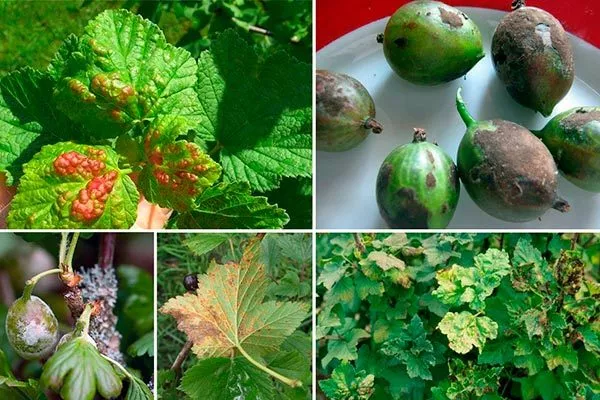
In unfavorable years or when agricultural practices are violated, plants are affected by infections:
- scab;
- rust;
- different spotting;
- anthracnose.
Of the harmful insects, a gooseberry plantation that does not receive proper care most often suffers from:
- spider mite;
- aphids;
- gall midges;
- geometer moths;
- fireflies;
- sawfly;
- scoop.
To prevent berry crops from becoming infected and being damaged by parasites, take the following preventative measures:
- To protect gooseberry plants from insects, sprinkle them with hot water mixed with a small amount of boric acid and potassium permanganate. Continue this procedure until the buds open. Use a full watering can of the hot solution for each plant.
- Treat the bushes with fungicides and insecticides several times during the spring to prevent infections and pests. Spray the plants in early spring (after the snow melts), during bud swelling, and before flowering. Use copper sulfate, colloidal sulfur, Gaupsin, and Trichodermin for spraying.
Storage of the harvest
Black Negus berries can be kept fresh for up to 25 days. Despite their thin, delicate skin, they don't burst, bruise, or leak during long-distance transport. Due to their excellent shelf life and transportability, gardeners grow this variety commercially.
Similar species
| Name | Disease resistance | Frost resistance | Fruit size |
|---|---|---|---|
| Black Negus | High | High | Small |
| Prune | High | Average | Average |
| Sirius | High | High | Average |
Experienced gardeners claim that there are two varieties of gooseberry that have similar characteristics to Michurin's creation:
- PruneThis variety is winter-hardy and resistant to powdery mildew. Its bushes are medium-height and spreading. The shoots grow at an angle and are thorny. They are covered with small, green, dense, and hairless foliage.
The fruits are characterized by a dark skin with a slight waxy coating. They weigh 4 g and are seedless.
The bush yields 4-7 kg of fruit. It has a pleasant sweet and sour taste with plum notes, good shelf life, and excellent transportability.

- SiriusThis variety is drought- and frost-resistant and resistant to fungal infections. Its bushes are medium-height. The shoots are thorned. The foliage is large, matte, and slightly pubescent.
The fruits are characterized by a dark red skin, a waxy coating, a medium number of seeds in the pulp, and a sweet taste with a slight sourness.
The yield indicator ranges from 4 kg to 7 kg.
Positive and negative qualities
This variety, developed over 100 years ago, remains very popular among Russian gardeners. It is loved for its many virtues:
Among the disadvantages of this variety, gardeners point out the small size of the berries and the presence of large and sharp thorns on the bush, which make harvesting difficult.
Reviews
Black Negus is a retro gooseberry variety that remains popular among Russian gardeners. It boasts disease and winter resistance, attractive berries with excellent flavor, and a long shelf life and easy transportability. Adherence to proper berry cultivation practices will ensure high productivity.