
The Chernomor gooseberry is widely sought after for its abundant harvest and delicious berries. This variety is noted for its reliability, stable yield, and disease resistance. With proper agricultural practices, it's possible to fully evaluate the varietal characteristics of the crop and produce high-quality fruit.
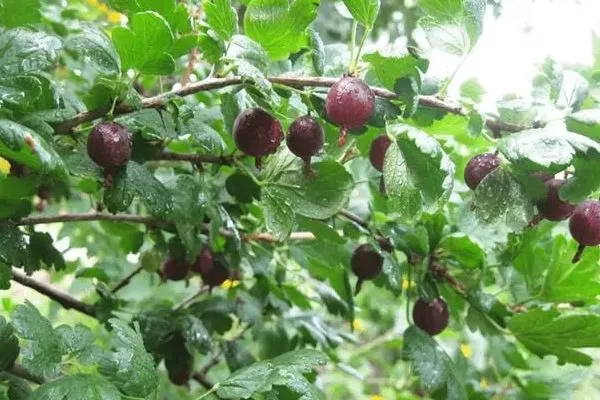
What kind is this?
Chernomor, known as Northern Grape and Garden Date, is a mid-late-ripening gooseberry variety. Its characteristics include:
- Plants begin to bear fruit two years after planting, with fruits ripening in the first or second ten days of July.
- It is distinguished by its high productivity: from 2.1 to 4 kg of berries can be collected from a bush, which is up to 10 tons per 1 hectare.
- For processing, the fruits are harvested 14 days before they are fully ripe, when they are still green. For fresh consumption, the harvest is made when the fruits are fully ripe and have turned a deep burgundy.
In the first case, gooseberries can be stored in a cellar or refrigerator for up to two weeks, in the second - no more than 7 days.
History of origin and distribution
It was bred by K. D. Sergeeva at the All-Russian Research Institute named after I. V. Michurin by pollinating Seedling 21-52 using pollen from the varieties Finik, Green Bottle, Brazilian, and Maurer Seedling.
This variety has undergone state variety testing since 1980 and was included in the State Register of Russia in 1994. It was approved for cultivation in the Central region, including the Ivanovo, Tula, Vladimir, Kaluga, Bryansk, Moscow, Ryazan, and Smolensk regions.
Varietal qualities
This variety was bred in Russia. Gardeners appreciate it for its numerous advantages and minimal drawbacks. The fruits are juicy, and the plants are resistant to adverse weather conditions.
Temperature resistance
The variety is highly frost-resistant: with proper winter preparation, the crop can withstand temperatures down to -25…-30°C, which allows it to be successfully grown in various regions of Russia.
Moisture and drought resistance
Thanks to its deep roots, gooseberries easily tolerate prolonged periods of drought. However, overwatering, stagnant soil, and high groundwater levels close to the surface can lead to root rot and plant death.
Resistance to diseases and pests
The crop is resistant to powdery mildew and moth. It can be susceptible to aphids, sawflies, and geometer moths.
Pollinator varieties
This variety is self-pollinating, so it only needs its own flowers to bear fruit. To increase yield, it is recommended to plant other varieties nearby that bloom during the same period (late April to mid-May).
Fruits and bushes – description
It is characterized by a compact and vigorous bush, reaching a height of up to 1.5 m. It has the following distinctive qualities:
- The crown is dense, with straight, glabrous, light-green shoots that have an anthocyanin tint on top and are covered with thin, sparse thorns of varying lengths, directed downwards.
- The buds are small, oval, without pubescence, with a pointed tip.
- The leaves are medium-sized, dark green, glossy, and smooth or with slight folds on the surface. They can be three- or five-lobed, with a straight or slightly notched base.
- The flowers form an inflorescence of 2 or 3 flowers with bright, slightly elongated sepals. The ovary is anthocyanin-colored and slightly pubescent.
- The berries are medium-sized, weighing about 3 g. They are oval with a multi-layered color, including black, purple and red shades, with a waxy coating and weak longitudinal venation.
- The skin is not thick, but strong, which ensures good transportability and long-term storage.
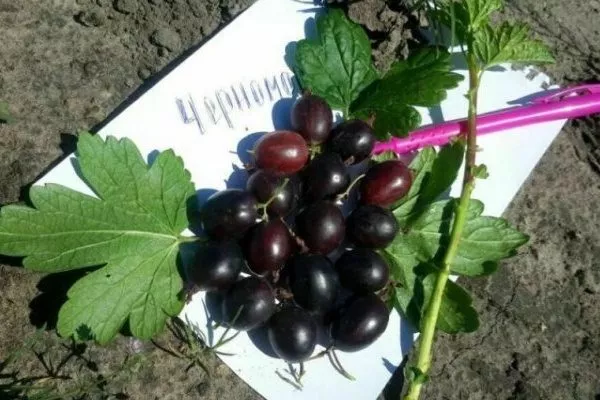
Scope of application
The fruits are versatile: they can be eaten fresh, preserved, or used in confectionery. They are added to jams, juices, preserves, jellies, marmalades, wines, sauces, kvass, and jelly. The berries are also used in baking.
Advantages and disadvantages of the variety
Gooseberries are widely grown in many regions of Russia and are popular due to a number of positive characteristics. These include:
Among the disadvantages, gardeners note:
Growing technology
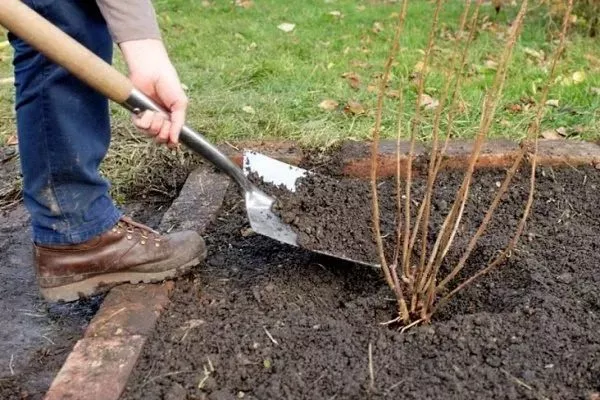
It's undemanding regarding soil composition. To successfully grow this variety, it's important to select the right location and ensure proper care.
Follow these recommendations:
- Optimal planting conditions include a well-lit area protected from drafts, preferably on a flat or elevated site.
- The soil should be light, loose, and provide good access to air and moisture. Ideal soils include forest-steppe soils, medium or light loam, sandstone, peat, and sod-podzolic soils. The groundwater table should be no more than 1.5 meters deep.
- When choosing a seedling, give preference to a two-year-old plant with an open root system, without damage or signs of disease.
- Before planting, prune the seedling, remove root tips and dry areas, and trim the branches so that they have 5-6 buds. Soak the roots in a growth stimulant solution and then soak them in a mixture of mullein and clay for 3 hours.
Planting should be carried out in early spring or autumn, following certain rules:
- Dig planting holes 30-40 cm deep.
- Prepare the nutrient mixture and form a mound at the bottom of the hole.
- Place the seedling on the hill, carefully spreading the roots.
- Fill the hole with soil so that the root collar is no more than 5 cm deep.
- Water the plantings using 10-12 liters of water for each seedling.
- Mulch the soil with peat or sawdust.
- The optimal distance between bushes is 1.2-1.5 m, and between rows – 2 m.
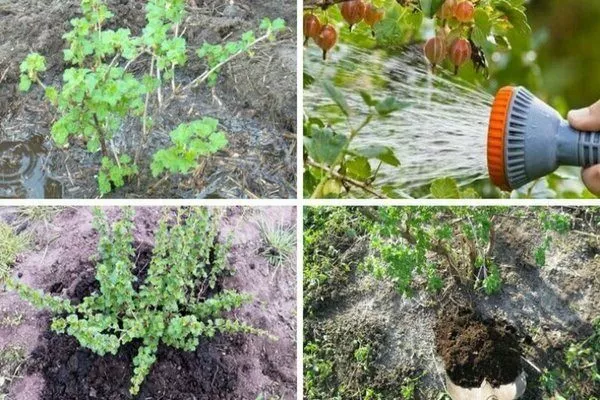
Growing gooseberries isn't particularly difficult, but it does require timely agricultural practices. Water the plant at the roots, avoiding contact with the leaves to prevent disease.
Water several times per season, following a specific schedule:
- Before flowering begins.
- After the formation of the ovary.
- Before the berries begin to ripen.
- After harvesting.
- In preparation for winter.
Begin pruning in the second year of cultivation. Leave only four main branches, arranged opposite each other. Thin out second- or third-order branches in the fall or spring to facilitate harvesting and ensure ventilation.
Apply fertilizer to the hole when planting the seedlings. Fertilize the bush only in the fourth year of growth. To do this, add superphosphate, potassium sulfate, wood ash, and organic matter. Repeat this process every three years. Loosen and mulch the soil under the plant every year, and apply urea in the spring.
Possible problems, diseases, pests
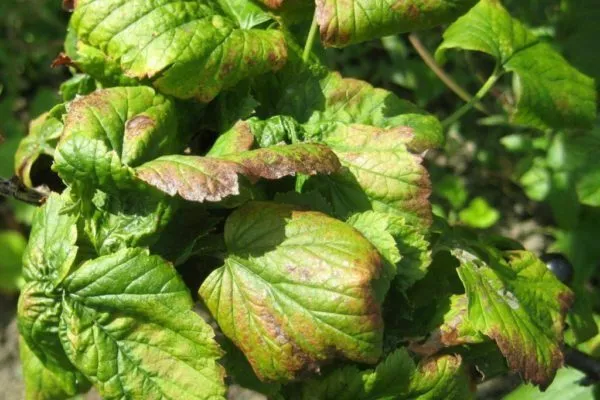
It has a strong immune system and is resistant to most diseases typical for this crop, including powdery mildew and moths. To prevent fungal diseases, treat the bushes in the spring with Topaz, Thiovit Jet, or a solution of Karbofos.
Among the pests that can cause damage, aphids, sawflies, and geometer moths are particularly dangerous. To protect plants from these pests, spray them 3-4 times during the growing season with Samurai, Fufanon, or Cyperus.
Wintering
Even if the variety is highly frost-resistant, it's important to prepare the bushes for winter. To do this, weed the soil between the rows, clear away any debris and plant debris, and then loosen it to a depth of 15-18 cm. Apply a moisture-replenishing watering (30-40 liters of water per square meter) and mulch the area around the trunk with a layer of peat or sawdust.
Growing features depending on the region
Planting and care requirements for Chernomor don't change depending on the region where it's grown. However, some adaptive methods may be used in different climate zones.
In hotter and drier regions, water more thoroughly and frequently to ensure adequate soil moisture. In regions with cold winters, it may be necessary to cover the bushes with agrospan in late autumn to protect them from low temperatures. In central Russia, this may be unnecessary.
Reproduction
Gardeners use two main methods to propagate the Chernomor gooseberry: layering and propagating the bushes with cuttings. Cuttings are the preferred method due to the high survival rate typical of this variety.
This method is more effective because it allows you to obtain more seedlings from a single planting. For cuttings, use two-year-old shoots, cut them into 12-15 cm long pieces, and plant them in a pre-prepared substrate of sand, garden soil, and peat.
Treat the cuttings with rooting stimulants before planting. Afterward, place the cuttings in a small trench, secure with a staple, cover with soil, and moisten the soil. In the fall, transplant the rooted cuttings to their permanent location.
Reviews from summer residents
The Chernomor gooseberry is characterized by compact bushes, a stable yield, and unrivaled berry flavor. Thanks to its resistance to diseases and pests, it requires minimal care, making it an excellent choice for both novice and experienced gardeners. Cultivating it with appropriate agronomic practices will increase productivity and strengthen the immune system.