
Cranberries, a tasty and healthy berry, are known to many as wild, growing in forest bogs. In fact, they have long been cultivated by farmers using cultivated varieties. Russian and international breeders offer numerous productive and promising cranberry varieties for commercial and amateur cultivation.
Types of cranberries
The subgenus cranberry is divided into several species, which differ significantly in their external characteristics and distribution ranges. There are four main species: common cranberry, small-fruited cranberry, large-fruited cranberry, and red-fruited cranberry.
Cranberries receive additional minerals from fungi. If the berries don't interact with the fungi, they first slow down in growth and eventually die.
| Name | Distribution area | Size of berries | Color of berries |
|---|---|---|---|
| Common (marsh) | North and center of the Eurasian continent | Up to 1.5 cm in diameter | Bright red |
| Small-fruited | Europe and Asia, up to Korea, the Far East | 6-7 mm in diameter | Red |
| Large-fruited (American) | North America | Up to 2.5 cm in diameter | Deep red |
| Red-fruited | Asia and North America | 8-17 mm in diameter | Dark red, translucent |
Common (marsh)
This is an evergreen shrub with creeping shoots capable of rooting. This method of vegetative propagation allows the plant to cover large areas.
Common cranberry (Vaccinium oxycoccos) grows naturally in the north and center of the Eurasian continent.
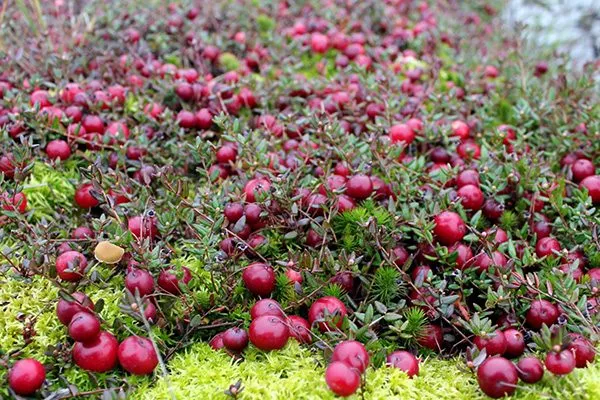
Brief description of cranberry:
- shoots – creeping, 25-35 cm long;
- leaves - small, green, oblong or ovoid, reverse side with a glaucous coating;
- fruits are bright red, spherical (rarely pear-shaped), up to 1.5 cm in diameter;
- roots – taproot type with many adventitious roots;
- flowers are pink, with four petals.
Small-fruited
The berries of the small-fruited cranberry are not only smaller than those of the marsh variety, but also elongated. The small-fruited cranberry (Vaccinium microcarpum) is listed as endangered. It is native to Europe and Asia, as far as Korea and the Far East. It is found in the Carpathians and the Urals.
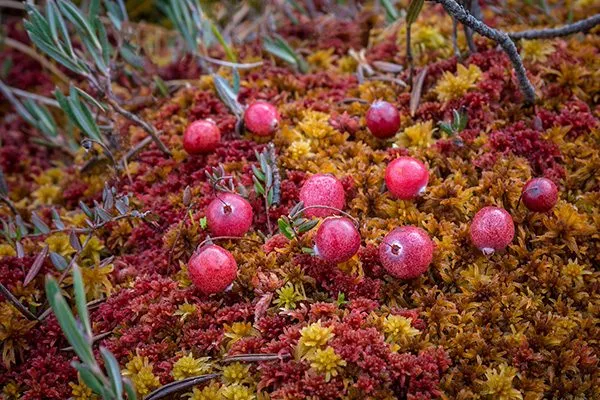
The climbing branches of this species grow up to 25-35 cm in length, the leaves are 0.6 cm, and the berries are 6-7 mm in diameter. The fruit, like the marsh cranberry, is red.
Large-fruited (American)
The large-fruited cranberry (Vaccinium macrocarpon) grows in North America. Local farmers grow domesticated varieties. The main distinguishing feature of the large-fruited variety is its large berries, reaching 2.5 cm in diameter.
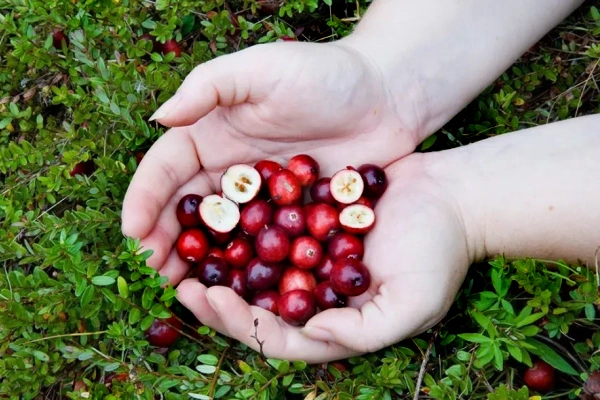
The leaves, green at the beginning of the growing season, turn dark red by autumn. The berries are also a rich red hue. Unlike other varieties, the shoots of large-fruited cranberries can be either straight or trailing. Fruits form only on upright branches.
Red-fruited
Red-fruited vaccinium (Vaccinium erythrocarpum) is found in Asia and North America. It grows in forests, in the most inaccessible and shaded areas. The bushes reach 1.5 meters in height. The berries are dark red and translucent.
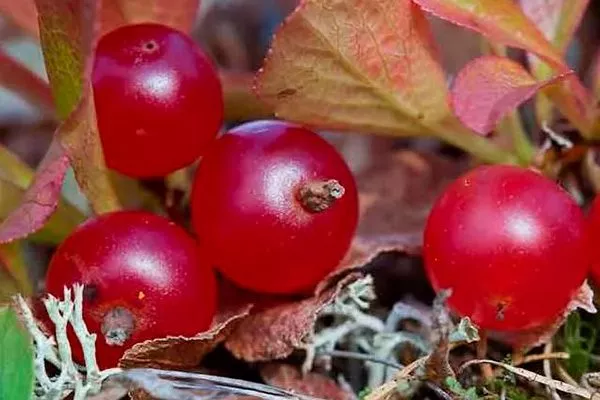
Some sources distinguish the plant as a separate species or classify it as belonging to the genus Vaccinium, but in most cases it is still considered a variety of cranberry.
Varieties of common cranberry
The most popular varieties and hybrids of cranberries are those of the marsh cranberry family. Cultivation in Russia began only in the late 20th century. The varieties listed below differ in ripening time, berry size, and other characteristics.
| Name | Ripening period | Size of berries | Productivity |
|---|---|---|---|
| Beauty of the North | The second ten days of September | 15 mm in diameter | 1.6/3.6 kg/sq.m |
| Gift of Kostroma | The second ten days of August | 12.5×16.5 mm | 1.6/4.1 kg/sq.m |
| Hotavetskaya | Beginning of September | 12.5 mm in diameter | 1.5/3.2 kg/sq.m |
| The Scarlet Commandment | Late-ripening | 13.5 mm in diameter | 1.2/3.4 kg/sq.m |
| Sazonovskaya | The first ten days of September | 12.5 mm in diameter | 0.9/2 kg/sq.m |
| Northerner | End of August | 18.7x14.1 mm | 1.4/2.4 kg/sq.m |
| Sominskaya | Mid-early | 14.5 mm in diameter | 1.4/2.7 kg/sq.m |
Beauty of the North
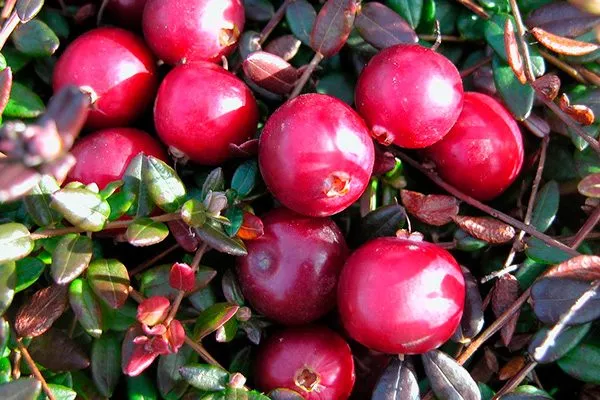
The main advantage of this late-ripening variety is its high yield. The fruits ripen in the second ten days of September. The round-oval berries are large, glossy, and have an oval indentation at the stem. The berries have a sugar content of 6.8%.
Specifications:
- berry diameter – 15 mm;
- color – from light red to dark red with light red sides;
- weight – 4.48 g;
- average/maximum yield – 1.6/3.6 kg/sq. m.
Advantages:
- large berries;
- high yield;
- commercial appearance of berries.
No defects were found.
Cranberry Gift of Kostroma
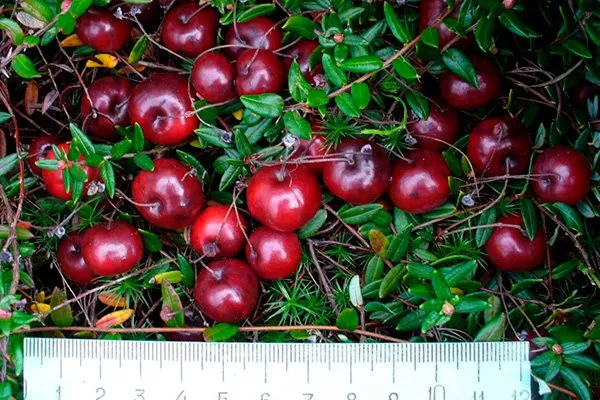
A mid-early variety. It produces flat-round, ribbed fruits with indentations at the stems. They have a tart, juicy flavor. They ripen in the second ten days of August. Sugar content is 6%.
Characteristics of berries:
- size – 12.5×16.5 mm;
- color – dark red and cherry;
- weight – 1.52-4.98 g;
- average/maximum yield – 1.6/4.1 kg/sq. m.
Advantages:
- high yield;
- good shelf life;
Flaws:
- Most of the berries are formed inside the thickets, which makes picking more difficult;
- There are years when few fruits are set.
Hotavetskaya
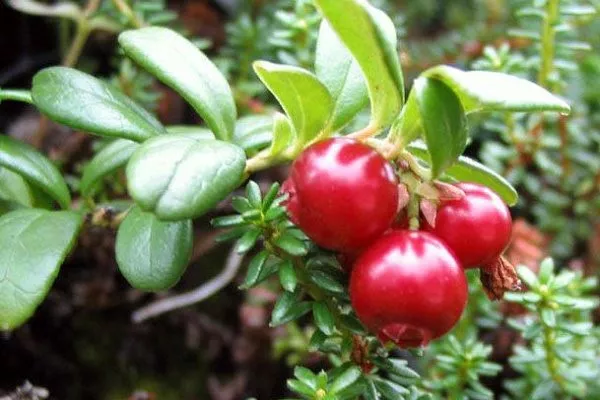
A mid-season variety, ripening in early September. The fruits are flat-round, juicy and tart. Sugar content is 6.4%.
Characteristics of berries:
- diameter – 12.5 mm;
- color – dark red and cherry;
- weight – 0.86-2.2 g;
- average/maximum yield – 1.5/3.2 kg/sq. m.
Advantages:
- you can store berries for a long time;
- good taste.
Disadvantage: small fruits.
The Scarlet Commandment
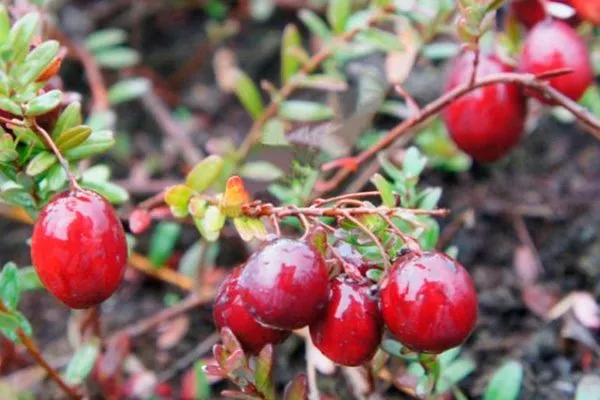
A late-ripening variety with spherical fruits. They are medium-sized to large, juicy, and have a distinctive cranberry-like flavor. Sugar content is 6%.
Characteristics of berries:
- diameter – 13.5 mm;
- color – red;
- weight – 1.3-2.3 g;
- average/maximum yield – 1.2/3.4 kg/sq. m.
Advantages:
- are well stored and transported;
- high yield;
- late flowering;
- one-dimensional fruits.
Disadvantage: the size of the berries is highly dependent on watering.
Sazonovskaya
A mid-season variety with medium-sized berries. Ripens in the first ten days of September. Sugar content is 8.1%. The fruits are rich in pectin and anthocyanins.
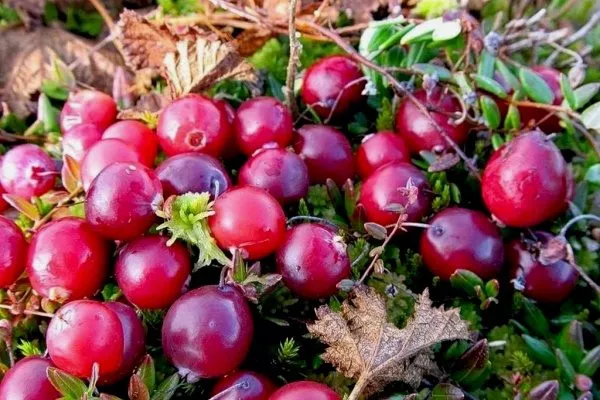
Characteristics of berries:
- diameter – 12.5 mm;
- color – purple-red;
- weight – 0.8-2.13 g;
- average/maximum yield – 0.9/2 kg/sq. m.
Advantages:
- beautiful color;
- ideal for recycling.
Flaws:
- half of the harvest is formed in the thickets;
- not very large fruits;
- small harvests.
Northerner
A mid-early cranberry with large, oval-shaped berries. The surface of the fruit has a thick waxy coating. The notch at the stem is shallow. The berries ripen in late August. Sugar content is 7.2%.
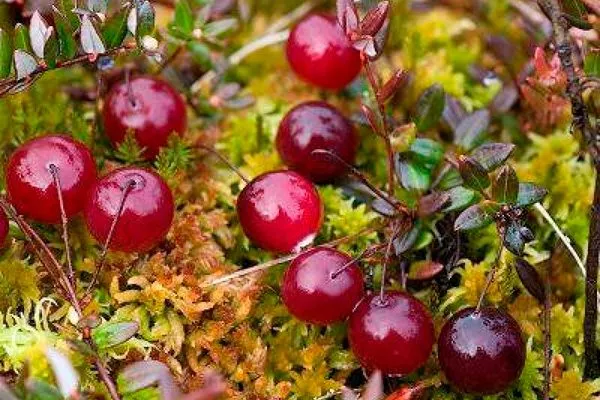
Characteristics of berries:
- size – 18.7x14.1 mm;
- color – dark red;
- weight – 1.38-2.83 g;
- average/maximum yield – 1.4/2.4 kg/sq. m.
Advantages:
- good shelf life;
- productivity;
- large berries.
Disadvantages: unevenness of fruits.
Sominskaya
A mid-early cranberry with large, tart, and juicy fruits. Sugar content: 7.1%.
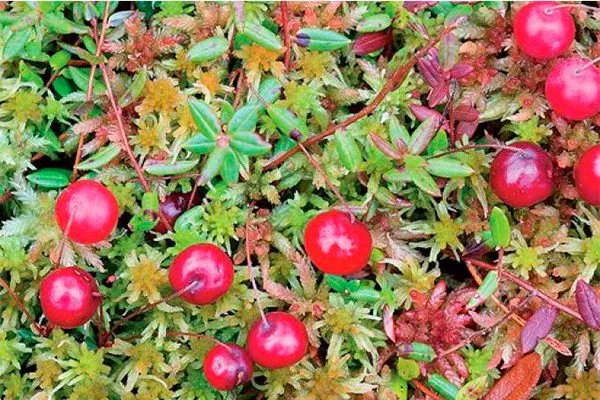
Characteristics of berries:
- diameter – 14.5 mm;
- color – dark red and cherry;
- weight – 1.32-2.84 g;
- average/maximum yield – 1.4/2.7 kg/sq. m.
Advantages:
- high yield;
- large berries.
Flaws:
- non-uniformity of fruits;
- may bloom again.
Large-fruited cranberry varieties
Large-fruited cranberries are represented by two dozen varieties of domestic and foreign selections. These include berries with early, mid-season, and late ripening periods. All varieties are productive and suitable for mass cultivation.
| Name | Ripening period | Size of berries | Productivity |
|---|---|---|---|
| Wilcox | Mid-September | 18-20 mm in diameter | 1.5-2 kg/sq.m |
| House | October | 16 mm in diameter | 1.5-2 kg/sq.m |
| Franklin | September | 13-16 mm in diameter | From 2 kg/sq.m |
| Pilgrim | October | Up to 20 mm in diameter | 1.5-2 kg/sq.m |
| Ben Lear | End of August | 18-20 mm in diameter | 1.5-2 kg/sq.m |
| Black Veil | The beginning of autumn | 15-18 mm in diameter | 1-1.3 kg/sq.m |
| Stevens | Late September – early October | 22-24 mm in diameter | Up to 3 kg/sq.m |
| Red Star | Not specified | 23 mm in diameter | Up to 2 kg/sq.m |
| McFarlane | The end of September or a little later | 10 mm in diameter | Up to 2 kg/sq.m |
| Taiga beauty | Not specified | Up to 15 mm in diameter | Up to 2 kg/sq.m |
| Ruby placer | September or October | Up to 20 mm in diameter | Up to 2 kg/sq.m |
| Early Black | Not specified | Up to 7-10 mm in diameter | Up to 2.5 kg/sq.m |
| Black early | Not specified | Up to 7-10 mm in diameter | Up to 2 kg/sq.m |
Wilcox
A fast-growing and productive cranberry with a mid-season ripening period. The bushes reach up to 25 cm in height. The plant has a compact crown and bears fruit 3-4 years after planting. The berries are harvested in mid-September.
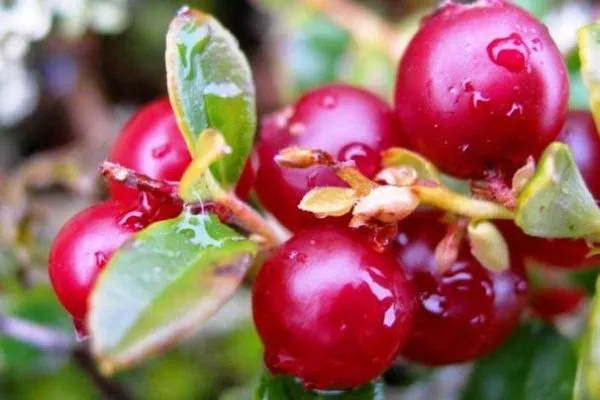
The berries are oblong-oval in shape. They are juicy, tart, and large. Planting near trees and shrubs is not recommended. Cranberries prefer peat soils. Without insulation, they can withstand temperatures down to -23°C. The berries are eaten fresh and can be processed.
Characteristics of berries:
- diameter – 18-20 mm;
- color – bright red;
- weight – from 2 g;
- yield – 1.5-2 kg/sq.m.
Pros:
- quickly grows shoots;
- universal purpose of fruits;
- high immunity.
No defects were found.
House
A fast-growing and productive cranberry with a mid-late ripening period. The bushes have thick, long, trailing shoots. The plant grows up to 25 cm tall and over 1 m wide. The first fruits appear in the second year of planting, and full fruiting begins in the third or fourth year.
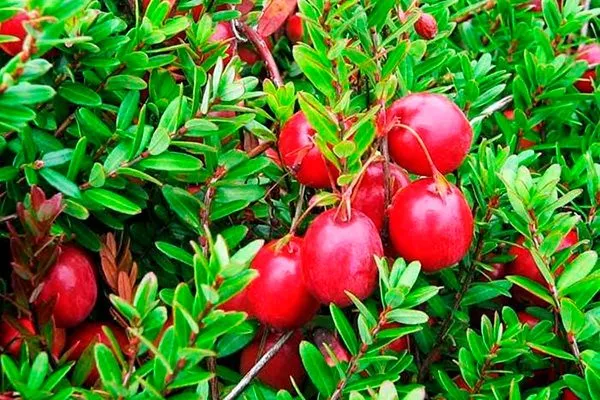
Harvest occurs in October. The variety prefers acidic soils. It can withstand temperatures down to -25°C, but only if covered with straw or leaves.
Characteristics of berries:
- diameter – 16 mm;
- color – burgundy red;
- weight – 15-17 g;
- yield – 1.5-2 kg/sq.m.
Pros:
- ease of care;
- easy to transport;
- rapid growth;
- high immunity to diseases and pests.
No defects were found.
Franklin
A mid-season variety with spherical fruits. Ripens in September. The berries can be stored for 3-4 months without spoiling or losing their quality. The bushes grow quickly, adding 10 cm annually. Plants reach 30-40 cm in height. Fruiting begins in the 2nd or 3rd year, depending on climate and conditions.
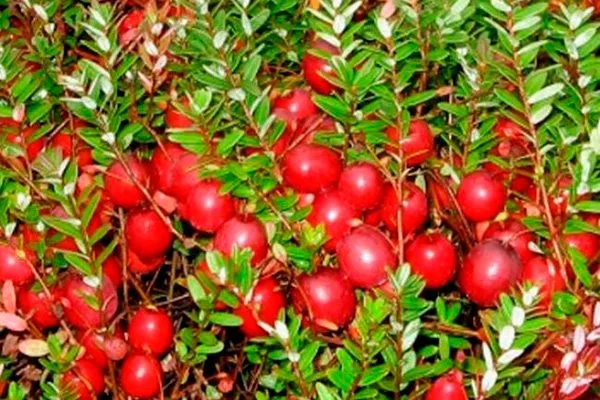
The berries are large, oblong-oval. The variety is drought- and heat-resistant, and can withstand temperatures down to -23°C.
Characteristics of berries:
- diameter – 13-16 mm;
- color – dark red;
- weight – from 1.5 g;
- yield – from 2 kg/sq.m.
Pros:
- are well preserved without additional processing;
- When caught by frost, the berries only become tastier.
Flaws:
- the berries have no aroma;
- In the first years, cranberries need formative pruning and fertilizing.
Pilgrim
The fruits of this cranberry ripen in October. This versatile variety is grown not only for its berries but also for its ornamental value. In Russia, Piligrim produces average yields due to its late ripening period. Bushes reach a height of up to 0.25 m and a width of 1.5-2 m.
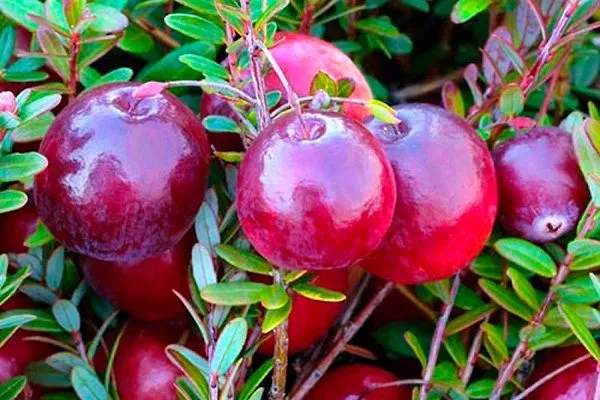
The oblong fruits are unevenly colored and covered with a yellowish waxy coating. The flesh is juicy and slightly crunchy. It is characterized by moderate winter hardiness. This variety is recommended for regions with a temperate climate.
Characteristics of berries:
- diameter – up to 20 mm;
- color – purple;
- weight – from 2 g;
- yield – 1.5-2 kg/sq.m.
Pros:
- commercial appearance of berries;
- good taste.
The disadvantage is that cranberries grow only in acidic soils.
Ben Lear
An early-ripening cranberry, ripening by the end of August. This ornamental plant can be used as a groundcover lawn. The bushes grow to a height of no more than 15-20 cm. The crop begins to bear fruit 1-2 years after planting.
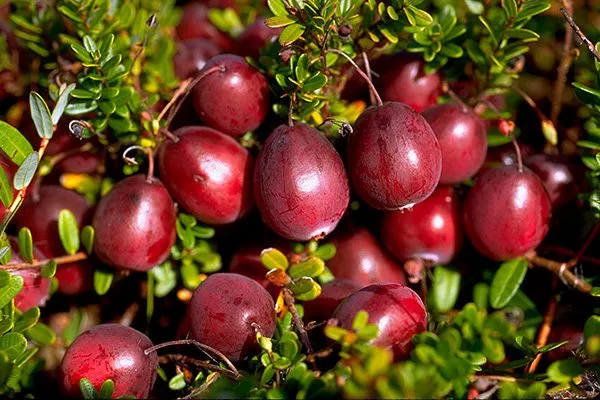
The berries are sour, pear-shaped, and pleasantly aromatic. They are used primarily for freezing and processing. The variety is characterized by moderate winter hardiness. It can be grown in temperate climates, but shelter is essential during snowless winters.
Characteristics of berries:
- diameter – 18-20 mm;
- color – dark red or burgundy;
- weight – 1.5-2.7 g;
- yield – 1.5-2 kg/sq.m.
Pros:
- good taste;
- decorativeness.
Flaws:
- berries are stored for no longer than two weeks;
- high soil humidity and acidity are required.
Black Veil
A large-fruited, early-ripening cranberry, popular in Russia due to its increased winter hardiness. The bushes are compact, occupying approximately 1 square meter of space. They begin to bear fruit in the second year of planting.
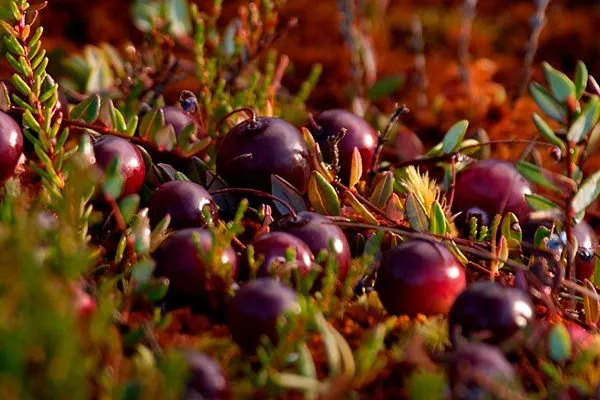
The berries ripen in early autumn. The berries are beautiful, large, and have firm flesh. The plant can withstand temperatures down to -25°C. It prefers acidic and slightly acidic soils.
Characteristics of berries:
- diameter – 15-18 mm;
- color – black and red;
- weight – 2 g;
- yield – 1-1.3 kg/sq. m.
Pros:
- general purpose;
- suitable for all regions of Russia;
- resistance to pests and diseases;
- frost resistance.
Disadvantage: requires high humidity.
Stevens
A mid-season cranberry, productive and winter-hardy. Ripens in late September – early October. Bushes reach up to 30 cm in height, with shoots over 1.5 m long. Active fruiting begins in the fourth year after planting.
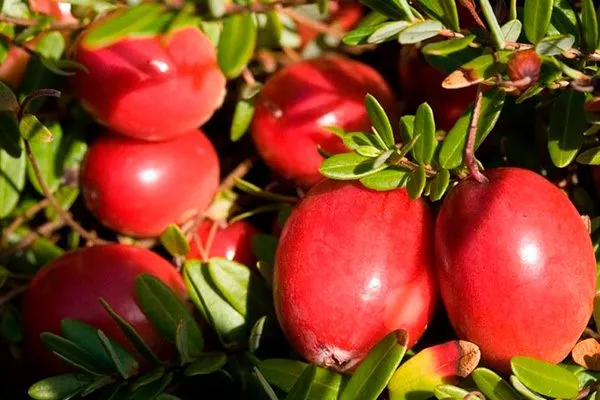
The berries are large, oblong, with juicy, sweet-tart flesh. The surface has a light waxy coating. Without freezing, the berries can be stored for almost a year. With cover, the bush can withstand temperatures down to -23°C.
Characteristics of berries:
- diameter – 22-24 mm;
- color – dark red;
- weight – up to 3 g;
- yield – up to 3 kg/sq.m.
Pros:
- high frost resistance;
- practically never gets sick;
- very good shelf life;
- easily adapts to the conditions of the middle zone and adverse weather conditions.
Disadvantage: in the first years it urgently needs watering.
Red Star
The best foreign cranberry variety. It produces high yields under any conditions. It is widely used in landscape design – it is planted in rock gardens and on the banks of man-made ponds. It begins to bear fruit in the third year after planting.
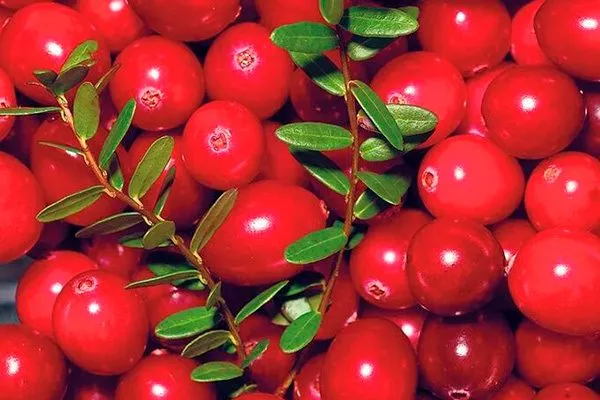
The berries have a pleasant sweet and sour flavor. They are best grown in sunny areas. They prefer loose, light soils. This variety can withstand temperatures down to -30°C.
Specifications:
- berry diameter – 23 mm;
- color – dark red;
- weight – up to 3 g;
- yield – up to 2 kg/sq.m.
Pros:
- high adaptability;
- productivity;
- decorativeness;
- grows quickly;
- very high frost resistance.
No defects were found.
McFarlane
A late-ripening variety with round-oval berries. The fruits are covered with a dense waxy coating. They have firm flesh with excellent flavor. The harvest ripens in late September or slightly later.
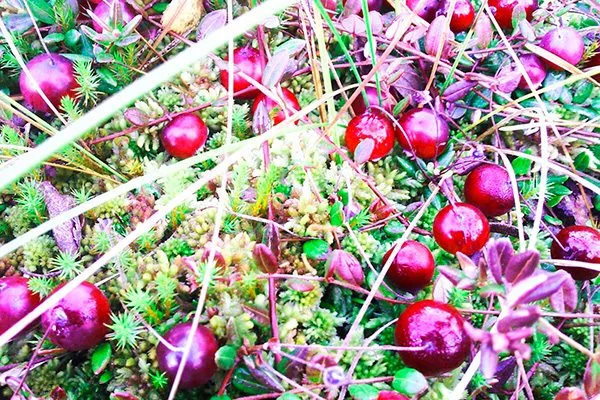
Specifications:
- berry diameter – 10 mm;
- color – dark red;
- weight – up to 2 g;
- yield – up to 2 kg/sq.m.
Pros:
- good shelf life;
- high taste qualities.
There are no disadvantages.
Taiga beauty
A large-fruited evergreen cranberry with creeping shoots reaching 20-30 cm in length. It prefers sunny sites and acidic, peaty soils. The fruits have a harmonious and balanced flavor. Recommended for fresh eating, freezing, pickling cabbage, and winter preserves.
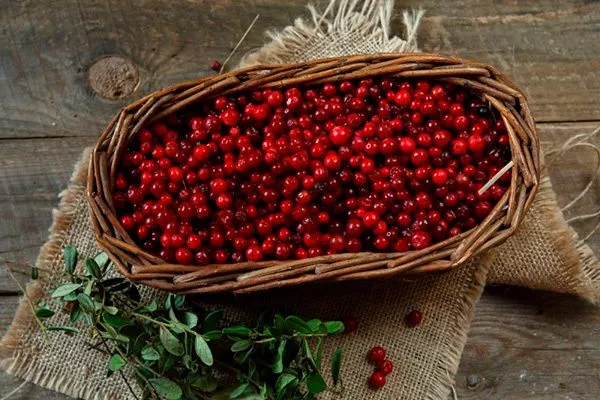
Characteristics of berries:
- diameter – up to 15 mm;
- color – deep red;
- weight – up to 1.5 g;
- yield – up to 2 kg/sq.m.
Pros:
- high winter hardiness;
- universal application;
- excellent taste.
No defects were found.
Ruby placer
This evergreen shrub has long, creeping stems and short, upright shoots. The fruits have a very good flavor and ripen in September or October. This variety prefers acidic soils and loves full sun.
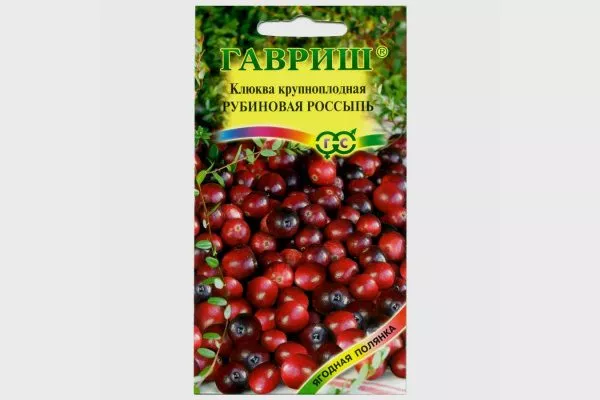
Characteristics of berries:
- diameter – up to 20 mm;
- color – dark burgundy;
- weight – up to 1.5-1.7 g;
- yield – up to 2 kg/sq.m.
Pros:
- excellent taste;
- high commercial qualities.
Disadvantage: when sowing seeds, stratification is required.
Early Black
An early cranberry variety with pear-shaped fruits. The bushes reach a height of 15 cm and a width of 50-80 cm. Fruiting begins in the second year after planting. The shoots are thin and creeping, rooting in the soil. The berries are large, with a shiny surface.
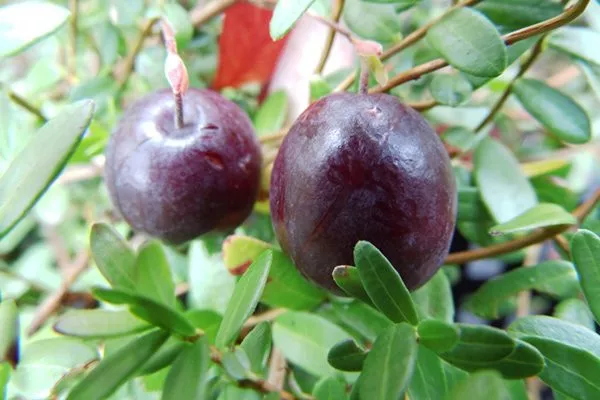
The variety prefers to grow in cool and damp places, on fertile but acidic soils.
Characteristics of berries:
- diameter – up to 7-10 mm;
- color – purple-violet;
- weight – up to 2 g;
- yield – up to 2.5 kg/sq.m.
Pros:
- high yield;
- are stored well.
Disadvantage: low frost resistance.
Black early
A large-berry variety. An unusual feature is the bell-shaped fruit. The berries are covered with a waxy coating. They have a pleasant, sweet-and-sour flavor. Recommended for freezing and making fruit drinks, kissels, and compotes. The bushes grow up to 15 cm tall.
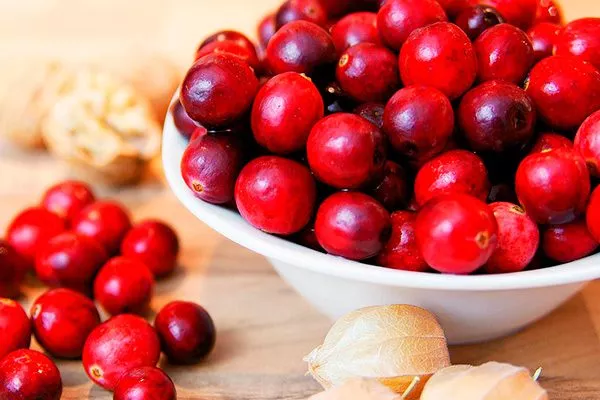
Characteristics of berries:
- diameter – up to 7-10 mm;
- color – dark purple;
- weight – up to 1 g;
- yield – up to 2 kg/sq.m.
Pros:
- high yield;
- are stored well.
No defects were found.
Characteristics of black cranberries
It's important to distinguish between wild black-fruited cranberries and selectively bred varieties with black berries. Examples include Early Black and Black Early. Although they have the word "black" in their names, they are actually very dark. The berries start out purple and become almost black as they ripen.
Description of black cranberry:
- the bush has creeping, spreading shoots;
- the leaves are dense, leathery, lanceolate or narrowly elliptical, with folded edges, green on top and grey-blue on the bottom;
- flowers are single or collected in small clusters on one peduncle;
- The fruits are spherical, black in color, with a bluish bloom, 8-17 mm in diameter.
If you haven't planted cranberries in your garden yet, be sure to do so. Firstly, you'll get delicious berries and a valuable medicinal herb in a single plant. Secondly, cranberries are also a decorative plant – they can be used to decorate your garden.