
Cranberries are in high demand among many home gardeners. Everyone knows the beneficial properties of this berry. It helps improve health, strengthen the immune system, and relieve ailments. Plant cranberries in your garden, and you won't regret it.
General characteristics of cranberries
Cranberry is a unique berry tree that doesn't take up much space in a garden. It's characterized by its perpetual greenness.
Appearance of the bush
The shrub was first cultivated in Russia in the late 19th century. Today, many farmers and gardeners prefer to grow this creeping plant in their gardens. The shrub has flexible, creeping stems 0.4-1.8 meters long. The roots are shallow, with the root system reaching no more than 20 cm deep.
The plant is covered with small, leathery, elliptical-lanceolate or elliptical leaves with slightly recurved margins. The foliage is glossy, bluish-ash-colored underneath and green above. In winter, it takes on a slightly brown color.
The flowers grow on 2-3 cm long stems, which hold several inflorescences. The petals are white or pink. In central Russia, flowering occurs in May-June.
Description of berries
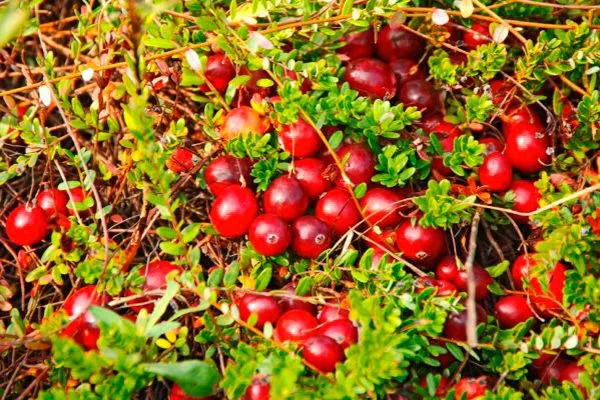
The fruit is typically spherical or ovoid. The skin is red or pink, and the berries are 1-2 cm in diameter. Initially, the skin has a greenish or creamy hue. Full ripeness occurs in late September or early October.
Cranberries have fleshy, red flesh. Inside is a hard seed. The berries have a sweet and sour taste, sometimes with a slight bitterness. The lack of cloying sweetness is due to their high vitamin C content.
Where does cranberry grow?
Different species grow in different areas. In the northern part of Eurasia, there is a small-fruitedIn some Russian regions (Lipetsk, Voronezh, and Ryazan Oblasts), harvesting the fruit is prohibited because it is listed in the Red Book as a rare species.
Large-fruited cranberries are common in the United States and Canada, while the wild variety is typically grown in mountainous regions of the United States and southern Canada. They are characterized by a spreading shrub habit and prefer shady areas.
Caloric content
Cranberries are low in calories, making them suitable even for diabetics. 100 grams contain 26 kcal.
Areas of application
The berries are often used in the food industry: they are used to make compotes, kissels, fruit drinks, desserts, and alcoholic beverages. The leaves of the shrub are suitable for making tea.
Cranberries are popular in folk medicine, especially for the treatment of acute respiratory infections. They are a rich source of vitamins, macro- and microelements, and other beneficial substances.
Benefits and harms
Cranberries contain a large number of beneficial substances, including fruit sugar. They are also rich in organic acids:
- lemon;
- oxalic;
- amber;
- quinine;
- benzoic;
- apple;
- chlorogenic;
- Ursolic;
- oleander.
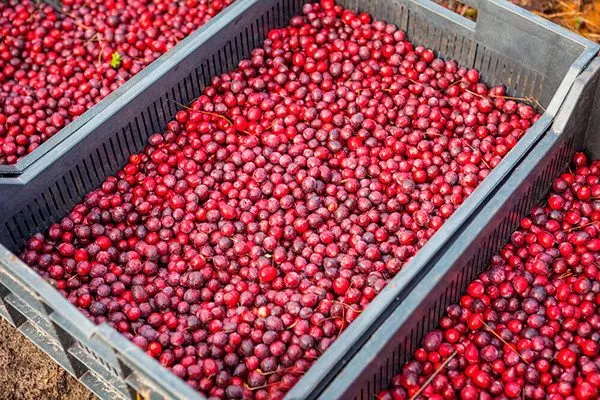
The berries contain leucoanthocyanins, catechins, anthocyanins, betaine, macro- and microelements:
- zinc;
- titanium;
- manganese;
- phosphorus;
- cobalt;
- boron;
- nickel;
- calcium;
- iron;
- molybdenum;
- potassium;
- copper;
- chromium;
- iodine;
- silver;
- tin.
Cranberry improves appetite and gastrointestinal function, protecting the genitourinary system and intestines from infections. It is a preventative anti-cancer agent. It is also used to reduce the risk of atherosclerosis.
Cranberry is known to be an excellent remedy for lowering blood pressure. It is recommended for people suffering from vitamin deficiency, fever, and respiratory illnesses. Cranberry juice is a good antipyretic, antibacterial, and thirst-quenching agent.
People with stomach and duodenal ulcers, those suffering from gastritis with high acidity, and those with liver problems are strongly advised against consuming cranberries. Those with weakened or thinned tooth enamel should also exercise caution.
Advantages and disadvantages
Each cranberry variety has its own unique characteristics. The berry's advantages far outweigh its disadvantages:
- a large number of vitamins and microelements in the composition;
- the ability to grow a plant in one area without replanting for many years;
- high frost resistance;
- the decorative nature of the shrub, which is why it is often used in landscape design;
- low shedding and preservation of berries on the bushes in winter;
- regular fruiting and high yield;
- undemanding in care.
Varieties of cranberries
There are three main varieties of cranberries: large-fruited, common, and small-fruited.
| Name | Growing region | Fruit size | Peculiarities |
|---|---|---|---|
| Large-fruited | North America, China, Western Europe, Canada, Japan, the Far East, Western Siberia | large | prefers moist peaty soil |
| Ordinary | Russia, forest-tundra zone | spherical shape | high frost resistance, resistant to transportation |
| Small-fruited | peatland tundra, swampy forests, and mountainous areas of the northern hemisphere | small (about 1 cm in diameter) | not a very attractive option for commercial cultivation, listed in the Red Book of the Russian Federation |
Large-fruited
Cranberries are native to North America, but their distribution is much wider. They are grown in China, Western Europe, Canada, Japan, the Russian Far East, and Western Siberia.
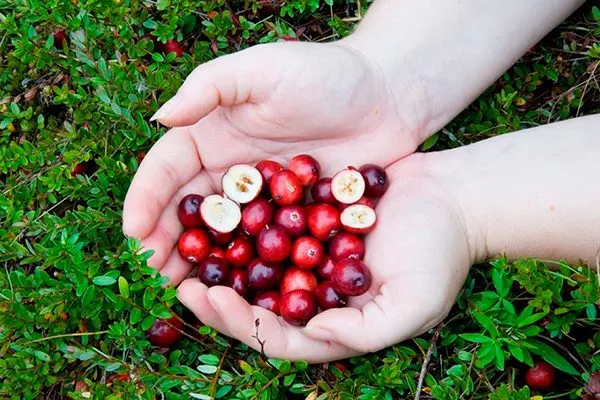
This variety grows as a creeping bush with erect stems reaching up to 20 cm. The fruits grow large. Large-fruited cranberries prefer moist, peaty soil.
Ordinary
This variety is characterized by high frost resistance. It is an evergreen, creeping shrub with white undersides. The fruits are spherical.
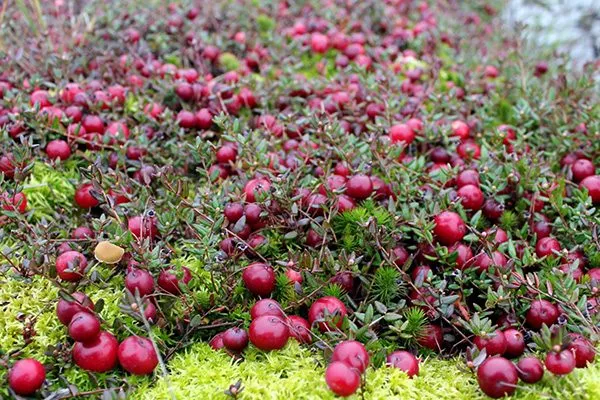
Typically, cranberries of this variety are resistant to transportation and are characterized by late ripening periods – mid-September.
Small-fruited
Small-fruited cranberries grow in tundra, peat bogs, and marshy forested and mountainous areas of the Northern Hemisphere. They are not a very attractive option for commercial cultivation.
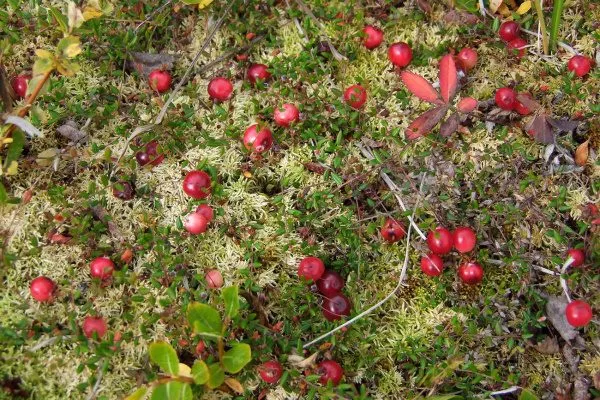
The fruits grow small (about 1 cm in diameter), and the bush itself is compact, not exceeding 50 cm. This variety has pointed leaves with curled edges. The berries ripen towards the beginning of autumn.
Popular varieties
| Name | Ripening period | Berry size | Frost resistance |
|---|---|---|---|
| Ben Lear | end of August | large | up to -18°C |
| Early Black | mid-September | medium (1.5 cm in diameter) | up to -18°C |
| Hoves | October | large | up to -18°C |
| McFarlin | the second half of October | large (up to 2.7 cm) | up to -18°C |
| Pilgrim | October | large (up to 1.9 cm) | up to -18°C |
| Stevens | October | large | up to -18°C |
| Searles | mid-early | oval shape | up to -18°C |
| Franklin | mid-September | average | up to -18°C |
There are several popular cranberry varieties renowned for their excellent characteristics. Before planting this berry in your garden, familiarize yourself with them:
- Ben Lear. The Ben Lear cranberry is an early-ripening variety. The berries ripen in late August. The fruits are large, with dark burgundy skin. The flavor is slightly tart and sweet. The shelf life is no more than 14 days. Up to 2 kg of berries can be harvested per square meter.
- Early Black. The variety was bred in 1857 in Massachusetts. It is characterized by rapid growth, producing long, slender stems. The fruits grow to a medium size (1.5 cm in diameter).
The skin is dark red and shiny. It is renowned for its resistance to common diseases. - Hoves. Gardeners report vigorous growth. The plant produces large, oval-shaped fruits with a shiny surface. The skin is tinged red. This is a late-ripening variety, with cranberries ripening in October.
- McFarlin. A slow-growing shrub with short shoots. This variety produces fruit well in warm climates. The cranberries grow large—up to 2.7 cm long and 2.4 cm in diameter. The berries are dark red, with a waxy, shiny skin. Ripening occurs in the second half of October.
- Pilgrim. This variety was developed in 1930. It produces a medium number of shoots. The fruits grow large: up to 1.9 cm in length and 1.6 cm in diameter. The berries are purple-red in color. They ripen in October.
- Stevens. Characterized by a robust vegetative system and disease resistance, the berries are large and covered with a thick, dense skin. Up to 2 kg of fruit can be harvested per square meter.
- Searles. A mid-early variety renowned for its regular yields. The oval-shaped, dark-hued fruits change color after harvest.
- Franklin. A mid-season variety, the berries can be stored without freezing or processing for up to four months. The harvest begins to ripen around mid-September. Gardeners harvest up to 1.5 kg of fruit per square meter.
Among a large number of varieties, you can choose the most suitable option based on external, taste and varietal characteristics.
Propagation of garden cranberries
Cranberries are propagated generatively and vegetatively. Seed propagation is extremely rare. Green cuttings are most commonly used.
Cuttings
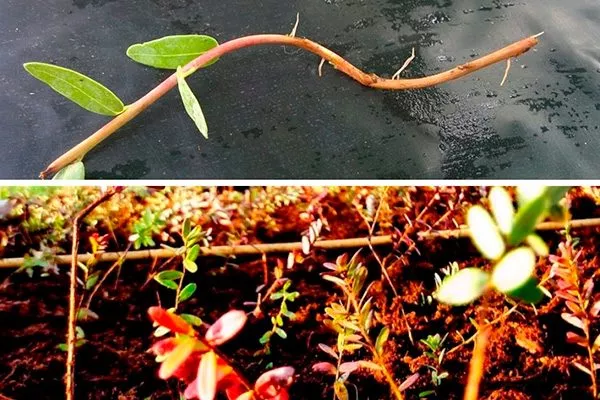
Begin harvesting green cranberry cuttings during the period of intensive shoot growth. The length should be at least 10 cm. Plant them in nursery pots filled with a mixture of high-moor peat, sand, and rotted pine needles.
You can immediately plant the cuttings in a permanent location. Follow these instructions:
- Deepen the blanks by 2-3 cm.
- Firm the planting and water thoroughly.
- Until the cuttings take root, make sure the soil is constantly moist.
- On very dry days, provide protection for the seedlings using stretched fabric or a special shading net.
Seeds
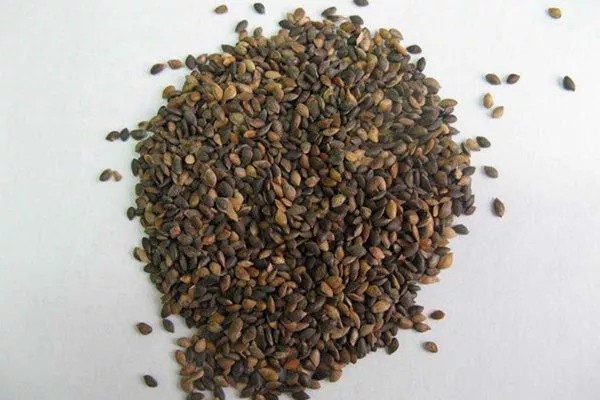
To obtain good seed material, pick well-ripened berries from the bush, crush them and rinse them in plenty of water, let the seeds settle in a sieve and begin sowing immediately.
If you plan to plant seedlings that have been stored for some time, stratify them. This involves exposing them to cold: keep the seeds warm for 7 days and then cold for 6 days.
Step-by-step planting instructions:
- Sow the seeds in a tray with a moist mixture of peat and sand in a 4:1 ratio and leave for 90 days at a temperature of +3 to +7°C (37 to 45°F). The room must be well ventilated.
- Sow seeds in the spring after stratification, and freshly harvested material in the summer. Scatter the seeds over the surface of the substrate without digging into it, into a container with high-moor peat.
- Sprinkle the material with a 2-3 mm thick layer of sand through a sieve on top, and then cover with 5 mm thick crushed peat.
- Water and cover with a glass lid. Place in a bright, warm place.
- Be sure to regularly water and ventilate the crops.
- If mold appears on the surface of the substrate, treat it with a fungicide.
Seedlings should appear in 14-20 days. Once this happens, remove the glass, but continue watering. When the seedlings have 4-5 leaves, transplant them individually into pots or a greenhouse, spacing them at least 10 cm apart.
Continue growing throughout the year and regularly fertilize with a Kemira-Universal solution (20 g per 10 liters of water). Apply fertilizer every few weeks, starting in mid-April and ending in mid-July. In August, remove the greenhouse cover, and at the end of October, mulch the bed with a layer of peat.
How to plant cranberries?
Cranberries prefer exceptionally moist areas, so they're often found in sphagnum bogs, marshy banks of forest ponds, and coniferous forests. You can create favorable conditions for them at your dacha or home.
Deadlines
You can plant the plant in your garden in spring or fall. In the former case, carry out the procedure in May, as the soil is already well warmed by this time and the chance of frost returning is below freezing. You can use seedlings or cuttings.
In the fall, plant in mid- to late October, when the plants are dormant. It's best to plant only seedlings during this time, as cuttings will likely not have time to take root before the frost sets in.
- ✓ Soil pH should be between 3.5-4.5 for optimal cranberry growth.
- ✓ The soil should be well-drained but constantly moist, simulating natural marshy conditions.
Suitable soil
Cranberries grow well in highly acidic soil. Use water with a pH of 4-5 for irrigation, otherwise the plant may become diseased and its growth may be stunted.
Although cranberries love moisture, don't overdo it. Keep the top layer of soil constantly moist—this is where the plant's root system resides. Choose sites with water- and air-permeable soil (peat, sand, or sandy loam).
How to select and prepare planting material?
When choosing planting material, be sure to contact specialized nurseries, gardening associations, or large farms. Buying from sellers with positive reviews will protect you from the risk of scams.
Two-year-old seedlings are suitable for planting—they begin bearing fruit much earlier. Choose healthy plants with large fruits. Take the cuttings, bury them in moist peat, and transplant them to their permanent location in the spring.
- ✓ The root system must be well developed, without signs of rot or damage.
- ✓ Leaves should be bright green, without spots or signs of wilting.
When purchasing a seedling, be sure to inspect its root system, trunk, and leaves. They should show no signs of disease or damage.
Good and bad neighbors
Some plants from the Ericaceae family make ideal companions for cranberries. They also prefer acidic soil. Plant blueberries, lingonberries, crowberries, and bilberries nearby.
Also for planting with cranberries, choose wild rosemary and herbaceous perennials from the Rosaceae family - cloudberry and arctic raspberry.
Because the plant grows in an acidic and humid environment, traditional crops such as peppers, tomatoes, eggplants, cabbage, and other members of the nightshade family will not grow near it.
Technology
Prepare the soil for planting cranberries in the fall, first selecting a well-lit area.
Planting technology:
- Dig holes about 10 cm deep. Leave 20 cm between rows and 15-20 cm between seedlings. Before planting, be sure to moisten the planting holes with warm water.
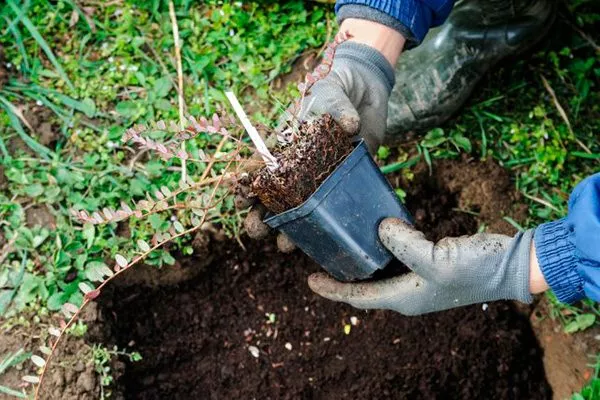
- If you plan to plant cuttings, plant them deep enough to leave the root collar up to 3 cm above the soil surface. Place several cuttings in the hole, firm the soil, and water thoroughly.
- When planting a seedling, bury it to the same depth it was growing at before planting. When replanting from a different container, be careful not to damage the root system. Place the roots into the planting hole along with the root ball.
- If you're sowing seeds, plant them in peat or moss to a depth of 5 mm. Water, cover with plastic wrap, and wait for the sprouts to emerge.
After planting, the first berries appear only 3 year. Yield indicators will be maximum in the 4th year of development.
Caring for cranberries
To grow a healthy tree that will bear fruit consistently, ensure regular watering, protect it from frost, and fertilize. These care procedures will increase yield and prevent cranberry damage.
Watering
The plant doesn't tolerate drought and heat well. Its shallow root system dries out easily. A lack of water during flowering can cause flowers to dry out, which ultimately prevents fruiting shoots from forming, and during berry growth, the flowers tend to fall off.
Ensure the soil is moist. The largest and most beautiful fruits are produced in well-watered areas. Water more thoroughly during hot summers. Also, mulch the soil around the trunk to retain moisture longer.
Some gardeners recommend using a drip irrigation system: place a barrel with a spigot and connect it to a thin hose with holes along its length. The water will slowly flow onto the cranberry patch.
Fertilizers
To get a good harvest, feed the plant correctly:
- In the first year after planting, apply nitrogen fertilizer. In the spring, when the first buds appear, apply ammonium sulfate at a rate of 20 g per square meter. This will promote the emergence of numerous fruiting shoots over several years.
- Feed older cranberries with a complex fertilizer for acidophilus plants, such as blueberries. Apply 20 g per square meter. These fertilizers contain nitrogen, copper, manganese, phosphorus, boron, and iron.
- Fertilize the plant a second time in the summer. Follow the same schedule as in the spring – use nitrogen fertilizers.
If you have any doubts about the dosage, it's better to apply less. If you didn't have a chance to fertilize the plant in the spring or summer, don't worry – cranberries tolerate the lack of fertilizer very well.
Frost protection
Cranberries have specific climatic requirements. Most varieties can withstand temperatures as low as -18 degrees Celsius. Common cranberry varieties can tolerate temperatures as low as -33 degrees Celsius. These varieties are suitable for growing in Siberia, the Moscow region, and central Russia.
Plants can be at risk during spring frosts, when day and night temperatures fluctuate. During this period, cranberries should be protected from the negative effects of low temperatures.
Cover a small area of your garden with a layer of straw or leaves in the fall. If you have a large planting, create a border around it when the soil freezes, fill it with water, and wait until the layer freezes. Repeat this process until the shoots are completely covered. This will ensure better wintering.
Pruning and rejuvenation
Pruning and rejuvenating bushes is an important maintenance procedure. Due to the formation of numerous vegetative shoots, excessive compaction leads to poor fruit ripening. Shorten long branches using pruning shears.
Prune cranberries in May. The main goal of this procedure is to shape the bush. During the first three years, when the bush is growing rapidly, shape it.
Gardeners often use a horizontal, spreading pruning technique, which encourages the development of lateral shoots and involves removing upper branches. Vertical, compact pruning, which involves cutting off strong lateral shoots, is also popular.
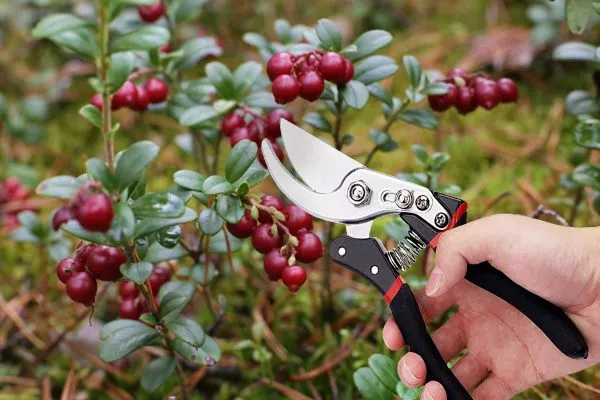
Recommendations:
- If you want to make the shrub compact and tall, remove all creeping, thin, frozen stems in the spring to stimulate the growth of vertical branches.
- If you want a spreading plant, encourage the growth of horizontally directed stems.
- At the beginning of the growing season or in the fall after harvesting, remove trailing branches. Prune shoots that extend above the upright tops. Removing shoots 2-3 cm wide is acceptable, leaving uncut branches nearby.
To rejuvenate old shrubs, mow them down with a lawn mower in early spring.
Diseases and pests of cranberries
If you follow proper gardening practices, you can keep your cranberries healthy. However, the plant can be susceptible to certain diseases and insect attacks. To avoid these, familiarize yourself with them and their control methods:
- Snow mold. A disease that can affect cranberries from March to April. Reddish-brown spots with yellowish mycelium appear on the plant's buds and leaves. By late spring, the affected leaves turn ashy and fall off.
In the fall, spray the area with a Fundazol solution according to the instructions. In the winter, gradually flood the area with water in layers, ensuring each layer freezes. - Red spot. A fungal disease that causes shoots to become deformed, eventually leading to their death. Buds, flowers, and peduncles are also susceptible, turning pinkish.
To destroy pathogens, treat cranberries with a solution of Fundazol or Topsin M at a rate of 2 g per 1 liter of water. - Monilial burn. A fungal disease that causes shoot tips to wilt and dry out. In damp weather, the affected area takes on a yellowish tint. The disease can infect the entire plant, eventually causing the fruit to rot.
To combat moniliosis, use fungicides. The most popular ones include Bayleton, Ronilan, Topsin-M, Ditan, and copper oxychloride. - Phomopsis. The disease causes shoot tips to dry out, and foliage to turn yellow, then orange or bronze. Dirty gray spots appear on the stems. The disease progresses in dry and hot weather.
In spring, treat cranberries with Topsin-M, and before active growth begins, spray with Bordeaux mixture. - Terryness (overgrowth). A viral disease that affects shoots and leaves, which shrink and cling tightly to the shoots. The affected plant stops growing and no fruit appears.
There is no treatment for this disease. Remove the bush and burn it to prevent the terry weed from spreading to other plants.
Cranberries are susceptible to numerous pests that feed on their above-ground parts. The plant is often attacked by:
- apple comma scale;
- black-headed lingonberry leafroller;
- gypsy moth;
- cabbage moth;
- heather moth.
To prevent weeds, follow proper agricultural practices and remove them promptly. If necessary, use insecticides, but no later than one month before harvest and after the fruit has been picked. Gardeners recommend the following products:
- Metaphos;
- Aktara;
- Karbofos;
- Actellic.
Harvesting and storage
Harvesting occurs at different times. Harvest wild fruits in the spring. After winter, the berries become sweeter.
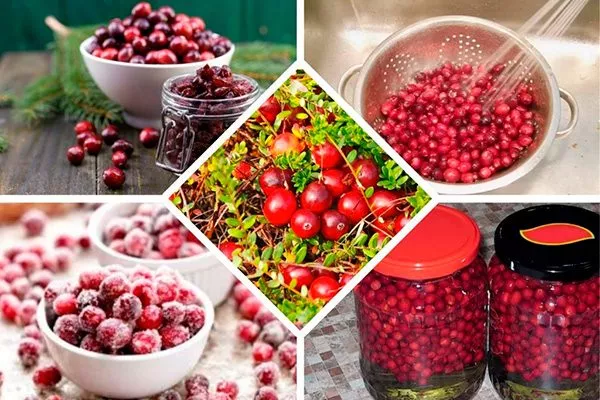
Helpful tips:
- If you need to store cranberries for a long time, harvest them after they are fully ripe – technical ripeness lasts from the end of August to the beginning of November.
- You can harvest the berries by hand or using special scrapers. This method prevents damage to the plant, so it's best to choose the latter. To ensure the berries last longer, harvest them in dry, sunny weather.
- Until the next harvest, preserve the berries by covering them with water, then storing them in the cellar. This will make pickled cranberries. You can also marinate them by adding a little sugar and vinegar.
- Process or freeze fruits harvested in the spring. Be sure to wash and dry them first.
- When freezing, portion the berries into containers or bags one at a time. Do not refreeze, as this will destroy the cranberries' nutritional properties.
- You can use frozen berries to make compotes, kissels, or desserts. Fresh berries can be eaten raw or made into jam.
What difficulties may you encounter when growing cranberries?
Cranberries are considered a plant with high disease resistance. However, problems can arise if the bush is grown in unsuitable soil with excessive acidity.
Problems also cannot be avoided if you overdo it with fertilizer or water your cranberries with hard water. This can lead to poor growth, yellowing and leaf drop, and a lack of fruiting.
Cranberries are a popular plant that everyone tries to grow in their gardens due to the incredible benefits of the berries. With proper planting and subsequent care, you're guaranteed a bountiful harvest. Follow the advice of experienced gardeners, and you'll have no problems growing these berries.