
Pineapple strawberries are easily recognized by their white berries. They are a dessert variety grown in almost every region of Russia. Let's learn about the characteristics of this unusual strawberry, how to plant, grow, and propagate it.
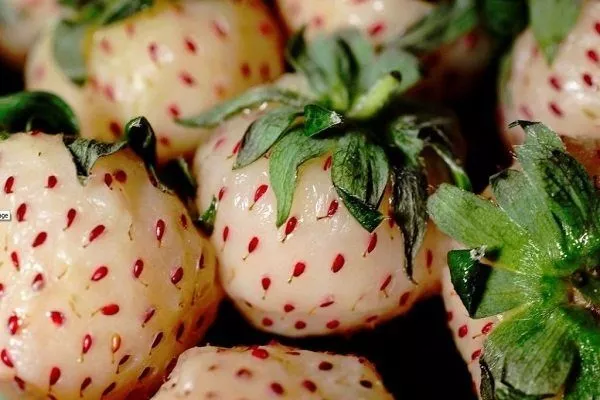
Pineapple strawberry
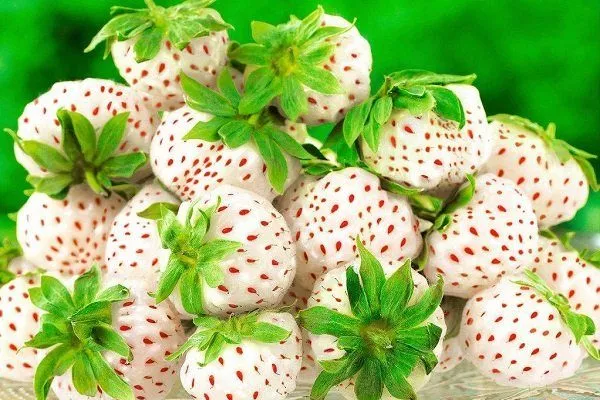
Pineapple strawberries lack red pigment.
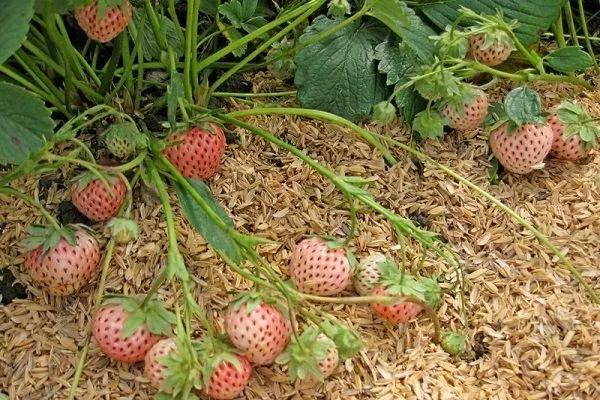
Pineapple strawberries tolerate winter well.
Characteristics of Pineapple Strawberries
Pineapple strawberry is a perennial herbaceous plant prized by gardeners for its excellent taste and unique appearance. Its berries lack the pigment that makes them red.
It's believed that the white variety owes its name to its distinctive flavor, which has hints of pineapple. Furthermore, the Latin word for "garden strawberry" is "ananassa."
Appearance of bushes
The bushes reach a height of 30 cm and have a robust structure. They have numerous large, bright green leaves set on long petioles.
Description of the bush:
- the edges of the leaves are serrated, with rounded ends;
- petiole length – up to 20 cm;
- the leaves have a slight pubescence;
- shoots are creeping, rooting at the nodes;
- flowers are large, bisexual, white, with five petals and many stamens;
- flower diameter – 2 cm, peduncle length – 3-5 cm.
What do the fruits look like?
The berries of the pineapple strawberry are small and have a classic shape for this crop.
Description of berries:
- diameter – about 2.5 cm;
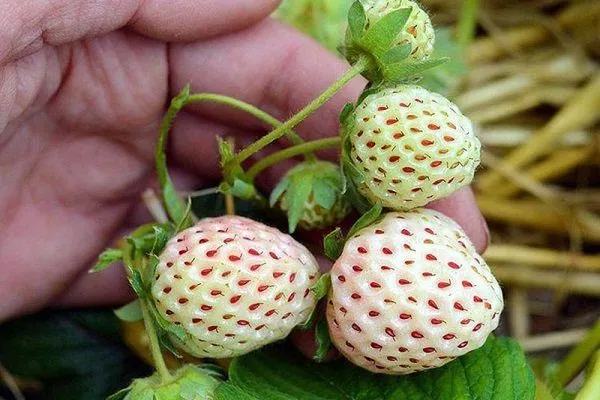
- color - initially green, then white, cream, pink or yellowish with red grains;
- weight – 6-8 g;
- taste – sweet and sour;
The ripeness of the berries is judged by the color of the seeds embedded in the white berries. As soon as they turn red/yellow, the strawberries are ready to pick.
Winter hardiness and disease resistance
The variety is relatively winter-hardy. It produces good yields in southern and central Russia. It survives winters with temperatures not falling below –20°C.
To ensure strawberry bushes survive the winter, they are insulated before the onset of frost. When snow appears, snowdrifts are piled onto the strawberry beds.
Fungal infections pose the greatest threat to pineapple strawberries. This berry is particularly susceptible to gray mold, which develops due to overwatering—during rainy weather or excessive watering.
Ripening period
The flowering time of a variety depends on the climate conditions of a particular region and the current weather. In the south, strawberries bloom in April, while in the temperate zone, they bloom in May. The first berries appear around the end of June. Everbearing white strawberry varieties produce several harvests per season.
Productivity and application
The average yield is 1 kg of fruit per square meter. This isn't the highest yield. Many garden strawberry varieties yield 1.5-2 kg per square meter.
Areas of application of pineapple strawberry:
- cooking – desserts and sauces are prepared from it;
- cosmetology — make face masks for acne and age spots;
- medicine — prepare antiseptic solutions and infusions.
Freezing strawberries is not recommended. To preserve them for future use, they are used to make compotes, jams, and preserves.
Pineapple strawberries are sometimes used for ornamental purposes. Bushes with pink flowers look especially beautiful on a green lawn.
Transportability
Pineapple strawberries, like all other white-fruited varieties, do not transport well. Berries transported in crates become bruised, lose their juices, and quickly lose their marketability. Growing white varieties for commercial purposes is impractical.
Pros and cons
Pineapple strawberries attract amateur gardeners with their unusual appearance. They are quite popular and are found in many gardens, despite their serious shortcomings.
Pros:
- White berries don't attract birds. They offer a better chance of preserving the harvest.
- Pleasant taste and aroma. Children especially love these berries with their unusual pineapple flavor.
Cons:
- small berries;
- they are difficult to transport – berries are transported only in small containers in one layer;
- low yield;
- susceptibility to rot.
Planting strawberries
Pineapple strawberries are undemanding, but there are a few things to consider when planting. To ensure a good harvest, it's important to grow or purchase high-quality seedlings and plant them promptly, following all agricultural practices.
Selecting seedlings
To grow strong strawberry seedlings, gardeners carefully tend to the seedlings for 2-3 months – watering, feeding, and providing optimal conditions for growth.
If you don't have the time, desire, or opportunity to grow seedlings, purchase them from nurseries or trusted sellers at the market. When purchasing, pay attention to the quality of the seedlings—it's easy to determine by their external characteristics:
- The seedlings should not have wrinkled, rotted, dried out, or wilted leaves. The leaf blades should be clean, uniformly green, without spots or inclusions.
- Roots are fibrous, fresh, and free of dried branches. The optimal length is 8-10 cm. If seedlings are sold in cups or pots, the entire volume should be filled by the seedling's root system, even extending beyond the pot's borders.
- The petioles are of medium length, with at least 3-4 leaves on each.
- ✓ The presence of at least 6 healthy leaves without signs of disease.
- ✓ The root system should be fibrous, without dried or rotten areas, and at least 8 cm long.
Site selection and soil preparation
Pineapple strawberries are heat-loving. In regions with harsh climates, they are grown primarily indoors. In temperate climates, the berry patch is located on the south side of the plot.
Direct sunlight on white strawberry beds is not recommended, as it will cause the berries to turn pink. To prevent discoloration, the beds are shaded with agrofibre.
Site requirements:
- Soil type. The variety grows well in any soil, but produces the highest yields on black soils to which wood ash has been added.
- Soil acidity. The optimal level is 5-6.5 pH.
- Moisture. The plant dislikes stagnant water. Planting berry patches in low-lying areas is contraindicated.
If water stagnates in a plot, gardeners create raised beds. Another option is to raise the water level by bringing in soil. Planting berries on a raised bed will protect them from overwatering, even during rainy summers.
Strawberries grow well in areas where root crops, legumes and grains were grown.
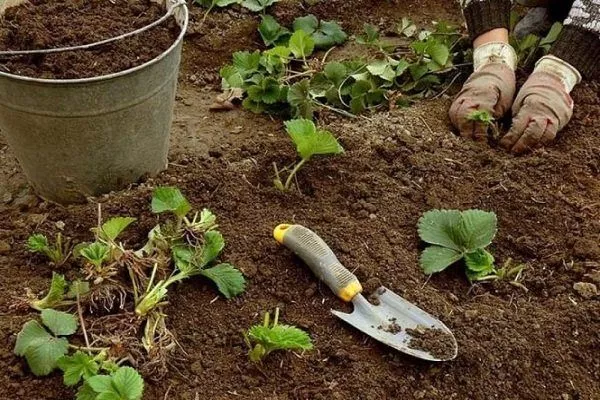
How to prepare a garden bed:
- in autumn, dig up the soil to a depth of 25-30 cm;
- When digging, remove debris, rhizomes, and plant remains;
- When digging, add 5 kg of organic matter (humus, compost) and 40 g of complex mineral fertilizers per 1 sq. m.
Fertilizers applied in the fall dissolve completely and are absorbed into the soil, which then acquires the necessary fertility. If the plot was not prepared in the fall, the beds are prepared in the spring, but no later than two weeks before planting the seedlings.
Deadlines
The timing of strawberry planting depends on the climate and current weather. Seedlings are sown 2-3 months before planting the seedlings in the ground. In temperate climates, sowing begins approximately between January 15th and February 15th. In southern and northern regions, adjustments are made for climate.
Conditions for planting strawberries:
- seedlings ready for planting have at least 6 leaves;
- the soil warmed up to +15…+17 °C.
Timing for planting strawberry seedlings in the ground:
- middle zone – approximately from April 15 to May 15;
- southern regions – from April 1;
- northern regions - from May 1.
Scheme and technology of planting in the ground
Pineapple strawberry seedlings are planted in one or two rows. When choosing a planting pattern, consider watering method, bush spread, and other factors.
Planting patterns:
- One-line. The bushes are planted in rows, keeping intervals of 20-30 cm. The width between rows is 60-90 cm.
- Two-line. The distance between bushes is 20 cm, between lines – 30 cm, between rows – 60-70 cm.
Over time, runners and rosettes appear between the rows, which gardeners use for vegetative propagation of strawberries. If the berry patch is intended solely for harvesting, the growing runners are pruned so that the bushes devote all their energy to producing berries.
How to plant seedlings:
- Make small holes in the beds. Adjust the diameter and depth to accommodate the seedling's root system comfortably. Add a little wood ash to each hole.
- Water the holes – approximately 0.5 l in each.
- Once the water has been absorbed, begin planting. Place the seedling in the hole so that its root collar is level with the soil surface.
- Carefully distribute the roots and fill the hole with soil, compacting it slightly.
- Water the beds. Use warm, settled water to prevent the risk of disease.
- Mulch the beds with humus or other mulch to prevent moisture evaporation.
- Water the seedlings every 2 days, using 0.5 liters of water per bush.
- A week after planting, carry out the first feeding with a weak solution of mullein (1:10).
- Check plants regularly for signs of disease or pests.
If there's a risk of frost, cover the plantings with a covering material at night. This also helps in rainy weather or in scorching sun. When covering the beds, be sure to leave the sides open to allow air to circulate.
Caring for Pineapple Strawberry
The yield and quality of berries—their taste and size—depend largely on proper agricultural practices. White strawberries require constant care.
Watering
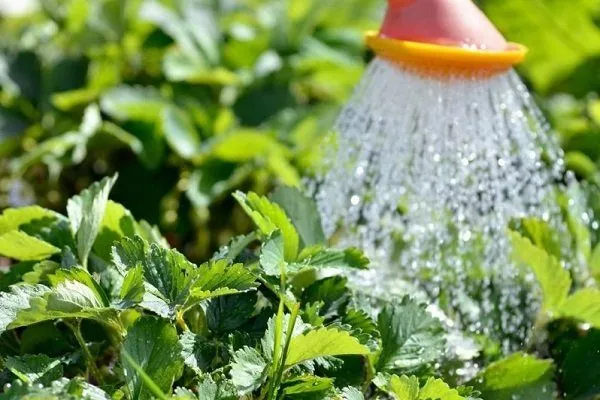
Pineapple strawberries require regular moisture to grow and bear fruit. The amount and frequency of watering changes as the plants develop and depend on weather conditions.
Features of watering Pineapple strawberries:
- Water young seedlings frequently, but little by little;
- During the first few weeks, water the bushes from above using sprinklers;
- after a month, increase the watering rate and water the flowering beds once every 10 days - 20 liters per 1 sq. m;
- during fruiting, increase the watering rate to 30 liters per 1 sq. m;
- It is recommended to water the berry bush in the morning;
- the water temperature should not be less than +16 °C;
- The minimum number of waterings per season is 6.
In hot weather, the frequency of watering increases approximately twofold: beds are watered every 3-4 days, and young seedlings - every day.
Weeding and loosening
Loosening is done after every watering or rain—as soon as the water has been absorbed and the soil is dry enough to no longer stick to the hoe. This prevents crust formation, which blocks air from reaching the roots.
It is forbidden to loosen the soil closer than 5 cm to the strawberry bushes, so as not to damage the roots.
Weeding is carried out simultaneously with loosening the soil. Weeds not only shade the berry patch but also serve as a breeding ground for diseases and pests.
Top dressing
Gardeners apply most of their fertilizers during bed preparation. After planting, berry plants are fed during the flowering and berry formation stages.
Feeding schedule:
- In spring, before flowering, add a complex fertilizer, for example, Nitrophoska.
- During budding, give organic matter - solutions of mullein or chicken manure, wood ash.
- During flowering, potassium-phosphorus mixtures are applied to the roots. Nitrogen is contraindicated at this stage, as it stimulates the growth of foliage, and all the plant's energy should be directed toward berry production.
- After harvesting, the berry bushes are fertilized with a nitrogen-containing complex.
Fertilizers should be applied only to the roots. Neither water nor fertilizer solutions should come into contact with the leaves, as this will cause burns.
Mulching
Mulching involves sprinkling the soil with loose material. This agricultural practice is performed after watering.
Mulching effect:
- prevents the growth of weeds;
- protects the soil from insect penetration;
- retains moisture evaporation;
- protects the soil and roots from drying out in extreme heat.
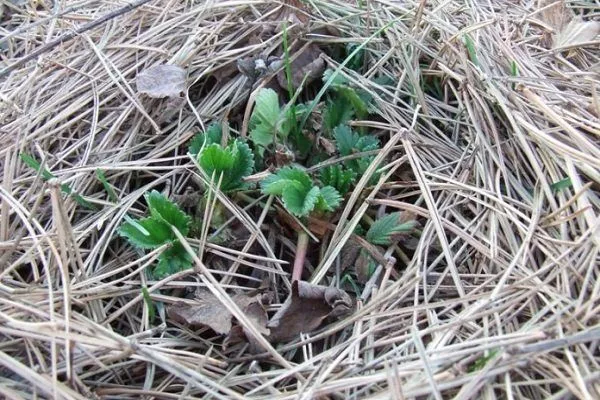
Berry bushes are mulched with various materials, including pine needles, straw, and grass clippings. The optimal layer thickness is 3-5 cm.
Trimming whiskers and leaves
If strawberry bushes grow too vigorously, the plant has to expend energy feeding the runners and rosettes, which negatively impacts yield. This situation can be corrected by removing excess parts.
Pruning rules:
- The main pruning is carried out in the autumn, when the berry bushes have finished bearing fruit.
- Prune the bushes with sharp, disinfected garden tools. Remove all dried leaves and damaged parts of the bushes, and trim off the runners.
- The leaves are cut not at the root, but at a height of 10 cm from the soil.
- Several tendrils are left on bushes that are intended to be used for propagation next year.
Preparing for winter
Pineapple strawberries can freeze in temperatures below -20°C. In regions with cold winters, berry plants should be insulated. Before covering the plants, several other important agricultural practices should be carried out:
- Hill up the bushes.
- Water the beds generously. After watering, do not loosen the soil or weed the plants to avoid damaging the strawberry roots.
- Mulch the plantings with a thick layer of mulch – about 8-10 cm.
- Cover the strawberry bushes with straw or agrofibre.
Pest and disease control
Pineapple strawberries are primarily affected by fungal diseases, which are triggered by high humidity. The variety is susceptible to:
- white spot;
- powdery mildew;
- white and gray rot;
- Fusarium wilt.
For preventive purposes, it is recommended to spray berry bushes:
- before flowering – with Actofit, Fitoverm or other fungicides;
- before and after flowering – with Actellic, Inta-vir, Karbofos and other insecticides.
Insecticides used protect strawberries from raspberry weevils, sawflies, leaf rollers, leaf beetles, and spider mites. Strawberry bushes can also be damaged by mole crickets, aphids, rose chafers, cockchafers, and many other insects.
Reproduction
Today, there are various varieties of white strawberries available on the market. Under the "pineapple brand," various cultivars and hybrids are sold, differing in berry color, ripening time, and propagation methods.
Among the white strawberries there are runnerless remontant varieties. They are propagated only seeds or by dividing the bush. Hybrids, on the other hand, are not planted by seed because varietal traits are not transmitted this way.
When purchasing white Pineapple strawberries, be sure to clarify how to propagate them later:
- Seeds. They are sown for seedlings, which are then planted in open or closed ground.
- With a mustache. The rosettes that grow on the tendrils are separated from the adult bushes and transplanted to new beds.
- By dividing the bush. The mother plant is dug up, carefully divided into parts and replanted in new locations.
Harvesting and storage of crops
The berries are picked in the morning or evening during dry weather. If they are to be transported, they are picked with the stems attached. The berries are placed in plastic or wooden containers lined with fabric or paper.
Berries are stored in the refrigerator at a temperature of 0 to +2°C. They are not washed before storage. If strawberries are purchased at the market, they are simply sorted, removing any that are rotten or have released juice. Under these conditions, strawberries can be stored for 3-4 days.
Reviews
A video review of the Pineapple strawberry can be seen here:
Growing white-fruited Pineapple strawberries is no more difficult than growing regular red-fruited varieties. To add some white berries to your dessert menu, plant this unusual variety in your garden. It won't cause you much trouble.
A very interesting variety; I'd love to have one myself. If I hadn't found this website, I wouldn't have even known it existed. Thank you for providing such interesting and useful information.