
Climbing strawberry varieties are distinguished by their fruitfulness and large, beautiful leaves. They make a unique addition to a greenhouse, garden, or any other space, and their delicious, aromatic fruits will leave no one indifferent.
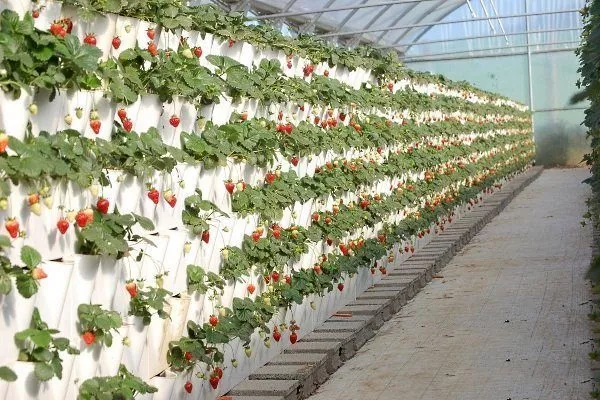
Distinctive features of climbing strawberries
Compared to other strawberry varieties, climbing varieties stand out due to several characteristics:
- the berry produces many tendrils that can be fixed in a vertical position;
- fruits appear both on the bushes and on the runners, which allows for a rich harvest;
- many types of climbing strawberries are remontant, the berries do not require annual replanting;
- does not require special care and frequent weeding.
- ✓ Soil pH should be in the range of 5.5-6.5 for optimal nutrient absorption.
- ✓ The soil should contain at least 3% organic matter to maintain moisture and nutrition.
Advantages and disadvantages
The positive qualities of the plant include:
- unpretentiousness (can grow in any soil, but require fertilizing);
- a large number of whiskers;
- fertility;
- berries can be picked until the first frost;
- large fruits, do not deform during transportation.
The negative characteristics of the berry include:
- frequent and abundant watering;
- the bushes require regular feeding;
- complex preparation for winter;
- Plants are susceptible to diseases.
Varieties of hanging strawberries
All trailing varieties are ornamental plants with creeping, trailing, or drooping stems. They can be grown in open ground or in vases.
Description of hanging strawberries, characteristics and growing rules, read inthis article.
| Name | Ripening period | Fruiting | Fruit weight | Disease resistance |
|---|---|---|---|---|
| Queen Elizabeth | early | 3-4 months | 30-100 g | resistance to fungal diseases |
| Homemade delicacy | early | from spring until frost | 30-60 g | susceptible to nematodes and fungal infections |
| Alba | early ripening | remontant | 25-40 g | resistance to heart rot, verticillium wilt, powdery mildew |
Queen Elizabeth
The variety's history begins in England, where it was developed by traditional breeders. It is distinguished by its large, juicy fruits.
Characteristics of the variety:
- early ripening period (the onset depends on the region and climate);
- fruiting period 3-4 months (from the beginning of flowering until the first frost);
- flowers - no empty flowers, have fluff, large;
- fruit weight – from 30 to 100 g;
- bushes – powerful, vigorous;
- leaves - large, smooth;
- fruits are large, fleshy, juicy;
- life cycle – perennial (2-3 years);
- diseases - resistance to fungal diseases.
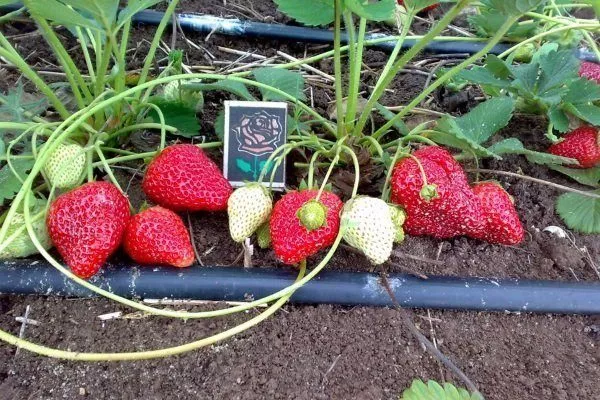
Homemade delicacy
The variety is unpretentious and can be grown at home in pots or on the balcony.
Characteristics of the variety:
- early ripening period (bears fruit at home all year round);
- fruiting from spring until frost;
- flowers - no empty flowers, have 5 petals;
- fruit weight – from 30 to 60 g;
- bushes - have many stems, strong;
- leaves are smooth, with pubescence;
- fruits are large, bright red, sweet;
- life cycle – perennial (2-3 years);
- diseases - susceptible to nematodes, fungal infections.
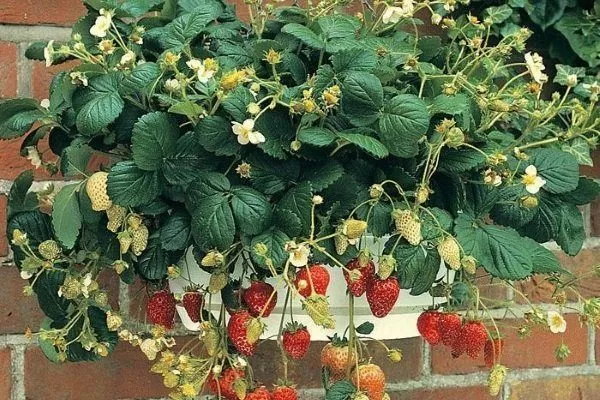
Alba
This variety was developed by Italian breeders. It grows in Europe and Russia and is a favorite among farmers and gardeners.
Characteristics of the variety:
- ripening period – early ripening;
- fruiting – remontant;
- flowers - no empty flowers, not twisted;
- fruit weight – from 25 to 40 g;
- bushes – powerful, vigorous;
- leaves - large, smooth;
- fruits are tender, fleshy, juicy;
- life cycle – perennial (2-3 years);
- Diseases – resistance to heart rot, verticillium wilt, powdery mildew, often affected by anthracnose.
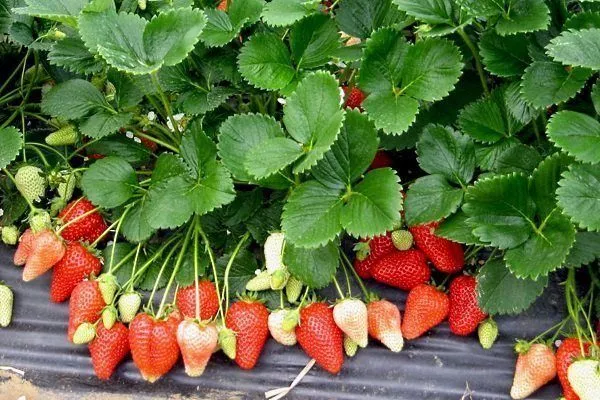
You can read more about the Alba variety here. here.
Growing climbing strawberries
This strawberry variety can be grown in open ground or on suspended supports. This not only saves space but also adds unique beauty to the plot. You can choose a specific method based on your personal preferences.
On vertical beds
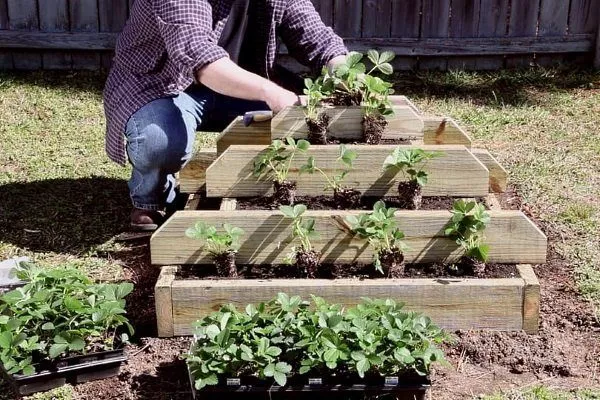
Vertical garden beds can be made in a pyramid shape. To do this, nail together several boxes and fill them with soil. The beds can also be arranged parallel to each other.
Advantages of vertical landing:
- saving space on the site;
- ease of collection (no need to walk between plants and bend down frequently to pick berries);
- pots or boxes can be placed in unconventional places: on a fence, on the wall of a house or buildings;
- no need to weed;
- the berries do not touch the ground and remain clean.
Berries grown outside require frequent watering (on average, once every 3 days).
You can create a "snake" or raised bed. This type of bed is made from chain-link fencing (which supports the flowerbed) and supporting supports. To prevent soil from spilling out, the bed can be edged with stones, boards, or plastic.
Other types of vertical beds (planting principle is the same):
- Holes are made in a metal pipe and the pipe is filled with soil. Strawberries will grow in the holes.
- Bags made of polyethylene film are filled with soil.
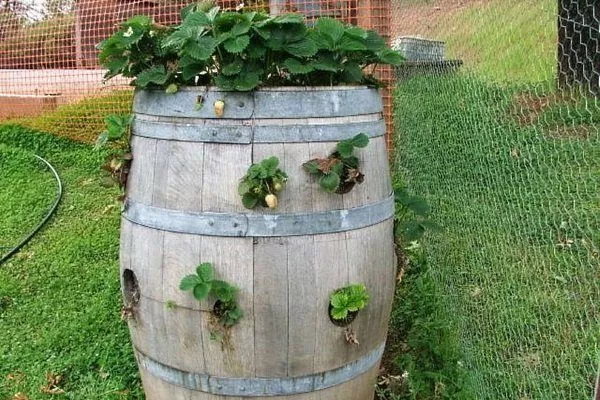
- Old barrels and metal containers.
- Car tires stacked on top of each other.
- You can make a garden bed from an old wooden chest of drawers.
On the supports
This type of planting assumes that the bushes themselves will be planted on the ground, then, clinging to the supports with their tendrils, the berries grow upward.
The following can serve as supports:
- wire;
- chain-link fencing;
- nails driven into a wooden post;
- pallets, boxes;
- plastic pipes.
You can decorate gazebos, building walls, pillars and much more with berries.
Air method
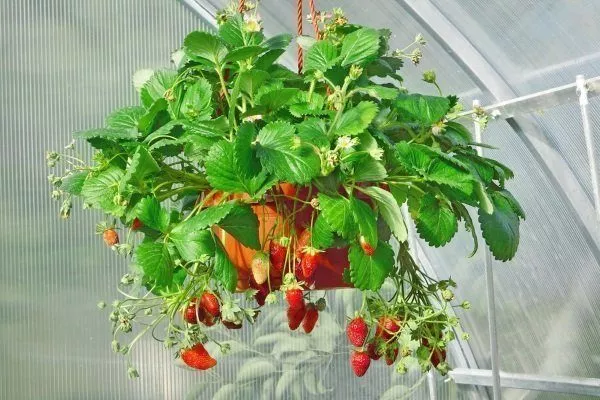
In this case, berries are planted in hanging pots. For planting, you can use a drain pipe cut to size and suspended with rope or wire.
You can also choose different types of containers:
- old dishes;
- used shoes;
- retro-style lanterns (if you leave the backlight on, you'll get an interesting lamp);
- baskets, tuesas, watering cans;
- children's plastic toys;
- plastic bottles;
- wide-mouth jars.
Care Features
Unusual planting patterns and the variety itself require special care. You'll learn more about this below.
- ✓ Yellowing of leaves between the veins indicates a magnesium deficiency.
- ✓ Leaf curling may be a sign of calcium deficiency or pest infestation.
Selection of soil mixture
The soil for planting climbing strawberries should be soft and fertile, rich in micronutrients. The most common mixture is:
- It is necessary to take 30% of compost that has been settled for 2 years.
- Bring meadow turf – 30%.
- Purchase 25% peat.
- The remaining 20% can be filled with organic fertilizers or regular manure.
There are special mixtures and fertilizers available at a specialist store. Climbing strawberry varieties are planted in a small amount of soil. Therefore, it's essential to fertilize the soil as much as possible to ensure it contains all the necessary nutrients.
Gardeners use sawdust to prepare potting soil. To do this, soak the wood shavings for several hours in a urea solution (1 liter of water, 2 tablespoons of urea, 1 cup of chalk, 1 cup of wood ash).
After mixing all the ingredients in the correct proportions, add Fitosporin. The well-soaked ingredients will serve as an excellent soil fertilizer.
Landing
It's recommended to plant strawberries in April, when they'll reach their full potential, or in August. It's worth noting that many everbearing varieties begin bearing fruit a year after planting.
Landing rules:
- Choose a permanent growing location immediately, as trailing varieties are very difficult to establish. If you want a rich harvest, it's best to plant the berries in the fall.
- When planting in containers, spread out the roots immediately, as there will be no room for them to grow. Pay attention to the container size – it should be at least 25-30 cm. Make drainage holes.
- If planting in the ground or a larger container, the distance between bushes should also be 25-30 cm. This will allow the root system to spread out better and the berries to take root.
- Place the core of the bush above the ground.
The planting process is completed by watering, loosening the soil and mulchingStrawberries need to be watered regularly. They thrive in moisture, but not too much. Overwatered strawberries can cause root rot and disease. Watering should be done at least twice a week. It's important to monitor the soil. Drip irrigation is best.
Trimming
Trailing berry varieties produce a large harvest, and timely pruning will help improve productivity. This will give the bushes a neat appearance, make weeding easier, and allow the fruit to receive more nutrients.
Pruning rules:
- In the first year after planting, remove all strawberry flowers. This allows the main plants to establish themselves better and gain strength.
- There should be no more than 5 runners on a single bush. This is necessary to prevent the plant from becoming depleted.
- At the end of the season, remove all leaves from the bushes.
Pruning can be done with regular scissors. Care must be taken to avoid damaging the plants.
Top dressing
Timely fertilization increases yield. When planting, add mineral fertilizers to the soil to enrich it. After watering the bushes, the fertilizer will decompose, providing the plant with all the necessary micronutrients.
Gardeners recommend using an infusion, which you can make yourself. Take green grass and chop it up. Then add wood ash and manure. Mix everything with water and water the strawberries once a week (instead of irrigation). Balanced fertilizers are available at specialty stores.
Nutrients must be applied at the root.
Transfer
Climbing berry varieties are replanted in the third or fourth year of fruiting. This is necessary to replace the soil in the boxes, pots, or flowerpots. Over these years, the soil loses nutrients.
Transplant rules:
- the core cannot be dug into the ground;
- In the first 1-2 weeks after transplanting, strawberries should not be exposed to direct sunlight; it is better to place them in the shade or create shade artificially;
- watering is done several times a week;
- After 2 weeks the berries need to be fed.
Reproduction
When caring for strawberries, it's important to identify the most viable young bushes so that they can be divided into several shoots in the fall. This is necessary for further propagation of strawberries.
Breeding rules:
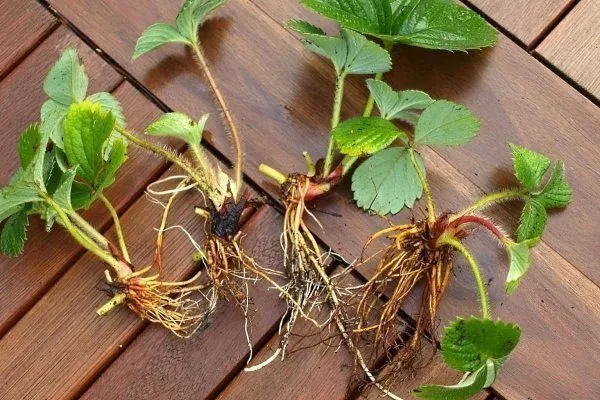
- Separate young shoots from the main bush.
- Plant the bushes in separate containers.
- For the winter, bring the seedlings into the house or bury them in the garden (greenhouse).
- In the spring, remove the seedlings from the containers and plant them in their main growing area.
The berry can be propagated using runners. To do this, runners are dug into the ground in several places and watered. Once new shoots appear, trim the runners on both sides. The seedlings can be immediately transplanted to a new location or left in containers for the winter.
Preparing for winter
To prevent strawberries from freezing in freezing temperatures, they should be covered or moved to a warm room (the temperature should not drop below 0). Follow these recommendations:
- You can cover the berries with roofing felt, film, or old blankets. The main thing is to avoid freezing the plants.
- The raised beds should be removed to the ground (buried if possible) and covered well with spruce branches and old grass. If the structure cannot be dismantled, cover the plant directly on the supports.
- If you plan to plant berries on a fence or mesh, you should think about how to store the plants for the winter.
- Strawberry runners should be hidden in the ground in preparation for winter.
Diseases and pests
Vertical planting not only adds beauty to your garden but also helps prevent diseases and pests, which primarily attack above-ground plants.
The most common pest is the strawberry mite. It feeds on the fruit. When it appears, the berries shrink, lose their juiciness, dry out, and the leaves curl and turn yellow.
Only chemicals such as Fufanon and Nero are effective against insects. These are sprayed on infected plants three times every 10 days.
Some parasites cannot be eliminated in any way, so diseased bushes are dug up and destroyed.
The berry can become infected with a fungal infection. As a preventative measure, the crop is sprayed with copper-containing substances before and after flowering.
These varieties are susceptible to nematode disease, which causes the fruits to become tough, the stems to become short, and the fruit to become enlarged. Affected plants are dug up and burned.
Gardeners' reviews
But when I was decorating, I didn't think about wrapping the berries for the winter. I had to buy covering material and nail it to the fence. It took a long time, but the berries survived the winter. In the spring, we pruned the frozen bushes. The berries appeared at the end of June and finished bearing in September (I had to remove them before the frost).
Any cultivated plant requires constant care. Climbing strawberry varieties are no exception. A good harvest requires effort. If the berries are left to grow on their own, a bountiful harvest won't be possible. By following the advice of experienced gardeners and vegetable growers, you can reap a substantial harvest from a small number of bushes.