
The Dutch have developed a proven and interesting method for growing strawberry bushes for a year-round harvest. It is gaining momentum every year due to its effectiveness and relative simplicity. Anyone can try out the Dutch method, even on their own windowsill.
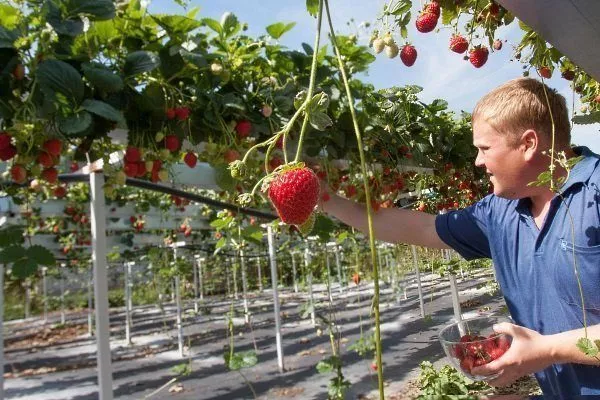
Features of the Dutch method
The basis of this method is a year-round, continuous strawberry harvest. The first harvest is followed by a second, continuous cycle. This distinguishes this approach from traditional strawberry cultivation.
The Dutch method has its own characteristics:
- The room should be equipped, and the soil in which the strawberry bushes are planted should be covered. Choose planting containers that are appropriate for the planting method. These can be boxes, pots, bags, buckets, etc.
- The plant doesn't produce fruit year-round, so after harvesting, it is replaced with prepared seedlings. The plants are replaced on average every 7-9 weeks.
- In this technology, irrigation and fertilization are applied only by drip.
- You can arrange strawberry bushes in beds vertically or horizontally.
Advantages and disadvantages of the technique
Every year, the method of growing strawberries proposed by the Dutch is becoming increasingly popular due to its obvious advantages:
- an impressive number of seedlings can be grown in a small area;
- placement of seedlings in any suitable container;
- sufficient natural light for all strawberry bushes when grown in heated structures made of material that allows sunlight to pass through;
- any shelter can be equipped for this method;
- Since the berries do not have contact with the soil, they are maximally protected from the transmission of diseases and pest attacks;
- short growing season - berries can be picked within 1.5-2 months from planting;
- fresh berries all year round;
- use of a well-established growing mechanism over a long period of time;
- The taste of strawberries is identical to those grown in open ground.
Disadvantages of the Dutch method:
- A constant supply of young runners is essential. Planting material is used year-round, so it must always be available. When growing small quantities of strawberries, it's advantageous to grow the seedlings yourself; on large farms with large-scale production, purchasing them is much more cost-effective.
- Continuous maintenance of microclimate and control of lighting in the greenhouse.
Suitable varieties for cultivation
To grow strawberries using the Dutch method, it's important to select the right varieties. Everbearing varieties are particularly suitable. Their advantage is self-pollination. If insects are used to pollinate the flower stalks, beehives are installed in larger spaces. Artificial wind, generated by fans, is also suitable for this purpose.
The following varieties are preferred:
- Darselect.An early-ripening variety from France with heart-shaped, orange-red-brown berries. It has moderate winter hardiness. Each bush yields up to 1 kg.
- Marmalade.Two waves of comb-shaped, bright red berries native to Italy. Yields up to 900 g per bush.
- Polka. The conical berries are a rich red color. Each strawberry bush yields up to 1 kg of large berries.
- Selva. A super-yielding variety from America. Fruits per bush weigh approximately 1.5 kg.
- Sonata.A Dutch variety. The berries are large, bright, and mid-season. They tolerate light frosts. The yield is up to 1.5 kg per bush.
- Tristar.Strawberries crossed with the Milanese strawberry produce high yields of large, red berries. Frost-resistant.
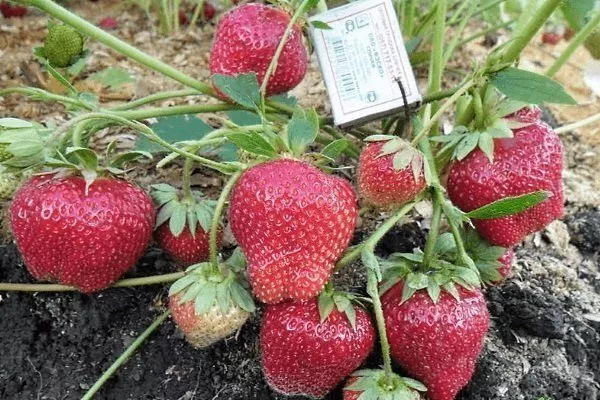
variety “Darselect”
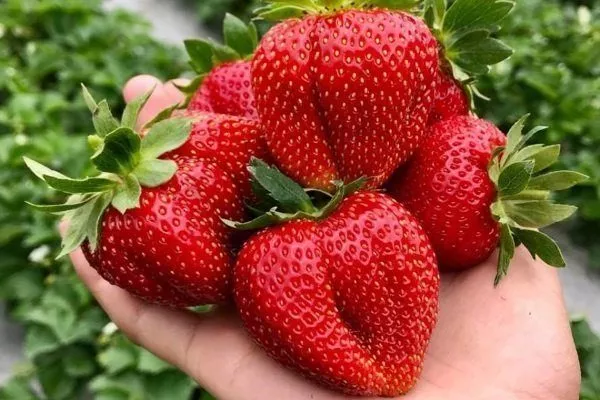
“Marmalade” variety
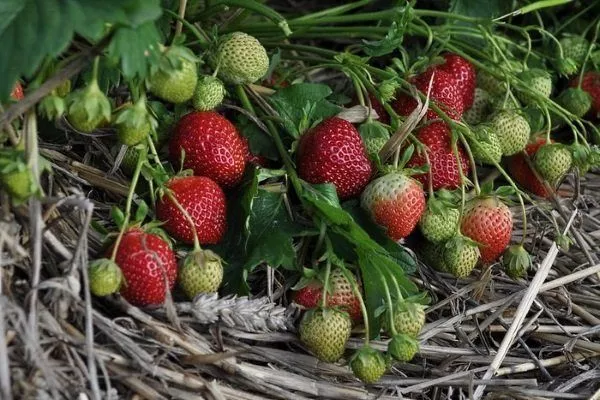
variety "Polka"
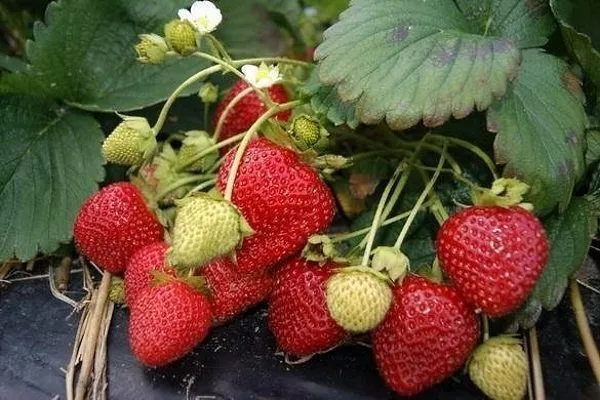
variety "Selva"
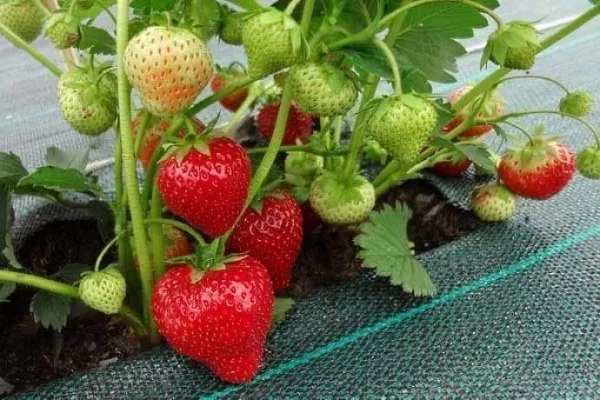
variety "Sonata"
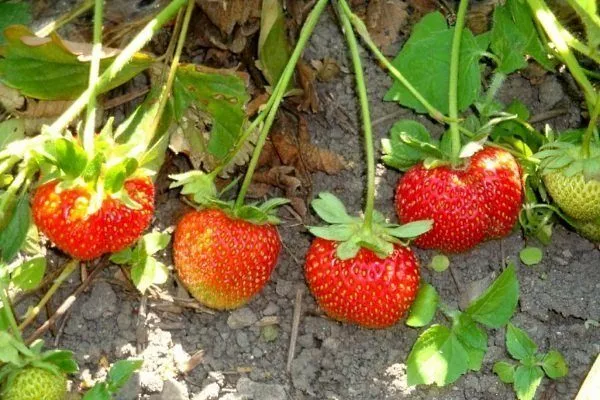
variety "Tristar"
In addition to these, it is possible to plant the following varieties: Tribute, Mrak, Baron, etc.
Planting methods
The Dutch strawberry growing method suggests that both horizontal and vertical planting are equally effective. The choice depends on the size of the room and its additional lighting system.
Horizontal
With this method of planting seedlings, they are planted in a single row, with the containers arranged in rows parallel to the floor surface. This planting method is suitable for large volumes and areas and is considered less expensive. It can be used in conjunction with the vertical planting method.
Watch a video about the horizontal method of planting strawberry seedlings:
Vertical
Vertical planting is done at a right angle to the floor. Cascading planting, with a staggered pattern, prevents the plants from touching each other as they grow. Therefore, maintain a minimum gap of 25 cm between strawberry plants. PVC pipes, bags, boxes, and other containers are used. This method has found favor in small farms and among gardeners.
The vertical strawberry planting method is shown in the video below:
Necessary materials and equipment
To implement the Dutch method of growing strawberries, you cannot do without:
- Containers for planting strawberry bushes.The choice of containers is vast, so let your imagination run wild. Flower pots, empty PET containers, sacks or polypropylene pipes with slits, old tires with holes punched in them for seedlings, and many others are all suitable. The main thing is to arrange them so the plants receive sufficient light.
- Seedling.It is preserved using whiskers or a cassette method.
- Priming. Regular garden soil won't do. You'll need to prepare or purchase special soil.
- Organization of watering.A spot irrigation system and humidifiers are used to ensure optimal humidity levels in the greenhouse.
- Lighting system.Responsibility and care in the selection and proper placement of additional lighting fixtures are key to achieving a productive harvest. Energy-saving and LED lamps or special red-blue grow lights are used.
Step-by-step instructions for growing strawberries using Dutch technology
The technology for harvesting strawberries using the method proposed in Holland has no optional conditions. Each one must be met precisely and completely.
Growing room
The choice of premises depends on the intended scale of production. This could be a large greenhouse or hangar, an apartment balcony, or even part of a room. Many even convert basements and attics for strawberry cultivation. The main requirement is adequate lighting and a favorable microclimate.
Planting soil
Before use, each potting mix is subjected to steam or high-temperature treatment to disinfect it. This is done using steam generators or by baking the soil in an oven at 130 to 180 degrees Celsius.
- ✓ Soil pH should be between 5.5-6.5 for optimal nutrient absorption.
- ✓ The soil must contain at least 30% organic matter to ensure the necessary porosity and moisture capacity.
Purchase a potting mix from a specialist store or prepare your own. Mix 3 parts sandy soil with 1 part humus or well-rotted manure and 1 part river sand (ideally, the ratio should not exceed 10%).
The most important thing is that the planting mixture has high water holding capacity, is porous, and is non-toxic. Peat, perlite, sawdust, urea, ash, and chalk are recommended for soil preparation.
In areas with unsuitable soil types, hydroponics is often used instead of soil. With this growing method, nutrients are fully regulated and supplied through the irrigation system. The fiber simply anchors the plant without providing nutrition. Coconut fiber, mineral wool, and other materials are used in hydroponics.
Harvesting and growing seedlings
Young strawberry plants must be available at all times. Without seedlings, the distinctive conveyor-belt principle of the Dutch strawberry growing method will be disrupted. Therefore, it's important to approach the matter of growing or purchasing seedlings responsibly.
- ✓ The root system should be white and dense, without signs of rot.
- ✓ Leaves should be bright green, without spots or signs of wilting.
Be sure to remove flower stalks from one-year-old plants, otherwise the seedlings will be weak and the root system will be underdeveloped.
High-quality planting material is obtained in two ways:
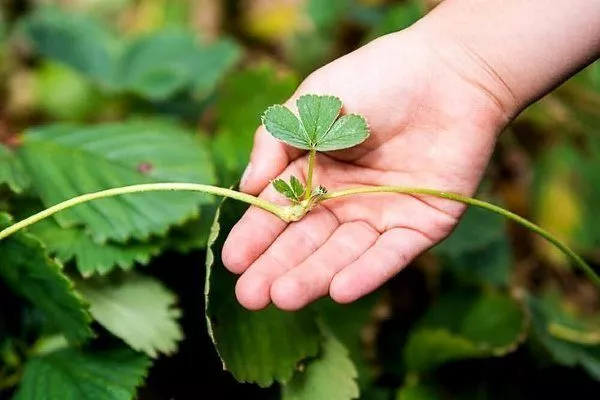
- It is grown from runners produced by mother plants. In the fall, they are carefully removed from the soil and transferred to a well-ventilated, dark storage area with low humidity and a temperature of 0 to 2°C. The day before planting in the greenhouse, they are transferred to a warm room and sorted, retaining only healthy specimens.
The main disadvantage of this method of obtaining seedlings is that the nursery of mother plants must be renewed every two years. - This method is similar to the first, but with the difference that the runners are immediately planted in cassette containers. They are then kept in this condition in a preparatory room for a month. At the fifth week, they are moved to a warmer location and left at room temperature for a week. Then, they are planted in a greenhouse. This growing method is less expensive and very common.
Lighting
To ensure a bountiful and consistent harvest, supplemental lighting is essential. One light fixture should be installed for every 3 square meters of greenhouse space. The lamps should be positioned at least 1 meter from the plants.
Strawberries require at least 12-16 hours of daylight per day. Therefore, in winter or on cloudy days, additional light from energy-saving lamps and phytolamps is used. Using incandescent lighting is not cost-effective, as electricity costs will immediately skyrocket.
You can read more about suitable lamps for growing seedlings here.
Irrigation and fertilizing system
When using the Dutch method for growing strawberries, it's possible to use only drip irrigation and fertilizing to protect the plant from moisture. This will protect the plants from rot and other diseases, as well as prevent insect pests. An irrigation system is easy to assemble yourself, but you can also buy and install a ready-made one.
To ensure optimal moisture supply to strawberries, watering should be adjusted until 3-4 drops of water are reached per minute.
Home watering in an apartment or other small space can be organized using bottles of water and rubber tubes.
To avoid over-watering when applying liquid fertilizer, consider the total amount needed. To prepare supplemental fertilizer, dilute 10 g of potassium chloride and 10 g of ammonium nitrate in 10 liters of water. Apply 100 ml of fertilizer per strawberry plant.
You can use organic fertilizers instead of mineral ones. For example, an infusion of chicken manure mixed with water at a ratio of 1:15.
Strawberries are fertilized 10 days after planting in the greenhouse and during the active flowering stage.
Container for seedlings
A wide variety of containers are suitable for this method of growing strawberries. These include single- or double-sided wooden crates and plastic boxes, polyethylene bags and flowerpots, long containers, and cut-off lengths of plastic pipe.
Make sure the plants have enough space to develop their root system. This determines the number of plants you can grow in a single container. A single strawberry plant requires a root ball at least 25 cm in diameter and about 30 cm deep.
Avoid dense plantings to save space. This will lead to air stagnation between plants, leading to rot diseases, disproportionate growth, and bushes stretching toward the light due to competition for light.
Microclimate
Berry development and ripening depend on the greenhouse's microclimate. The optimal temperature range is between 18 and 25°C. When temperatures drop below this range, plant growth slows and development stops.
Humidity in the room should not exceed 70-80%. To control it, regularly ventilate the greenhouse and mist it. Water containers placed inside the shelter will help saturate the air with moisture.
For efficient photosynthesis, carbon dioxide levels must be at least 0.1%. To achieve this, candles are lit in the greenhouse.
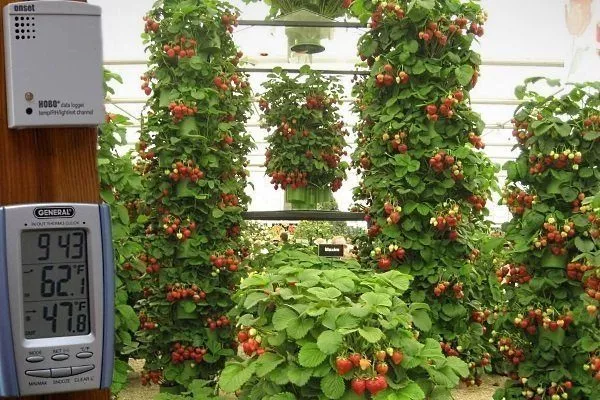
Caring for strawberry bushes
Caring for strawberry bushes indoors is important. Follow these steps:
- Don't forget about watering. It should be moderate. You can make a drip irrigation system yourself or purchase one from a specialist store.
- Regulate daylight hours with supplemental lighting. To avoid forgetting, you can automate the system using timers.
- Maintain a temperature in the greenhouse between 18 and 25 degrees Celsius. During the strawberry flowering period, reduce the temperature to 21°C.
- Monitor the temperature when preparing and storing seedlings. At -3°C (3°F), plants die, while at +3°C (3°F), seedlings awaken.
- Maintain humidity levels, ventilate the room and spray the plants.
- Inspect the plants, removing dry leaves and unusable fruits.
- Watch for pollination.
- Replace finished fruiting bushes with new ones promptly. Rooted runners from "old" strawberry plants can be used as seedlings.
Potential difficulties
Difficulties with the Dutch method of growing strawberries can arise in two directions:
- Providing seedlings. It is necessary to think through delivery times in advance and create conditions for preserving young mustaches.
- Creation and maintenance of growing conditions. This process is greatly simplified by purchasing and installing automated equipment. It's expensive, but its use quickly pays for itself with a bountiful, delicious harvest.
Growing strawberries using the Dutch method isn't difficult, but it does require a certain amount of investment and consistent, responsible work. Initially, while the process is still in its infancy, difficulties and additional expenses may arise. Eventually, the process will proceed steadily, yielding a bountiful harvest and a corresponding income.