
Strawberries are a favorite crop for many gardeners. Their juicy and sweet berries make a delicious treat on the table. But even with careful care, problems can arise, such as drying leaves. This unpleasant symptom can be caused by a variety of factors, so it's important to know how to treat it.
Improper strawberry care
The causes of wilting leaves can be varied. This can be due to inadequate plant care, pests and fungal infections, or the natural process of leaf drying and renewal.
Lack and excess of moisture
It's easy to tell if your strawberry bush is under-watered: the soil is dry and cracked. To avoid this, water your strawberries regularly. If the soil is over-saturated due to frequent rain, allow it to dry out. Loosen the beds—this will help the soil dry out faster and provide additional air flow to the roots.
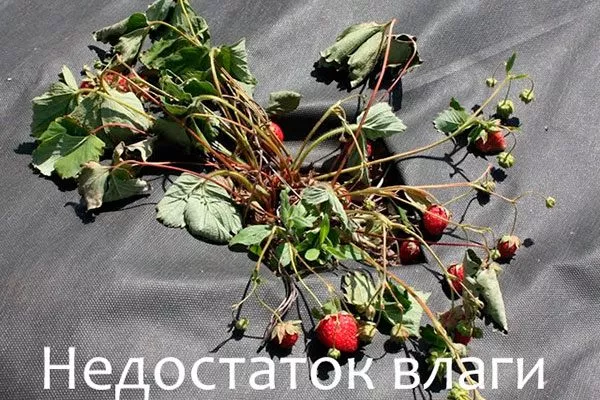
- ✓ The optimal water temperature for irrigation should not be lower than +15°C to avoid stress on plants.
- ✓ Watering should be done in the morning before 10:00 or in the evening after 18:00 to minimize moisture evaporation.
During hot, dry weather, when strawberries are lacking moisture, provide additional water. During flowering, water every 3-4 days, being careful not to splash the flowers. Approximately 20 liters of water are required per square meter of soil. Once the berries appear, switch to watering every 7 days, increasing the amount to 30 liters.
Nutritional deficiencies
When strawberry leaves begin to dry out due to nutrient deficiencies, this can be caused by a variety of factors. One of the most common is a lack of important macro- and micronutrients (nitrogen, phosphorus, potassium, magnesium, iron, etc.).

Use fertilizers containing essential macro- and micronutrients. Apply fertilizer according to the manufacturer's recommendations and do not overdo it to avoid overloading the plant.
Excess of fertilizers
Strawberries can dry out due to both a lack and an excess of minerals. Frequent fertilization will not increase the yield but will only harm the plants. Organic fertilizers are the best option for fertilizing the bushes, but it's important not to overdo it.
Rare landings
When strawberry leaves begin to dry out due to sparse planting, this can be caused by several reasons:
- Plants do not compete for water and nutrients in the soil. This can lead to an uneven distribution of resources among plants, causing some specimens to suffer from a lack of moisture and nutrients.
- When planting too sparsely, the soil is subject to increased moisture evaporation. This can lead to rapid soil drying and a lack of moisture for plants.
- Plants may be more exposed to direct sunlight without the shelter of nearby foliage. This can cause the leaves to dry out and die back.
Ensure regular and adequate watering of the plants, especially during periods of high temperatures and dry weather. When planting strawberries, maintain optimal spacing between plants to create a denser green carpet, which helps retain soil moisture and protects them from direct sunlight.
Growing strawberries in one place
After several seasons of growing strawberries in the same area, the soil can become depleted. This leads to a lack of nutrients, which affects the health and condition of the leaves. Growing strawberries in the same location can lead to the accumulation of pathogenic microflora and parasites over the years.
Rotate your strawberry beds periodically. Replenish soil nutrients by adding organic fertilizers (compost, humus, or manure). This will help restore soil fertility and provide the plants with essential nutrients.
Sunburn
Prolonged exposure of strawberry leaves to bright sunlight can cause sunburn, especially if the plants don't receive enough moisture. If the beds are located in open areas without adequate shade, the leaves may become overheated.
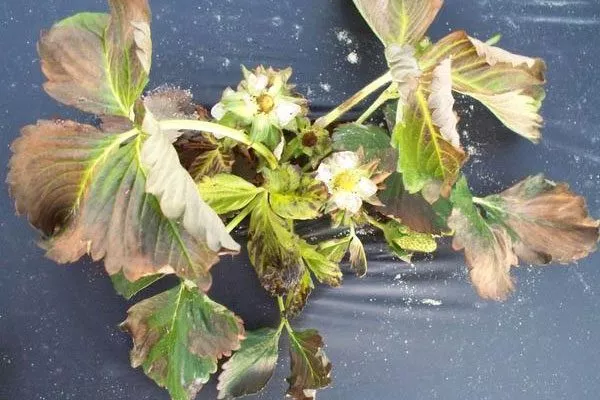
Water plants in the morning or evening to prevent moisture evaporation and reduce the risk of sunburn. Mulching the beds helps retain soil moisture and prevent leaves from drying out during hot weather. Install shade covers over the beds, especially during periods of intense sunlight.
Weather conditions
Strawberries don't tolerate extremely high temperatures. If the heat persists for long periods, not only the air but also the soil heats up. Some strawberry varieties can begin to dry out at soil temperatures above 30°C. Even regular watering won't help, as the roots stop taking up moisture and supplying it to the plant.
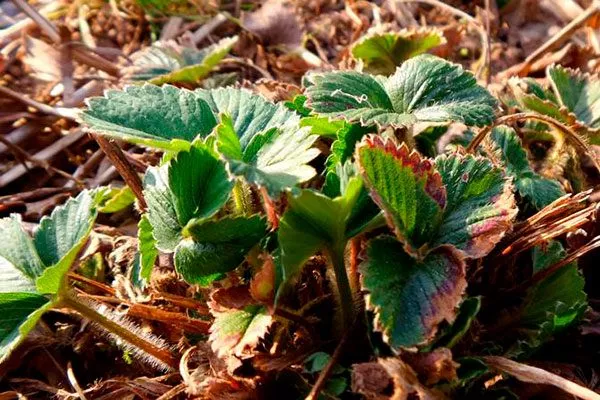
On weakened bushes, berries often dry out as their development stops. However, the plant may remain green and healthy. Although strawberries prefer bright light, it's best to temporarily shelter them in the shade. For this, use a special shade net or any white non-woven material.
If dry spells occur regularly, choose strawberry varieties that are resistant to such weather conditions. To protect the soil and roots from overheating, mulch the plantings. This helps reduce moisture evaporation and ensures better survival of the strawberries during hot periods.
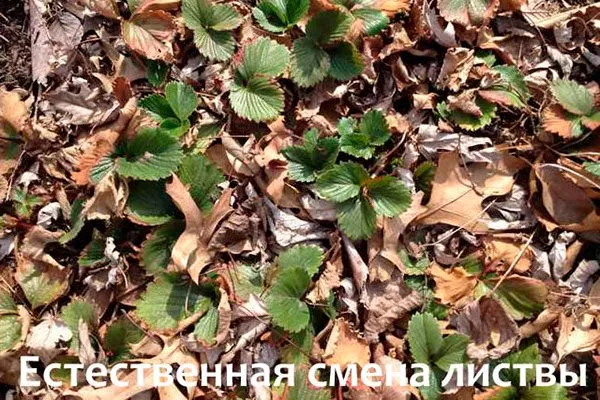
Natural process
One sign of aging is a decrease in yield compared to previous years. This indicates the need to remove old bushes. When harvesting, select only the strongest runners, trimming and removing the rest. The average lifespan of a bush in one location is 3 to 5 years.
Strawberry diseases
There are several diseases that cause strawberries to wilt and dry out, even during fruiting or at the ovary stage. Each has its own characteristic signs that can be used to identify the disease and initiate appropriate treatment.
Powdery mildew
Favorable conditions for powdery mildew development include humidity of 80% and temperatures between 18 and 23°C. Affected plants typically turn pale and begin to wilt. A white, web-like coating first appears on the petioles, then on the stems, tendrils, and berries.
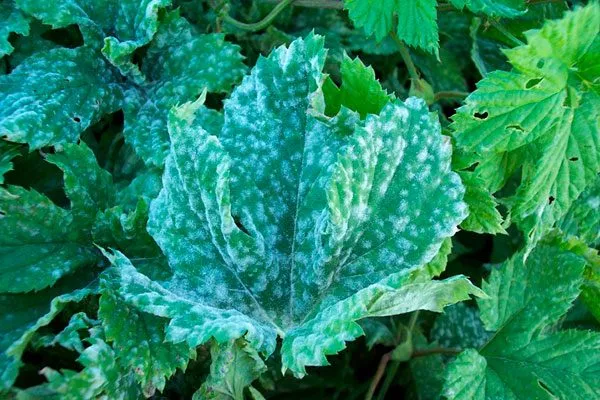
The inner tissues of the leaves become affected, turning brown with a rusty coating, becoming deformed, curling upward, and drying out. The fruits first become covered with a white coating, acquiring a moldy odor, then darken and mummify, and the runners gradually die off.
To combat powdery mildew, use the following chemicals (amount per 10 liters of water):
- Topaz – 5 ml;
- Bayleton – 2 g;
- Gaupsin – 100 ml;
- Horus – 3 g;
- NAT – 100 g.
- Before starting treatment, remove all affected leaves and plant parts.
- Prepare a soda solution (40 g per 10 liters of water) and spray the plants thoroughly, paying special attention to the underside of the leaves.
- Repeat the treatment after 7-10 days to consolidate the effect.
After the snow melts, spray the beds with a 3% Bordeaux mixture. The marsupial fungus is killed by treating strawberries with baking soda; this requires 40 g of powder per 10 liters of water. This mixture can be used during bud formation and after harvest.
Gray mold
Fungal growth is promoted by cool (up to 15°C), humid conditions, dense plantings, and poor ventilation. Under these conditions, the disease can destroy up to 90% of the crop. The fungus overwinters in old leaves, grass, and diseased berries, and in the spring attacks stems, petals, sepals, and fruits.
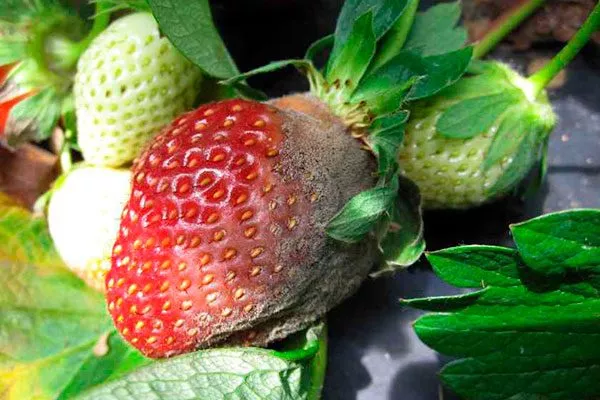
Small, brown spots appear on the berries, quickly expanding to form a gray-brown, cotton-like coating containing numerous small spores. The rot (dark gray or brownish-red spots) then spreads to the leaves, stems, tendrils, and roots.
Use mustard infusion (100 g dry mustard per 10 l water, diluted in a 1:1 ratio) or a solution of boric acid with copper sulfate and iodine (2 g boric acid, 5 g copper sulfate and 5 ml iodine per 10 l water).
Verticillium wilt
The fungus that causes the disease thrives in the soil, especially in hot weather. Its spores spread throughout the plant, penetrating the vessels where mycelium forms, producing toxins.
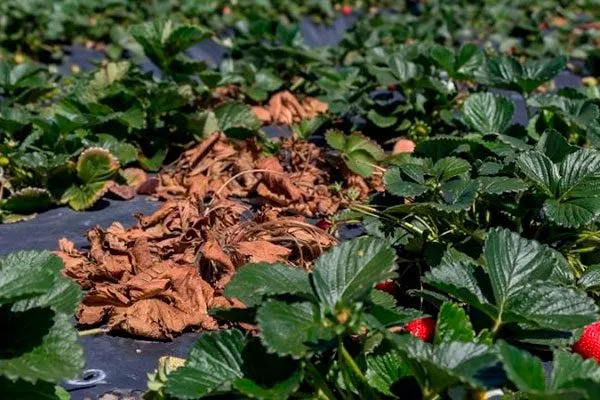
The diseased bush begins to wilt, the lower leaves dry out, and the berries turn brown. Then, the young leaves begin to dry out. The disease can be identified by red petioles and poor growth.
To treat, remove the affected plant, treat the soil with fungicides, and spray the beds with a 3% Bordeaux mixture. Use Maxim to treat the bushes and disinfect the soil—one ampoule per 2 liters of water (200 ml per plant). The following products are also effective: Fundazol, Fitocid-r, Fitodoctor, and Trichodermin.
Fusarium wilt
The fungus thrives in hot and rainy weather, and can be transmitted by weeds, some cultivated plants, and contaminated soil. Spores remain viable for up to 20 years. Brownish spots appear on the leaves, and signs of necrosis are visible along the leaf margins.
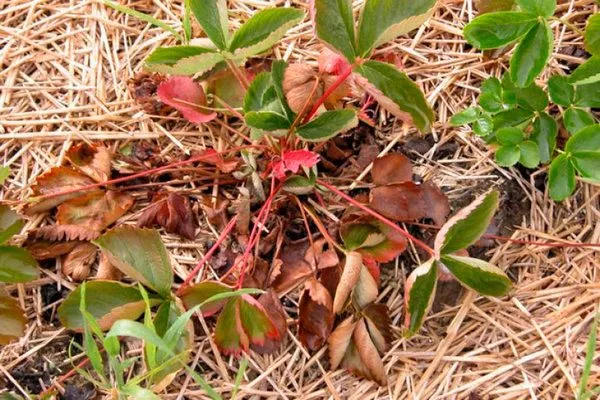
The shoots and tendrils turn brown. The leaves gradually curl inward, ovaries fail to form, and in the final stages, the bush droops, the rosette collapses, and within 4–5 weeks, the plant dies.
To prevent the disease, it is recommended:
- selection of varieties resistant to the local climate;
- periodic change of planting sites every 3 or 4 years;
- thinning of plantings after harvesting;
- active control of weeds and pests;
- adding lime or potassium oxide to the soil;
- spring spraying of plants with Fitosporin;
- destruction of affected plants and subsequent treatment of the soil with Nitrafen.
Anthracnose or coal disease
Sunken ulcers begin to appear on the tendrils and petioles; at first they are small and reddish-brown in color, but then they increase in size, turn black, and encircle the tissue, which leads to the drying out of the stems and tendrils.
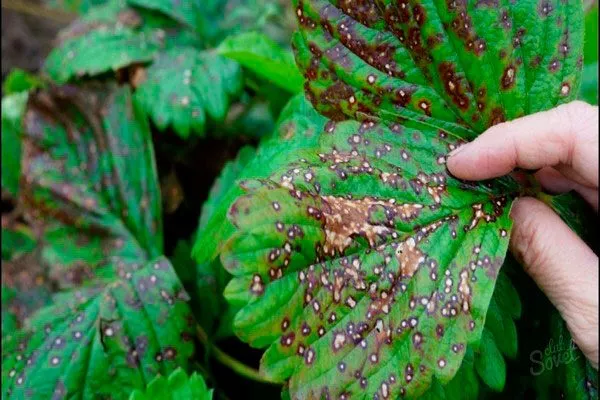
Multiple light-brown spots form on the leaves, gradually turning black and spreading over the entire surface, leading to death. Flowers appear scorched, and sunken dark spots appear on unripe berries.
Plants severely affected by the disease cannot be treated. Optimal conditions for disease development are temperatures of 25-28°C and air humidity of 95-100%.
Strawberry pests
The juice secreted by strawberry leaves attracts insects, which can cause serious damage to the crop. Let's look at the most common pests.
Strawberry mite
These insects actively spread in spring and summer and can completely destroy a plantation. These miniature insects, translucent or yellowish-brown in color, are difficult to detect at the very beginning of their presence. Signs of their attack become noticeable in the second half of summer.
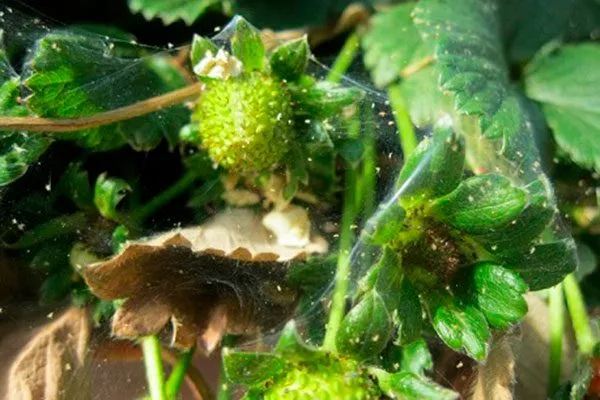
Leaves begin to curl, wrinkle, and develop a yellowish coating, then fall off. The mites feed on the plant's sap, causing it to die. These insects are particularly active in humid northern regions, while they are less of a problem in the drier south.
To combat mites, use an infusion of onion peels or garlic. For the former, dilute 200 g of peels in 10 liters of water and let it steep for 4-5 days. For the latter, pour 200 g of crushed garlic into 10 liters of water, stir the mixture, strain, and apply the resulting liquid to the bushes. Remove heavily infested bushes.
Weevil
In winter, these beetles hide under fallen leaves and in the soil, and in spring, their females lay eggs in strawberry buds, gnawing through the stalks beneath the buds. A single female can damage up to 50 flowers, often preferring male specimens with tall stalks.
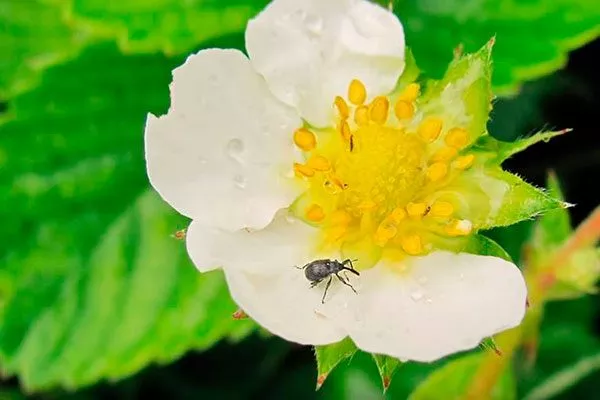
The weevil larva feeds inside the bud, where it then transforms into a pupa. In July, a new generation of insects emerges, feeding on strawberry leaves and then searching for a place to overwinter in the soil.
The fight against weevils involves treating bushes with various insecticides: Karbofos, Metaphos, Actellik, Korsar, etc. during the budding period, but no later than a week before flowering begins.
Slugs
Pests prefer damp areas and are attracted to plant fruits, buds, leaves, and petioles. They often carry infectious diseases. Collect slugs by hand. Mulch the soil with sawdust and pine needles. Effective products include Groza, Ulicid, Slizneed, and Antislizen.
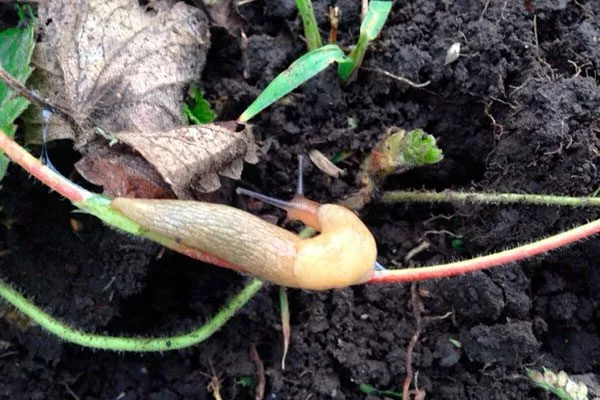
Use special slug traps, such as jars of cornmeal, as bait. Once the pests have accumulated in the trap, destroy them. Treat the spaces between the rows with a mustard solution.
Nematode
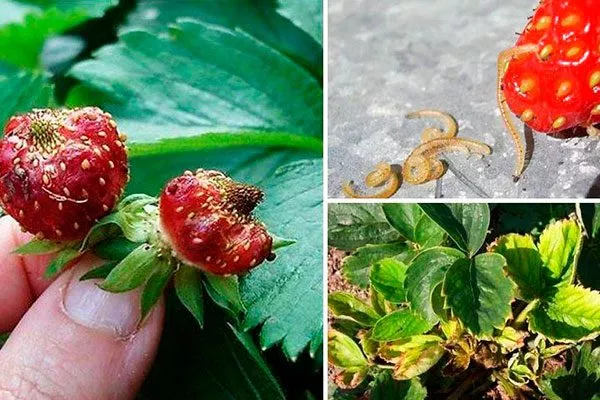
Tiny roundworms, up to 1 mm long, burrow into the soil and onto plants. They are invisible to the naked eye and feed on roots, ultimately causing the bushes to wither. The only effective solution against nematodes is to uproot the affected bushes. Treat healthy bushes with Mercaptofos, Ruskamin, or Fosfamtide.
Mole cricket
A harmful polyphagous insect in strawberry beds is a large, brown beetle, about 6 cm in size. These insects attack the strawberry root system, causing the bushes to dry out completely.
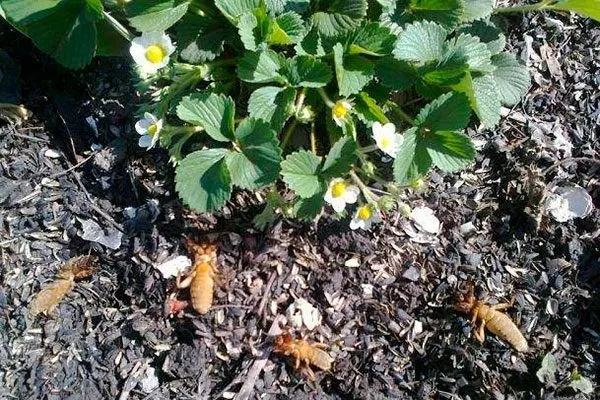
To combat this pest, use insecticides such as Marshall, Hinofur, and Zolon. During the fruiting period, use noise-making devices made from tin cans, nuts, and other metal objects.
How to prevent strawberries from drying out?
Preventing diseases is much easier than treating them. When growing strawberries, follow these preventative measures:
- Practice crop rotation. Avoid planting strawberries in areas where potatoes, tomatoes, or eggplants were previously grown.
- Choose a variety according to the climate. If there is a specific disease in the area, give preference to varieties that are immune to this disease.
- Avoid dense plantings. The distance between bushes should be at least 25 cm to ensure access to sunlight and air.
- Replant strawberries every 2-3 years. As bushes age, they become more susceptible to insects.
- Keep the area clean. Remove weeds and dead leaves promptly to help prevent rot and increase yield.
- After watering, loosen the soil. This process helps avoid stagnant moisture, which promotes rot and attracts slugs.
- Plant garlic and onions between the bushes. These plants suppress the growth of fungi and repel harmful insects.
- Avoid using nitrogen fertilizers. Give preference to fertilizers containing potassium and phosphates, which strengthen the plant's immunity.
- Treat strawberries twice a year. In the spring, carry out preventative treatments against diseases and pests, and in the fall, prepare plants for winter.
Drying leaves on strawberry plants can be a serious problem, threatening the harvest and overall health of the plants. Early identification and elimination of the causes will help maintain the health and vitality of the strawberry plants. Following care tips and providing the plants with the necessary conditions will help prevent leaf drying.