
Strawberries are a hardy and frost-resistant crop that can be planted not only in spring but also before winter. Taking advantage of this, experienced gardeners prefer to plant strawberries in the fall. Let's learn the benefits of fall planting and how to achieve a good harvest.
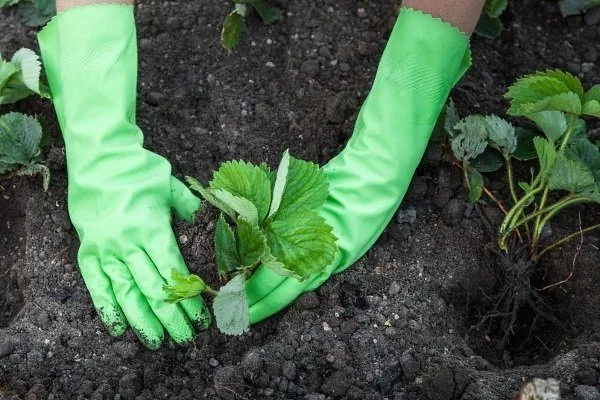
Features of autumn planting
Planting strawberries in the fall is much more profitable – during this period, gardeners have more free time, and most importantly, autumn planting has a positive effect on the crop's productivity.
Advantages and disadvantages
Benefits of autumn planting:
- Harvesting in the first summer. spring planting you have to wait for berries all year.
- Good root survival.
- Soil preparation for planting.
- In the fall, when the harvest has been collected, there is enough space on the plot for planting.
- The weather that is favorable for planting is damp and moderately cool.
- There are plenty of seedlings for sale—you can find any variety. In the spring, they usually sell off what they didn't sell in the fall.
- The cost of planting material is lower than in spring.
- If seedlings are ordered from another city, then autumn provides more favorable conditions for transportation.
There's one drawback to fall planting: there's always a risk of damage to the seedlings. If frost strikes early or planting is done too late, the strawberries won't have time to establish, and the frost will kill their leaves first, followed by their roots. To avoid this, keep an eye on the weather forecast. Allow at least a month between planting and the first frost.
Suitable strawberry varieties for autumn planting
| Name | Ripening period | Productivity | Disease resistance |
|---|---|---|---|
| Kimberly | Early | High | High |
| Florence | Average | Average | Average |
| Kent | Early | High | High |
| Honey | Early | High | High |
| Crown | Average | Average | Average |
| Ali Baba | Late | Low | Low |
| Forest Tale | Average | Average | Average |
Recommended varieties of everbearing strawberries – Kimberly, Florence, Kent, Honey, Crown, Ali Baba, Forest TaleThese varieties bear fruit all summer and even into autumn—until October. They yield two or three harvests per season.
Non-remontant varieties are no less popular among gardeners – Desna, Pocahontas, Rusanovka, ZaryaThey are also planted in the fall; they are sweet, large, and disease-resistant.
Whatever variety of strawberries you plant, the first harvest will ripen in about six months.
Basic landing requirements
Strawberries aren't a fussy crop; they'll produce fruit even under the most modest conditions. But to achieve a good harvest, they need to be provided with favorable conditions, and then every square meter of space will yield the maximum return.
Timing and climate
Strawberry planting times depend on the local climate and specific weather conditions. There are three distinct fall planting periods:
- early – until mid-September;
- average – until mid-October;
- late – ends 30-45 days before the onset of cold weather.
Gardeners prefer early and mid-season plantings, which are considered more productive and less risky. Late planting of strawberries carries the risk of freezing of the seedlings—it's never possible to accurately predict when the first frost will strike. Strawberries experience a decrease in yield after exposure to frost.
Suitable conditions for planting strawberry seedlings:
- cloudy weather;
- afternoon;
- warm weather – not less than +10 °C.
It is not recommended to plant strawberries in hot weather.
Experienced gardeners, when determining the optimal time for planting, consider the crop's growing cycle. Most varieties begin to sprout runners in June, rooting in July or late summer, and fruiting buds form in the fall.
Based on the vegetative characteristics of the crops and the local climate, the optimal planting time is selected. Table 1 shows strawberry planting times by region.
Table 1
| Regions | Timing of strawberry planting |
| Moscow region | beginning of August - end of September |
| Leningrad Oblast | mid-August - early September |
| Central Russia | late August - mid-September |
| Siberia | no later than the last ten days of August |
| Ural | late July - mid-August |
| Southern regions | October |
Predecessors and neighbors
Predecessors and neighbors are selected taking into account diseases that may be common to different crops.
Relationship of strawberries with other crops:
- Favorable precursors: beets, radishes, onions, green manure (mustard, lupine), beans, peas, carrots, corn, celery.
- Unfavorable precursors: Raspberries, tomatoes, cucumbers, peppers, potatoes, and eggplants. These crops can be a source of late blight. If you must plant strawberries after these crops, treat the soil with Fitosporin M (35 ml per 10 liters of warm water). This amount is enough for hundreds of seedlings.
- Favorable neighbors: Parsley - it repels slugs, garlic and low-growing marigolds - nematodes.
- Unfavorable neighbors: all nightshades – potatoes, tomatoes and others, as well as raspberries, horseradish, cabbage, Jerusalem artichoke, sunflower.
Selecting a site and preparing the soil
Planting strawberries in an unfavorable location will inevitably impact their yield, health, and berries. In the shade, strawberries grow small and tasteless. Strawberries grow in the same spot for no more than three years, after which the soil becomes depleted, requiring replanting. Experts recommend replanting everbearing varieties annually.
Site requirements:
- good lighting, no shading or thickets;
- soils – sandy loam, loam;
- optimal acidity – 5.0-6.5 pH;
- permissible groundwater level is 60-80 cm.
- ✓ The pH level must be strictly within 5.0-6.5 for optimal absorption of nutrients.
- ✓ Groundwater should not rise higher than 60 cm from the surface to avoid root rot.
In southern regions, slight shading of the area in the afternoon is allowed.
Strawberries are not planted:
- on marshy soils;
- after unfavorable predecessors;
- on heavy soils – here strawberries are oppressed, their roots rot.
In areas subject to spring flooding, strawberries can be planted, but only in beds of appropriate height.
Soil composition adjustment:
- For clay soils, add 2-3 buckets of river sand per 1 sq. m.
- Add 1-2 buckets of peat to sandy soils.
How are seedlings prepared?
If you have a week before planting, start preparing:
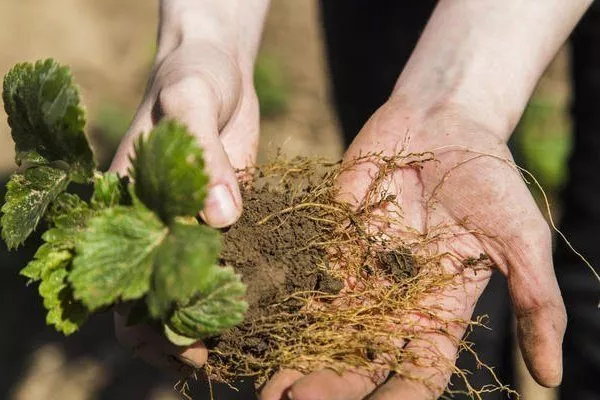
- trim the roots to 10 cm.
- Spray with antifungal medications.
- Sprinkle with soil and leave in a cool, dark place.
- An hour before planting, moisten and soak the seedlings.
- Tear off excess leaves, leaving 4-5 pieces.
Soaking solutions:
- garlic infusion - from parasites;
- clay mash – to protect roots from drying out and improve rooting;
- growth biostimulator – to accelerate rooting and good development of the plant.
The ideal option for propagation is seedlings from mother plants. These seedlings are disease-resistant and productive. Signs of high-quality seedlings:
- healthy, well-developed horns, 7 mm thick;
- branched roots, length – 7-8 cm;
- leaves are shiny, dense, green;
- number of leaves – no more than 4-5;
- no damage or signs of disease.
Forming beds and fertilizing them
Greenhouse berries are often tasteless and watery—this is because they are fed only with mineral fertilizers. Strawberries, however, require organic fertilizers to be delicious.
Preparing the beds:
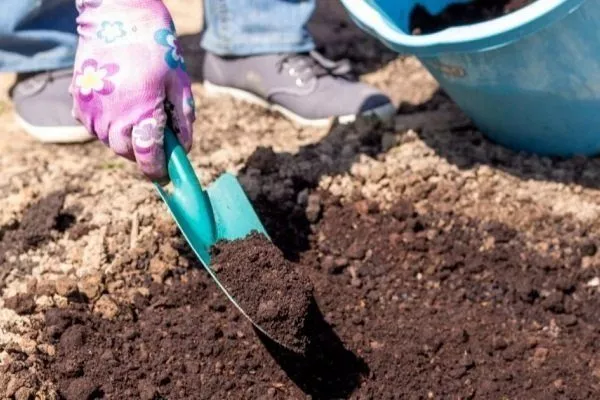
- Half a month to a month before planting, dig the soil to a depth of at least 30 cm using a shovel blade.
- Add 5-15 kg of humus and 2 cups of ash per 1 sq. m. during digging. Or add compost (1 bucket), urea and superphosphate - 50 g each, and potassium salt - 1 tbsp. All of these fertilizers can be replaced with nitrophoska - add 2 tbsp. per 1 sq. m.
- If the soil has been infested with insects, treat it with insecticides such as Marshal, Confidor, or others a month before planting.
- Fertilizer is scattered over the dug soil and raked into place, forming beds. Gardeners typically create simple beds, raised 20-25 cm above the soil surface. This method is popular in damp climates.
You can see how to prepare a plot for planting strawberries and how to properly prepare strawberry seedlings for planting in the video below:
Types and planting patterns
Everyone plants strawberries in their own preferred way—in rows, solids, or nests. Let's look at some planting options.
In open ground
The procedure for planting in open ground:
- Loosen and level the soil.
- Mark out the area according to the chosen planting pattern.
- Dig holes 10-15 cm deep. The depth of the hole should be no less than the length of the roots.
- Water the holes. If planting takes place after rain, you can skip watering.
- Mix the soil removed from the holes with compost and rotted manure—if you haven't fertilized the soil beforehand. If the beds were fertilized, skip this step.
- Cover the roots of the seedling, lowered into the hole, with soil up to the root collar - it should be at ground level.
- Firm the soil and water the seedling. Apply generously, but be careful not to let water splash onto the plant.
- Once the moisture has been absorbed, loosen the soil. Add humus or peat moss on top.
With agrofibre
To implement the project, use:
- PE film;
- agrofibre - spunbond, for example;
- organic mulch - straw, rotted sawdust.
Benefits of using covering materials when growing strawberries:
- the soil retains moisture and does not need to be loosened;
- protection from drought, extreme conditions;
- absence of weeds;
- prevents whiskers from taking root;
- protection from pests and rot;
- reduction of labor intensity of cultivation;
- clean berries - no contact with soil.
The covering material is changed every 3-4 years, at the same time as the strawberry is replanted.
Stages of planting on covering material:
- Mark out the beds. Consider the width of the covering material—it's best to cover the bed with a full strip. If you don't have enough material, layer it on top of each other.
- Prepare the beds the same way as for planting outdoors. Dig over the soil and fertilize.
- Cover the bed with plastic, agrofibre, or other covering material. Secure it with wire pins or something heavy.
- Mark the planting sites. Use chalk to mark the agrofibre mat. After cutting holes and turning back the corners, plant the seedlings.
The video below provides an overview of planting strawberries using agrofibre. The gardener also discusses the advantages of this method:
Planting in a greenhouse
Planting in a greenhouse is similar to planting in open ground. The difference is that they are planted more densely. If you have a greenhouse, you can create the ideal microclimate for strawberries. When preparing the soil, use a standard set of fertilizers—rotted manure, ash, compost, and others.
Caring for strawberries
Caring for strawberry seedlings is aimed at providing ideal conditions for rapid rooting and growth of the bushes.
Watering
Features of watering young strawberries:
- During the first 10 days, strawberries are watered frequently, but little by little.
- The water used for irrigation should be warm.
- Water the bushes so that water does not get on the leaves.
- The best time for watering is morning.
- Once established, watering frequency decreases. It's recommended to water strawberries only 2-3 times a week, but the watering rate increases.
- First watering immediately after planting: 0.5 l of water per bush.
- The next 10 days: daily watering of 0.3 l per bush in the morning.
- After rooting: water 2-3 times a week, 0.5 l per bush.
Top dressing
Feeding rules:
- At first, fertilizers are not needed – enough is added during planting.
- Fertilizer consists of organic and mineral fertilizers. The plant especially appreciates potassium and phosphorus fertilizers, which influence photosynthesis and root growth.
- Fertilizing in autumn Fertilizers are applied periodically. If strawberries are kept in a greenhouse, they are also fertilized in winter. It's important not to exceed the recommended fertilizer dosage, as excess phosphorus can cause root death.
- Fertilizing strawberries in spring – after the snow melts, during flowering and after fruiting ends.
- Nitrogen fertilizers are never applied in the fall.
- After applying fertilizer, the bushes are watered so that the nutrients are evenly distributed in the soil and do not damage the roots.
Do I need to trim?
Not all bushes need to be pruned. If a seedling has only a couple of leaves, they can be left. Later, the runners are trimmed to ensure the plant devotes energy to the root system. Bushes are pruned if they are too dense. Rotted and deformed leaves are always removed.
It's not recommended to prune strawberries too low, as this can damage the plant. Pruning should be done carefully, cutting the leaves 10 cm from the ground.
Mulching
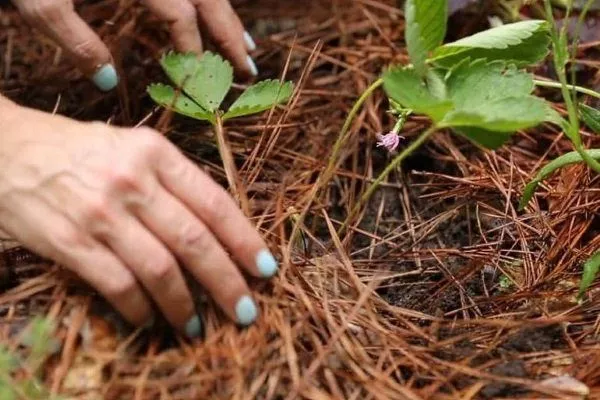
If strawberries are planted without using agrofibre or film, it is required mulchingThis procedure simplifies cultivation techniques. Mulch the soil after watering. A variety of materials are used as mulch, including sawdust, hay, straw, tree bark, humus, and peat.
Dry leaves, grass clippings, straw, and pine needles are more suitable for the fall and winter. Mulch should be scattered over the soil, but avoid contact with the bushes. If the plants are planted on a covering material, mulch is not necessary; film, spunbond, or agrofibre can serve as mulch.
Preventive measures
Strawberries can be susceptible to fusarium wilt, verticillium wilt, brown spot, and other berry diseases. To prevent strawberry diseases and pests, take the following preventative measures:
- If there is no covering material, the soil is loosened.
- Treatment with Karbofos. This product is poured onto the soil and sprayed onto the bushes. Apply 150-170 g of the product per bucket of lukewarm water.
- In a bucket of water, dissolve wood ash (50 g), vegetable oil (3 tbsp), vinegar (2 tbsp) and liquid soap (2 cups).
Preparing for winter
Strawberries are frost-hardy berries that easily survive harsh winters. Snow cover is sufficient for this crop to survive the winter. Under a layer of snow, strawberries can easily withstand prolonged frosts of -20°C and short-term frosts down to -30°C. To protect strawberries from abnormally low temperatures, simply cover the plantings with a covering material.
Before winter, additional mulching is applied. Mulch, in addition to its primary functions of retaining moisture and preventing weed growth, can also act as an insulator. However, for this to be effective, the mulch layer must be at least 5 cm thick. Straw, sawdust, and peat are used for pre-winter mulching, but the most popular insulating material is spruce branches.
When gardening is almost complete and the harvest is in, it's time to plant berries. By planting strawberry seedlings in the fall, you'll get a quick harvest—by spring, the seedlings will have matured and will begin to bear fruit.