
The Rumba strawberry, or Zumba as it's also known, belongs to the category of garden strawberries with single-fruiting. It's ideal for cultivation in harsh climates, in private gardens, and in large-scale industrial settings. This variety can be grown in open beds, under plastic cover, in greenhouses, and even on balconies and windowsills.
History of the variety's development
This non-everbearing fruit crop was developed by Dutch scientists. Specialists from the Fresh Forward agricultural firm were involved in its development. They succeeded in producing a variety with berries of high commercial quality. Rumba strawberries are ideal for cultivation in Russia, Ukraine, and Belarus.
Description of the variety
The variety has impeccable characteristics, especially in terms of shelf life and long-distance transportation. This allows it to be used not only for personal but also commercial purposes.
Bushes
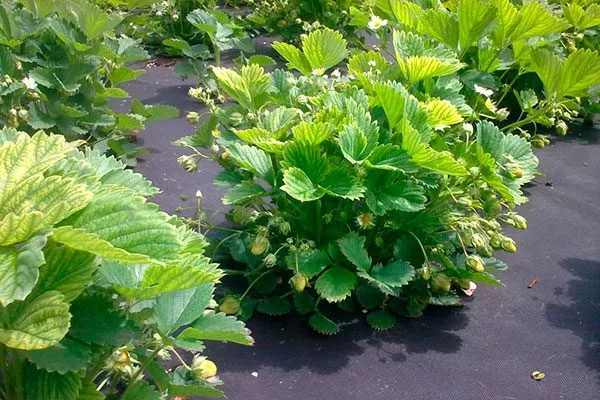
The strawberry's main characteristic is its unusually ovoid-shaped leaves. Other characteristic features of the variety include:
- bush – medium-sized, dense and spreading type, which is why you need to provide them with enough free space;
- leaves - dark green in color, with large teeth and stepped edges;
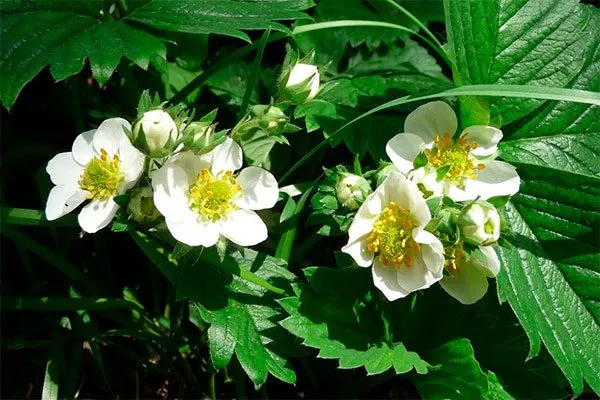
- peduncles – elongated, with snow-white flowers;
- mustache - are located in the central part of a powerful bush;
- foliage – at a high level;
- root system – It has a fibrous structure, which allows the bush to easily tolerate minor frosts and thrive in winter under snow cover.

Berries
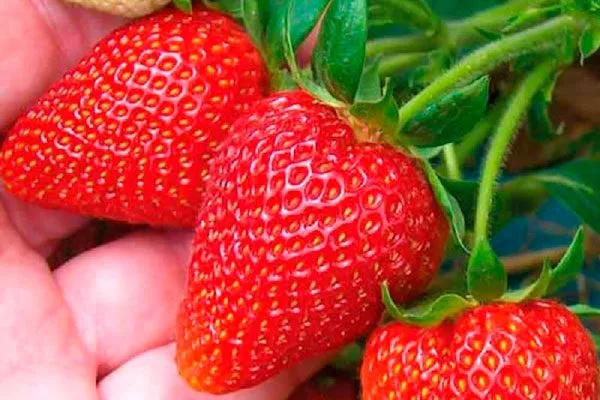
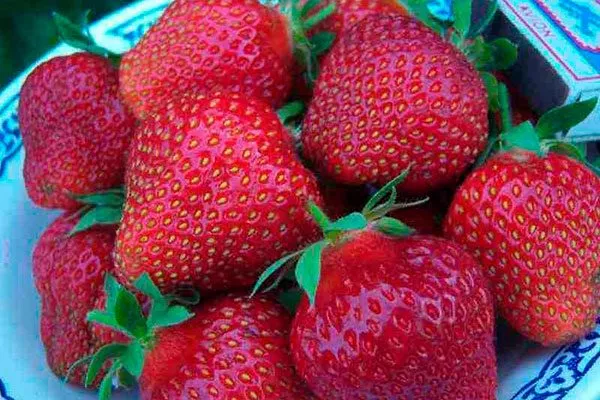
Rumba is characterized by a very sweet taste, but also has a slight acidity. The aftertaste is exceptionally strawberry, and the aroma is very intense. The fruits are always uniform in size, and only a small percentage of the berries are distorted.
External data:
- form type – during the first wave of fruiting they are evenly conical, then they also form conical, but already rounded;
- surface color – dark red, and when fully ripe, almost cherry-colored;
- pulp shade – rich scarlet;
- surface – glossy;
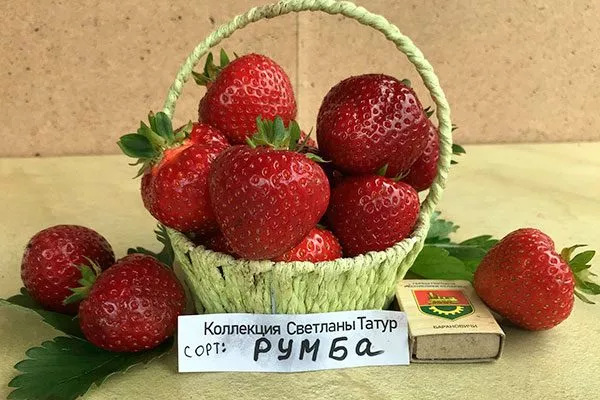
- berry parameters – the minimum weight is 25 g, the maximum is 30 g;
- pulp – juicy texture, dense structure;
- crunching sound when biting – absent.
These strawberries are suitable for fresh-picked consumption, jam, compote, juice, desserts, and baked goods. They can also be dried and frozen.
Productivity
Rumba is considered a high-yielding variety: when grown in a home garden, 400-500 g of berries can be harvested from a single plant, while in commercial cultivation, this figure is 800-1000 g. However, there is a peculiarity: in the first year after planting, no more than 250 g of fruit is produced on a single bush.
Ripening period
The Rumba strawberry is an early-ripening berry variety. Its peak flowering period occurs in late May or early June, depending on the region and growing conditions. In warmer climates, harvesting begins earlier than in colder zones.
Pollination
Rumba has both male and female flowers, allowing it to self-pollinate successfully without the need for insect pollinators. This contributes to a bountiful harvest even in the absence of other bushes nearby. This variety's flower stalks are strong and long, and each shoot can produce up to six large berries.
Frost resistance and the need for shelter
The quality and appearance of berries directly depend on wintering conditions. The Rumba variety is characterized by good winter hardiness, but preparation for winter should begin immediately after the fruiting phase has completed, including watering and fertilizing with nitrogen fertilizers. In areas with cold and low-snow winters, covering the berries with non-woven fabric or spruce branches is recommended.
Using berries
Growing Rumba strawberries produces a high yield, which is efficiently used by large agricultural enterprises for transport to wholesale markets and canneries. Smaller farms often consume the berries fresh or cooked.
Advantages of the variety
This variety is considered very popular. This popularity is due to its many positive qualities:
Disadvantages of the variety
Negative aspects include the following:
Growing conditions
Rumba strawberries adapt to any climate, are drought- and frost-resistant, tolerate temperatures down to -25 degrees Celsius, and survive long winters. However, in northern regions, this variety is recommended for greenhouse cultivation. The crop is suitable for hydroponic cultivation.
- ✓ The soil pH level must be strictly in the range of 5.5-7.0, otherwise the plant will not be able to absorb nutrients.
- ✓ The soil should not only be light and fertile, but also well-drained to avoid water stagnation and root rot.
How to plant strawberries with a closed root system?
Before planting, thoroughly water the bed and create planting holes approximately 18 cm deep, spaced 30-45 cm apart. Leave 50-70 cm between rows to ensure adequate space.
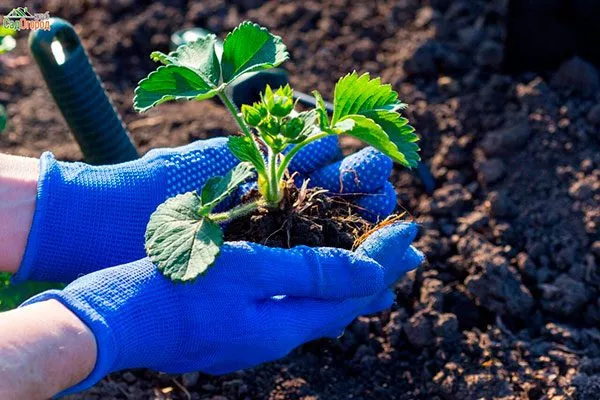
Next, proceed according to the scheme:
- Extracting the seedling. Carefully remove the plant and its root ball from the cup or container to minimize root damage. If the plastic is thin, simply cut it with scissors and remove it from the seedling.
- Transplantation into a hole. Carefully place the seedling together with the root ball into the prepared hole.
- Backfilling with soil. Fill the hole with soil to the level of the root collar of the seedling.
- Soil compaction. It is important to compact the soil around the bush to prevent the formation of air pockets.
- Watering. Moisten the substrate generously with warm, settled water – approximately 1.5-2 liters per bush.
How to plant bare-root strawberries?
The bed is prepared in the same way as the previous method, with the same spacing between plantings. The only difference is the hole depth—it should be no more than 15 cm.
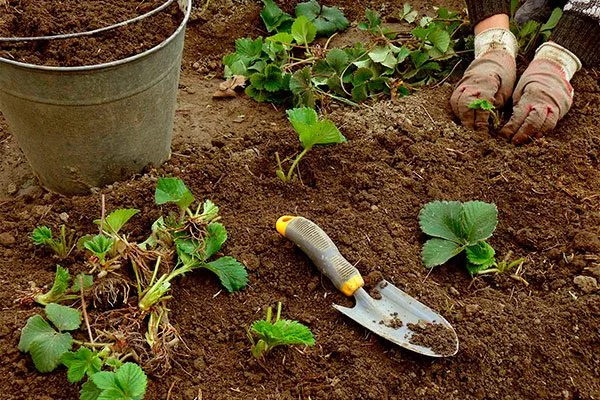
Other actions:
- Creating a protective cocoon. Place some damp nutritious peat substrate or soil from the garden bed in your palm and press lightly, forming a cocoon.
- Straightening the root system. Place the seedlings on the prepared cocoon so that the roots lie neatly on the substrate and the root collar is above the edge.
- Formation of a protective cocoon. Add more soil, forming a moist protective layer around the roots.
- Transplanting a seedling into a hole. Transfer the seedlings into the hole in a formed cocoon, add substrate up to the level of the root collar, compact and water generously.
How to care for Rumba strawberries?
Care procedures are fairly simple and standard. However, they do have varietal characteristics that are important to note:
- Watering. In moderate weather, water the beds once a week. During hot and dry periods, increase the frequency to 2-3 times. Apply water after the top 10 cm of soil around the plants has dried out, but moisten the soil mixture to a depth of at least 20-25 cm. After watering, it is recommended to loosen the soil and remove weeds.
The optimal method of irrigation is drip irrigation. Installing a drip irrigation system will save time and effort, reduce the risk of plants drying out or overwatering, and prevent the development of rot. - Top dressing. To obtain a good harvest of berries, starting from the second year after planting, the plants need to be fed:
- In spring, nitrogen compounds (mullein, bird droppings, compost) are added to stimulate the growth of green mass.
- In summer, during flowering, mineral complexes based on potassium and phosphorus compounds are added to increase yield and improve the taste of berries.
- In autumn, use liquid mullein or bird droppings.
- Mulching. To protect the fruit from dirt and prevent it from rotting, mulch the beds with black agrofilm or straw, which will further help inhibit weed growth and retain moisture in the soil longer.
- Loosening and weed control. Weeds steal nutrients from crops and create shade, preventing them from receiving sufficient light and heat. An effective weed control measure is to plant buckwheat in the garden beds a season before planting strawberries.
- Moustache removal. The tendrils that form on the shoots draw nutrients from the mother plant, reducing yield. They should be removed promptly. If the goal is to produce rosettes for propagation, leave a few bushes and break off the flower stalks, which encourages vigorous tendril formation.
Pest and disease control
The main strawberry pests attack the leaves and stems of the plant, hindering its growth and even potentially destroying the crop. These are the insects to watch out for:
- Spider miteSigns of damage include slow plant growth, pale and dry leaves, and poor new growth. Control methods: After harvest, treatment with Karbofos, Neoron, Omite, or Fitoverm is recommended, as well as irrigating the plants with hot water (80-85°C).
- Nematode. Signs of damage include darkening leaves and plant growth cessation. Flower stalks and buds become deformed, thickened, and shortened, while petioles and tendrils turn red. Control measures include removing affected bushes.
- Raspberry-strawberry weevil. Signs of damage include visible damage to leaves and flower stalks. Control methods include spring treatment with Actellic or Aktara, as well as mulching with spruce or pine needles.
Plants should be treated before budding or after harvest. Additionally, the following preventative measures can be taken:
- Autumn deep loosening of the soil in berry fields.
- Removing dry and pest-damaged leaves.
- Destruction of diseased plants.
- Soil moisture regulation.
Rumba is resistant to powdery mildew and brown spot, but can be affected by gray mold. Leaves and fruits become covered with brown spots and a gray coating. To prevent the disease, harvest the berries promptly, remove weeds, and, if necessary, use covering material during rainy periods. In the spring, spraying the bushes with Azozen is effective.
Harvesting and storage
The fruits are harvested as they ripen, carefully separating them along with the stems for longer storage. Berries are picked in the morning after the morning dew has dried, with preference given to berries lying on a layer of mulch or litter.
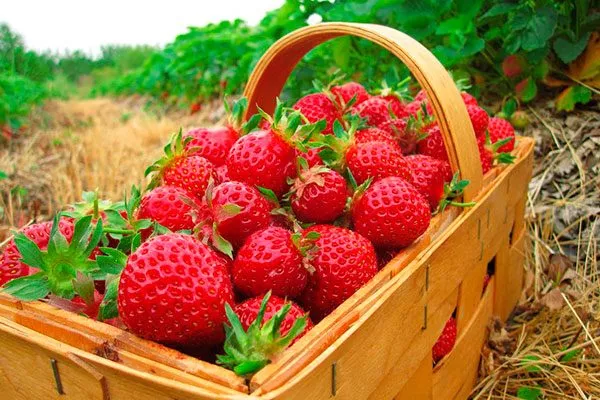
Rumba berries, due to their density, can be layered in the freezer, but the best method is as follows:
- collect together with the stalk, which is removed before freezing;
- the fruits are lightly washed and laid out on paper towels to dry;
- then spread in one layer on a tray or wide plate and place in the freezer;
- after 6-8 hours of freezing, the strawberries are poured into a plastic bag or cling film;
- return to the freezer.
Reproduction
The simplest method is propagation by runners, in which young shoots are separated from the mother plant. Dividing the bush into sections is possible, but this method is only used for healthy, three-year-old plants.
Reviews
To care for the Rumba strawberry, it's important to water it regularly, especially during dry periods. Fertilize with organic fertilizers and monitor the foliage, protecting the plant from pests and diseases. For this, the bushes will reward you with an abundance of delicious, very sweet berries with a strawberry aroma and flavor.