
The Rubin strawberry has a unique pineapple-strawberry flavor and aroma. It belongs to the everbearing variety, which was introduced several years ago, in 2011. It has already won an award at the international exhibition "FleuroStar." It is a late-ripening variety.
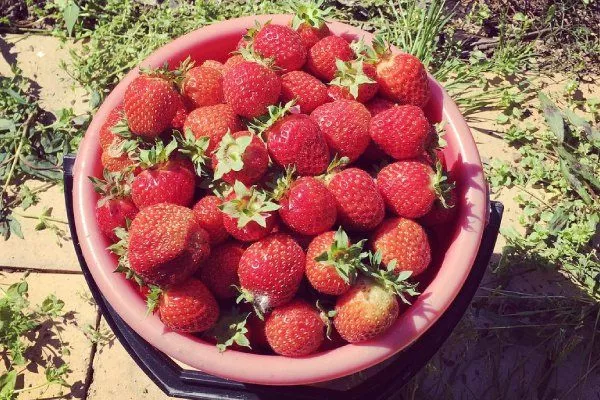
Description of the variety and its brief characteristics
This variety isn't considered widespread in our country, but many private farmers grow it. Varietal characteristics:
- the height of the bush varies from 40 to 50-55 cm, its width is approximately the same;
- the stems are not too thick, so the branches spread out to the sides and are considered very spreading;
- the leaves are huge, making the bush look lush, their color is classic green;
- the number of flower stalks on one plant varies – from 10 to 25 pieces;
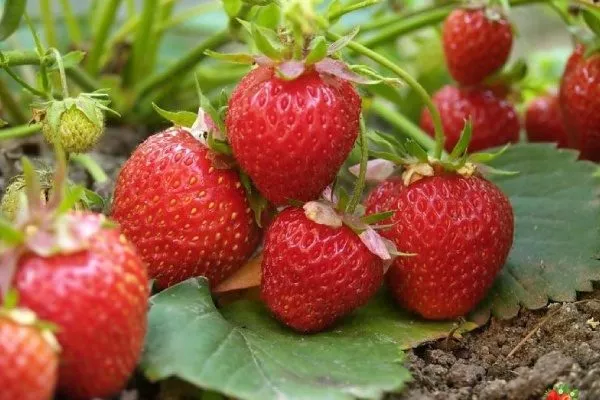
- the color of the fruits is rich, with ruby notes (red-burgundy);
- the weight of the berries depends on growing conditions, so it ranges from 40 to 100 g;
- berry shape – standard conical-round;
- the pulp is very juicy and sweet, therefore the density is of moderate type;
- fruiting occurs throughout July;
- The variety is easy to transport over long distances, as it has good shelf life, but only if stored properly and packed in containers in a maximum of 3 layers;
- The fruits are easy to collect as they easily separate from the bush;
- good winter hardiness, so it can be grown in the conditions of the middle zone;
- If agricultural requirements are met, bushes are not susceptible to diseases and pests.
Advantages and disadvantages of Rubin strawberries
In the short time since the variety's cultivation, gardeners have appreciated both its positive and negative qualities. Rubin's advantages:
Landing rules
Rubin strawberries prefer loamy or sandy loam soil with a neutral to slightly acidic pH. The soil should be rich in nutrients, well-aerated, and moist, allowing water and air to pass through easily.
- ✓ The soil pH level should be strictly within 5.5-6.5 for optimal nutrient absorption.
- ✓ It is mandatory to have a drainage layer at least 15 cm thick to prevent water stagnation.
Please pay attention to some nuances of the variety when planting:
- Before planting, add organic fertilizers – humus and charcoal – and mix them thoroughly into the soil.
- Seedlings should be planted in spring or autumn, when the air temperature is optimal and the soil retains the necessary moisture.
- Before planting, the roots of the seedlings should be soaked in a solution that stimulates the growth and development of the root system.
- Tear off the lower leaves, leaving only the central part.
- The distance between strawberry plants should be 35-45 cm within a row and 50-60 cm between rows. This spacing is necessary to ensure each plant has sufficient space to nourish, grow, and bear fruit.
- After deepening the seedling into the hole, it is watered, the roots are carefully compacted and covered with mulch.

Plant care tips
Ruby requires careful care when grown indoors. Otherwise, the bush won't reach its full potential—the berries may become sour, the yield will decrease, and the fruit will become smaller. Despite this, the rules are standard.
Watering and fertilizing
Strawberries need to be watered once a week at moderate temperatures, and more often in hot weather. Fertilize at the beginning of the growing season, before budding, and after flowering, using organic and mineral fertilizers according to the instructions.
- ✓ The water temperature for irrigation should not be lower than 18°C to avoid stress on plants.
- ✓ Watering should be done early in the morning or late in the evening to minimize evaporation.
Loosening and weed control
If the soil isn't covered with mulch to help retain moisture, it's necessary to loosen it after each watering and simultaneously weed to remove emerging weeds. To make maintenance easier, you can use natural mulch, agrofibre, or black film to prevent weed growth and retain soil moisture.
Removing antennae
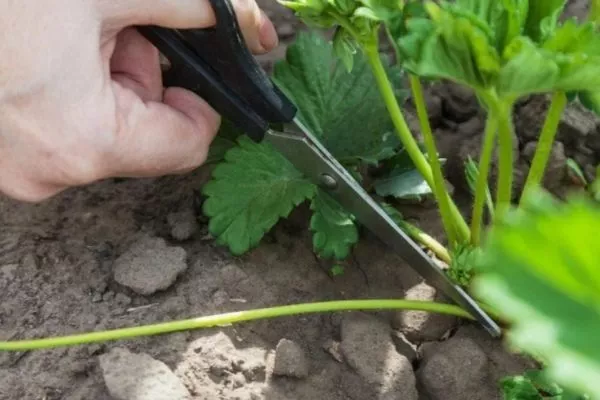
Whiskers deplete nutrients that are critical for berry formation. All long shoots not used for propagation must be pruned as soon as they appear.
Preparing for the winter period
In the fall, strawberry beds should be thoroughly cleared of dry leaves and old mulch, replacing it with fresh mulch. The winter layer should be at least 10-20 cm thick, depending on climate conditions and the upcoming winter weather.
Disease and pest control
Although the Rubin variety is resistant to most diseases, preventative treatments are recommended before signs of infection or pest infestation appear. Chemical pesticides can be used before fruit set, but only biological treatments are permitted during fruit ripening.
The nuances of reproduction
Rubin strawberries are propagated using rooting runners, which are dug into the ground near the bushes in the spring. The runners are watered and fertilized along with the parent plants throughout the season, and in the fall, the rooted runners are dug up and replanted.
Collection and storage
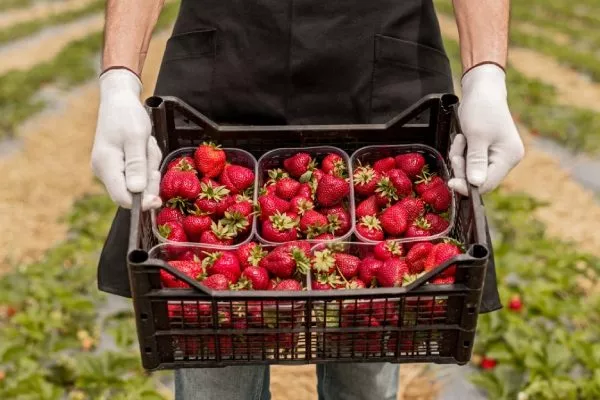
Berries should be picked when they reach technical or biological ripeness, avoiding overripeness, as such fruits are not suitable for long-term storage and transportation. Only whole, undamaged berries are selected, placed in baskets or plywood boxes, and stored in a cool, dark place with moderate humidity.
Reviews
The Rubin strawberry is not particularly demanding in terms of care – simply remove rapidly growing runners promptly, mulch the area around the trunk, and water it during hot weather. This variety is characterized by good winter hardiness and can resist diseases and pests, but requires ample planting space.