
A bountiful summer strawberry harvest is the result of proper fall and winter care. The process isn't difficult. The key is to ensure you're harvesting and fertilizing your strawberry beds at the right time, based on the specific characteristics of your varieties.
When to start preparing strawberries for winter?
The timing of autumn gardening procedures depends on the region where the garden plot is located. It's important to determine the right time to allow the bushes to recover and strengthen after pruning and replanting. Delayed preparations can cause the berries to freeze, weakening, becoming diseased, or dying.
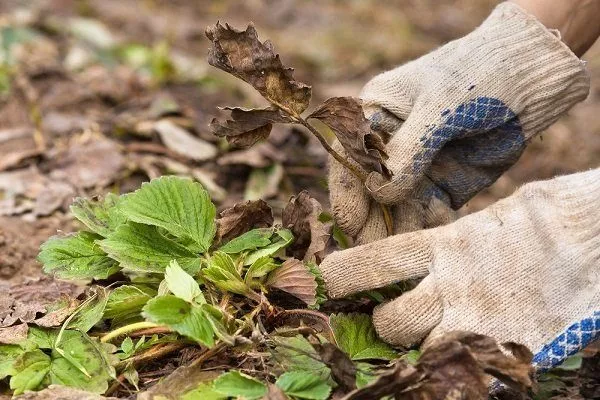
Cleaning times in different regions of the country:
- In the Moscow region. This is a region where warm summers quickly and abruptly give way to cold weather. It is recommended to begin all preparatory activities as early as early September.
- In the Urals. Prune away damaged leaves in the second half of July. Then clear the beds of dead wood. Pruning can begin in late August.
- In Siberia. Harsh climate conditions allow for autumn preparations to begin immediately after harvest. In early August, it's recommended to remove old leaves from the lower rows and flower stalks. Until the cold weather sets in, all that remains is periodic watering and fertilizing.
- In the Leningrad region. High humidity promotes the rapid development of fungal diseases and plant rot. Old leaves, dried flower stalks, and runners can be removed from the garden bed starting in the second half of August.
- Other regions. The southern regions of the country, including Crimea and the Krasnodar Krai, are the last to begin autumn berry processing. Here, gardeners begin their work in early October.
How to properly care for strawberries in autumn?
Novice gardeners often make mistakes when working with strawberries.
It is forbidden:
- trim bushes close to the roots;
- stop watering after harvesting berries;
- It is premature to cover with thick film (if the weather is still warm), etc.
This leads to a decrease in garden yield the following year. To avoid this, it's important to learn the nuances of autumn plant treatment.
Cleaning and weeding beds
The first thing to do when carrying out autumn activities is to get rid of weeds. Grass prevents proper ventilation of berry crops and robs them of some of their nutrients. It's best to weed as soon as possible. It's recommended to do this in late summer.
Avoid pulling weeds in the fall. You risk damaging the root system, which won't have time to fully recover before the cold weather sets in.
Trimming
One of the most contentious issues among gardeners is whether to prune strawberries. Experienced gardeners claim that after pruning, the plant will devote all its energy to forming new foliage. By the time the weather gets colder, the berries will be weakened.
Opponents of the procedure remove leaves, leaving only low stems, only if signs of damage or disease are noticed on them.
To perform partial pruning, do the following:
- Prepare pruning shears or sharp garden shears. Dip the tool in the disinfectant solution for a few seconds. Wear gloves to protect your hands.
- Carefully trim away dry, weakened, and damaged leaves. Remove any leaf blades with red discoloration or spots.
- Place the waste in a container and take it outside the plot. Do not leave it in the garden bed or between rows. This will cause rotting, which will spread to the healthy parts of the plant. Bacteria, which are not always beneficial to the plant, also thrive under rotted cuttings.
It's best to leave the large, lush leaves alone. In winter, they will provide reliable protection from frost and wind.
It's best not to prune everbearing varieties. This is because strawberries produce fruit until frost. Removing foliage in cold weather will prevent the plant from recovering. However, removing leaves showing signs of disease or damage is essential. This can be done on warm, dry days during the fruiting period.
An experienced gardener will discuss the pros and cons of pruning strawberries for winter in the following video:
Loosening and hilling
Late tillage can negatively impact the root system of berry bushes. However, this procedure helps oxygenate the soil, which will positively impact plant growth and development. The golden mean is to loosen the soil between the rows at the end of August.
Hilling is a necessary procedure. During the summer, the plant develops new root shoots, which form at the top of the rhizome. If hilling is not done at the end of summer, the root system will be exposed and will freeze in the winter cold.
Watering
Watering is required until early October. In dry weather, a generous irrigation of the soil once a week is sufficient. The flow rate is 12 liters per square meter. Stop the irrigation once rain begins.
The water should be warm. The temperature should not be less than 18ºC.
Top dressing
The most favorable time for fertilizing berry crops is the second half of September or early October. Fertilize the soil after pruning.
The main goal of feeding is to increase the nutritional level of garden berries for the purpose of rapid recovery and improvement of winter hardiness.
Autumn feeding There are 2 types:
- Organic. The most common is mullein. This fertilizer helps restore microflora and provide nutrients. The preparation method is as follows:
- take 1 kg of organic matter and pour 5 liters of water;
- leave for 14 days;
- Next, prepare a working solution in a ratio of 1 liter of infusion to 10 liters of water;
- Use for root feeding at 0.5 l per bush.
- Mineral. Dilute potassium salt with water at a ratio of 20 g per 10 liters of water. Water the spaces between rows with the resulting solution. Superphosphate (10 g per 10 liters) can also be used.
It's important to apply the correct amount of fertilizer. If you use too little, the plant won't receive the necessary nutrients. Autumn treatments will be less effective.
Excessive mineral fertilizer application will lead to nitrate accumulation, which will negatively impact the growth of berry bushes and the quantity and quality of the future harvest. Excessive organic nitrogen-containing additives will stimulate crop growth when they should be dormant.
Strawberry processing
Pre-winter treatment of strawberries against pests and diseases eliminates existing problems and provides preventative measures for the future harvest. The best time to do this is August, after the last harvest of berries.
From diseases
The most common disease is spotting. It can be treated with a 1% Bordeaux mixture solution.
Do the following:
- Dissolve 100 g of the active ingredient in 2 liters of water. It's best to use warm water, no more than 50ºC.
- Mix the contents thoroughly until a homogeneous solution is formed.
- Add cold water to bring the volume to 5 liters.
- In a separate container, combine lime according to the instructions so that the total amount equals 5 liters.
- Mix the two solutions. It's best to use a plastic or enamel container, as a metal one will cause oxidation.
Spray the strawberry bush with the resulting solution. Apply immediately after preparation. Apply in the morning, evening, or during the day on cloudy, dry days. If it rains after applying the solution, repeat the procedure.
From pests
The most common strawberry pests are spider mites.
You can get rid of them, as well as other insects, in the following way:
- Dissolve 2 tablespoons of vegetable oil and the same amount of wood ash in 10 liters of water.
- Pour in 2 tablespoons of vinegar.
- Grate 20 g of soap (preferably laundry soap). Add 2 tablespoons of the ingredient to the total mixture. You can also use 2 tablespoons of liquid soap.
- Mix the fertilizer thoroughly until a uniform consistency is achieved.
Spray the bushes and the surrounding soil with the solution. Apply in early October (2-3 weeks before the expected frost).
Frost protection
One of the most important procedures in the fall is protecting strawberries from freezing. To achieve this, it's necessary to provide reliable shelter from frost and snow. Mulching or agrofibre can help solve this problem.
Mulching
In the second half of August, mulch should be laid.
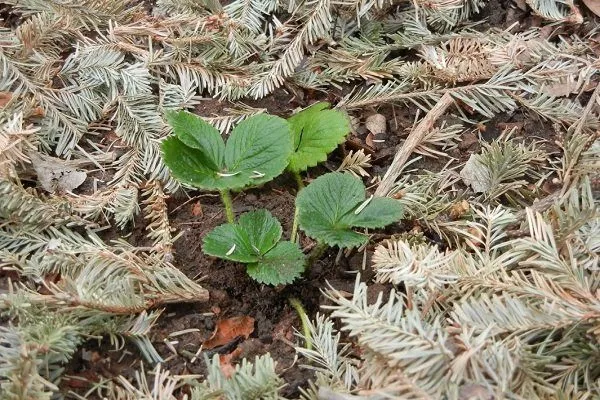
The following are suitable for this purpose:
- mown grass, which has been pre-sorted, shaken, soaked and dried in the sun;
- needles;
- tree bark crushed into large pieces;
- wood shavings or coarse sawdust.
- ✓ Make sure the mulch is free of weed seeds.
- ✓ Make sure the mulch material is well-ventilated.
- ✓ Ensure that the material is free of pests before use.
Peat can be used, but in small quantities. Otherwise, the soil will become over-acidified.
Mulching is done like this:
- Weed and loosen the strawberry beds.
- Spread a layer of mulch approximately 2 cm thick on the soil around the bushes and between the rows.
Agrofibre
It's best to transplant strawberries in the fall under agrofibre. The material will protect the plants from frost in winter and from harmful vegetation in the spring.
Boarding procedure:
- Clear the soil of weeds.
- Dig it up.
- Loosen the soil.
- Apply fertilizer.
- Spread the agrofibre according to the size of the bed.
- Make holes in it where the wells will be located.
- Plant the strawberry seedlings in a new location.
Features of preparing different varieties for winter
The rules for preparing strawberries for winter are identical for all berry varieties. There are only minor nuances for regular and everbearing varieties.
Normal
The berry begins bearing fruit early and finishes yielding by the end of July. Basic winter preparation can begin as early as August.
This variety tolerates winter well. A plant-based mulch, such as pine needles, is suitable for covering. This should be applied after the first frost.
Remontant
Everbearing strawberry varieties continue to bloom until the cold weather sets in. It's recommended to begin preparing for winter no earlier than September.
This variety should be well-watered before winter. Regular watering is necessary, with 5 liters of water per square meter, morning or evening.
Plants usually don't survive winter well. They need to be properly covered. For this purpose, use a thick layer of straw or dry leaves.
Tips from experienced gardeners
Experienced gardeners recommend taking several important nuances into account when preparing strawberries for winter.
Subtleties of processing:
- For the first time before winter, prune only one row of plants, leaving the rest unchanged (this will help determine which plants survived the winter better);
- In autumn, you cannot use fertilizers containing chlorine and large amounts of nitrogen;
- It is not recommended to transplant into frozen ground (if you are unable to do this in time, it is better to postpone the procedure until spring);
- As snow falls, shovel it onto the strawberry bed (it will serve as additional cover).
You can find more tips from experienced gardeners in the following video:
Pre-winter strawberry treatment will allow the crop to awaken more quickly in the spring. It will also contribute to a high-quality, abundant summer harvest, as the buds are formed in the fall.
This fall, I followed your advice on preparing strawberry bushes for winter. Thank you, it gave me something to think about—I realized I made mistakes in previous years, which is why I was losing bushes by spring. I didn't know I needed to treat pests, too. But it's true, many of them overwinter just fine, especially under a thick layer of mulch and agrofibre.