
For many gardeners, the term "strawberry" typically evokes images of red berries, but there are varieties that produce fruit in other shades, such as yellow. These berries are just as sweet and flavorful as their red counterparts, and their distinctive feature lies solely in their color. There are many popular varieties of yellow-fruited strawberries.
Features of yellow-fruited strawberries
Plant breeders are constantly searching for and creating new plant varieties and hybrids. Their primary goal is to develop high-yielding crops that can withstand adverse weather conditions and diseases.
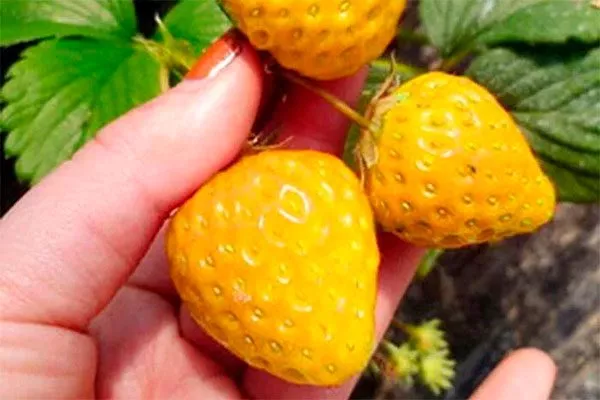
Appearance plays an important role, so scientists are experimenting with creating berries with unusual colors. This is how yellow strawberries emerged—with their bright golden berries and fruity aroma and flavor.
Features of yellow-fruited varieties:
- The absence of components responsible for the red color of strawberry flesh and skin. In regular varieties, the fruits first turn green and then, as they ripen, turn red (or another shade) due to special proteins. Studies have shown that these proteins can cause allergic reactions.
- Yellow varieties lack the proteins responsible for the red color, and even during the ripening process, they are not synthesized. This results in green berries not turning red, but rather taking on a whitish or yellowish color, depending on the variety.
- The color of the berries depends on the chemical composition and genetic characteristics of the pulp, which do not change during cultivation. Therefore, ripe fruits acquire a yellowish or lemon-colored hue.
- ✓ Consider the climatic conditions of your region to select a variety with suitable resistance to diseases and frost.
- ✓ Pay attention to the soil type preferred by the chosen variety to ensure optimal growing conditions.
The most popular varieties
For many gardeners, yellow-fruited plants are exotic, although their care is essentially the same as that required for regular strawberries. Despite this, there aren't many hybrids and varieties with yellow fruit available on the market. Below are several well-known varieties cultivated in Russia.
| Name | Ripening period | Disease resistance | Features of taste |
|---|---|---|---|
| Yellow miracle | Early | High | Sweet with hints of pineapple |
| Goldfinch | Average | Average | Sweet with a bright aroma |
| Golden dessert | Average | High | Sweet with strawberry aroma |
| Weiss Solemacher | Early | High | Sweet with a slight sourness |
| Pineberry (Pineapple) | Early | Average | Sweet with a hint of pineapple |
| White soul | Early | High | Sweet with hints of pineapple |
Yellow miracle
This is a remontant, all-purpose variety, and its characteristics are impressive. Distinguishing characteristics:
- The berries are white or light yellow, and the bushes are compact, not exceeding 15 cm in height, with bright green, dense leaves.
- Large, snow-white flowers and tall stems help the berries stay high above the ground, minimizing the risk of rot.
- Up to 1000 small berries ripen on the bushes, each weighing up to 10 g.
- The shape is elongated and conical, and the light yellow hue resembles the color of a peeled banana.
- The berries have an intense sweet taste and aroma with light notes of pineapple.
- Their juicy flesh and distinct strawberry flavour make them ideal for eating fresh or for making aromatic strawberry jam.
- The seeds are clearly visible on the surface of the berry, which gives it a characteristic appearance.
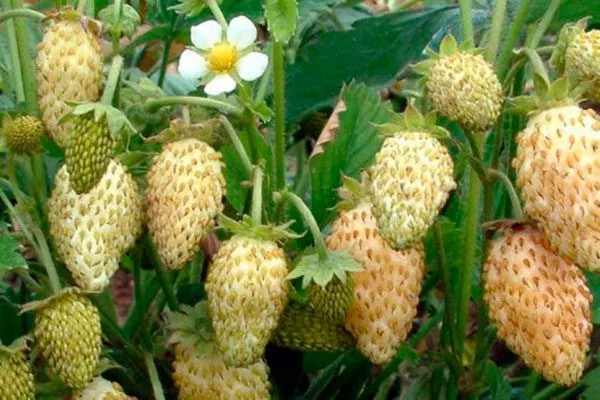
This variety bears fruit continuously throughout the season, and its yield is high thanks to its compact bushes. With proper care, each bush can produce up to 10 kg of berries over the entire ripening period.
Goldfinch
This variety was bred by S. V. Maksimov, N. N. Klimenko, and O. A. Elizarov. It boasts excellent varietal characteristics. It has become popular due to its high yield, winter hardiness, and excellent berry flavor.
Distinguishing features:
- The bushes are upright and well-foliated, dense, 14 to 20 cm high, with green, slightly wrinkled leaves.
- Strawberries do not form runners, which makes them easier to care for.
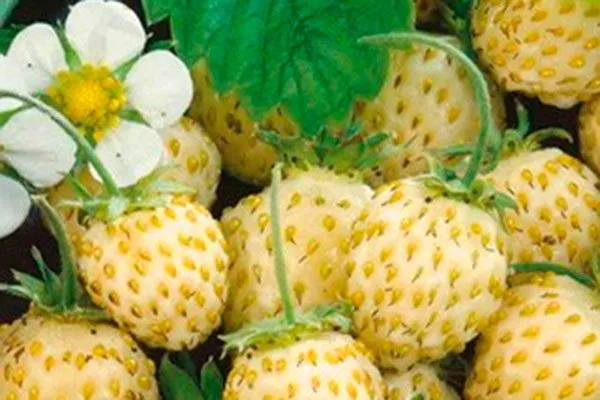
- The berries are whitish-yellow in color, conical in shape, small in size (1.7 g), and have a sweet taste with a bright aroma.
- The flesh is whitish, juicy and tender.
- Based on the tasting results, this variety received a score of 4.4 out of 5. It is rich in vitamin C (82.4 mg%) and contains 7.6% sugar and 0.6% acid.
Yields reach 75.2 centners per hectare thanks to the plant's high fertility and long fruiting period. This makes this variety very attractive for commercial cultivation.
Golden dessert
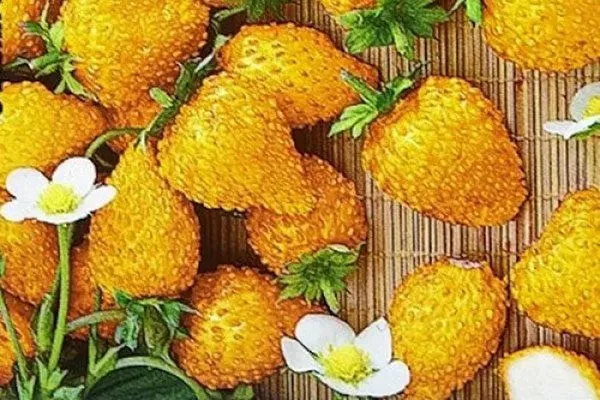
The entire summer season is filled with aroma and flavor thanks to this hybrid garden strawberry. Its name comes from the unusually sweet taste of its fruits, which sparkle like little suns from beneath the green foliage.
External characteristics:
- Plants reach a height of 20-25 cm, with rounded, rich dark green leaves.
- The buds are located on strong stems, and the petals are white.
- The berries ripen in mid-June and, under favorable conditions and care, continue to delight until the beginning of October.
- The shape is conical, slightly pointed at the bottom, their weight is 2.5-3 g.
- The taste is sweet, with a distinct strawberry aroma.
The crop is not afraid of slight frosts, which allows it to bear fruit in the middle zone until the very frost.
Weiss Solemacher
The Weiss Solemacher strawberry is a low-growing variety bred in Germany. The bushes are compact and semi-spreading, reaching a height of 15-20 cm.
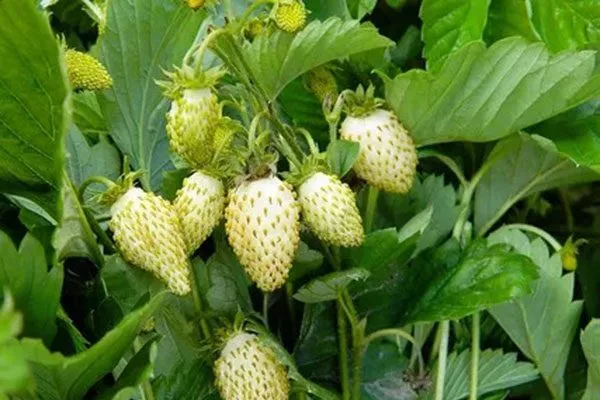
Other distinctive qualities:
- The berries are conical in shape and creamy white in colour, weighing 4-5 g.
- The taste is excellent, with a balance of sweet and acidity, with a delicate hint of pineapple.
- The pulp is white, juicy, tender and loose, aromatic.
This early-ripening variety begins bearing fruit as early as early June. Thanks to its long fruiting period, it offers delicious berries until frost sets in.
Pineberry (Pineapple)
The Dutch hybrid Pineberry is everbearing, allowing for two harvests per season. The bushes are larger than average, reaching 20-30 cm in height, with a green, pubescent rosette of leaves. The seeds are burgundy-red.
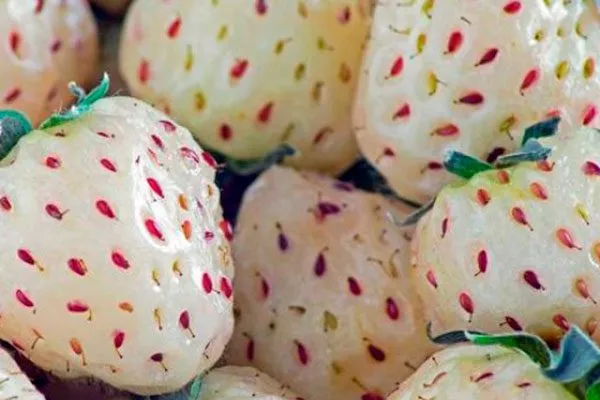
Features of the culture:
- It is famous for its excellent taste characteristics, with a distinct pineapple flavor and tropical mango aroma.
- The berries are small, weighing up to 30 g and 1.5-2.5 cm in diameter, with white skin and slightly cream-colored flesh, sometimes with a slight orange tint.
- The pulp is slightly watery, a characteristic that appears with excessive watering.
- Although the yield is high, the variety does not transport well, making it unsuitable for commercial cultivation. Approximately 1 kg of fruit can be harvested per square meter, but this figure can be higher in greenhouses.
White soul
The unique berry color, interesting aroma, and compact bush make this variety special. The plant height does not exceed 15 cm, making it an ideal choice for those with limited space.
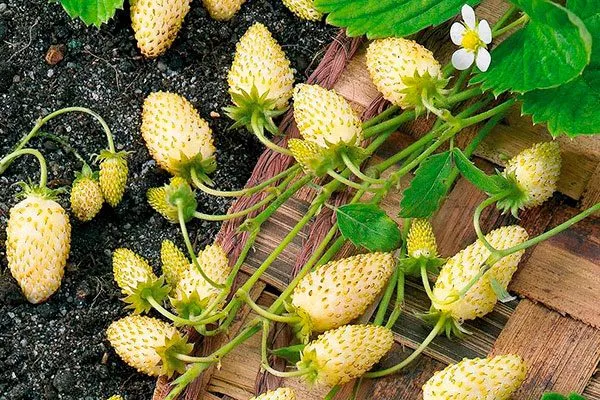
Distinguishing qualities:
- The main advantage is the unique taste.
- The berries are conical in shape and weigh about 5 g.
- The pulp is juicy, pleasant to the taste, and when fully ripe, acquires sweet notes of pineapple.
It's an early strawberry variety, and its everbearing nature is one of its distinctive features. This means that after the first fruiting cycle at the beginning of summer, it continues to produce fruit until autumn.
What to pay attention to when growing?
Caring for yellow garden strawberries is no different from caring for red varieties. Basic growing methods are standard. However, these plants can have problems with absent or insufficient runners, so they are often propagated using purchased seedlings from nurseries or grown from seed.
Reviews of varieties
Yellow-fruited strawberry varieties delight with their sunny hue and impress with a superb flavor that rivals that of red-fruited varieties. Growing and enjoying yellow strawberries opens up new horizons for gardeners, allowing them to reap bountiful harvests with minimal but timely care.