
Mulching is a cultural practice that plays a vital role in strawberry cultivation. The specifics of the process, the types of mulch used for strawberries, and step-by-step instructions are discussed further in the article.
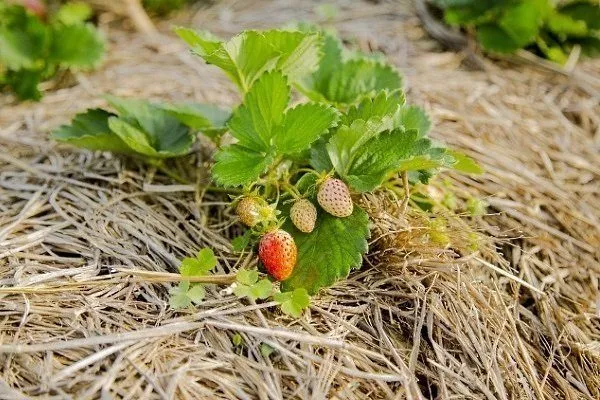
What is mulching?
Mulching is the process of covering the free soil surface between rows of berry and vegetable crops with a protective organic layer or film (fiber).
- ✓ Consider the acidity of the soil before choosing mulch, especially when using pine needles or sawdust.
- ✓ For regions with frequent rainfall, it is preferable to use materials that do not contribute to waterlogging, such as shredded bark.
The following positive aspects of mulch are noted:
- some of its species perform a nutritional function, enriching depleted soil;
- retains moisture, reduces its evaporation;
- in a mulched layer, sudden temperature changes are not so noticeable, so metabolic processes occur at an accelerated pace;
- prevents the growth of weeds, as well as the hardening of the surface layer and the formation of a hard crust;
- preventing the development of gray mold on berries, since they do not come into contact with the ground.
- Strawberries are mulched for the winter to prevent them from freezing and to enrich the soil with nutrients.
However, the procedure also has its disadvantages:
- This can encourage snails and slugs to appear in the area. On a hot day, wet mulch is often their only refuge, where they also find food—decomposing organic matter. However, there is a solution: in areas with a large mollusc population, use woody materials such as pine needles or sawdust.
- A layer of long-lasting mulch can be detrimental to plants during subsequent frosts. The above-ground part of the plant becomes the "weak link" and is extremely vulnerable to frost, as all the heat will be retained in the soil.
- Root rot and fungal diseases are common in summers with heavy rainfall or when applying mulch to heavy clay soils. However, choosing the right mulching method and layer thickness, along with regular monitoring of the site, can solve this problem. In light soils, the layer thickness should be 10 cm, in heavy soils, 5-8 cm, and in clay soils, the mulch layer should not exceed 2 cm.
- Some gardeners and vegetable growers believe that a mulched area attracts various rodents, birds, and insects. This is a highly controversial claim, as a garden with a variety of vegetable, berry, and fruit trees is already a magnet for a variety of creatures.
Mulching is done in several ways:
- Inorganic — covering the soil with film or fibrous cloth;
- Organic - filling the soil with organic material.
The choice of method depends on the type of soil, weather conditions and purpose.
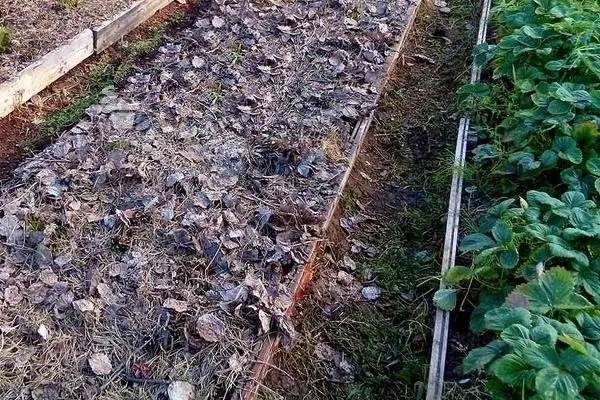
Experienced gardeners advise carrying out this procedure twice a year – in summer and late autumn.
Shredded materials are used for summer mulching. Strawberry bushes are covered with mulch when the first buds begin to form. This helps protect the flower stalks from touching the ground. The mulch is removed from the beds after the entire harvest or at the end of summer, placing it in a compost bin.
- Check the moisture level of the material before applying to avoid rotting.
- Make sure the mulch layer does not come into direct contact with the plant stems to prevent disease.
- Renew the organic mulch layer every 2-3 months to maintain its effectiveness.
Mulched strawberries are watered less - watering is reduced by 1/3, and is done in the morning so that the mulch has time to dry by evening.
Mulching based on organic materials
The following organic materials are used as mulch when processing strawberries.
| Name | Material type | Service life | Impact on soil |
|---|---|---|---|
| Sawdust and shavings | Organic | 2 years | Acidifies the soil |
| Humus and compost | Organic | Season 1 | Enriches the soil |
| Cones | Organic | For a long time | Protects from weather conditions |
| Coniferous litter | Organic | Season 1 | Increases acidity |
| Lowland peat | Organic | For a long time | Improves soil structure |
| Straw and hay | Organic | Season 1 | Extracts nitrogen |
| Weeds and mown lawn | Organic | Season 1 | Nourishes the soil |
| Fallen leaves | Organic | Season 1 | Improves soil structure |
| Crushed bark | Organic | 5 years | Protects the root system |
Sawdust and shavings
They are used for winter and summer mulching. It's best to choose sawdust from deciduous trees. In winter, it breaks down more quickly. However, it's important to remember that chipboard sawdust is not suitable for this purpose, as it contains harmful resins that are hazardous to humans.
Fresh sawdust should also be used with caution. It draws nitrogen from the soil, which is necessary in adequate quantities for strawberry growth and development, and acidifies the soil. To avoid negative impacts, water the sawdust with a urea solution (200 g dissolved in 10 liters of water). Alternatively, use sawdust that has rotted for several seasons without any concerns.
The mulching algorithm is as follows:
- the soil is cleared of weeds and loosened well;
- Place two layers of newspapers overlapping each other;
- pour a layer of sawdust or shavings.
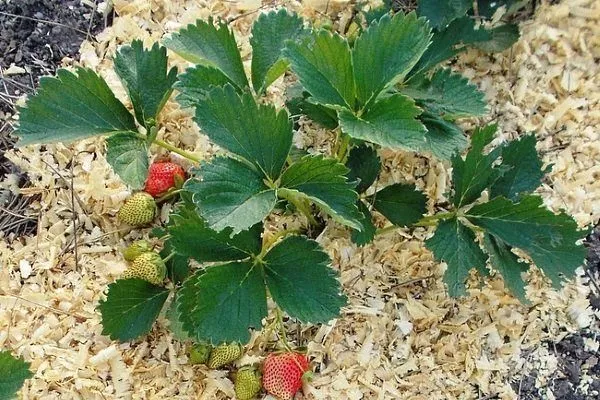
The mulch layer should be at least 5 cm thick and left for two years. During this period, the wood will completely decompose, and the process is repeated. Since sawdust absorbs water very well, it is necessary to water the berry plantation generously. Until the sawdust is sufficiently saturated with water, moisture will not penetrate the soil.
They're not suitable as a food source due to their relatively slow decomposition. However, their rough texture makes them an excellent deterrent to slugs and snails on their way to the bushes.
Humus and compost
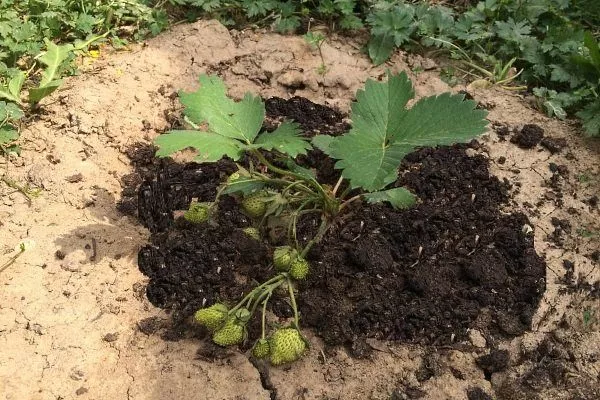
These are ideal winter mulch components. They warm the soil well and supply it with nutrients. The only drawback of this material is that it is quickly broken down by soil organisms, requiring regular replenishment. Before use, it should be sifted, removing stones and any stray debris. A layer of at least 5-7 cm should be applied.
Cones
If your plot is located near a forest, it's worth heading there and stocking up on pine cones. Mulch is collected from the ground and spread under the bushes in a thick layer—3-5 cm. It takes a long time to rot, so the layer needs to be renewed infrequently. It effectively protects the plants from adverse weather conditions, retains moisture in the soil, and gives the beds a unique decorative appearance.
Coniferous litter
Pine needles contain a high concentration of phytoncides, which have bactericidal properties. They reliably protect plants from pathogens and harmful insects.
In areas with hot summers, using pine needles is not advisable, as they do not prevent soil overheating or inhibit weed growth. Experiments have shown that to suppress weed growth, a pine mulch layer of at least 30 cm is needed.
Typically, the soil is mulched with yellowish pine needles, layered 3-5 cm high. In the spring, they are removed or incorporated into the soil.
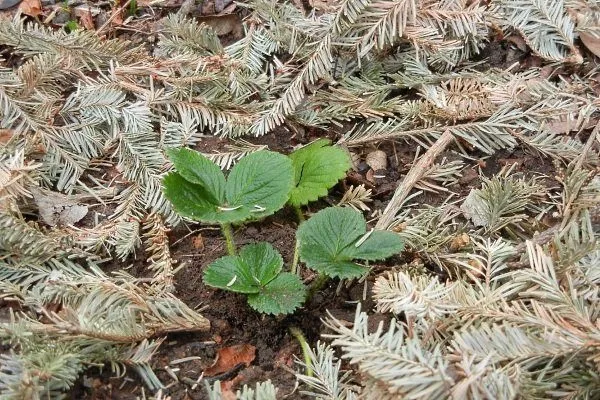
A significant drawback of pine needles is their effect on soil acidity. They increase it, so before applying mulch, slaked lime is first added to the soil. Then, twice a year, dolomite flour or ash are added, or alternated with other mulching materials such as straw, peat, or humus.
Lowland peat
Why should you choose low-lying peat over high-moor peat? High-moor peat significantly increases soil acidity, and if watered irregularly, it forms a hard crust that is difficult to wet.
Lowland peat protects the soil from temperature fluctuations and weathering, prevents weed growth, retains moisture, and positively impacts the structure and properties of the soil. For example, clay soils become loose over time, while sandy soils become water-retentive. Compacted or compressed peat is crushed to a free-flowing consistency before use. If it is overwatered, it must be dried. When mulching strawberries, apply a peat layer 6-8 cm thick.
Straw and hay
Experts don't recommend using hay. It quickly rots, decomposes, and compacts. Straw is a better mulch. It doesn't nourish the soil, but it insulates it and retains moisture. On the other hand, it actively draws nitrogen from the soil, so it's usually used in tandem with rotted manure or compost.
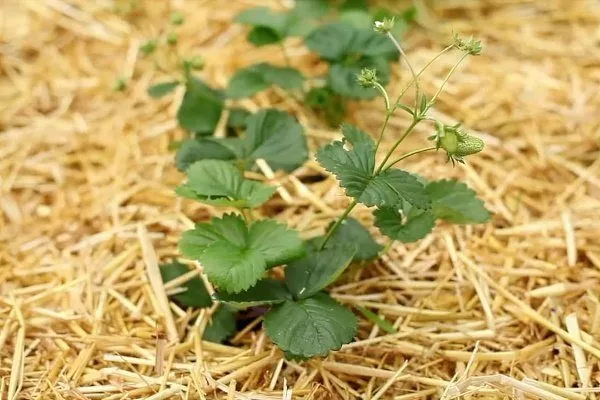
In late autumn, it's used to cover strawberries in warmer regions of the country to prevent winter frost damage. In central and northwestern regions, it's best to apply it in the spring, as winter mulching will prevent the soil from warming up properly in the spring, delaying plant development by at least two weeks.
Mulch is applied only after the strawberries have been fertilized. The straw layer should be 15-20 cm thick. Rodents love straw, and they happily build nests in it, so it's important to closely monitor the area.
Weeds and mown lawn
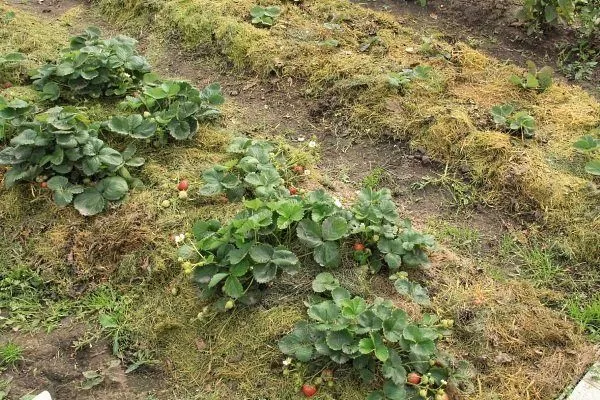
This material is always available during the summer and offers an alternative to straw, but when it decomposes, it also nourishes the soil. The green, seedless portion of weeds is placed under bushes to prevent hordes of weeds from overrunning the entire planting. Apply a 3-5 cm layer. To prevent the mown grass from becoming a source of fungal infections in rainy weather, dry it in the sun for 2-3 days before use, turning it over.
Fallen leaves
Leaves are collected either from your own garden or from the forest. They have no nutritional value, but they greatly improve the soil structure, making it looser and increasing air and water permeability. The layer should be at least 3-5 cm thick; this will protect the berry crop from drying out during hot periods, inhibit weed growth, and prevent contamination of the fruit.
Leaves are used only in the summer, as in the fall, with heavy rainfall, they rot and become a breeding ground for fungal diseases. Over time, they, like pine needles, begin to acidify the soil.
Leaves containing tannins inhibit crop development. Oak, willow, walnut, and aspen leaves are rich in these substances, so they are not used. Before placing leaves between rows, be sure to ensure they are free of pests and diseases. Many insects migrate to fallen leaves for the winter, and pathogenic microorganisms can also be found there.
Crushed bark
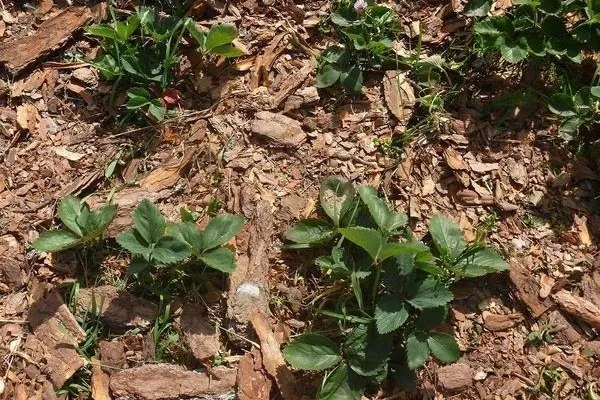
This is the most durable material, lasting about five years and applied in the fall. Larch or pine bark is ground to a medium or fine particle size. It contains few tannins, so it doesn't negatively impact plant growth or acidify the soil.
The mulch layer should be 5-7 cm thick. Bark protects the root system well from cold and overheating, but it does not retain moisture well. Strawberry plantations treated with bark require more frequent watering.
Inorganic mulch
Inorganic materials are also used.
| Name | Material type | Color | Functions |
|---|---|---|---|
| Film (agrofibre) | Inorganic | Black | Maintains water level |
| Non-woven materials | Inorganic | Different | Allows air and moisture to pass through |
| Cardboard | Inorganic | Brown | Economical and environmentally friendly |
Film (agrofibre)
Black polyethylene film is used for strawberries. The following advantages of this process are noted:
- the film maintains a constant water level in the soil;
- helps keep berries clean and of good quality;
- facilitates harvesting;
- increases soil temperature by 2°C;
- Bushes covered with black agrofibre take root faster.
Mulching of the area is carried out before planting strawberries as follows:
- the land is fertilized;
- they dig well;
- level and water;
- the surface is covered with film, the ends are secured at the edges;
- then cross-shaped cuts are made in it - at a distance of 30 cm in a row, between rows 40-50 cm;
- strawberries are planted in the holes.
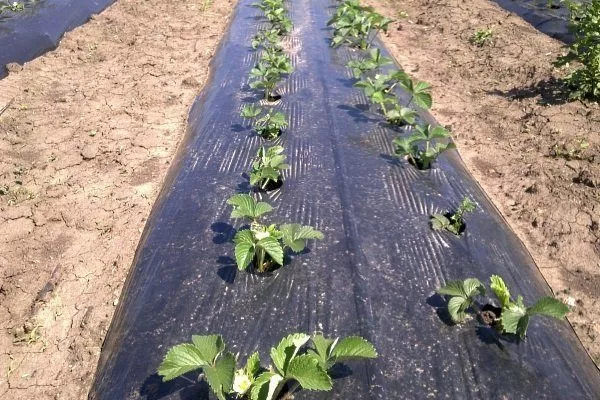
To ensure a long-lasting film, its thickness must be at least 30 microns. Its color is also a very important characteristic:
- Black film performs two functions at once: it warms the soil and prevents weeds from growing. It's suitable for temperate regions with short, variable summers.
- For southern regions, brown, gray, or two-color film—black on top and white on the bottom—is used. These colors help prevent the soil from overheating.
- White or transparent film is not suitable for mulching, as it does not prevent weed growth.
However, agrofibre also has its disadvantages:
- watering is done only through holes;
- If you overwater, condensation will accumulate under the film, which will cause root rot or the appearance of slugs;
- During spring frosts, condensation can lead to freezing or death of plants;
- rapid depletion of the soil occurs, a lack of oxygen is observed, since the film does not allow not only water, but also air to pass through;
- in hot weather it gets very hot, the root system overheats;
- The shelf life of the material is reduced by sudden temperature fluctuations and exposure to direct sunlight.
Non-woven materials
Experienced gardeners are increasingly using non-woven materials for mulch. They're more durable than film, but also considerably more expensive. They're breathable and moisture-permeable, allowing watering across the entire surface, not just in the hole.
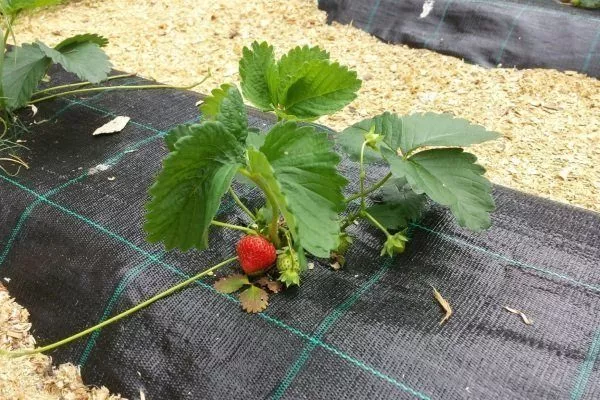
The following materials are available on the market:
- Russian production - agrotex and spunbond;
- Ukrainian - agrin;
- German - lutrasil;
- French - agril;
- Polish - plant-protects.
Despite the apparent diversity, they differ from each other only in the weaving and processing of polypropylene threads, but have the same functions.
The material consists of two layers: the first is highly permeable to moisture, while the second retains it. This is a major advantage during dry periods. However, during rainy summers, the soil becomes overwatered. For mulching, a non-woven fiber with a density of 60 g/m2 is sufficient. The fiber application procedure is the same as for film.
Cardboard
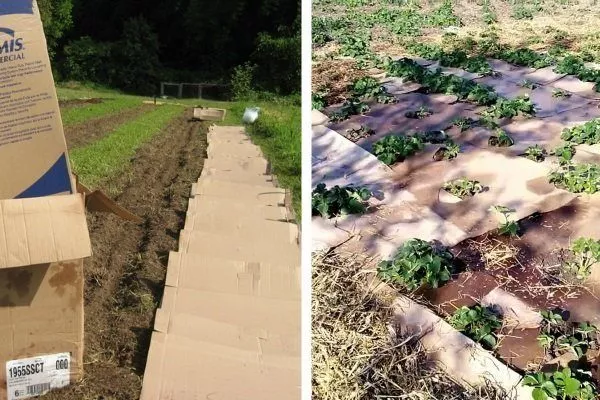
Compared to other inorganic methods, this is the most cost-effective and environmentally friendly method. Sheets of cardboard are laid over the entire area, overlapping (15-20 cm on each side), and a 10 cm thick layer of fertile soil is added on top. Leave the entire area for a week, and then begin planting berry seedlings.
To do this, use a shovel or knife to make holes in the cardboard with a layer of mulch, into which the plant's root system is placed. Cover the hole with fertile soil, compact it, and water thoroughly. Water directly into the hole, being careful not to get it on the cardboard to prevent it from becoming soggy and to prolong its life. After a season, the cardboard usually rots, so the process is repeated the following year.
Mulching is a fairly simple procedure, easily mastered by any novice gardener. Adhering to proper agricultural practices, choosing the right mulch, and applying the right thickness will only benefit strawberries and increase their yield.
I've never really thought about what to mulch strawberries with. I always thought it made no difference, so thank you for so much informative information. I think it's best to mulch with sawdust in the spring, and then with humus, compost, or peat before winter. After all, these materials retain and release heat. I'm completely against inorganic materials, though. I once covered the bushes with plastic, and the poor strawberries actually started to rot.