
The Marshall strawberry produces large, juicy, and sweet berries. It's easy to plant, grow, and care for. It's frost-resistant and resistant to major pests. This article discusses planting and care methods for strawberries.
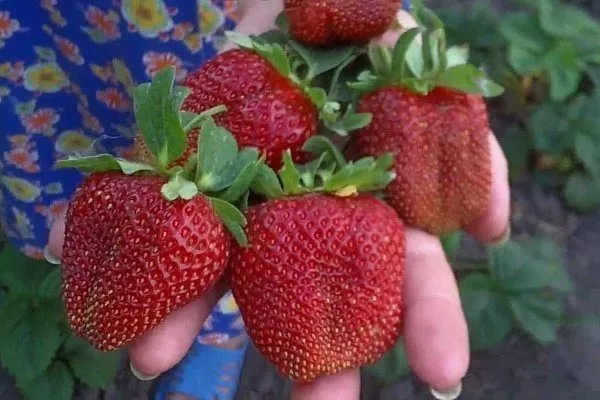
strawberry variety "Marshal"
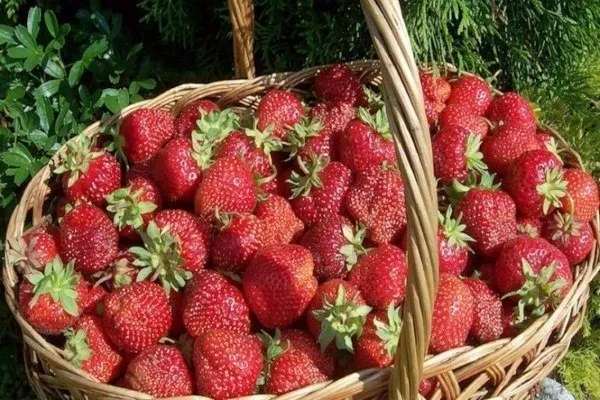
Due to the excellent taste of its berries, the popularity of the 'Marshal' variety is growing
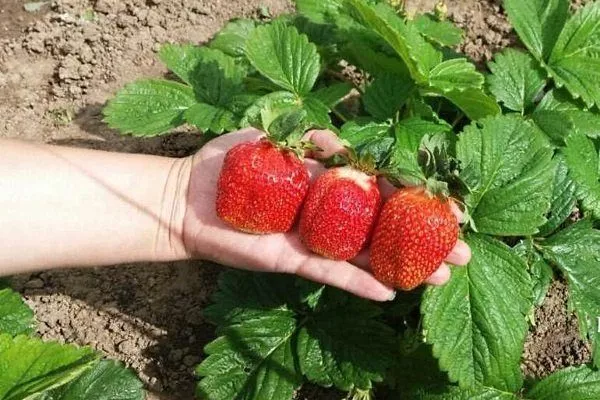
The 'Marshal' strawberry variety can easily survive even the hottest and rainless summers.
Description of the "Marshal" variety
The Marshal strawberry is a mid-season variety. It thrives and produces fruit in the cold Russian climate. It adapts well to a variety of weather conditions and soil textures, and is drought-tolerant. The summer harvest is high. The berries are larger than average in size, juicy, and attractive.
The variety was brought to our country after the Second World War from the USA, where it was developed by the American breeder M.F. Well at the end of the 19th century.
Features of the bushes
The Marshall strawberry grows up to 0.15 m. The plant has the following structure:
- the branches branch out widely to the sides;
- the stems are thick and dense;
- Leaves: large, light green in color; have a glossy sheen; are shaped like an umbrella; grow densely and protect the fruit from excessive sunlight and birds;
- the root is strong with numerous shoots;
- the peduncle consists of dense stems;
- they contain large flowers with a bright center;
- flowers rise above the bush.
The Marshal strawberry variety is characterized by the growth of numerous runners, making the plant easy to propagate. It's best to trim off excess runners during active growth and fruiting.
Productivity
A high-yielding variety: in a mild, warm climate and with proper care, a single tuber can yield over 800-900 g of berries. In warmer climates, the yield almost doubles.
The berry ripening period begins in June and ends in September. The Marshall strawberry begins bearing fruit in the first summer after planting, but the yield decreases with each subsequent harvest season.
It's best to pick strawberries in the afternoon. At this time, they contain less excess moisture and have a longer shelf life.
Berries
Fruit characteristics:
- large size;
- slightly elongated shape with a flattened tip;
- weight from 38 to 65 g;
- the appearance is rich poppy with a slight shimmer;
- solid from the inside, without voids;
- medium density consistency;
- when cut, the fruit has a less saturated color;
- the taste is sweet with a hint of sourness,
- the aroma is distinctly strawberry;
- The seeds are yellow, small, and are almost not felt when eating the berries.
Characteristics of the variety
Experienced amateur gardeners are increasingly choosing to grow Marshall strawberries due to their numerous advantages over other varieties.
Watch a review of the Marshal strawberry in the video below:
Advantages
The plant has a number of undeniable advantages:
- the berries are large with a pleasant strawberry flavor;
- grows in cold climates;
- easily adapts when planting;
- resistant to weather conditions and dry periods without loss of yield;
- has high yield stability;
- the berries ripen early;
- the harvest period is long;
- undemanding to feeding;
- the berries are protected by wide foliage that shelters them from the sun's rays;
- resistant to diseases and pests.
Strawberries are versatile: they are eaten immediately after picking and used for canning and freezing.
Flaws
The plant has some minor disadvantages:
- poor transportability of berries;
- decrease in yield after the first harvest season;
- formation of a large number of tendrils and rapid rooting of new tubers.
Planting strawberries
Planting the Marshall strawberry is the same as for other varieties. The best time is early spring, when weather conditions have stabilized. Read about how to plant strawberries in the spring. this article.
Some gardeners living in warm climates plant strawberries in late fall. However, this isn't the best way to ensure a good harvest. Young seedlings are at risk of freezing during the winter, which results from insufficient rooting due to the short time before winter.
For those who decide to plant in the fall, it's best to choose a time a few weeks before the onset of frost to allow the plant to adapt better.
Choosing a planting site and soil requirements
The Marshall strawberry will grow well if you choose the right planting location. It should be:
- well lit, not darkened by tree canopies;
- It is better to choose a place on the southern side of the plot, where the sun's rays warm the soil the most;
- with a flat surface, without slopes and lowlands, since during heavy rainfall it is necessary to avoid the accumulation of water;
- The area should be ventilated, but strong drafts should be avoided.
Before planting, pay attention to the crops that were previously grown. Avoid potatoes, zucchini, cucumbers, and tomatoes.
Recommended predecessor crops: onions, garlic, dill, parsley, radishes, horseradish, legumes, carrots, daffodils and others.
Soil requirements:
- The most suitable are: slightly acidic, loamy and sandy loam.
- Before planting, it is loosened to achieve lightness and moisture permeability.
- In the fall, add organic fertilizers such as compost or humus. For loamy soil, add sand, sawdust, and ash.
- ✓ Soil pH should be between 5.5-6.5 for optimal growth.
- ✓ The soil must contain at least 3% organic matter to provide nutrients.
When preparing the soil in the fall, it is dug up, roots, leaves and branches are removed to avoid the preservation of pathogenic organisms and subsequent infection of strawberry bushes.
Preparing seedlings
The best time to plant is the first few months after winter, when the plants are well established and developing. This will allow the strawberries to survive the cold winter.
Before planting, the root system of seedlings must be disinfected. Dip the roots in a weak solution of potassium permanganate for several minutes and rinse with clean water.
Planting diagram
The Marshall strawberry bush is quite large. During the summer, the upper part of the plant grows especially large and the root system develops. To ensure the plant's full development, it's important to maintain certain planting distances:
- plant seedlings every 1/4 m;
- leave a space of up to 0.8 m between the beds.
Strawberry bushes can be planted using the diagonal alternation method, adhering to the standard distance.
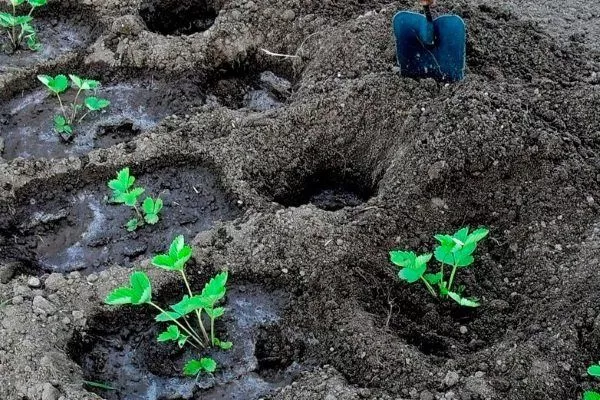
Planting strawberries
The procedure for planting seedlings is very simple to perform:
- Dig holes in the ground to a depth equal to the length of the seedling's root.
- Carefully place the plant in the hole, straighten the roots, and cover with soil. Deformed roots lead to slow growth and very small yields.
- After planting, water the plant generously.
- After some time, loosen the soil to allow moisture to reach the roots.
The favorable time for planting is evening and cloudy weather.
Care Features
To ensure your strawberry plant thrives in your garden and produces large, juicy berries, it's important to properly care for it. Timely harvesting is crucial for the health and full growth of your strawberry bush.
Overripe berries attract insects and small rodents, creating a breeding ground for bacteria and rotting processes.
Watering
The first heavy watering after planting is done in late spring, when active growth begins. Thereafter, water regularly as the soil dries out. This watering ends after the last harvest at the end of September.
Watering time: early morning or evening, after sunset. Allow the water to fully absorb. Evaporation during the day can cause burn damage to the stems and leaves.
Water the plant carefully: pour water under the roots, avoiding moisture getting on the leaves and flowers.
Watering frequency: In a moderate climate, once a week is sufficient. In summer and hot weather, increase watering by 2-3 times.
During dry periods strawberries are mulched: hay, sawdust or dry grass to prevent moisture evaporation.
Loosening
Don't allow the soil around the strawberry plant to harden. This will significantly reduce oxygen and moisture availability, causing the plant to wilt. To avoid this, loosen the soil periodically as needed.
Fertilization
In soil with sufficient fertilizer before winter, strawberries grow well and can do without additional feeding. If shoots have noticeably thinned, this indicates a potassium deficiency in the soil. A mineral fertilizer and wood ash should be added.
We recommend reading the article about spring feeding of strawberries.
For preventative purposes, organic and mineral fertilizers are applied. During the period of active growth in May, during berry ripening in June, and after the final berry harvest in September, it is recommended to use fertilizers to replenish the plant's strength.
| Fertilizer type | Recommended dosage | Period of contribution |
|---|---|---|
| Mullein | 1:10 with water | May, June, September |
| Wood ash | 100 g per bush | June, September |
Fertilizers are applied along with watering and soil loosening. Fertilizers used include: cow dung, bird droppings, wood ash, and weed infusions.
The Marshal strawberry variety is very sensitive to inorganic fertilizers. Incorrect application can cause severe damage to the root system.
Caring for strawberries after harvesting
In early autumn, after the period of active growth and fruiting has ended, strawberries continue to grow. New shoots and leaves appear, root growth continues, and even false flower buds begin to form.
During this period, the bush should not be completely pruned. Trimming off yellowed and drying leaves is permitted. Loosening the soil is essential. If pests or disease have damaged the above-ground portion of the plant, it should be cut off at the root.
When pruning parts of the plant, it is worth leaving about 3 cm of shoots from the root.
You also need:
- remove mulch that may contain pathogens;
- weed and get rid of all the weeds;
- loosen the soil;
- apply fertilizer;
- water generously;
- If necessary, treat with preparations against various pests.
When preparing strawberry bushes for winter, it's important to consider your climate zone. In colder regions, you'll need to cover the plants more thoroughly to prevent the roots from freezing.
Diseases and pests
The Marshal strawberry has good immunity to viral diseases and harmful pests. To prevent disease, plant marigolds, aromatic herbs, and garlic between the rows.
If a disease occurs, the bushes should be sprayed with a special compound purchased at any specialty store.

Sprays should not be used during flowering and harvesting. The berries absorb harmful compounds and, if ingested, can cause poisoning.
If the plant is infected with fungus, spray it with a fungicide and cut off all tendrils. Repeat the spraying if necessary.
If you're infested with strawberry mites, you need to thoroughly disinfect everything and dig up the soil. The mites are most active in late spring and summer and carry dangerous fungal diseases.
You can tell a strawberry plant is infested by mites by curled leaves only by mid-summer. Earlier, spotting the mites is difficult; they're invisible to the naked eye. If you don't disinfect or spray the plant with special products, the mites won't disappear on their own, and the plant will turn yellow, shrink, and may even die.
A whitefly infestation is one of the most devastating pests. Initially, they settle in the lower part of the bush as small insects, as they dislike sunlight. Their next life cycle is transformation into a butterfly. Its white wings give it its name. The butterflies parasitize on leaves and suck their sap.
Loosening the soil is the best prevention against whiteflies. Adults can be controlled by placing adhesive yellow plywood sheets between the beds.
Gardeners' reviews of the 'Marshal' variety
The Marshall strawberry is easy to grow and care for. The reward is juicy, large berries, which can be frozen if desired. This variety is quite resistant to temperature fluctuations, short-term droughts, and pests.