
Strawberries are a favorite crop for garden plots. When grown properly, a single bush can yield up to 15-20 berries, and if you choose large-fruited varieties, you can not only eat your harvest but also sell it. Maxim, one of the most popular varieties, is a large-fruited variety.
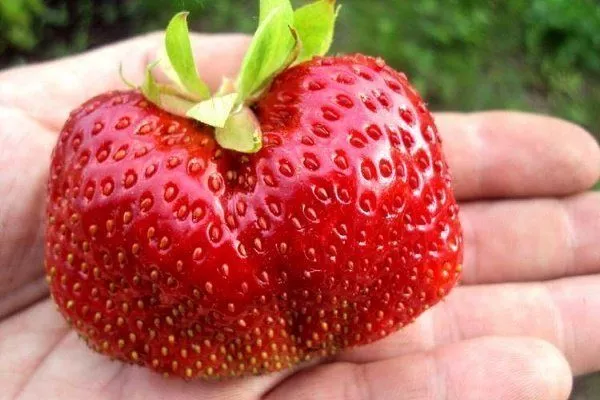
strawberry variety "Maxim"
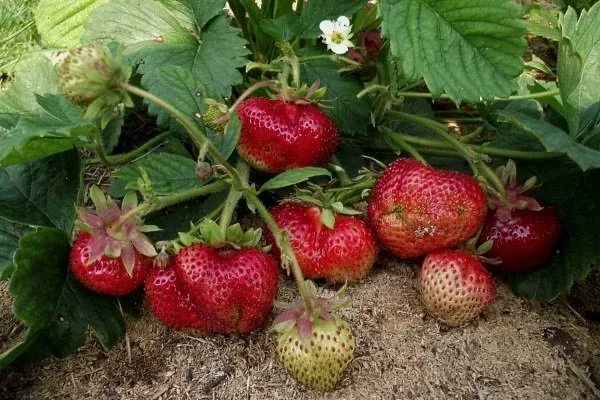
The Maxim strawberry is valued for its very high yield and large fruit size.
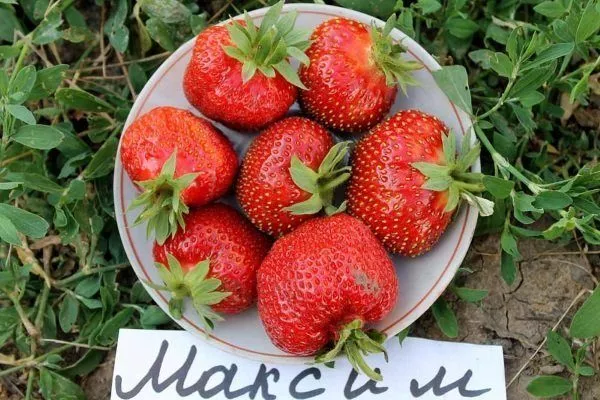
The berries of the Maxim variety have a dessert, pineapple-like flavor
Description and characteristics of the variety
The variety is also called "Gigantella Maxim," referring to the size of the fruit. This variety originated in Holland thanks to the efforts of breeders. Maxim's main advantages are high yields and ease of care. It is very popular in Russia and abroad.
Bushes
Maxim strawberry bushes need to be planted quite far apart because this variety has a developed root system. While the top, or stems with leaves, reach about 60 cm in diameter, the rhizome grows even further. It's best to keep the root systems of different bushes from intertwining.
The upper part of the plant has strong, fleshy stems covered with large leaves and flower stalks. The height is typically around 45 cm, but with good nutrition, the plant can grow up to 50 cm. Strawberries have numerous runners, making them easy to propagate by cuttings.
Cultivation
Strawberries thrive even when grown in the same spot, provided the soil is properly fertilized. However, experienced gardeners recommend not keeping Maxim in the same plot for more than seven years. Over this time, the bush becomes too old, its yield declines, and the plant becomes prone to disease. Furthermore, the soil becomes severely depleted. There are several solutions to this problem (it's best to combine them):
- Use new planting material regularly to ensure a consistently high yield. Use material from your own bushes, provided they are disease-free.
- Don't just fertilize, but also completely renew the soil where your plants grow. Periodically pull the plants out of the ground, dig the soil, remove a layer to a depth of about 10-20 cm, and fill the trench with humus or soil mixed with fertilizer. This will ensure better growth and a consistently bountiful harvest.
Advantages and disadvantages of the variety
The variety is easy to grow, propagates well, and produces a bountiful harvest. And that's not all its advantages. Breeders and gardeners highlight the following positive attributes of Gigantella:
- Mid-late fruiting season. Unlike early varieties, Maxim doesn't depend on the early arrival of warm summer. This is a useful trait in central Russia, where warm weather may not arrive until late June.
- Long fruiting period. Strawberries ripen in about a month and stay on the bush without rotting, so you can eat them without rushing.
- Long-lasting storage. Strawberries don't bruise if picked from the bush before they're overripe, and when stored in a dry container, they can last for several days without rotting or molding. This makes the harvest easy to sell.
- High yield. With minimal effort, each bush can yield over a dozen large berries.
- Excellent taste. No bitterness or excessive cloyingness.
- Crop stability. The yield is virtually independent of external factors, as long as adequate watering and minimal fertilization are maintained.
The video below clearly shows the "Maxim" strawberry variety:
In winters with little snow, the bushes may freeze, but this problem is easily solved by simply covering the bed during cold weather.
Productivity
The berries form in mid- to late June and ripen within the first 10 days of July. The largest fruits are observed in the first week, during which time a single berry can weigh up to 120 g (100 g on average). Given that each bush has multiple stems with flower stalks, the overall yield per bush ranges from 15 to 20.
You can harvest about 2 kg of strawberries from one bush in a month. It's important to note that by the second ten days of July, the fruit size already decreases, reaching only 70 g with regular fertilization and watering.
Characteristics of berries
The berries are round, not elongated, and bright red. The largest fruits can be heart-shaped. All berries taper sharply toward the bottom, giving them a triangular appearance.
The berries have excellent flavor. Notes of strawberry are detectable when tasting. A timely harvest is neither bitter nor sour. The fruits are juicy enough, but not overly watery. If a berry is too soft, it's overripe.
Landing rules
Before planting, there are several rules to follow. Pay particular attention to the following:
- selection of seedlings;
- site preparation;
- soil preparation.
Peculiarities of choosing seedlings
It's best to buy seedlings at large gardening stores, where plants are sold in conveniently sectioned pots with precise markings indicating the variety of each plant. Buying at a market carries a high risk of being scammed, and planting seeds will make the growing process too complicated.
It's worth considering the general rules that will help you choose the healthiest seedling:
- at least 3 open leaves;
- the color of the foliage is bright, rich green;
- leaf blades without spots, burns, unclear inclusions or traces of pests;
- the root system is developed (it is recommended to ask a consultant to pull the bush out of the ground), without damage;
- the core of the bush is not rotten, the stems are hard (softness indicates the development of root rot);
- there are no signs of pest damage (no larvae, bite marks on the leaves, etc.).
It's best to purchase seedlings when the site is ready for planting. Keeping them indoors for a long time will slow down the plant's growth.
When and where to plant strawberries?
The optimal time to plant strawberry bushes is mid-April, after the snow has melted. If you live in more northern regions, you should wait until the weather warms up, but don't expect a harvest that same year. The seedlings need time to develop, and if you plant them later than April, for example, in May or June, they won't have time to bloom.
If the April-May period was missed, it's best to plant the bushes later, in August or September. This should be done during a period free of extreme heat and drought. The site where the strawberries will be grown should also meet several criteria:
- Good lighting. Strawberries do not like shade or even partial shade, so there should be no tall bushes, trees or buildings nearby.
- Moderate or lower soil acidity. If the substrate does not meet this requirement, it will have to be replaced.
- Slight slope of the site. This will prevent water stagnation and root rot. If the strawberry planting area isn't sloped, create one artificially.
- Good ventilation. Stagnant air also doesn't lead to anything good, because on hot days it can cause heat stroke.
Soil preparation
Strawberries aren't picky about soil, despite producing a good, large harvest. To ensure rapid growth and minimal disease, check your soil's acidity. If it's high, apply lime. Loam or soil with added river sand is a suitable substrate.
Gardeners who grow other crops on their plots, as well as industrial enterprises, can use soil from the following crops as soil:
- radish;
- peas;
- grain plants.
It's recommended to add a little compost and fertilizer if the soil isn't particularly fertile. However, it's important not to overdo it, as too many minerals are just as damaging to strawberries as too few.
Landing
When planting strawberries, you need to consider a few simple rules:
- Prepare the holes. Their depth depends on the length of the rhizomes; there should be approximately 3-4 cm of extra space.
- Place a layer of ash at the bottom of each hole. This provides additional drainage.
- Then place the plant in the hole. Lightly sprinkle its rhizome with a mixture of regular soil and clay.
- Once the seedling is in the hole, cover it with the prepared soil. The soil should not cover the leaves; the entire stem should remain above ground.
- Compact the soil around the strawberries slightly, then water each bush generously.
- Maintain a distance of half a meter between rows of crops, and 40 to 50 cm between individual bushes.
Care instructions
Gigantella care is standard. Even gardeners who only visit their plots once a week, on weekends, can manage to grow this plant.
Loosening
Weed the bed only in spring and fall, preparing the plant for winter cold. Avoid disturbing the plants during flowering and fruiting, as this can weaken them. Remove all weeds beforehand, and then treat the soil with a weed control solution.
Watering
Moisten the substrate as the top layer dries out. The soil should not become dusty or cracked. During the hot season, which typically lasts from July to August, water the strawberries regularly, at least every other day. During normal seasons, moistening the soil once every two weeks is sufficient.
- ✓ Water strawberries early in the morning so that the water has time to be absorbed before the heat sets in.
- ✓ Use drip irrigation to minimize the risk of fungal diseases.
It is advisable to water in such a way that moisture does not get into the core, otherwise the root system and stem may rot.
Pest control
This variety is susceptible to fungal diseases, so it's important to regularly check its stems for powdery mildew and rot. If you suspect either of these diseases, treat the plant with a fungicide. However, spraying with such products should only be done after the strawberries have finished flowering and have produced a harvest.
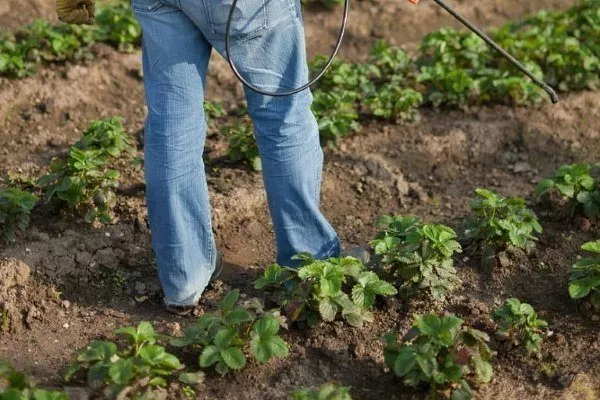
Using fungicides too early can poison people and bees collecting pollen. To prevent disease development, periodically add ash to the soil or sprinkle a thin layer on the leaves.
Mulching
Mulching the soil It helps prevent weed growth and accumulates moisture, releasing it during hot periods. Sawdust or chopped straw should be spread in a thin layer on the soil. This procedure should be repeated as the previous mulch disappears.
Fertilization
Strawberries love fluoride and potassium. Fertilizers containing these components should be applied twice during the growing season until fruiting, ideally in May and June. Immediately after planting the seedlings, or simply in early spring if the bushes have survived the winter, it is recommended to sprinkle the rhizomes with ash.
You can find out more about spring feeding of strawberries here.
In the fall, simply dig up the bed and add compost or pre-prepared leaf mold to the soil. Manure can also be used.
Trimming whiskers and leaves
The runners must be trimmed off, as they draw nutrients and interfere with fruit development. They should only be left on the bushes from which the runners will be taken for rooting.
Rules for trimming whiskers, stems and leaves:
- Carry out only in dry weather to prevent rot.
- Take one tendril from one bush and cut off the others.
- Cut off all excess shoots with scissors, and do not tear them off by hand.
Fertilizing during the growing season
When the plant propagates, that is, when the runners take root, any fruit fertilizer can be added to the water solution. After planting, ash is recommended.
Preparing bushes for winter
After the strawberries have bloomed and produced a harvest, remove any dried or yellowed leaves. Loosen the soil and remove weeds. It's a good idea to cover the bushes with straw to protect them from frost. If snow falls, they'll be protected, but during periods of light snowfall, uncovered plants may die.
Reproduction
Maxim's propagation process is no different from the vegetative method used for similar crops. It's much more convenient to plant not from seeds, but from the runners that form abundantly on each plant. Propagation can be either spontaneous, occurring without the gardener's intervention, or forced.
It's best to plant the runners yourself, otherwise the previously orderly beds will turn into disorderly, disorganized flowerbeds, and the strawberries will begin to grow poorly or even die altogether.
Watch the video below about strawberry propagation using runners:
To propagate strawberries using runners, you need to take cuttings from the best bushes with optimal yields. It's important to remember that first-year bushes should not be used for division. They are still too weak, and separating the runners will hinder their development. The shoots themselves, which need to be rooted, will also be weak and may not thrive in the new soil.
Vegetative propagation algorithm:
- Select the best tendrils from the largest bushes.
- Separate them by carefully trimming the stems with scissors. Treat the cut end of the original bush with ash to prevent rot.
- Prepare a container with an aqueous solution. Add one of the popular gardening fertilizers to the liquid.
- Place the trimmed end of the tendril in a container and wait for it to root. If roots have already formed on the tendril stem, these should be the ones you place in the water. They should develop slightly.
- After rooting, transplant the seedling into loose soil, using a mixture of soil and river sand. Wait 6 weeks, then plant it in the main garden bed.
During the rooting period, it is important to constantly add fertilizer and not leave the seedlings without watering.
Gardeners' reviews of the Maxim variety
It's important to remember that the size and quantity of berries per bush are a direct result of how well the plant is cared for. The better the watering and fertilization, the higher the yield. Although strawberries can be left unattended, a prolonged lack of watering won't kill them, but they will stop producing a good harvest.