
Lord strawberries are the brainchild of British breeders and are renowned for their large fruit, high yields, and resistance to frost and cold snaps. Despite this, a moderately warm climate is considered optimal. They are grown in both private gardens and large-scale plantations—the berries are easy to transport and retain their marketable appearance for a long time.
Who developed the variety and when?
The origins of the Lord variety are described in various scientific sources. According to some sources, this hybrid was developed by British breeders in the 1980s. Despite its popularity among Russian gardeners, the variety is not officially registered in the State Register of the Russian Federation.
- ✓ Optimum temperature for growth and fruiting: +18°C to +25°C.
- ✓ Required soil pH level: 5.5 to 6.5.
Appearance of the plant
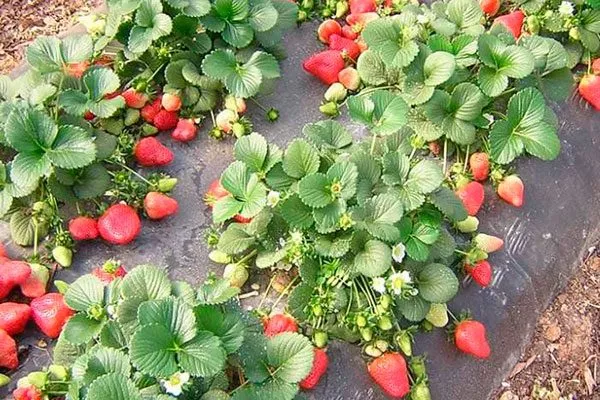
Lord's bushes are very spreading and robust, so they require more space for planting. The height and diameter of the bush are the same – 50 to 60 cm, but the width can be greater than the length. When grown in unfavorable climates, the plant may reach only 30 cm, or even 20 cm.
Plant characteristics:
- Leaf blades. They are quite large, with a wrinkled surface and ribbed texture. They are usually light green in color and have a glossy sheen. The leaf edges are slightly curved inward and serrated.
- Antennae. They are characterized by strength and rapid growth in length. They form in large numbers until the age of three, but then their number decreases.
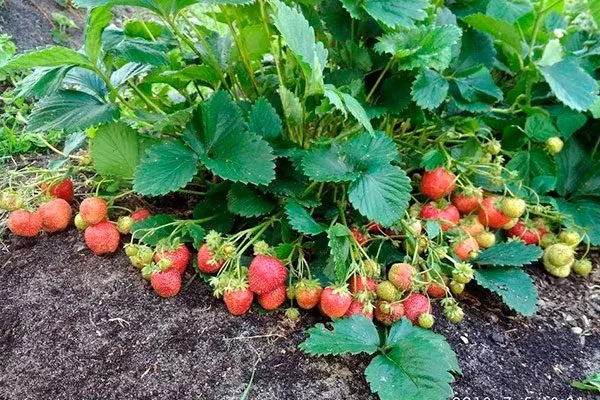
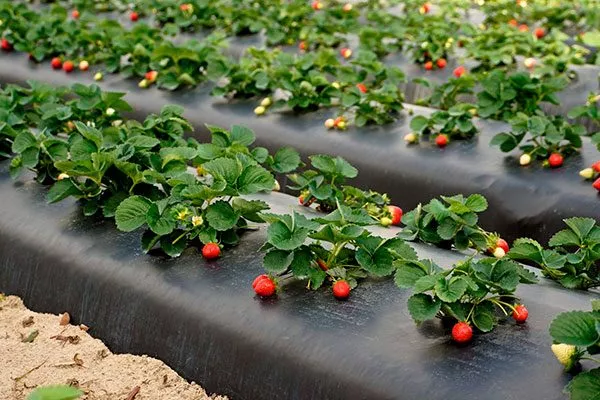
- Peduncles. One bush contains 10-12 berries, each producing about six. Despite their robustness, the flowering shoots droop. Therefore, it's important to provide mulch or other support to prevent the fruit from rotting and to keep them clean.
Fruits and their taste qualities
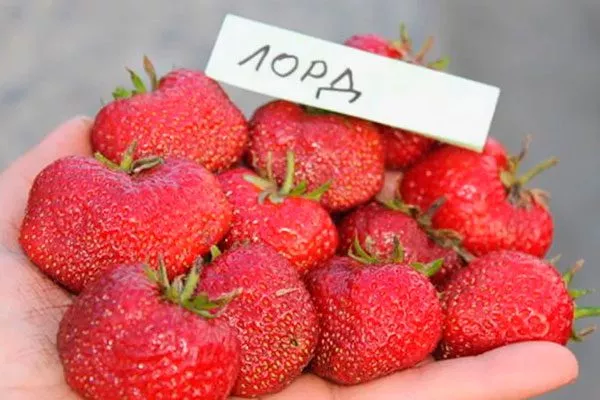
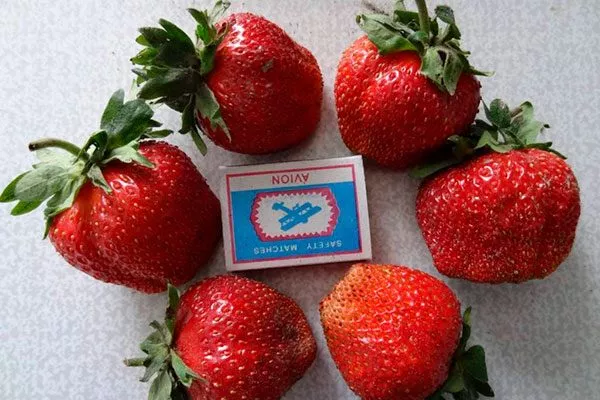
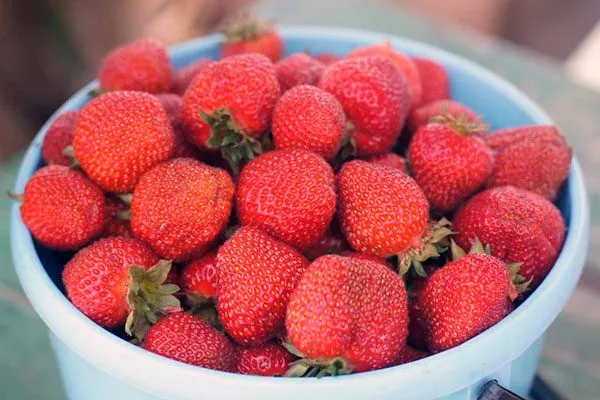
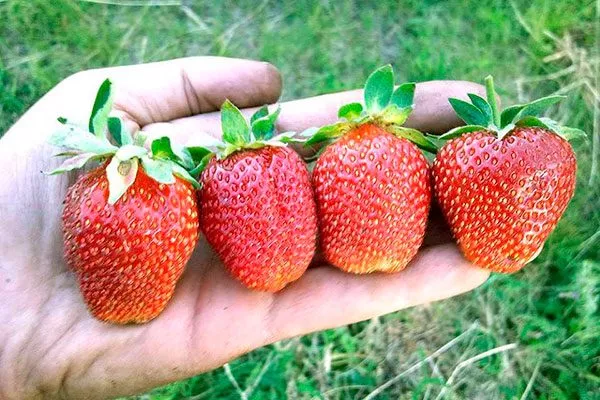
The berries, like the bushes, are also large. Their flesh is particularly juicy and their texture is firm, so they remain whole when making jam. Other characteristics:
- form - conical, rounded, the nose is always blunt;
- surface painting – rich dark red;
- weight - during the first wave of fruiting it varies from 60 to 80 g, later – from 30 to 45 g;
- pulp color – classic yellowish pink;
- taste - sweet, but sometimes there is a slight sourness, therefore the tasting score has a range of 4.6-4.9 points;
- aroma – rich strawberry.
Ripening period
The variety is characterized by an extended fruiting period – it begins in the last days of June and continues until July 20, while the strawberries bloom from the end of May to the first of June.
Productivity
Lord is highly productive, yielding 0.5 to 1.5 kg per bush in just the second or third year after planting. However, under the best growing conditions, up to 2 kg can be harvested per bush. Tests in the Samara region showed that the average yield of this variety ranges from 151 to 192 centners per hectare.
Stability and endurance
Among the variety's advantages is its winter hardiness: Lord tolerates spring and fall frosts and can overwinter unharmed at temperatures down to -26 degrees Celsius under snow cover without additional cover. Other characteristics:
- The variety is resistant to diseases such as white and brown leaf spot, powdery mildew and gray rot of fruits.
- The plant has some unique characteristics: it's sensitive to humidity. In dry conditions, flower stalks fail to form properly and productivity drops sharply. In high humidity or frequent rainfall, it's susceptible to heart rot, and the berries don't ripen.
The variety shows good agronomic results when grown in the southern regions, as well as in the central part of the country, the Urals and Siberia.
Features and rules of planting
For successful cultivation of Lord strawberries, certain conditions must be met:
- Select location. The site should be level or have a slight south-facing slope to provide additional warmth and light. The area should be well-lit throughout the day. The soil should be moderately moist, avoiding boggy or low-lying areas.
- Preparing the land. Before planting, dig up the bed thoroughly, add organic fertilizers - add 9-11 kg of compost or humus per 1 sq. m or 1 running meter of row, and add 0.5 kg of charcoal.
Planting patterns
This variety can be planted using three key schemes:
- Like chess. Follow these rules:
-
- Prepare rows 80-85 cm wide, removing all weeds.
- Using cords, stretch them at a distance of 13-17 cm from the edges of the bed and 50-55 cm from each other to align the rows.
- Mark the points for the holes at a distance of 75-85 cm between them, placing the holes in parallel rows in a checkerboard pattern.
- Plant the seedlings and water the soil. To reduce the frequency of weeding, you can use roofing felt or black film to mulch the beds.

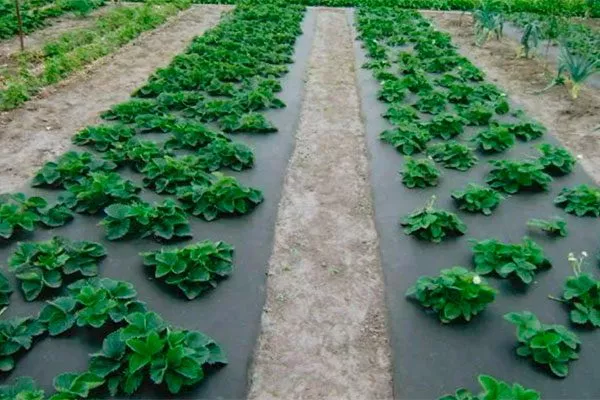
- Planting using the ridge method. This method is suitable for areas with shallow groundwater and areas where water stagnates (doesn't drain). Create a 1-meter-wide strip with grooves on the sides to drain excess water.
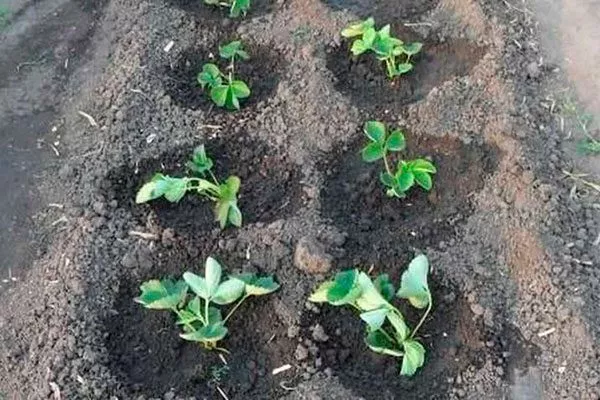
- Planting strawberries in holes. The standard method is as follows:
-
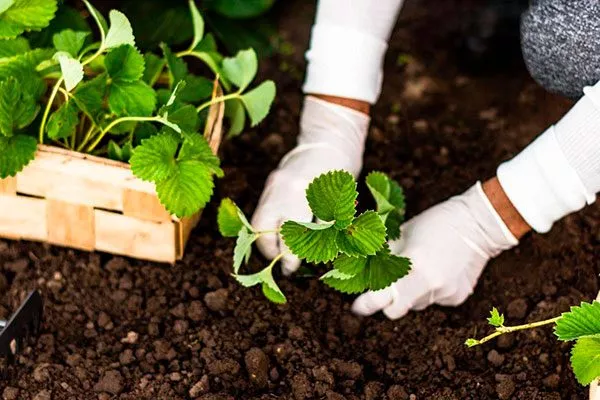
- Form the beds and dig holes.
- Fill them half full with organic matter.
- Shorten the root shoots and leave 3-4 healthy leaf blades on each seedling.
- Dip the roots in a clay mixture with the addition of Kornevin for better rooting.
- Carefully spread the roots in the hole, fill with substrate and compact lightly.
- Form a small mound of soil around the plant to retain water when watering.
Growing and care
The flowers of the Lord strawberry variety are bisexual, as is typical for most strawberry varieties, so no special pollination measures are required. However, to improve fruit quality and increase yield, it is recommended to plant other flowering plants nearby to attract pollinating insects.
Other cultivation nuances:
- In commercial greenhouses, beehives or bumblebees are installed during flowering for pollination. At home, forced ventilation can be provided in greenhouses to promote air circulation.
- Lord's berries require frequent and abundant watering, especially in the spring before budding, as this significantly impacts yield. At least 1-1.5 liters of water should be poured under each rosette. Avoid stagnant water, which can negatively affect the flavor of the berries. Drip irrigation is the optimal method for hydrating the berry patch. In rainy summers, it is recommended to protect the beds with plastic.
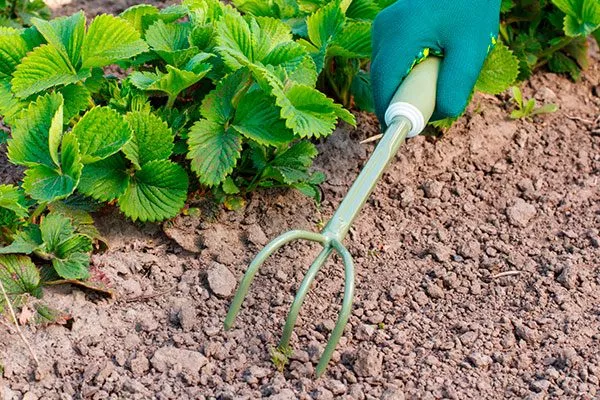
- It's important to regularly loosen the soil and remove weeds, which can rob plants of moisture and nutrients. It's best to do this the day after watering.
- Immediately after planting, apply the first fertilizer, consisting of peat and compost. At the beginning of the growing season, it's also beneficial to use mineral fertilizers such as urea or superphosphate. Before budding, apply nitrogen, but don't exceed the recommended dosage to avoid excessive foliage growth, which can harm the harvest. After fruit set, apply potassium. Before wintering, apply mullein and an ash solution.
- At the beginning of the growing season, apply nitrogen fertilizers (urea) at a rate of 10 g per 1 m².
- Before flowering, feed with a complex mineral fertilizer with a predominance of potassium.
- After harvesting, add organic fertilizers (compost or humus) to restore the soil.
Strawberries should be fed only with mature organic matter to avoid the risk of root burn. Mulching with pine needles or straw will protect the soil from drying out and frost in winter.
Methods of reproduction
Almost all strawberry propagation techniques apply to Lord, but root division is considered the fastest and most effective. A brief description of the methods:
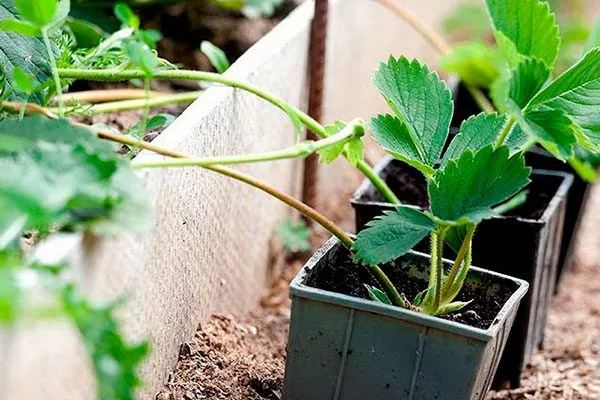
- With a mustache. To propagate, cut off the runners, leaving only the first rosette. By August, the rosette will root, and you'll have a high-quality seedling. Use a clean knife to separate it from the mother plant, dig it up with the soil, and transfer it to a nursery bed, keeping a distance of 9-11 cm between the runners.
By spring, the planted rosettes will have grown and strengthened, and they can be transferred to a permanent location.
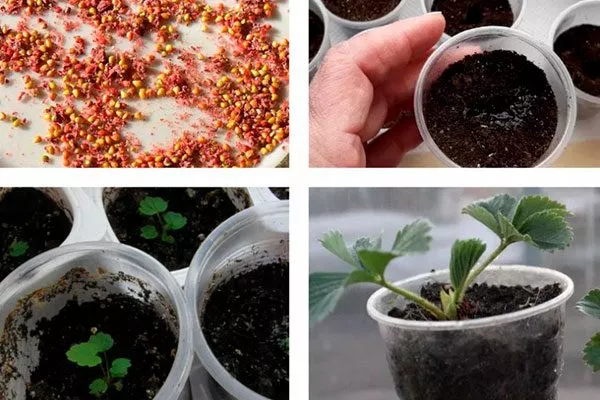
- Seeds. Soak high-quality seeds for two days, changing the water periodically (twice a day). Then, prepare a universal substrate of turf, coarse sand, and peat. Spread the soaked seeds on it, carefully separating them with a toothpick. Do not cover the seeds with the substrate.
Cover the seedlings with a plastic bag and place them in the refrigerator for 10-13 days to stratify. After this, move the container to a warm place.
Once the seedlings have sprouted and developed 2-3 true leaves, remove the film. After 2 weeks, transplant the seedlings into individual pots and plant them in the ground in early June after all danger of frost has passed.
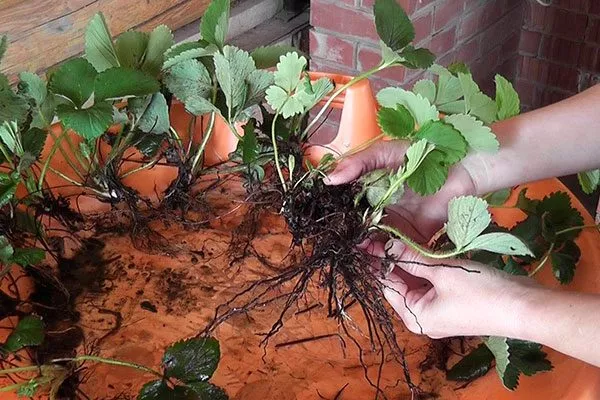
- By dividing the bush. To propagate using this method, select strong, mature plants and divide them into as many pieces as possible. This is best done in late spring or August. Treat the divisions with a solution of potassium permanganate or a fungicide, trim the roots to 5-6 cm, and plant them in a nursery with a minimum distance of 10-12 cm between them. After 2-3 weeks of rooting, transplant them to their permanent location.
Protection from diseases and pests
Although Lord is disease and pest resistant, certain problems may arise during cultivation that require attention. To avoid them, follow these preventative measures:
- Use proven, safe folk remedies. For example, applying lime or manganese to plant rosettes is effective against wireworms. Corn flour can help get rid of snails, and kerosene can repel silkworms.
- It's important to regularly inspect the plantation and promptly remove damaged plant parts. Careful maintenance of strawberry beds ensures the health of the berry plant.
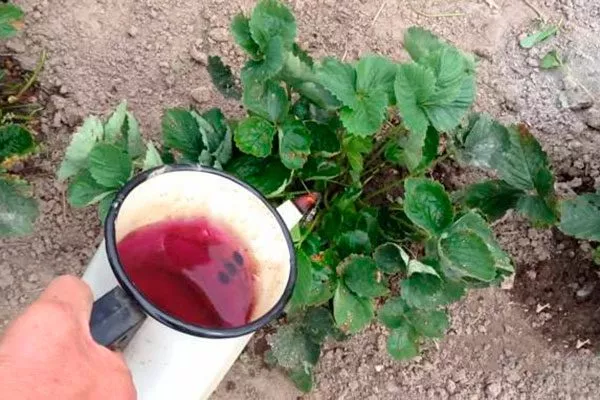
- Treat the beds with a mustard solution: dilute 90-110 g of powder in 9-10 liters of hot water, leave for two days, and then spray the affected plants.
- An effective solution consists of 0.5 teaspoon of boric acid, 1 teaspoon of iodine, and 4-5 g of copper sulfate, diluted in 10 liters of boiling water. It is recommended to treat the plantation with this solution twice, 12-16 days apart.
Harvesting and storage
The fruit of this variety is prone to spoilage, so it should be picked daily. It's recommended to pick the berries when they're pink, rather than fully ripe. These fruits can be stored in the refrigerator for 2-4 days.
It's best to store the harvested berries in wicker baskets or wooden boxes lined with clean paper, arranging them in a single layer, as they quickly begin to release juice. Do not wash the strawberries before storing or transporting them. This variety has limited transportability, so it's best to use or sell them as soon as possible.
Advantages and disadvantages
Lord is quite popular in our country.
Regulation of ripening times
Lords can be sped up or slowed down in maturation. How to do this depends on the goal:
- Acceleration is achieved by installing arches and a plastic cover over the beds at nighttime temperatures of no less than -5 to -7 degrees Celsius. It's important to ensure that the temperature under the cover does not exceed 25 degrees Celsius. To ensure pollination on warm days, the sides of the cover should be slightly opened.
- Delaying ripening is possible by maintaining a low temperature using snow and a layer of sawdust, which will slow down its melting.
Reviews from gardeners
Lord strawberry is a leader among strawberry varieties, attracting attention with its large fruits, vibrant color, and sweet flavor. Gardeners appreciate it for its ease of cultivation and the ability to propagate it in a variety of ways. However, keep in mind that the potential for high performance in all characteristics increases in regions with warmer climates.