
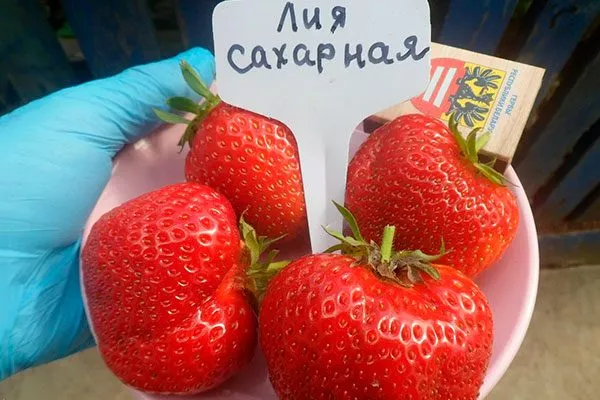
Sugar Lia is the name of a mid-early garden strawberry variety popular in European countries. Thanks to its high-quality commercial qualities, it has won the hearts of Russian gardeners, including those engaged in commercial berry cultivation. This beautiful and delicious strawberry does not bruise or leak, and it transports well.
Who developed the variety and when?
Sugar Lia is an achievement of European selection, which appeared in 2006. Its authorship belongs to the Italian Institute of Fruit Growing CRA - FRF and the Unita di Ricerca per la Frutticoltura - Forli.
It is suitable for amateur and industrial cultivation in conditions such as:
- open ground;
- closed (tunnel, hothouse, greenhouse).
Sugar leah produces an extremely early harvest when sheltered. It can also be grown indoors in pots.
Appearance of the plant
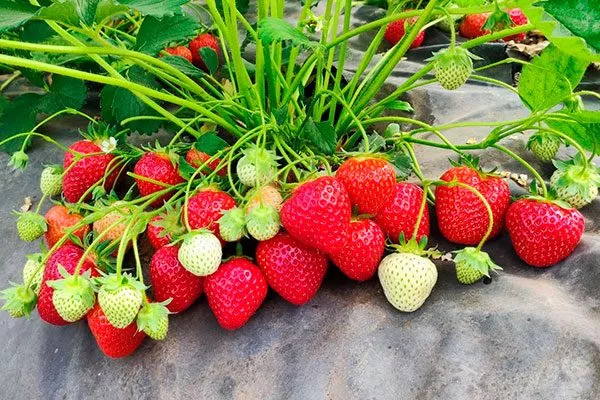
The berry bushes of this variety are characterized by medium vigor and possess the following characteristics:
- "above average height";
- developed, strong and long roots;
- powerful upright structure;
- spreading;
- foliage: large in size, smooth, erect, dark green;
- numerous peduncles with abundant fruit ovaries;
- numerous small antennae with small rosettes.
Fruits and their taste qualities
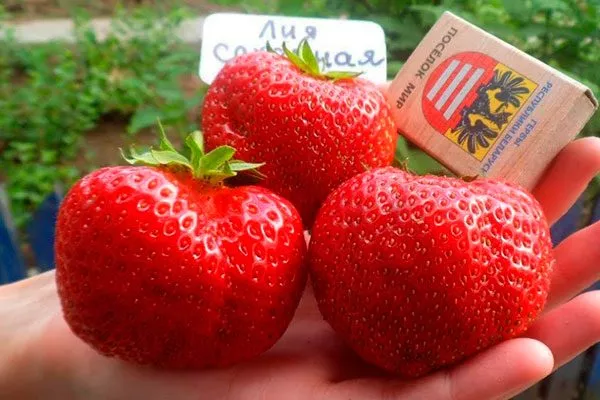
Sugar leah produces large, beautiful berries with the following characteristics:
- round conical shape;
- average weight - 60-70 g (under particularly favorable conditions and with intensive feeding, the weight reaches 90 g);
- red-raspberry color with a glossy sheen;
- dense juicy pulp.
This strawberry is renowned for its unrivaled flavor and rich aroma. It is sweet, with a pleasant fruity-strawberry aftertaste. It has a Brix rating of 8.4. It is also noted for its high vitamin C content.
Ripening period and yield
Sugar leah is a mid-early ripening berry variety. Gardeners harvest it at the following times:
- the second half of June or the first days of July - when cultivated in an open bed;
- end of May — in closed ground conditions or at home in a pot.
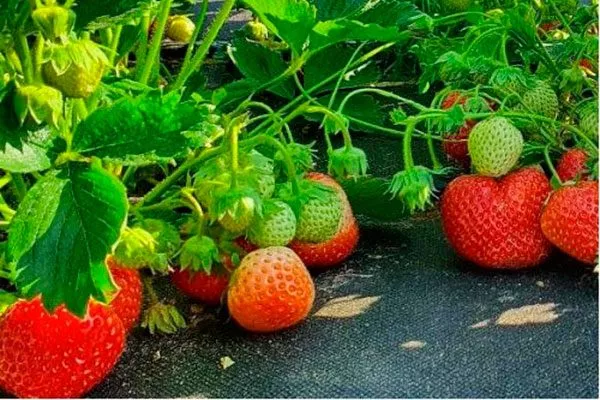
This variety's yield is above average, ranging from:
- 0.7 kg of fruit is produced by 1 bush a year after it is planted in the garden;
- Gardeners collect 1-1.2 kg from a two-year-old plant.
Pollination
To ensure abundant fruit production on this variety, ensure pollinating insects are present during flowering. Place a small beehive near the strawberry planting. Bumblebees and butterflies can also pollinate the crop.
When growing this variety indoors, allow bees access to the shelter. If you're growing it indoors in pots, transfer the pollen with a brush.
Application
The harvest of this garden strawberry has a universal purpose:
- berries are eaten fresh;
- add them to desserts;
- they make jam, preserves, and compote from them;
- make juice;
- canned.

Positive qualities
This variety has the following advantages:
Landing
The best times to plant bushes of this variety in your dacha are:
- in the spring - April, May;
- in summer - June, July, August;
- in autumn - September.
Experienced gardeners do this at the end of July, allowing the berry crop time to develop flower stalks and strengthen before winter. In southern regions, this procedure can be carried out at the end of September. If you prefer spring planting, wait until the soil warms up, but do it before the hot weather sets in.
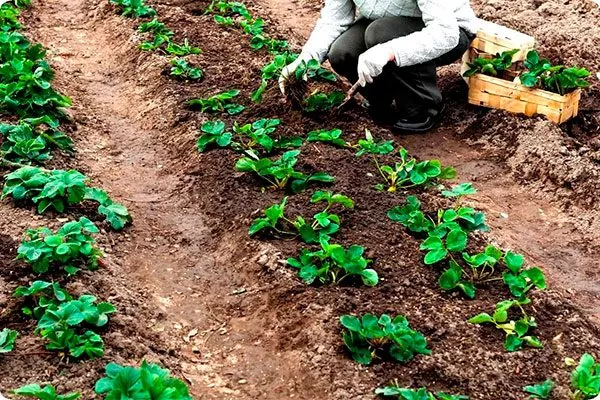
Set aside a suitable area for strawberry beds:
- solar;
- protected from drafts and wind;
- with loose fertile soil, loamy or sandy loam, with a pH of 5.2-5.5;
- with groundwater levels of at least 0.70 m.
- ✓ The area must be well lit by the sun for at least 8 hours a day.
- ✓ The soil must have good drainage to avoid water stagnation.
Avoid planting berries in waterlogged areas. Acidic soil is also unsuitable for strawberries. Lime the soil or add dolomite flour (400 g per square meter).
Plant sugar leah where crops such as:
- peas;
- onion;
- garlic;
- carrot.
Prepare the area for the strawberry beds in advance. While digging, add compost (5-6 kg per square meter) and ash (200 g). Do not use fresh manure, as this crop does not tolerate it.
- 2-3 weeks before planting, add compost or humus to the soil at a rate of 5-6 kg per 1 sq. m.
- Check the soil pH and adjust it to 5.2-5.5 if necessary using dolomite flour.
- A week before planting, loosen the soil to a depth of 20-25 cm.
Follow this planting pattern for bushes of this variety:
- distance between plants - 25-30 cm;
- between the rows - 40-50 cm.
Orient the beds north-south to ensure good light. When planting strawberries, ensure the center of the plant remains at ground level. Water them and then monitor the soil to ensure it doesn't dry out.
Growing and care
Getting a bountiful harvest of sugar leah is easy if you properly care for its bushes. They require the following care:
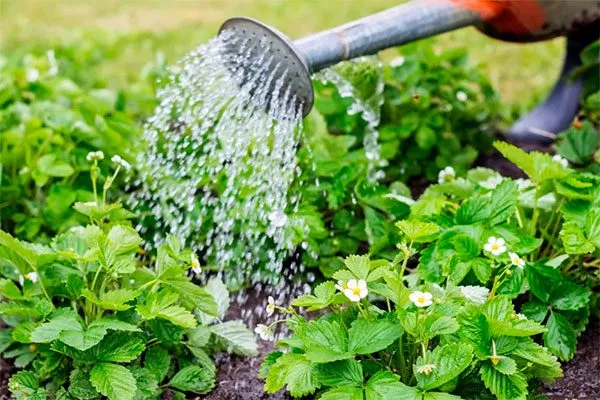
- Proper wateringStart watering your strawberries at the end of April. Use 10 liters of settled, warm water per square meter of planting. On hot days, water frequently (every other day). In the fall, reduce watering to once every 7 days. Water in the morning, avoiding contact with the leaves.

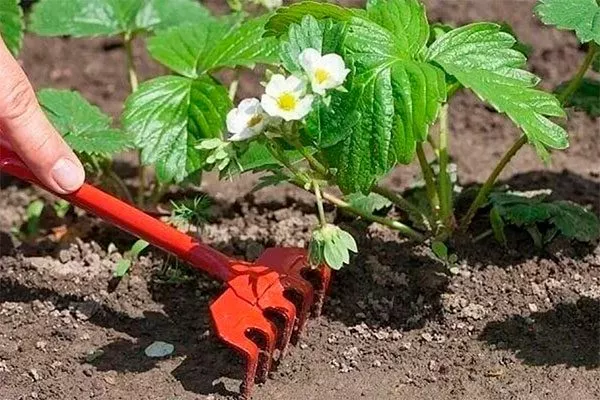
- Loosening and weedingLoosen the soil under the bushes after rain and watering to prevent a dense crust from forming, which would block air flow to the roots. Do this carefully, without damaging the roots. Combine this procedure with weeding. Prevent weeds from growing and choking out the berry crop.
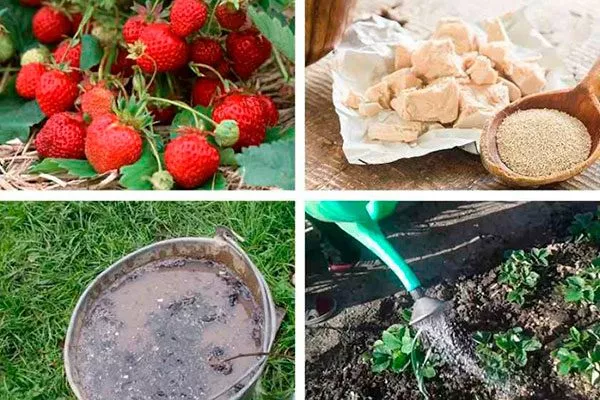
- Use of fertilizersUse these fertilizers starting in the second year after planting your strawberry bushes. Use mineral mixtures or organic matter.
In early spring, fertilize the beds with rotted manure, a solution of cow dung (1:10) or chicken manure (1:20) to provide the plants with nitrogen.
During flowering and fruit set, apply complex mineral fertilizers. Spray the strawberries on the leaves in the evening. To prepare a nutrient solution, use 10-15 g of the fertilizer and 10 liters of water.
In the second half of summer or early autumn, apply phosphorus and potassium mixtures.
- Moustache removalThis variety is characterized by intensive runner formation. Be sure to prune annual creeping shoots to prevent the strawberry planting from becoming too dense, which can lead to nutrient deficiencies, reduced yields, and increased risk of various infections and pests.
Pest and disease control
Sakharnaya Liya exhibits good disease resistance, particularly to fungal infections. However, improper care of this berry variety and unfavorable weather are factors that can increase its susceptibility to disease.
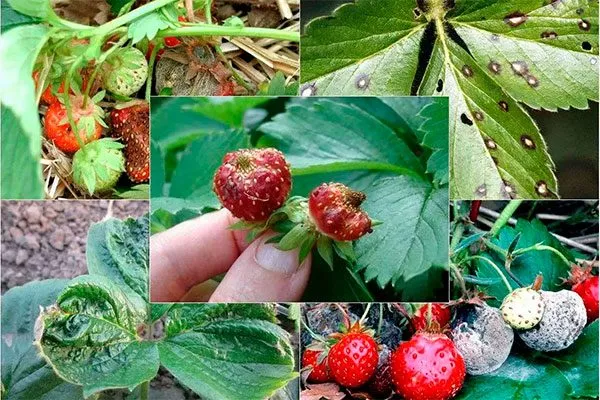
Carry out preventative soil treatments during periods of prolonged rainfall to prevent strawberry root rot. For this purpose, use the following:
- potassium permanganate solution;
- onion peel decoction;
- garlic infusion.
Plants of this variety are often infested with spider mites. Use Actellic and similar products against these pests. Slugs are also a threat to the strawberry patch. If an infestation occurs, use tobacco dust.
Preparing for winter
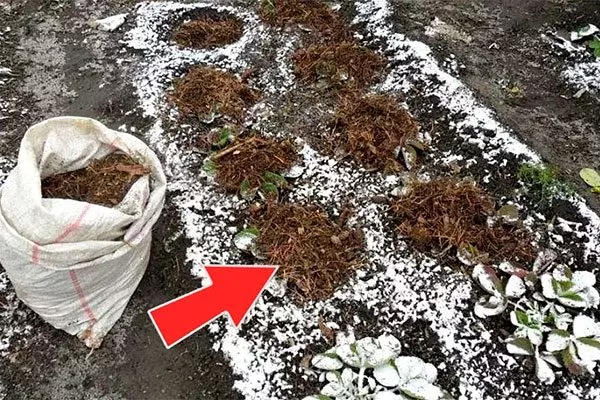
Sugar leah is frost-resistant, but to successfully overwinter its bushes in cold climates where temperatures drop to -30°C, they require shelter. Construct it from the following materials:
- spruce branches;
- straw;
- agrofibre.
Reproduction
Bushes of this variety are easy to propagate using these methods:
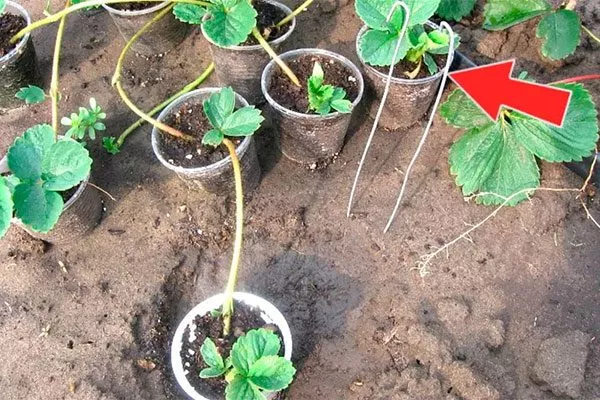
- MustacheDig in the shoots of a strong, two-year-old bush with a rosette into cups. No need to cut them off. Once they have rooted, transplant them into the garden bed.
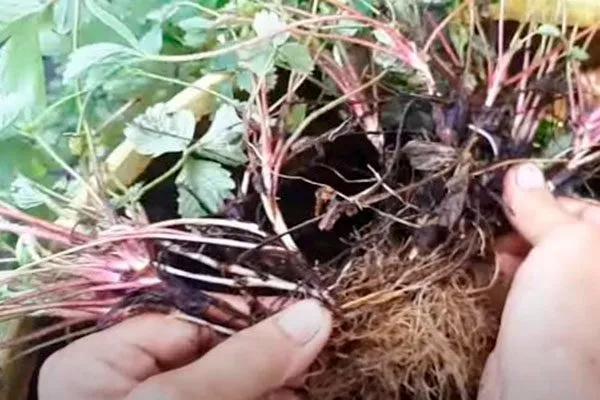
- By dividing the bushDivide a three-year-old plant in half so that each part has a vegetative bud.
Gardeners rarely propagate strawberries by seed. It's a very long and labor-intensive process.
Reviews
Sakharnaya Lia is an Italian variety popular with gardeners. Its berries are early, large, sweet, and easy to transport. Many grow them commercially.