
Victoria strawberries are classified as garden strawberries, characterized by a sweet, refined flavor, vibrant aroma, and excellent characteristics. This variety is resistant to diseases and pests, but strict adherence to proper cultivation practices is essential. It tolerates temperature fluctuations well and ripens early.
Victoria variety: strawberry or wild strawberry?
It's commonly believed that strawberries are grown in gardens and fields, while wild strawberries are wild berries found in forests. In fact, many strawberries grown in garden beds are actually varieties of garden strawberries, including the popular Victoria variety.
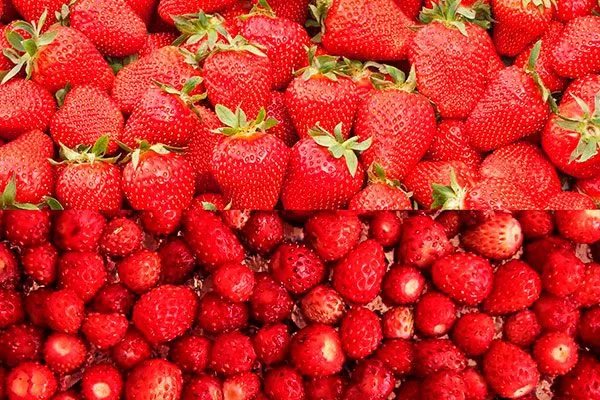
Differences:
- Strawberries typically produce small, pointed berries with a distinct aroma. Strawberry bushes are divided into male plants, which have only stamens and do not produce fruit, and female plants, which have pistils. For fruit formation, female plants must be pollinated by pollen from male plants, which is why strawberry plants have a relatively low yield and are not grown by all gardeners.
- Garden strawberries, on the other hand, produce larger, juicier, and more delicate fruits with a slightly tart flavor. Their flowers contain both pistils and stamens, so additional pollination is not required—the plant always produces a harvest. Strawberry bushes bear fruit actively for approximately 3–5 years in the same location, after which replanting is recommended.
Where did this berry come from?
The sweetness and aroma of the Victoria strawberry are undeniable, but its origin remains a matter of debate. Characteristics and interesting facts:
- Some experts are confident that this variety was brought to Russia from Europe, where it was grown by either French or Dutch breeders.
- Others insist that Victoria is the result of Russian selection, as the berry is perfectly adapted to the country's climate and soil conditions, and is also resistant to diseases and pests.
- Until the late 18th century, only wild strawberries were eaten in Russia. The first large-fruited Virginia strawberries appeared in the royal gardens during the reign of Tsar Alexei Mikhailovich. Meanwhile, in Europe, work was actively underway to breed new varieties of large-fruited strawberries, created by crossing Virginia and Chilean strawberries. One of the results of this work was named Victoria in France.
- Initially, this variety was grown only in imperial gardens in Russia, but over time it spread throughout the country. The name "Victoria" has become a household word in Russia and is used to describe any large-fruited strawberry, although the number of varieties continues to grow.
- Today, the term "Victoria" is often used as a synonym for the word "strawberry".
- Selective changes to this variety took place over many years through folk selection; the variety has not undergone official testing and is not included in the State Register of the Russian Federation.
- In its original form it can now only be found in the collections of individual hobby gardeners.
Description of the variety
Victoria has many positive characteristics, which is why it enjoys such widespread popularity. Before planting, carefully study all the characteristics of the variety.
Appearance of the plant and fruits
The shrubs are considered medium-sized, reaching a height of no more than 50 cm, but most often reaching 35-40 cm. The bushes are covered with dense, dark green, large foliage. The leaf blades have finely serrated edges, and their surface is slightly wrinkled.
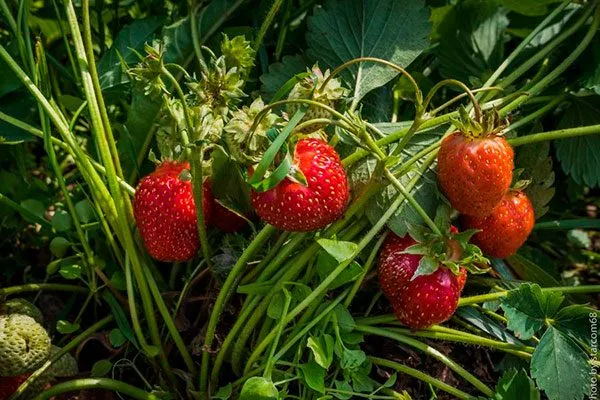
The variety is distinguished by thickened flower stalks, a powerful root system, and very long tendrils, the ability to form which is at an average level.
Features of berries:
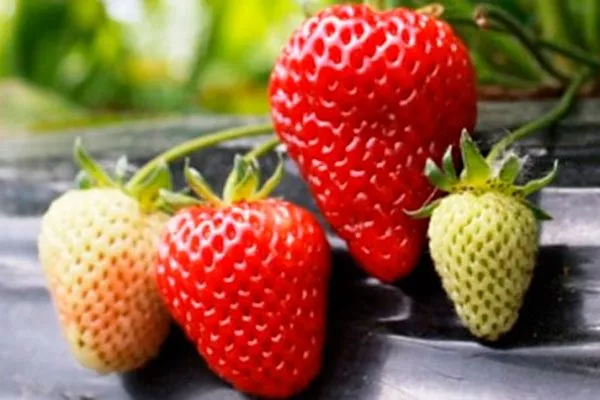
- form - truncated cone-shaped, but with rounded edges;
- weight of one fruit – varies from 20 to 60, and sometimes 90 g, depending on the conditions of growing the culture;
- surface color – bright red with a slight gloss;
- pulp shade – pale pink;
- seeds – quite large and superficially located, yellow in color;
- pulp structure – tender and juicy;
- taste - mostly sweet, as the sourness is insignificant.
Ripening period and yield
This variety is early for southern regions and mid-early for other regions—the first berries can be enjoyed in early or mid-late June. Flowering begins in May, and fruiting ends after September.
The active lifespan ranges from 5 to 7 years. During these years, a single bush can yield 1.5 to 2 kg of fruit.
Winter hardiness
Victoria is characterized by good resistance to recurrent frosts and sudden cold snaps. Its winter hardiness is equivalent to -18 degrees Celsius.
Advantages and disadvantages
How to plant Victoria correctly?
To successfully grow strawberries, it's recommended to choose sunny, wind-protected sites where snow accumulates well during the winter. This is important because strawberry roots are close to the soil surface and can die at temperatures below -8°C (-8°F) without a protective layer of snow.
- ✓ Soil pH should be between 5.5-6.5 for optimal growth.
- ✓ The soil should be well drained to avoid water stagnation.
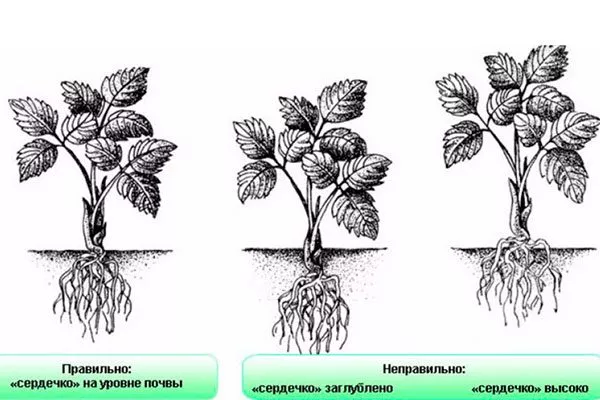
Subtleties of planting work:
- Choose level, dry sites with sandy loam soil. Highly humid areas, swampy areas, areas with a high water table (less than 1-1.5 m from the surface), and salty or excessively sandy soils are not suitable for cultivation. Planting strawberries in raised beds is not recommended due to poor ventilation and insufficient snow cover in winter.
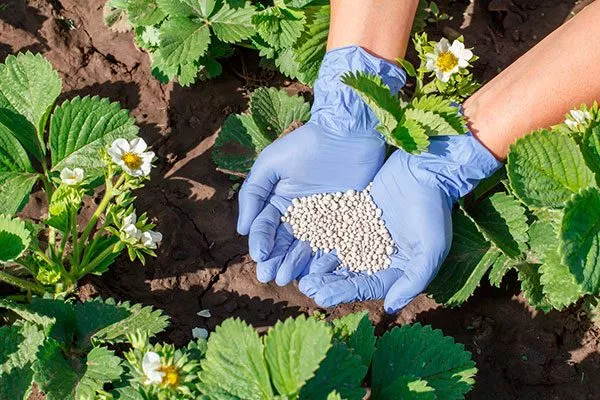
- Prepare the soil six months before planting, adding 6-8 kg of compost per square meter. If desired, you can add ammonium nitrate, potassium salt, and superphosphate (15-25 g of each, depending on the soil fertility).
- A week before planting, dig the soil again, but not too deeply – half a shovel depth.
- It is better to plant plants in cloudy weather to give them time to adapt.
- The optimal time is May or August.
Care Features
Maintenance procedures are straightforward. Only a few standard steps are required, but tailored to the specific varietal requirements:
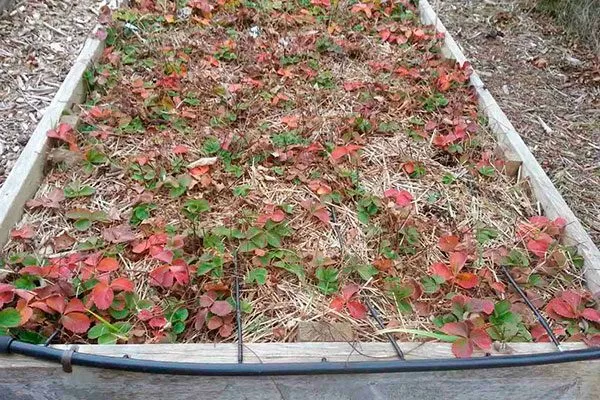
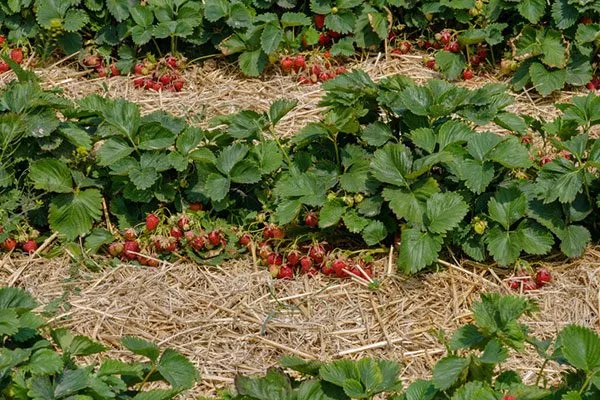
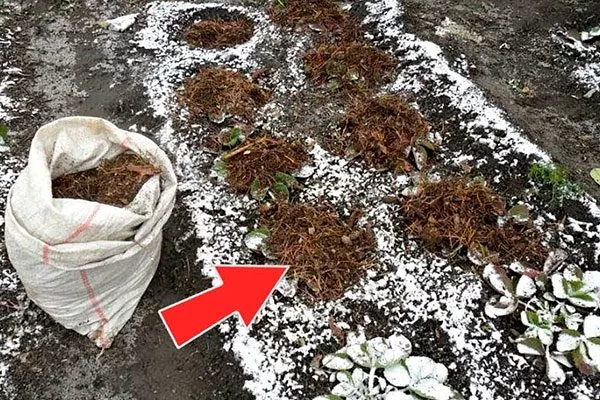
- Mulching. Sawdust, straw, and moss are best for this purpose. Mulching is done twice: after flowering and before wintering. It's not necessary at other times. When using straw, it's important to ensure it doesn't rot or become a pest breeding ground.

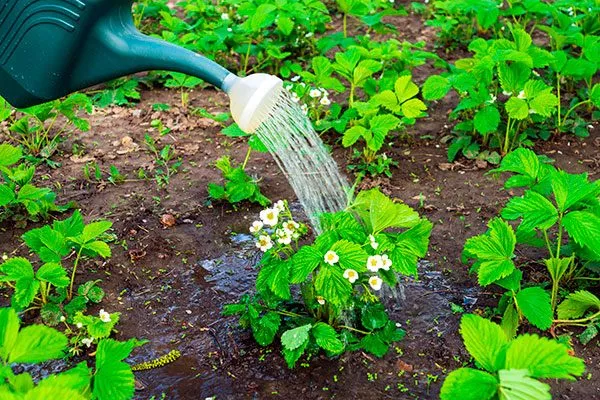
- Moisturizing. Strawberries need to be watered every 3-5 days, and daily during dry periods. This regimen is especially important during budding and active flowering. Insufficient water can result in small fruits.
- Weeding. Weeds should be removed, the soil around the roots should be kept from eroding, and the soil should be loosened to prevent crust formation. These measures prevent the strawberries from drying out and help maintain a healthy appearance.
- Top dressing. It is carried out three times:
- At the beginning of spring, add ammonium nitrate or nitroammophoska (10-15 g per 10 l of water).
- Before strawberry buds begin to form, apply manure or mullein infusion. After fertilizing, you can sprinkle the plants with straw or treat the area with a boric acid solution.
- After fruiting has finished, feed the bushes with phosphorus and potassium.
- Update. It is recommended to replant bushes every 3-4 years. When replanting, select healthy, large plants. This can be done in spring or late summer. After replanting, it is important to protect the plants from direct sunlight and water them regularly until they are fully established.
Reproduction
Garden strawberry variety Victoria can be propagated in two ways: by seeds and by tendrils.
| Method | Time until the first harvest | Complexity |
|---|---|---|
| Seeds | 2 years | High |
| With antennae | 1 year | Low |
Method one: seeds
Propagating strawberries from seeds is a rather labor-intensive process. Seeds can be purchased or collected independently. To collect them yourself, select large, ripe berries from young, healthy bushes, carefully trim off the outer layer of pulp, and dry it.
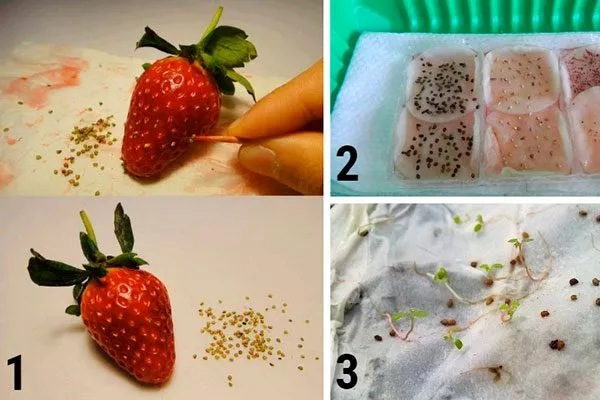
To extract the seeds, rub the dry mass between your palms and separate it from the remaining berries. It is recommended to store them in a glass container.
Nuances:
- 2-3 months before sowing, the seeds need to be stratified, that is, subjected to cold treatment to stimulate germination.
- Seeds should be sown in early February for seedlings.
- Strawberry seedlings are demanding in terms of conditions: they need slightly moist soil that does not dry out, a constant temperature of 20-25 degrees, and sufficient lighting.
- As the seedlings grow, they are regularly pricked out and in the spring they are planted in a permanent place in the garden bed.
The second method: antennae
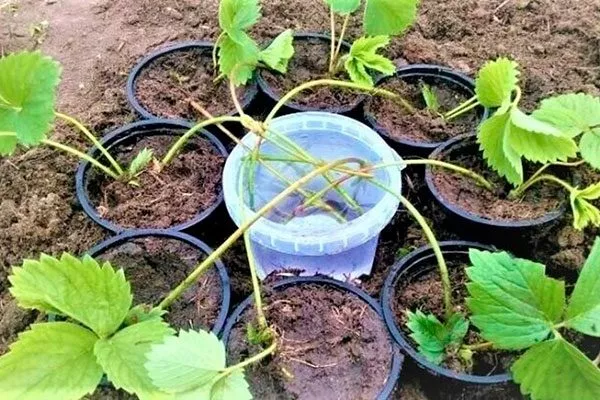
Propagation by tendrils is considered the simplest and most convenient method. By midsummer, tendrils with rosettes grow from the main bush.
Peculiarities:
- For propagation, it is optimal to use the first 2-3 rosettes, which are located closer to the mother plant.
- It is recommended to take tendrils from young bushes that are no more than three years old.
- The propagation process begins with preparing the bed and soil.
- The rosette is considered ready for transplantation when 4-6 leaves appear on it.
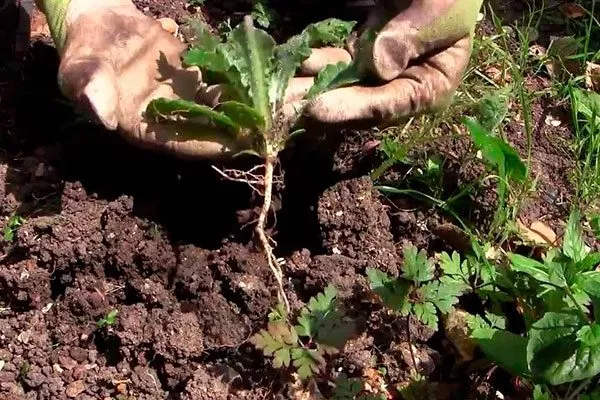
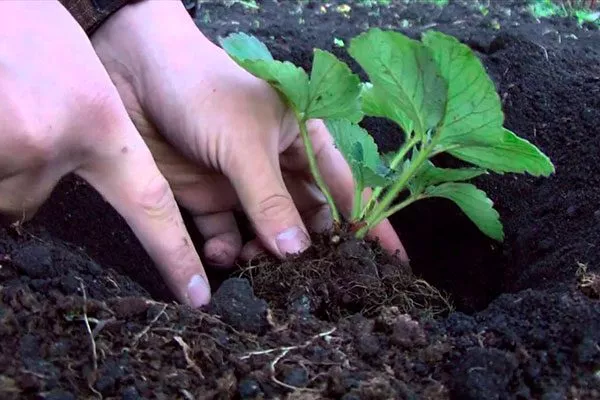
- On a cloudy day, carefully separate the rosette from the mother plant, being careful to keep the soil on the roots. Transplant it into prepared holes in its permanent location.
Diseases and pests
Despite the Victoria variety's resistance to pests and diseases, the following may occur in unfavorable weather or when agricultural practices are violated:
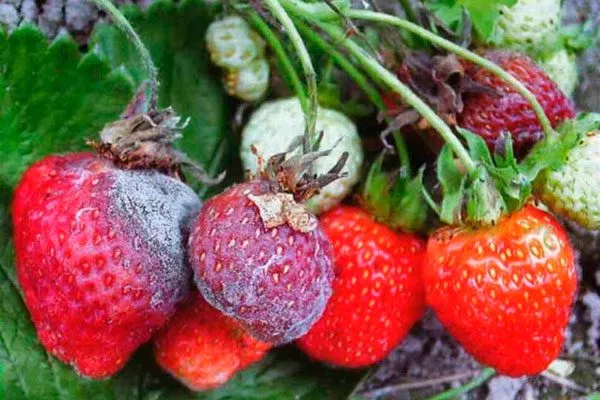
- Gray rot. This disease most often manifests itself in wet weather. Infected berries develop a gray coating, and the leaves become covered with gray or brown spots. With inadequate protection and constant precipitation, almost the entire crop can become infected.
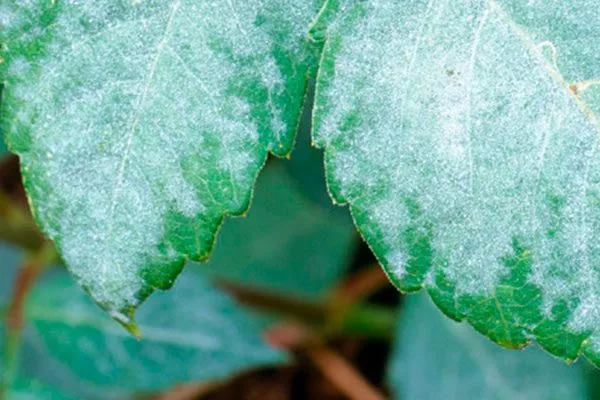
- Powdery mildew. If Victoria berries become infected with powdery mildew, the disease can be controlled with fungicides. This situation is particularly challenging if the infection occurs during fruit formation or harvest. The disease can affect all above-ground parts, hindering pollination and berry development, threatening the death of both the fruit and the plant itself.
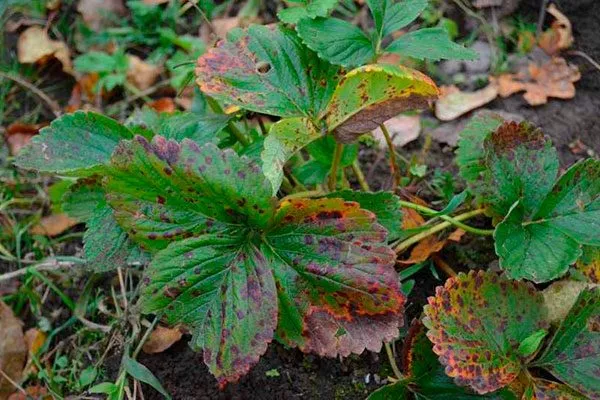
- Brown spot. Dark brown spots appear on the plant's leaves, which over time can lead to the development of fungal spores. In severe infestations, the leaves may turn purple and die.
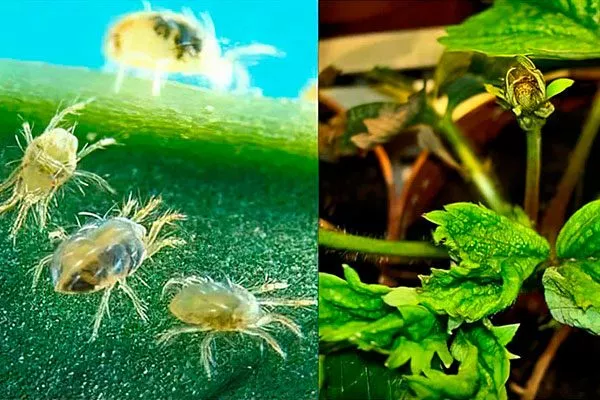
- Strawberry mite. This light yellow pest severely attacks strawberry leaves. The mites survive the winter at the base of the leaf petioles, and in the spring they begin to actively reproduce and feed on the sap of young leaves.
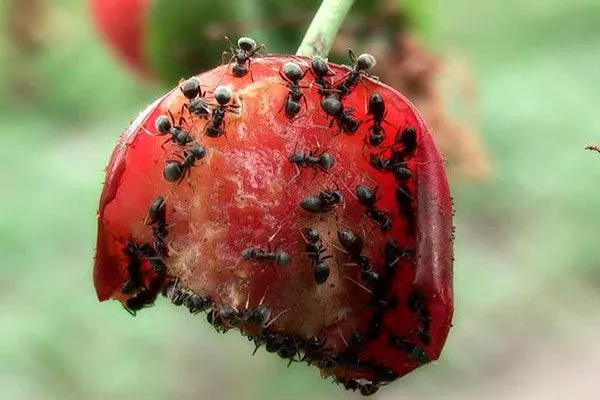
- Snails, red ants, centipedes. These pests prefer damp, shady, humus-rich areas and often feed on strawberries.
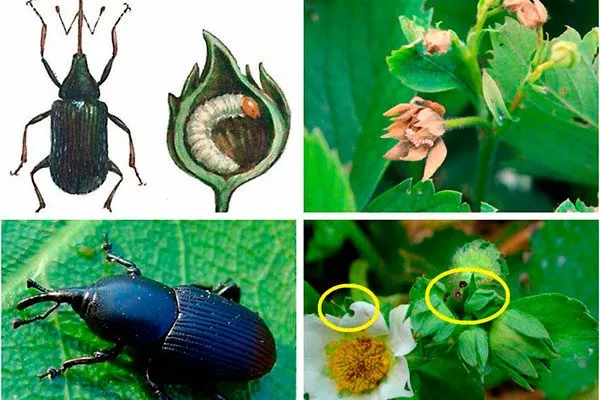
- Nettle leaf weevil. A green insect with a weakly defined proboscis, weevils feed on strawberry leaves, creating decorative or smooth cuts on them. They lay their larvae in the soil, which, when hatched, can damage the plant's roots.
- ✓ The appearance of yellow spots on the leaves.
- ✓ Slowing down of plant growth.
Harvesting and storage
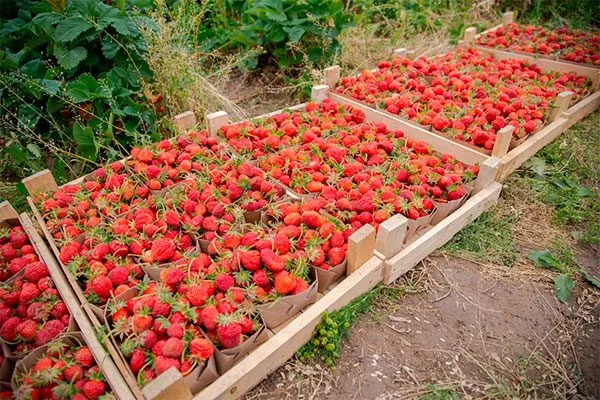
Victoria garden strawberries should be picked as they ripen. Ripe berries should be firm and uniformly colored, with no green tips. It's recommended to pick regularly, approximately every two to three days, or daily during periods of extreme heat.
Other helpful tips for collection and storage:
- It's best to pick dry berries. If it rains, let the collected berries dry.
- It's ideal to cut strawberries with the stems attached, leaving a small stalk. This helps minimize damage to the berries, maintains dryness, and promotes longer storage.
- For ease of collection, you can use scissors.
- Fruits soiled with soil should be carefully cleaned with a soft brush so as not to damage their surface.
- If you plan to store berries, they should be immediately sorted by size and quality and immediately placed in the container in which they will be stored.
- Cardboard or wooden boxes are suitable for storage. Avoid using plastic or metal containers, as they do not provide adequate ventilation and can cause the berries to spoil quickly.
- Place the strawberries in 2 layers, no more.
Preparing for winter
In the first half of August, trim old and dry leaves, leaving small stem sections. It's recommended to use sharp pruning shears or scissors for this procedure. Other steps:
- Be sure to remove all plant tendrils.
- Weeds should be pulled out, leaving the roots in the ground, as they will become good fertilizer for the next season.
- To protect plants from frost, it's a good idea to use a cover. If your region lacks snow, you can wrap the beds with conifer branches, tree tops, straw, or dry leaves. Many gardeners use spruce branches for this purpose.
Good options for covering are agrotextile or spunbond, which are stretched over metal arches.
Reviews of Victoria strawberries
The Victoria variety is considered hardy and resistant to adverse conditions. It boasts abundant yields, early ripening, and impeccable flavor. The key is to pay a little attention during the growing season and provide insulation before winter.