
The Clery garden strawberry is an early-ripening variety with large, sweet fruits. With proper care, this productive Italian variety, intended for both amateur and commercial gardening, thrives in temperate climates.
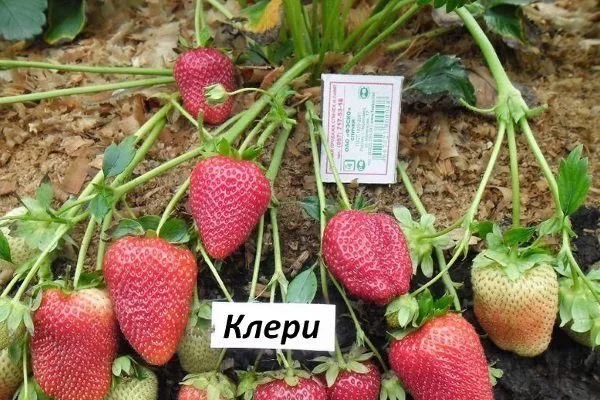
garden strawberry variety 'Clery'
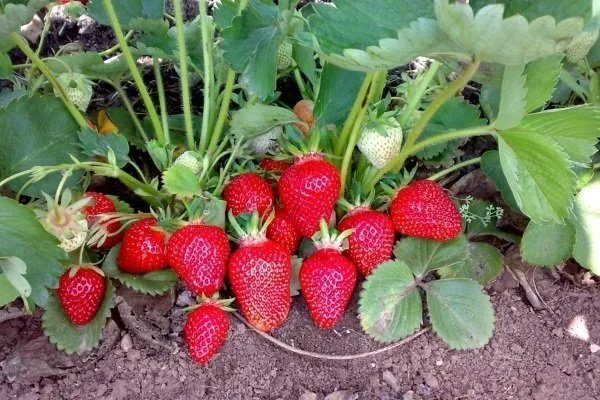
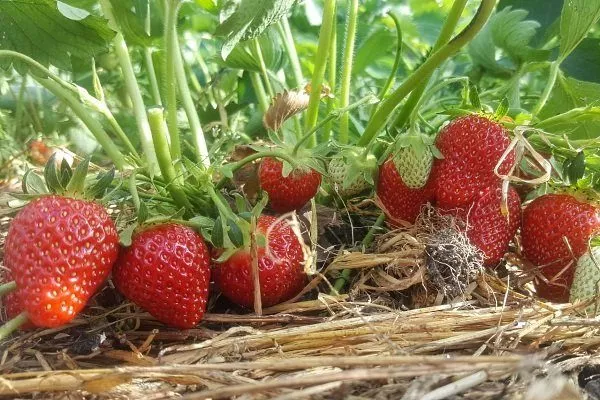
The 'Clery' variety has sweet berries with a strawberry aroma
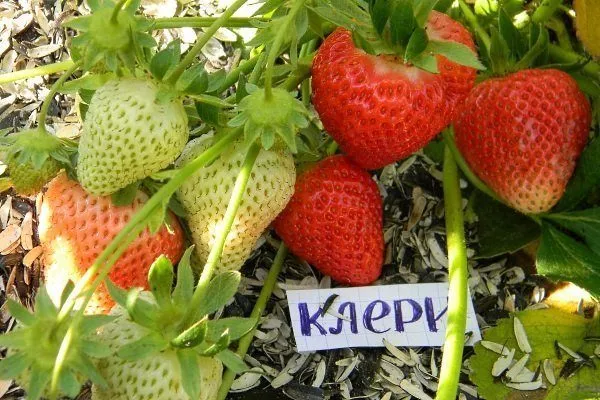
The fruits of "Clery" do not lose their marketable appearance after a certain period of storage
How did the variety appear?
The Clery garden strawberry was developed by Italian breeders from the Mazzoni Group. The parent varieties are Onebor and Sweet Charlie. The variety was created in 1996. Since 1998, the variety has been protected by a European patent.
Botanical description
In fact, Clery is a garden strawberry, but gardeners often call it a strawberry because of the large size of the berries and their resemblance to strawberries.
A brief botanical description of this variety is as follows:
- Bushes. Tall and powerful, semi-spreading, with thick peduncles.
- Leaves. Large, shiny, with long petioles. Color – dark green.
- Flowers. Blooms abundantly, the flowers are large, snow-white, and the center is bright yellow.
- Fruit. Uniform in size. Average weight is 30-40 g. Some specimens reach 50 g. The color of ripening berries is red, and upon reaching technical maturity, it turns dark cherry.
Characteristic features
Characteristics of the garden strawberry Clery:
- Early ripening variety.
- The fruits ripen simultaneously, evenly. The harvest period is 12-15 days.
- Average yield is 300 g per bush, 290 c per 1 ha.
- Flowering – beginning of May.
- Frost resistance is average. The plant tolerates light spring frosts well.
- The pulp is dense, there are no voids, the taste is sweet, the aroma is strawberry.
- The cultivation period in one location is four years. During this time, the variety retains its varietal characteristics. After this period, yield declines, and the fruits become smaller.
The plant grows vigorously—a single mother plant produces up to 30 rosettes per season. The abundance of planting material makes propagation easy.
Clery's good agronomic characteristics allow it to be used in both amateur and industrial gardening.
Growing regions
This variety was developed for the northern regions of Italy, so it's best suited for the southern regions of Russia. It has also proven itself in the central regions, Ukraine, and Belarus. However, Clery is not suitable for the Urals and northern regions—there, if it's grown at all, it's only under plastic covers and in greenhouses.
Is the variety everbearing?
The Cleary variety is a remontant variety, meaning it produces multiple harvests. Under favorable conditions and with good care, gardeners can harvest three crops of berries. Remontant varieties are productive, but require extra attention. Cleary requires a fertile soil and regular fertilizing.
Advantages and disadvantages
Advantages of Clery:
- Dietary properties of berries - they do not contain acid, so they are suitable for consumption in case of gastrointestinal diseases and high acidity;
- good transportability – the berries tolerate transportation well, do not leak juice, do not flow or get crushed;
- berries can be stored for a long time - up to 5 days;
- tolerate frost well;
- undemanding to soil composition;
- high immunity to root diseases, average immunity to white and brown spot;
- the possibility of self-propagation – many tendrils form on the bushes;
- even during rainy periods the berries do not lose their sugar content – they remain sweet;
- friendly ripening of berries.
A gardener shows off the "Clery" variety of garden strawberry in his video:
Flaws:
- in the first year of fruiting the variety has a low yield;
- every 4 years – mandatory replanting;
- affected by anthracnose;
- prone to the rapid spread of diseases.
- If agricultural practices are not followed - lack of fertilizer, planting in low-fertility soil - the berries become sour.
There is also an opinion that Clery berries have too primitive a taste, lacking refined notes and any memorable “zest”.
The Clery variety retains its varietal characteristics for four years, then it degenerates – productivity drops, and the berries become small.
Optimal planting times
Optimal planting times for Clery garden strawberries:
- From early to mid-August. Bushes planted during this period are well-established before winter sets in, helping them survive low temperatures. By autumn, fruit buds have already formed on the bushes, producing a harvest the following summer.
- At the beginning of April. Young seedlings develop strong roots during the first warm season, and the following year they produce a full harvest—large, abundant berries. It's recommended to remove flower stalks and runners during the first summer to prevent the plant from wasting energy on reproduction during its first year.
How can you plant Clery?
Clery can be propagated by any of the existing methods:
- By dividing the bush. A part of the bush with roots is separated and planted in the ground.
- Sockets. This strawberry variety produces numerous runners, but seedlings are taken from the most productive bushes. It is not recommended to separate the runners from the bush until roots have grown – this ensures 100% survival of the seedling.
- Cassette method. This is the best option for the Clery variety—effective and convenient. Seedlings are taken from the mother plants; they should have one leaf each and a 1-cm-long runner spur.
The seedlings are planted in trays and placed in a greenhouse covered with agrofibre and shade netting, but without plastic to facilitate hardening off. The greenhouse should be kept dark. If grown correctly, the seedlings will be ready for planting in 25-30 days.
Seed propagation is the least popular method—it's labor-intensive and doesn't guarantee the preservation of varietal traits. Kleri is planted in open ground or greenhouses—this variety is suitable for any cultivation method.
You can read more about how to grow everbearing strawberries here.here.
Landing
This Italian variety is undemanding of soil conditions, but grows best in chernozem and forest soils. It is not recommended to plant Clery in marshy, loamy, or calcareous soils. Poor soils must be fertilized before planting.
- ✓ The optimal pH level for the soil should be between 5.5-6.5.
- ✓ The soil must have good drainage to avoid water stagnation.
Characteristics of the optimal site:
- Flat or slightly sloping. Facing southwest.
- Predecessors include annual grasses, lupine, and winter crops. Strawberries should not be planted after nightshades (potatoes, tomatoes, peppers, eggplants) or cucumbers.
Prepare the site 3-4 weeks before planting. Soil preparation:
- Weeds are removed. Dolomite or chalk is added to acidic soils, and peat or gypsum to alkaline soils.
- Dig up, adding compost or rotted manure - 2 buckets per 1 sq. m, with the addition of Azofoska (2 tbsp.).
- Form a shallow bed. Cover it with sand to keep away slugs and centipedes.
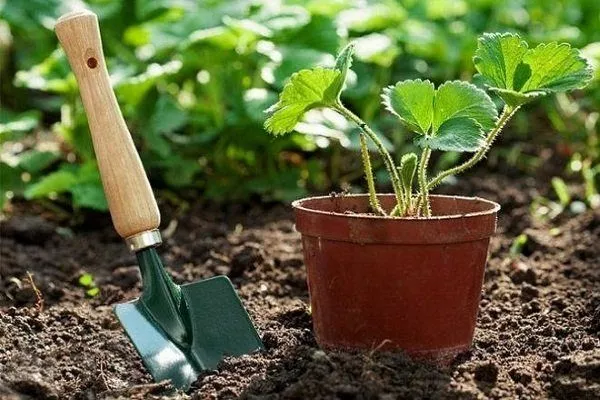
It is not recommended to plant Kleri on southern slopes - the snow melts early here, and the bushes may freeze.
The order of planting seedlings:
- Harden off seedlings before planting for three days at a temperature of +10 °C.
- Select healthy seedlings. Each plant should have at least 5 leaves. Trim the roots to 10 cm and dip them in a clay slurry.
- To disinfect the soil, water it with a copper sulfate solution (2 tablespoons per 10 liters of water). Use 1.2-1.5 liters of solution per 1 square meter.
- Make holes. Space adjacent holes 30-35 cm apart. Space rows 40-45 cm apart. Pour 0.5 liters of warm water into each hole.
- Place the plant in the hole, spread out the roots, and fill them in. The growth bud should be above the soil.
- Water the seedlings – another 0.5 liters under each bush.
- Mulch the planting.
It's recommended to plant strawberry seedlings in the morning or evening. Be sure to shade the seedlings to protect them from direct sunlight.
How to properly care for the variety?
Caring for Clery is almost the same as for most everbearing varieties. To produce several harvests per season, the plant requires constant support in the form of watering and fertilizing.
Watering, weeding and loosening
The key to a good harvest is regular and moderate watering. Excess moisture will damage the roots, but the variety tolerates short-term droughts without harm. Water the bushes at the roots, and sprinkler irrigation is used in the spring to stimulate leaf development. Sprinkler irrigation can also be used after the berries are picked. However, the best watering method for the Clery variety is drip irrigation.
After watering, it is recommended to loosen the soil between rows, removing weeds. Loosening depth is 10-15 cm, and near bushes – 2-3 cm.
Frequent watering promotes the development of fungal diseases on the roots and deprives the plant of frost resistance.
Warm water should be used for irrigation; its temperature should not fall below 17°C. Cold water negatively impacts the immune system. Watering is greatest during flowering and fruit set, as well as after harvest. The average watering frequency from late May to mid-August is once every two weeks. The final watering, for moisture replenishment, is at the end of October.
Top dressing
The flavor and size of Clery's berries directly depend on soil fertility. To replenish the energy expended on fruiting, this everbearing variety requires regular fertilizing. It's recommended to fertilize strawberry plants four times per season. Read about spring fertilizing. Here.
Fertilizing the Clery variety – composition and dosage of fertilizers:
| Fertilizer application period | Name of fertilizers and dosage |
| Early spring | A complex fertilizer or foliar feeding of ammonium, boric acid, and potassium permanganate (2 g each, diluted in 10 liters of water) is used. Alternatively, add compost at a rate of 3-4 kg per 11 square meters. |
| Before flowering | Water with a solution of nitrophoska (20 g) and potassium sulfate (2 g) per 10 liters of water. The watering rate is 0.5 liters per bush. Or spray with boric acid (2 g per bucket of water). |
| During flowering | Water with a solution of cow manure (1:8). |
| After harvesting the berries | Water with a solution of complex fertilizer – 40 g per 10 liters of water. Add a glass of ash. Use 1 liter of solution per bush. |
| Throughout the season | Water periodically with solutions of organic fertilizers (manure, litter). Dilute the organic matter in water at a ratio of 1:10. After soaking for 2-3 days, water the soil with the solution, being careful not to get it on the leaves. |
After fertilizing, the plantings must be watered.
Mulching
The soil between the rows is mulched—straw, forest needles, plastic film, tree bark, humus, or roofing felt are all suitable. Mulching begins in the spring; it prevents moisture evaporation and prevents the berries from coming into contact with the soil.
Benefits of soil mulching:
- the amount of loosening and watering is reduced;
- weeds do not grow;
- crop yields increase.
And if organic mulch is used, soil fertility is also increased. Find more information on soil mulching. here.
Trimming whiskers and leaves
Features of pruning:
- Strawberry leaves are pruned as soon as they completely dry out. This usually happens at the end of summer. The key is to catch this moment so that new leaves have time to form before winter.
- For pruning, use a special tool—pruning shears or scissors. It is not recommended to tear the leaves by hand. Leaves are cut 5 cm from the ground.
- Don't prune leaves when they're just slightly yellowed—this is when new growth and buds are forming. Disturbing the bush at this point could ruin the future harvest.
- Strawberry runners are pruned when there's no need to obtain planting material, especially when the strawberry is flowering and fruiting. They absorb a lot of nutrients, which negatively impacts yield and berry size. Trim runners with sharp, cutting objects.
- ✓ Yellowing of leaves between the veins may indicate a magnesium deficiency.
- ✓ Stunted growth and small leaves may be a sign of nitrogen deficiency.
Preparing for winter
Once the leaves and runners are trimmed, the strawberry plants begin preparing for winter. In August, the soil is loosened to improve oxygenation. The final winter mulching is done in late autumn, no earlier than the third ten days of October.
A layer of mulch is applied to protect strawberry plants from frost. Hay, fallen leaves, pine needles, straw, and agrofibre are all suitable insulators. In the spring, the mulch layer is removed as soon as the strawberry plants begin to grow. The main rule of mulching is to cover the spaces between the rows, not the strawberry plants themselves.
Diseases: control and prevention
Clery is resistant to fungal infections. The only disease that seriously threatens Clery is anthracnose. This disease causes the runners and petioles to become covered with reddish-brown sunken spots, which eventually develop into black ulcers. The plants dry out and die.
Affected leaves or even entire bushes are removed. If signs of disease appear, the plants are sprayed with the fungicide Antracol (15 g per 10 liters of water) or Ridomil (25 g per 10 liters of water).
To prevent planting, spray several times per season with 2% Bordeaux mixture or a mixture of copper sulfate and lime (100 and 130 g, respectively, dissolved in 6 liters of water).
Pests: control and prevention
The main pests of Clery garden strawberries are slugs, spider mites, aphids, weevils, and cockchafers. A tansy decoction is effective against these pests. Boil 700 g of dried tansy in a bucket for half an hour, cool, and bring the volume to 10 liters. Add 30-40 g of soap to the decoction.
Pests of garden strawberries Clery and their control:
| Pest | What harm? | How to fight? |
| Aphid | It sucks the juices from the green parts of the plant. The leaves curl and dry out. | Spray with garlic infusion. For every 10 liters, use 200 ml of garlic and onion juice, and 150 ml of dandelion juice. A soap solution of 60 g per bucket of water will also work. |
| Weevil | Beetle larvae attack buds and ovaries, they stop developing and dry out. | Spray with potassium permanganate (5 g per bucket of water) or Inta-vir (2.5 tablets per 10 liters of water). |
| Strawberry mite | They suck the juices from the green parts of the plant. Affected bushes shrivel and dry out. | Spray with colloidal sulfur – 8 g per 10 liters of water. Or with Karbofos – 60 g per 8 liters. |
| Slugs | They eat leaves and berries. Affected leaves have round indentations along the edges, and fruits have eaten-out depressions. | They dust the beds with ash in the evenings, when the slugs emerge. They set out traps—damp objects from which they then collect the slugs. |
| May beetle | The larvae attack the roots of plants, causing their death. | Six months before planting seedlings, add Bazudin to the soil (5-7 g per 5 sq. m). |
Preventive measures:
- destruction of plant residues;
- regular loosening of the beds;
- planting onions and garlic between rows;
- pollination with sulfur during leaf growth and after harvest;
- spraying with a tobacco-soap solution (100 g is infused for 48 hours and 40 g of soap is added).

Harvesting, storage and transportability
Even the most transportable variety is not recommended for transfer from one place to another. Therefore, the berries are immediately stored in the container they will be transported in.
Tips for picking, storing and transporting berries:
- To extend the shelf life of berries, pick them with the stems.
- If the berries are to be stored or transported, do not water the plantings before harvesting.
- Pick berries in the morning or evening. When picking, discard any damaged fruits immediately.
- The best containers for collecting and storing berries are wooden or plastic boxes. Line the bottom of the boxes with paper or fabric. You can also store the berries in wicker baskets or glass containers.
- In the refrigerator, at a temperature of 0 to +2°C, berries will keep for 5-6 days. If left at room temperature, they will begin to spoil within 24 hours.
Gardeners' reviews
The Clery variety is suitable for gardeners and farmers willing to devote maximum attention to their strawberry plants. To ensure profitable cultivation of this high-yielding variety, it's essential to strictly adhere to proper cultivation practices, including watering and fertilizing. Clery will also satisfy amateur gardeners, as long as they remember that the flavor of the berries directly depends on soil fertility.