
To grow a bountiful and high-quality strawberry harvest, it's important to understand the proper growing practices, select the right variety, and consider the local climate. To delight your family with homegrown strawberries next season, experts recommend familiarizing yourself with a few tips now.
Which varieties are best propagated by seeds?
Today, you can choose the optimal variety for any region and climate zone. Experienced gardeners identify nine main varieties, the propagation and cultivation of which will bring pleasure and a bountiful harvest.
| Name | Yield (kg per bush) | Berry weight (g) | Frost resistance |
|---|---|---|---|
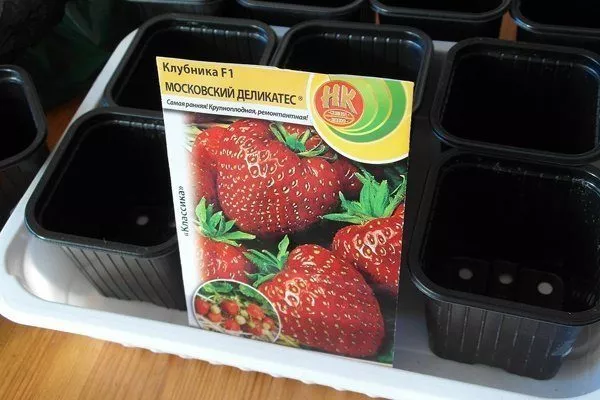
| Moscow delicacy | 1-1.5 | 60 | High |
| Sarian | 1.5 | 60 | High |
| Queen Elizabeth | 1.5 | 60 | Average |
| Gigantella | 2 | 70-80 | High |
| Geneva | 1.5 | 60 | Average |
| Tristar | 1 | 30 | High |
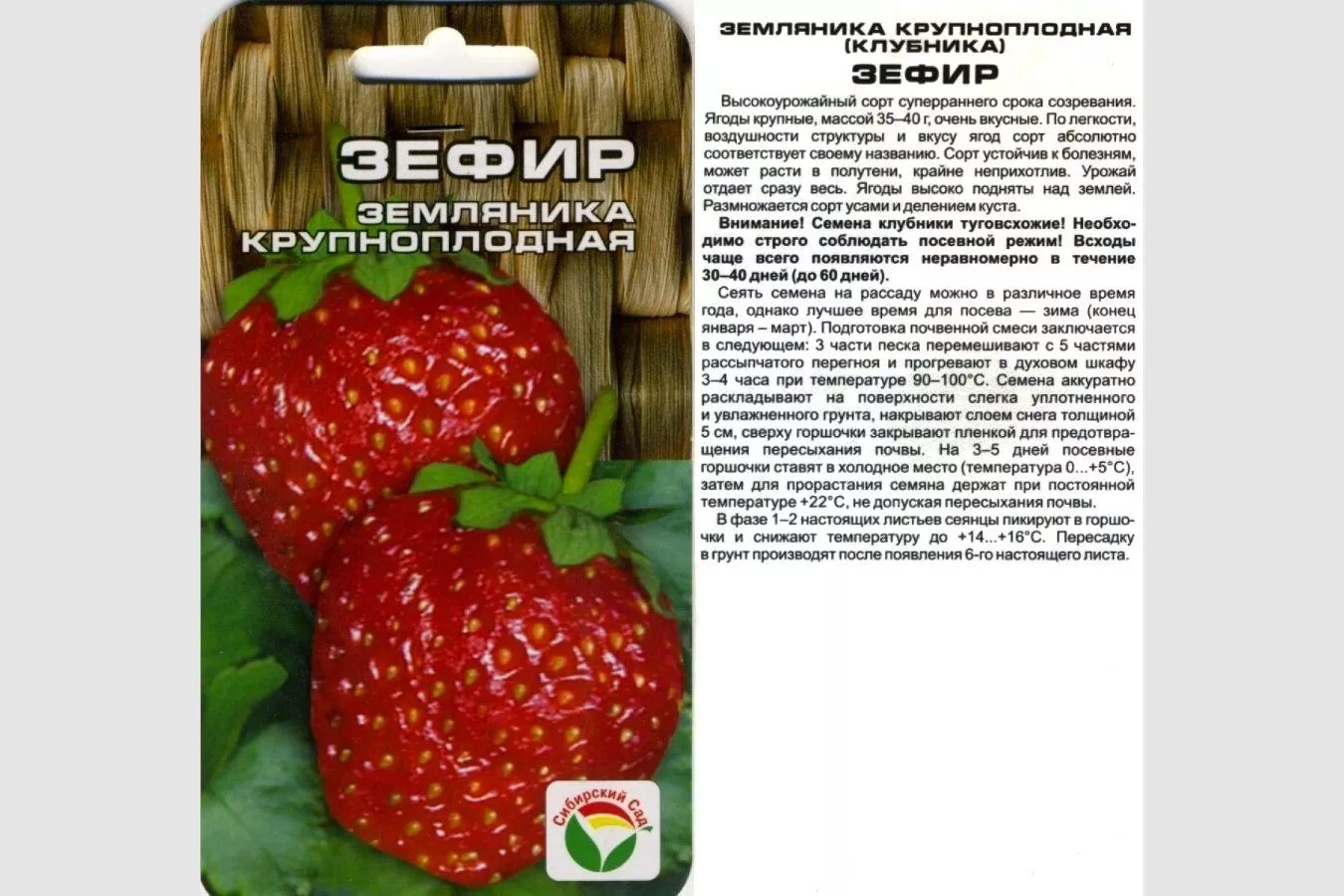
| Marshmallow | 1 | 40-50 | Average |
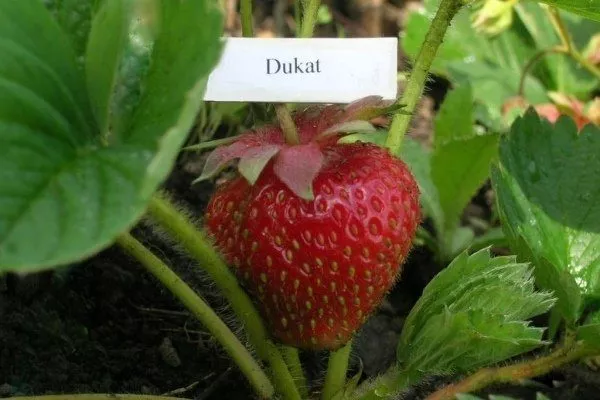
| Ducat | 1.5-2 | 60 | Average |
| Diamond | 1 | 30 | High |
Moscow Delicacy F1
This variety belongs to the hybrid category. The main characteristic of this Moscow delicacy is its high yield. It is grown both in open ground and in greenhouses. A standard bush yields 1-1.5 kg of berries. Experts highlight the following characteristics:
- the berries are large and juicy, weight – from 60 g;
- first harvest in June;
- tolerates sudden temperature drops well.

Sarian F1
A hybrid variety well suited for growing in cold climates. Its main advantage is that it produces fruit even on the plant's tendrils. With proper cultivation practices, a bush can produce up to 1.5 kg of berries. Key characteristics include:
- The harvest can be collected throughout the season.
- The bush requires care; the better the gardener takes care of it, the more berries there will be.
- The variety is frost-resistant and can be grown in open ground.

Queen Elizabeth
This variety gained popularity due to its high yield and minimal maintenance. Over the 20 years of its existence, bushes have become a common sight in almost every garden plot. Key benefits:
- Large and sweet berries.
- The harvest is collected from May until the end of September.
- Even when young, the plant is resilient to movement. The bush can be dug up and transported.
- The average weight of all berries is 60 g.
- The plant has strong immunity.
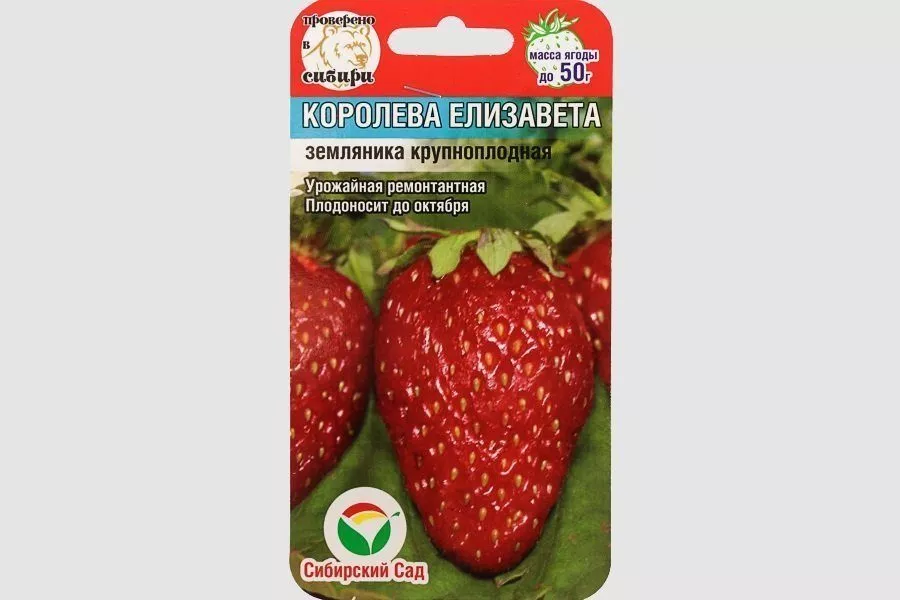
Gigantella
The hybrid's main characteristic is its vigorous and robust bushes. The plant tolerates cold well and is suitable for northern climates. The name is accurate, with berries averaging 70-80 g. With proper care, it produces a record harvest. Features:
- large bushes - it is necessary to take this into account in advance so that adult plants do not suppress each other;
- For an abundance of berries, a large amount of light is required;
- With proper care, the bush will be able to produce a high-quality harvest for 8 years.
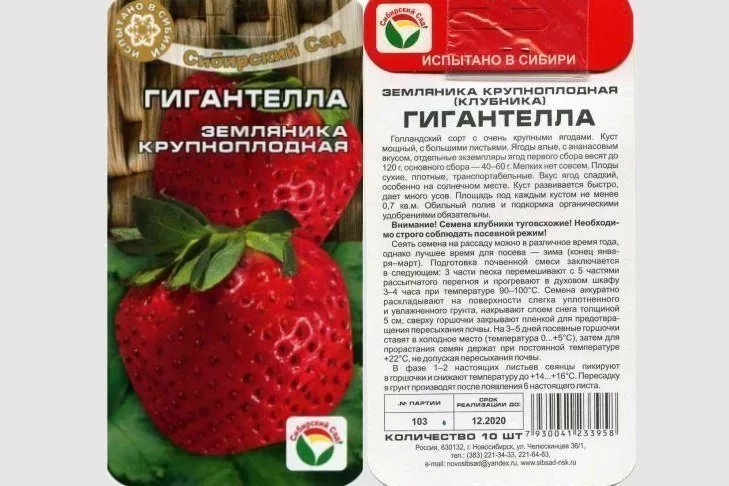
Geneva
This variety has been in use for 30 years. Its main characteristic is that it requires little maintenance. Experts recommend Geneva as the best choice for visiting gardeners who will be tending to it on weekends. Variety characteristics:
- Each bush produces 5-6 tendrils, so the gardener does not need to trim off any excess.
- The berries are large and juicy, but they shouldn't touch the ground. This point must be taken into account in advance.
- Bright and unusual taste.
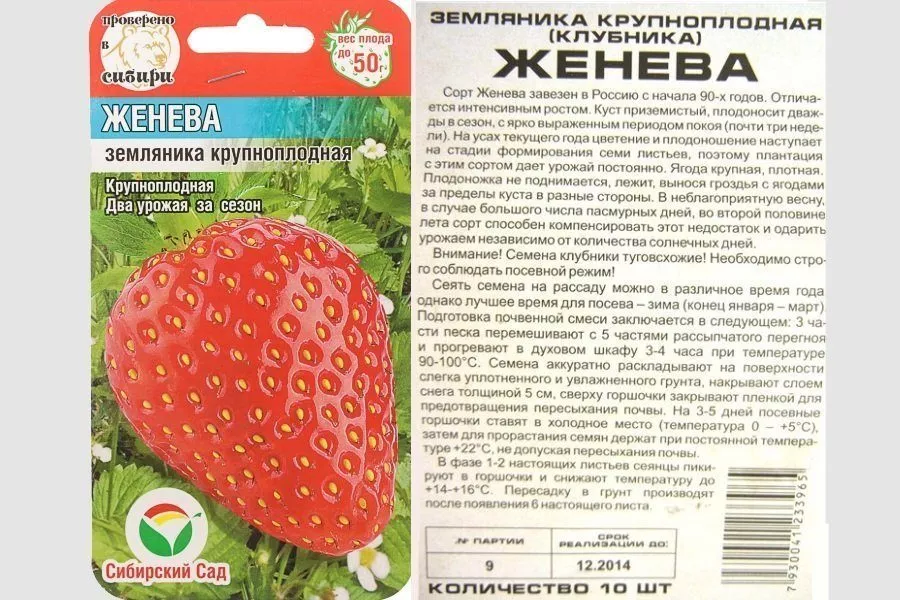
Tristar
This frost-hardy variety is ideal for northern climates. Its main characteristic is its sweet and aromatic berries. Tristar may not boast large sizes, but the harvest will be abundant. Characteristics:
- a high-quality and abundant harvest will only be in the spring; by autumn the bush begins to produce a minimum, preserving its strength for the winter;
- the plant is strong and has good immunity;
- average berry weight is 30 g.
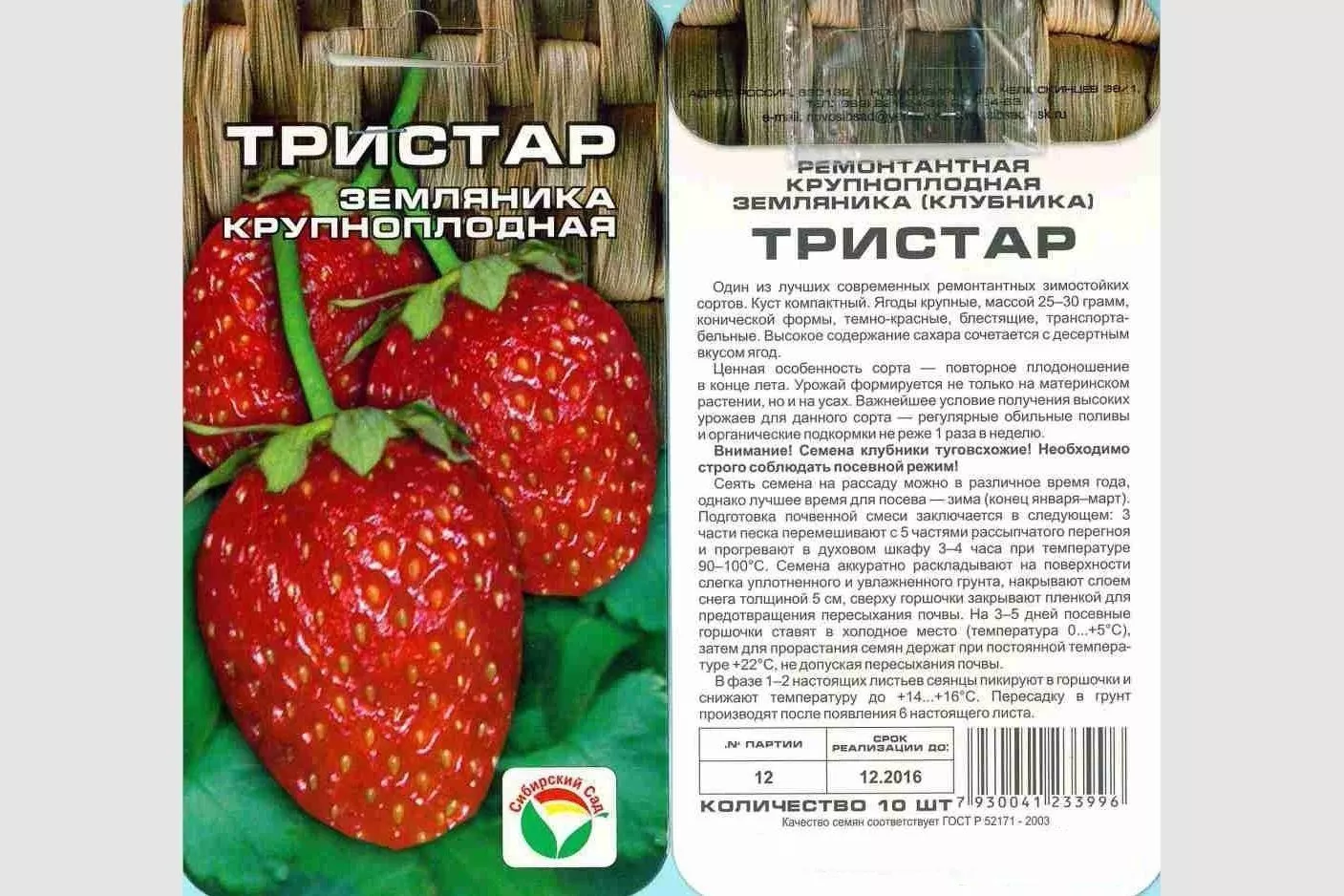
Marshmallow
This hybrid has a key distinguishing feature: the plant produces a harvest early. It's ideal for greenhouse cultivation. Growing strawberries for sale will be a joy. However, to propagate them correctly, all agricultural practices must be followed.
With proper care, the berries will:
- Medium size from 40 to 50 g.
- The plant will delight you for more than 4 years.
- The first harvest is in mid-spring.
Ducat
A variety of Polish origin. Its main characteristic is that it is not sensitive to soil conditions. It can be propagated if minimal requirements are met. The first harvest will occur in late spring, with each plant yielding 1.5-2 kg. Characteristics:
- Bright red berries.
- Does not lose its aroma and taste after heat treatment.
- For the winter, the bushes are protected from frost.
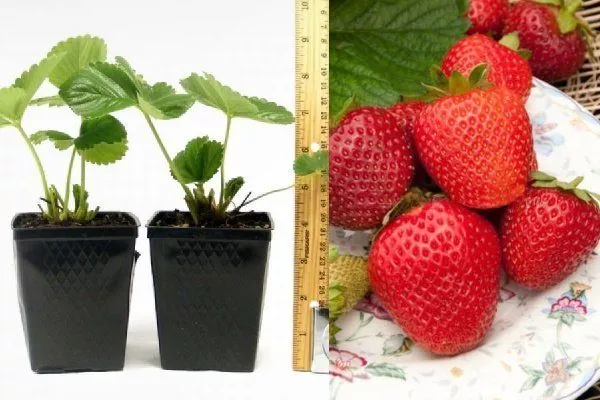
Diamond
Although the berries won't impress with their large size, the harvest will be stable. The plant tolerates frost and cold well and adapts to any climate. It's an ideal choice for gardeners who don't have time to care for their plants. Key characteristics:
- Average weight of berries is 30 g;
- Due to its density, it can be stored for a long time and does not wrinkle.
- The berries are beautiful and bright and sell well.
Benefits of Growing Strawberries from Seeds
By choosing the right seeds, even a novice gardener can grow a strawberry bush on their own. The main advantages of this method of growing strawberries are:
- There's a high chance the future seedlings will survive. The gardener will be monitoring the plant from the very beginning, meaning they can control every detail, from weather conditions to soil nutrition.
- The gardener himself controls the time of sowing and the receipt of the first harvest.
- Seeds last longer than purchased seedlings. If you run out of time, you won't have to worry about wasted money or the loss of purchased seedlings.
With proper care, gardeners can be confident in the variety they're growing. Often, to save money, commercial seedlings are poorly cared for, resulting in small berries and a frail plant.
Difficulties in growing strawberries from seeds
Growing any crop from seed requires special and proper care. The first thing a novice gardener will encounter when growing strawberries from seed is proper seed preparation and lighting.
- ✓ Soil pH level that is optimal for each variety (for example, 5.5-6.5 for most strawberry varieties).
- ✓ The required feeding area per bush (for example, 30×30 cm for compact varieties and 50×50 cm for large ones).
The health and fertility of a future plant depends on proper care from its early stages. Gardeners should follow a number of standard rules:
- Select high-quality soil and fertilizers.
- Disinfect the seeds.
- Take care of artificial lighting and thermal conditions.
Failure to follow any of these steps will result in poor cultivation. The yield will be low, and the plant itself will become prone to disease or even die when transplanted outdoors.
Seed preparation
Proper seed preparation is the foundation of growing and propagating. Regardless of cost and manufacturer, gardeners must always follow proper agricultural practices. The most important ones can be listed separately:
- Calibration – only high-quality and whole seeds are selected.
- The seeds must be disinfected. To do this, simply soak them in a special solution of potassium permanganate and water.
- Steaming seeds is done to monitor germination. Before placing the seed in the soil, soak it in warm water or wet cheesecloth. For best results, place the seeds in wet cotton pads in the refrigerator for several weeks.
The video below explains how to stratify strawberry seeds before planting:
Each variety should be labeled, and the cotton pads should be kept moist. After this preparation, even the largest-fruited variety will produce an early harvest.
Sowing dates
Experienced gardeners adhere to an old and proven method for determining sowing times: the lunar calendar. However, through extensive research, specialists have been able to pinpoint a more precise time, as the lunar calendar doesn't take into account the specificities of individual territories and climate zones. The following dates are used:
- February is a good time to sow seedlings of large-fruited varieties. If the gardener wants to harvest the next season, it's best to sow during this period, but care must be taken to ensure adequate light.
- April – you won't get a quick harvest, but the plant will have more time to gain strength. This is the ideal time for northern regions. Within a year, gardeners will be able to reap a high-quality and abundant harvest of berries.
Sowing timing depends solely on the gardener's needs. The sooner the seeds germinate, the sooner the harvest will be. However, growing a full-sized bush in a single season will require more effort, and energy costs must be taken into account.
For successful germination of seeds, it is necessary to create a 12-hour daylight period.
Soil preparation
Soil influences the plant's yield and immunity. Often, garden plots are allocated on dead lands previously used by the state for commercial purposes. Therefore, taking soil from a plot isn't enough; strawberries require special fertile soil. Strawberries don't like too much clay, as it puts pressure on the roots and hinders the plant's development.
For sowing seeds, sandy and loamy soil is required to protect the roots from excessive moisture. Peat should be avoided, as excess minerals create a favorable environment for disease development.
For best results, you can use ready-made mixtures or mix black soil with sifted sand. In the latter case, you'll need to add ash and compost.
Selecting the right container
When it comes to choosing a container for growing seedlings, whatever's at hand is usually sufficient. However, gardeners should keep in mind that seedlings develop quickly, and a container that's too small will hinder root development.
Each container should be treated against diseases and viruses. To do this, wash the container and treat it with potassium permanganate. It is advisable to avoid using wood, as it often becomes a breeding ground for bacteria and fungi.
For best results, it's best to use special silicone containers. They're easy to clean, lightweight, durable, and maintain proper temperature. Make sure to pre-drill holes to allow excess moisture to escape. A standard rim is 10 cm, but the length and shape can be customized by the gardener.
Sowing in separate containers
This is the best option if the seedlings are being grown for sale. This way, the gardener won't have to disturb the young plant by separating it from the others. Moreover, this option is also more convenient for transplanting into open ground. The risk of root damage is minimal.
You can use special single-stage pots or special containers with individual cells. The number of seeds to be germinated should not exceed the number of containers.
Sowing in boxes
This option is more suitable for germinating seedlings at home. If the gardener is unsure of the quality of the seeds, a box offers a better chance of growing strong seedlings. It's worth keeping in mind that even with ideal care, not all seeds survive.
Boxes are easier to illuminate artificially, they don't take up much space, and they're easy to transport. These days, you can buy ready-made containers with measuring lines for convenience.
How to sow strawberry seeds correctly?
To make it easier for beginning gardeners to germinate their first seedlings, experts have prepared detailed instructions. By following proper agricultural practices and standards, you'll have a better chance of getting a high-quality and tasty harvest. Here's how to sow:
- Prepare the seeds in advance. This process takes over two weeks, so consider this when choosing a sowing time.
- Once the seeds and soil are ready, assess the size of the seedlings. If they are small, sow them on the surface. There's no need to cover them with soil; weak seeds won't germinate. If the seeds are large, feel free to cover them with 2-3 mm of soil.
- After sowing, the gardener sprays the seedlings and covers the container with film.
- During the first few days, the room temperature should not be lower than +25 degrees.
- Remove the film for 5 minutes once a day. The soil should be saturated with oxygen.
- As soon as the first sprouts appear and the temperature is stable at least at +22 degrees, remove the film.
The appearance of the first sprouts means the gardener has completed all the stages correctly. From now on, all that remains is to maintain the temperature and water the seedlings on time.
In the video below, a gardening blogger explains how to sow and grow strawberries in peat pellets:
Peculiarities of caring for young seedlings
To ensure healthy and strong plant growth, care for it properly from the seedling stage. Overwatering is just as bad as drought, and over-mineralization can lead to bacterial growth.
Prepare the small plant for planting outdoors; a slight temperature fluctuation will kill the entire bush. Read on to learn how to properly care for seedlings.
Watering
Watering seedlings is easy – if the soil is dry, they need watering. If you're sprouting in special tablets in containers, you should pour water directly into the tablet; the tablet will absorb the required amount.
If you're growing in boxes, it's a good idea to mist the soil as it dries. Once the seedlings gain strength and grow, you can water them thoroughly at the roots.
Top dressing
You can start feeding the plant as soon as the first few leaves appear. Water the plant beforehand; young shoots can be watered with rainwater and manure. Avoid overfeeding during the seedling stage.
Fertilizing the soil where the seedlings will be transplanted is essential. When the weather first warms, the area where the bush will produce fruit is dug up and fertilized with compost.
Picking strawberry seedlings
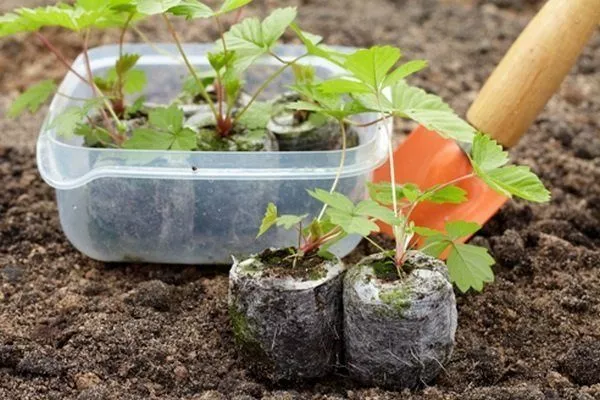
Pricking out is dividing plants into different containers. Strawberries are pricked out when the seedlings have produced 3-4 leaves. They are transplanted into special cups, being careful not to damage the young roots.
For ease of handling, use tweezers. If the roots are intertwined, they can be separated by rinsing with water. There's no need to fertilize after repotting; the main thing is to keep the soil from drying out.
Preparing seedlings for planting in the ground
Young plants are ready for transplanting into open ground within two months after the first leaves appear. It's crucial to harden off the seedlings before planting, as sudden temperature changes can kill them. To do this, place the pots or transplanted seedlings outside for a few minutes, increasing the time over the next two weeks.
- Start hardening 2 weeks before planting, gradually increasing the time spent outdoors.
- In the first days, take the seedlings out into the shade, avoiding direct sunlight.
- By the end of the second week, leave the seedlings outside overnight if there is no threat of frost.
Before replanting, it's best to leave the plant next to the bed overnight and water it. If the seedlings are being planted in May, you can cover them with plastic for safety.
Diseases and pests of strawberry seedlings
Choosing the right hybrid will protect against 70% of diseases and pests. However, using untreated tools can have dire consequences. Several major diseases are currently recognized: brown and white spot, ramularia, root fungus, and verticillium wilt.
Pests: strawberry leaf beetles, spider mites, strawberry mites, ants, and weevils. Proper care and inspection of the plant will help eliminate them early.
Growing strawberries from seed is a fun and enjoyable experience. Seeing the fruits of your labor is the gardener's greatest reward. By following these guidelines, you can harvest your first strawberries as early as early summer. These healthy and delicious berries will help restore your family's vitamin balance.