
Growing strawberries in greenhouses allows for 5-6 harvests annually. This berry is in demand year-round, making it a profitable greenhouse crop for many farmers. Learn about the different types of greenhouses, the Dutch method, and how to maximize your strawberry production.
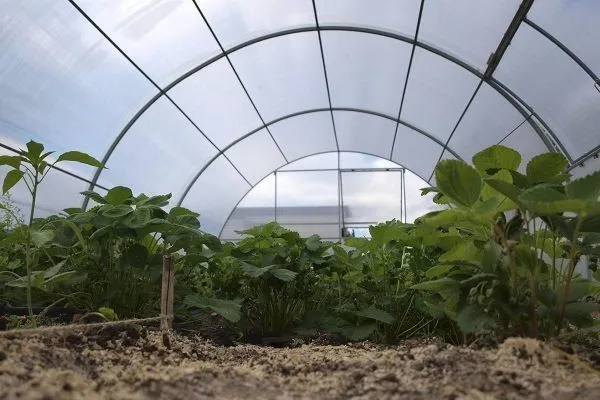
Advantages and disadvantages of growing strawberries in a greenhouse
Strawberries grow beautifully outdoors—that's how they're grown for home gardening. Growing strawberries in greenhouses is usually done for profit—during the cold season, strawberries are much more expensive than in the summer. Before planting strawberries indoors, it's important to consider all the pros and cons.
Advantages:
- In heated greenhouses, the harvest is collected one after another, regardless of seasonality.
- Fruit production, berry size, and flavor, as well as harvest quantity, are not affected by weather. In open ground, unfavorable conditions—dampness, rain, and scorching sun—can reduce yield by 25% or more.
- The costs of organizing greenhouse cultivation pay for themselves within a season.
- Greenhouse-grown berries are more readily purchased by supermarket chains.
- Good prices for berries in winter allow you to make a tangible profit.
- It is easier to care for berries in greenhouses than in garden beds.
- High business profitability – almost 100%.
Flaws:
- Large initial investment.
- Paying workers. Caring for strawberries grown for sale is impossible to do alone.
- The need for heating. If there's no way to heat the greenhouse, the idea of growing berries year-round will have to be abandoned.
Greenhouse for growing strawberries
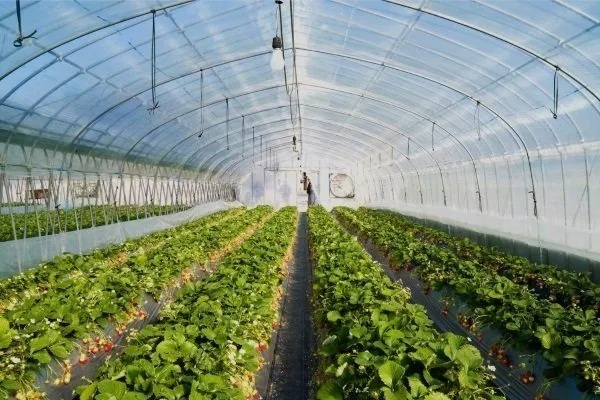
There are several types of greenhouses, varying in design, materials, and heating systems. The choice of materials for greenhouse construction is determined by cost, climate, and growing method.
When creating a greenhouse, proceed approximately according to the following plan:
- construction of a greenhouse;
- creation of a microclimate system;
- purchase of gardening equipment;
- organization of the irrigation system;
- filling the greenhouse with soil;
- purchase of fertilizers and protective preparations – against diseases and parasitic insects;
- purchase of planting material.
Greenhouse material
The greenhouse material must provide good thermal insulation, be durable, and be suitable for specific weather conditions. In the latter case, minimum temperatures, wind strength, and precipitation must be taken into account.
There are three main materials used to build greenhouses:
- Film. This is the cheapest and least reliable option. It's not suitable for winter. The film deteriorates within a few years and begins to tear. It's not durable enough, becomes cloudy over time, and, most importantly, it doesn't provide sufficient thermal insulation.
For year-round strawberry cultivation, a plastic greenhouse is the worst option, and it can only be used in southern latitudes, where winters are warm and snowless. Maintaining a suitable microclimate in plastic greenhouses is extremely difficult.
- Glass. Glass greenhouses are more reliable than film greenhouses. A foundation is built during their construction. The glass is installed in special frames. Glass is a heavy and fragile material; although hard, it is extremely brittle, easily damaged by hail, broken by the weight of snow, and cracked by sudden temperature changes.
Maintaining a microclimate in glass greenhouses is easier than in film-based greenhouses. This requires constant temperature monitoring and ventilation and heating systems. - Polycarbonate. This material is cheaper than glass, yet durable and capable of withstanding heavy loads. Unlike film and glass, polycarbonate is impervious to snow and gusty winds, especially when used with a metal greenhouse frame securely anchored to the ground.
Polycarbonate polycarbonate outperforms glass in many performance parameters – it's durable, lightweight, and somewhat flexible. It's easy to clean and virtually unbreakable. Polycarbonate greenhouses don't require a foundation. The polycarbonate sheets are bent to the required angle and secured to steel profiles. Polycarbonate greenhouses last 10-20 years.
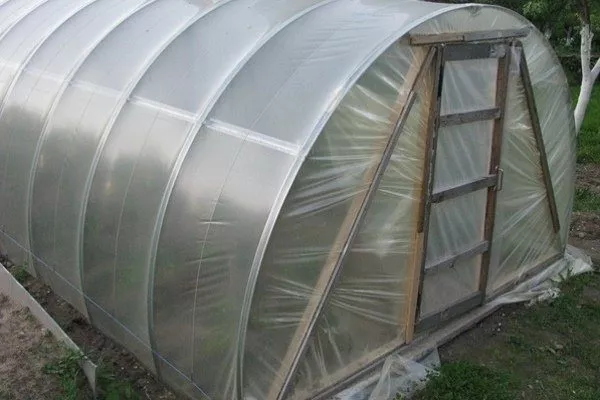
Greenhouse made of polyethylene film
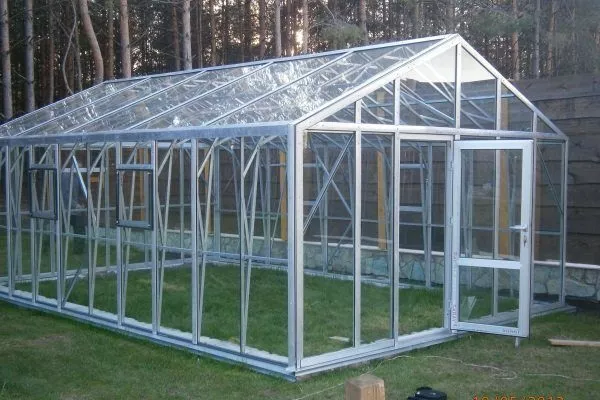
Glass greenhouse
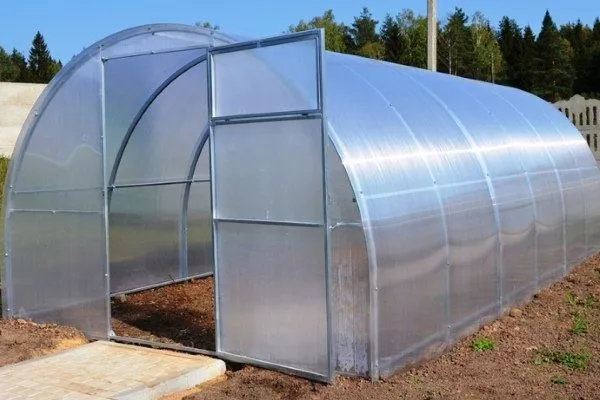
Greenhouse made of polycarbonate sheets
Containers and their fastening
To grow strawberries in a greenhouse, containers are used – they are filled with nutritious soil, into which the plants are planted. The following containers are used:
- pots;
- bags;
- packages.
Containers should have holes in the bottom to allow water to drain during watering. Growing strawberries in metal containers is not recommended, as this material is considered cold and is not suitable for growing plants.
The containers are placed on metal or wooden racks. These racks must have strong supporting bars capable of supporting the weight of the containers filled with soil. A disadvantage of wooden structures is their warping due to the moisture found in greenhouses. To prevent premature deterioration, the wood must be coated with waterproof varnishes.
Heating, irrigation, and lighting systems
In a greenhouse, it is necessary to monitor three environmental characteristics:
- Temperature. Electric heating is the most popular heating method today. Automation is used for control. Sensors automatically regulate the temperature and maintain it at a preset level.
When choosing a heating option, consider the growing method. If strawberries are grown low in the ground, a more intensive heating regime is required. Plants in containers raised on racks are easier to heat, as the air is warmer at higher altitudes. - Humidity. It is maintained through irrigation. Greenhouses today are equipped with drip irrigation, which not only provides plants with the optimal amount of moisture but also creates the required humidity. This parameter is monitored with a hygrograph or a psychrometer. The latter is a simple device that can easily be made from ordinary room thermometers.
To increase humidity in the greenhouse, place a container of water close to the heat source. To reduce humidity, simply ventilate the greenhouse.
- Lighting. It is used to artificially extend daylight hours in winter. Fluorescent lamps are most often installed. Fluorescent lamps are increasingly being used for greenhouse lighting, gradually being replaced by energy-efficient and long-lasting LED lights.
Modern greenhouses, unlike their primitive counterparts where humans must manually adjust environmental parameters, are equipped with automated systems. Sensors monitor all parameters—temperature, humidity, and lighting. However, such systems are expensive and used only by profitable greenhouse businesses.
If you're just starting out growing berries in greenhouses, consider using inexpensive automation devices initially. For example, by installing a timer and setting artificial lighting parameters, you can eliminate the need to monitor lighting settings.
When choosing the material and heating method for greenhouses, the climatic features of the region are taken into account:
- In southern regions, where temperatures don't drop below -5°C, solar-heated greenhouses are beneficial. Excess heat is removed from the greenhouses through ventilation.
- In Siberia and other cold regions, infrared heating and pumps are often used to maintain normal heat even in the most severe frosts.
In temperate climates, biofuels, which release heat as they decompose, can be used for heating.
Additional equipment
When growing in a greenhouse, it is necessary to purchase additional equipment:
- Lighting fixtures. Energy-efficient and safe.
- Drip irrigation system.
- Heating equipment – gas or electric boilers, potbelly stoves, etc.
- Fans.
- Thermometers and hygrometers.
- Containers for planting and shelving.
To better diffuse the light, it is recommended to equip the greenhouse with reflectors.
The best greenhouse varieties
When growing strawberries for commercial use, choosing the right variety is crucial. Characteristics of strawberry varieties suitable for commercial use include:
- Tasty, beautiful, uniform, shelf-stable and transportable berries.
- Repairability.
- Self-pollination.
- High yield.
- They belong to day-neutral varieties.
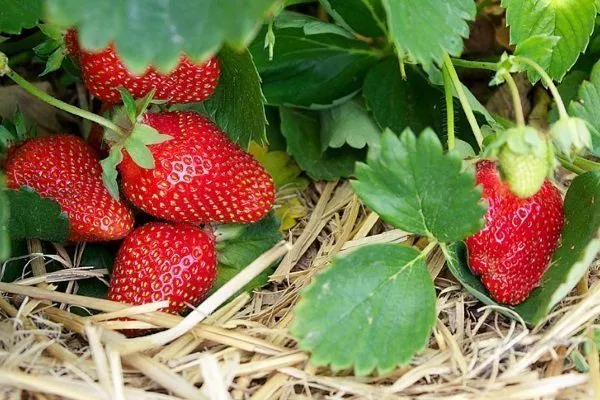
Day-neutral varieties are characterized by continuous fruiting – their fruit buds form every 5-6 weeks.
Through trial and error, experienced gardeners have identified the strawberry varieties most suitable for growing in greenhouses:
- Gigantella. A large-fruited Dutch variety. A single berry can weigh up to 100 g. The strawberries are firm, easy to transport, and have a rich pineapple flavor and aroma. The bushes are compact, yielding approximately 3 kg per bush during the season.
- Albion. A remontant variety that bears fruit repeatedly. Bred in 2006. Originated in the USA. Produces up to 2 kg of berries per bush per season. Berry weight: 40-60 g. Resistant to gray mold and anthracnose.
- Crown. An old Dutch variety, bred in 1972. It is productive, produces fruit for a long time, and has excellent agronomic characteristics. Berries weigh 15-30 g, are medium-dense, and have a good flavor.
- Brighton. This is a semi-everbearing variety. Berries weigh 50-60 g and are red, attractive, and glossy. They transport well. The variety is resistant to fungi.
- Honey. An early variety. Berries are medium-sized, shiny, and have a dessert-like flavor. Yield: 1.2 kg.
- San Andreas. An American variety that bears fruit four times per season. Berries weigh approximately 35 g. They keep well and are easy to transport. Up to 1 kg can be harvested per bush.
Greenhouse varieties are primarily foreign-bred. In addition to the varieties listed above, the following are also suitable for greenhouse cultivation: Tristar, Darselect, Moskovsky Delikates, Trufo Prodyus, Capri, Temptation, and others.
How to choose strawberry seedlings?
Once you've chosen a variety, all that's left is to buy seedlings. It's important to purchase healthy, high-quality planting material. When choosing seedlings, follow these steps:
- Inspect the foliage; it should be perfect—free from defects and a rich green color. Spots, spots, wrinkles, and other damage are excluded.
- Count the leaves - there should be at least 3 leaves on one seedling.
- Inspect the root collar – it should be firm, at least 5 mm in diameter. No rot or spots are allowed.
- Assess the condition of the root system. Roots should be at least 7 cm long and be strong, healthy, and free of defects.
Those planning to grow strawberries for sale are advised to purchase "healthy" seedlings. These plants are grown from mother plants under special conditions. These seedlings are much more expensive than regular ones, but they are particularly disease-resistant and produce high yields.
You can also grow seedlings yourself from seeds. This article explains how to do this. Here.
Maximum yields are observed in plants whose flower stalks were removed promptly. Such seedlings are sold in certified nurseries.
Signs of strawberry seedling diseases:
- white spots indicate a fungal infection;
- pale leaves – late blight;
- wrinkled leaves - damage by spider mites.
Soil for growing
The soil for the greenhouse is prepared a year before planting the seedlings. Here are some tips for preparing the soil:
- It is best to use soil in which cereal crops were grown.
- Humus or compost is added. The soil is diluted with peat, which is needed to optimize its acidity and improve moisture and air permeability. Mineral wool, perlite, and coconut coir are also used to loosen the soil. Lime is added to acidic soils at a rate of 50 kg per 100 square meters.
- Immediately before planting, the soil is fertilized again. First, it is moistened, then potassium chloride and superphosphate are added, at a rate of 15 and 30 grams per square meter, respectively.
After adjusting the soil's composition and structure, they begin treating it with chemicals for disinfection. High temperatures also help control weeds, pests, and diseases.
Options for planting seedlings
There are several ways to plant strawberries in greenhouses. And from time to time, gardeners come up with new, more advanced methods. Today, the most popular methods are growing in pots, in the ground, and in bags.
The choice of method largely determines the strawberry yield and return on investment. While experienced gardeners harvest around 60 kg of berries per square meter, beginners typically yield no more than 30-40 kg in the first few years.
Let's consider different options for growing strawberries in a greenhouse.
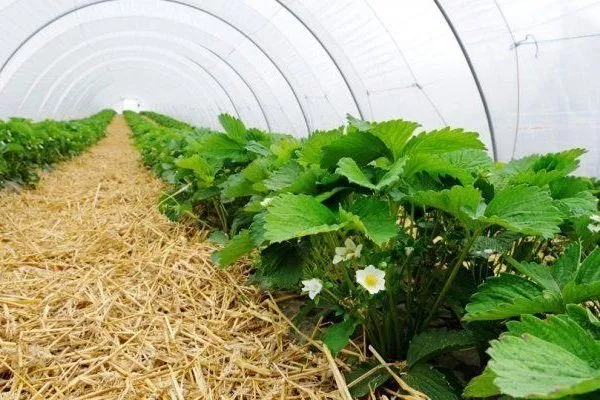
Classic cultivation in soil
This is the most common and simple planting method. Seedlings are planted directly into the soil, in pre-made beds. The advantages of this method:
- ease and convenience of care;
- minimum costs – no need to build shelves or buy containers for planting seedlings.
The disadvantage of this method is the limitation of the usable area to one level.
The seedlings are planted in a staggered pattern or in a two-row method. Leave a 30-40 cm gap between rows, 30 cm between adjacent seedlings, and 90-100 cm between strips. The beds are covered with spunbond or sprinkle with mulch – so that weeds don’t grow and the soil releases moisture more slowly.
In special pots
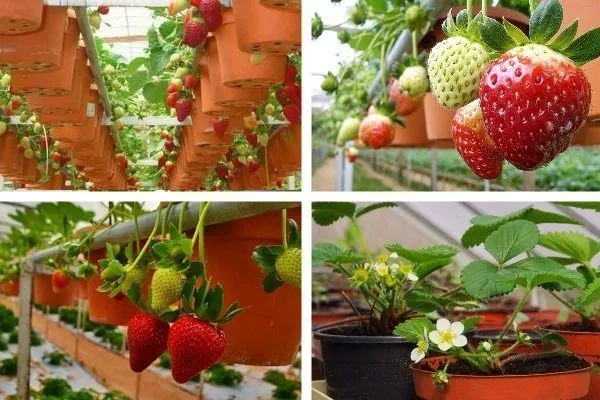
Each seedling is planted in a separate container with holes in the bottom. The pots are not placed on the ground; they are positioned to accommodate the maximum number of strawberries in the greenhouse.
Special supports are installed in the greenhouse to support hundreds of pots, arranged in several tiers. With five or six "tiers," one square meter can accommodate about fifty plants.
To plant strawberry seedlings in pots, prepare a substrate:
- peat – 2 parts;
- sawdust – 1.5 parts;
- perlite – 1 part.
The pots are approximately 20 cm in diameter and are made of wood or plastic. The pots with seedlings are suspended on special brackets or placed on shelves.
Planting is done in the same way as planting ordinary flowers:
- a drainage layer is placed on the bottom of the container;
- fill with moist substrate;
- make a hole and place the roots of the seedling in it;
- fill the roots and carefully compact the substrate;
- watered with warm water.
The described method cannot be used for growing varieties with a powerful root system and tall stems.
In addition to classic pots, you can use multi-tiered and cylindrical versions, ones with pockets, and others. The most popular option is multi-tiered combination pots with pockets.
In bags
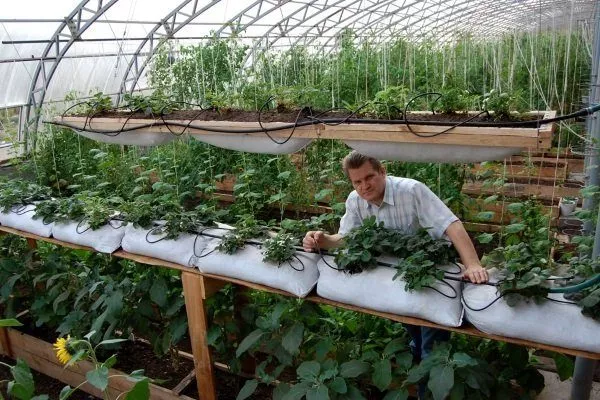
Growing in bags is an alternative to pots. Bags are cheaper than pots and easier to set up. Each bag contains several plants. The growing medium is poured into large white plastic bags. The filled bags are placed on shelves or secured to pre-installed supports.
Features of planting strawberries in bags:
- The optimal size of the bags is: diameter – 16 cm, length – 210 cm.
- No more than 3 packages are placed per 1 sq. m.
- Expanded clay is placed on the bottom for drainage.
- Fill the bags with a peat-perlite mixture. The ingredients are used in equal parts. Another mixture is turf soil mixed with humus and sawdust.
- Cut 8 cm long incisions in the bags. The distance between adjacent cuts is 30 cm. Seedlings are planted in these cuts.
With this growing method, drip irrigation is used. Plastic bags can be replaced with polypropylene sacks, the kind used to sell flour and sugar.
Growing strawberries using Dutch technology
This is the most popular method of greenhouse strawberry cultivation today. The essence of the technology:
- Holes are cut in the black film into which the seedlings will be planted.
- The film prevents weed growth, prevents moisture from evaporating, and prevents berries from becoming contaminated with the substrate.
- Thanks to the black color, plants receive more light, which accelerates the ripening of berries and increases the yield.
- The seedlings are constantly replenished. After the harvest, the spent bushes are pulled out and replaced with new ones.
This method requires constant seedling renewal. Simple forcing allows for a faster harvest—new bushes produce berries more quickly than old ones.
For the Dutch method, only the highest-yielding varieties are used – Tristar, Sonata and others.
The difficulty of this type of cultivation is the need to create a separate plantation to obtain seedlings.
Read more about Dutch strawberry growing technology here.
In the pipes
PVC pipes serve as both supports and substrate containers. Watering is supplied directly through the pipes. Features of growing in pipes:
- Two types of pipes are used: 10-15 cm and 20-30 mm in diameter. In the thick pipes, 5 cm diameter holes are drilled at 15 cm intervals. In the thin pipes, small holes are drilled and then wrapped with agrofibre, which is secured with wire.
- Expanded clay is placed at the bottom of thick pipes, then thin tubes are inserted into them – they are needed for supplying water and fertilizers.
- They fill a thick pipe with substrate, and plant strawberries in the holes.
- Thin pipes are connected to the irrigation system or to a water container that is installed at a height.
- Thick pipes are fitted with plugs at both ends to prevent soil from being washed away by water.
- Each bush should receive 3-5 liters of substrate.
The following video explains how to grow strawberries in pipes for a greenhouse:
Caring for strawberries in a greenhouse
Strawberries are a productive berry, but they require constant care. Growing this berry crop even outdoors presents its own challenges. In greenhouses, in addition to watering, fertilizing, and preventative treatments, it's essential to ensure the plants maintain adequate humidity levels by regularly ventilating the greenhouse.
- ✓ Optimum temperature during the day: +20-24°C, at night not lower than +16°C.
- ✓ Air humidity during flowering and fruiting should not exceed 70%.
Additional lighting
Features of lighting in a greenhouse:
- When grown year-round, strawberries are provided with 10-14 hours of daylight.
- To obtain the required daylight hours, the lamps are turned on from 8:00 to 11:00 and from 17:00 to 20:00.
- Additional light is especially important during the release of flower stalks, during flowering and fruiting.
- It is recommended to use fluorescent lamps.
Increasing daylight hours accelerates flowering and harvest. If daylight hours are 8 hours, the plants will bloom 14 days after planting; if daylight hours are 16 hours, they will bloom 10 days later.
Temperature
When planting seedlings, the temperature should not exceed 10°C. Gradually increase it to 18-20°C. When flowers begin to bloom, the temperature should be 20-24°C, and subsequently no less than 22-24°C.
Ventilation
When the temperature reaches +21°C, the greenhouse is ventilated—if there is no automatic system, this is done manually. Ventilation is carried out only during the day. Warm greenhouse air is released outside, and fresh air is brought in.
By reducing temperature and humidity through ventilation, a favorable microclimate is maintained and the development of many diseases is prevented.
Humidity
When planting seedlings, humidity should be maintained at 85%. Once the seedlings have established themselves, it is reduced to 75%. When the plants are flowering and fruiting, humidity should be even lower – no more than 70%.
Watering
Watering strawberries As needed. Drip irrigation helps maintain the desired soil moisture without splashing water on the leaves and flowers. It's important not to overwater the soil, as excess moisture leads to rot and fungal diseases. Without drip irrigation, plants are watered at the roots, which can be time-consuming.
Pollination
Most modern varieties are self-pollinating. However, older varieties require pollination. Self-pollination of strawberries significantly simplifies cultivation. However, some argue that pollination is essential for all strawberries grown in greenhouses.
Even self-pollinating varieties benefit from supplemental pollination. Pollination methods:
- If the greenhouses are small, strawberries are pollinated manually - with a regular brush.
- For larger scale bees, it's more convenient to set up a hive with pollinating insects—honeybees or bumblebees are suitable. This method is not without risks, but it is effective—up to 95% of flowers are pollinated.
- Fans are used to disperse pollen through air currents. Three fans are required for every 100 square meters. They are turned on for several hours during the flowering period.
- Water spraying gives an efficiency of 45%.
| Method | Efficiency | Cost |
|---|---|---|
| Manual | Up to 70% | Low |
| Bees/bumblebees | Up to 95% | Tall |
| Fans | Up to 60% | Average |
Top dressing
After planting, plants require potassium and nitrogen fertilizers. Recommended fertilizers:
- Potassium chloride diluted in water – 10 g per 10 l.
- Ammonium nitrate - make a solution of 80 g in 10 l.
- Organic fertilizers include slurry diluted in water at a ratio of 1:5, and chicken manure diluted at a ratio of 1:10.
Fertilize strawberries every two weeks. Do not exceed the recommended fertilizer dosage, as this can cause plant burns.
Read more aboutapplication of spring fertilizersAnd autumn fertilizer strawberries.
Watch the episode of the TV show "Rural Stories" about the technologically correct cultivation of strawberries in a greenhouse:
Frost protection
If the greenhouse is heated, strawberries won't be affected by frost or freezing temperatures, especially if an automatic temperature monitoring system is installed. If the temperature drops below -4°C, greenhouse plants require protection.
But strawberries aren't a crop that can be grown in unheated greenhouses year-round. Therefore, the only way to reliably protect them from frost of any severity is to install a reliable heating system.
Strawberry diseases
Strawberries are easily affected by various diseases when exposed to unfavorable conditions. That's why maintaining the appropriate microclimate in the greenhouse is so important.
The most common strawberry diseases and measures to control them:
| Disease | Symptoms | How to fight? |
| White rot | The leaves turn lighter and become covered with a white coating. The berries rot. | It's impossible to completely eradicate the fungus. The only solution is to pick off infected leaves and berries and destroy them. |
| White spot | Leaves become covered with white spots. This disease develops during the flowering period. Leaves, stems, and sepals die. This leads to crop loss. | Suitable fungicides are Falcon or Euparen. |
| Powdery mildew | A white coating forms on the underside of the leaves, eventually affecting the entire plant. | Spray with copper sulfate and 4% soap solution, as well as Quadrix. |
| Brown spot | Kills up to 60% of plants. Leaves darken, turning bright brown. Affects all above-ground parts. | Remove affected plant parts. Preventative measures include Euparen and Metaxylene. |
Preventive treatment
Methods of disease and pest prevention:
- Regular ventilation.
- Preventing over-watering of soil and air.
- Maintaining distances between adjacent bushes.
- Maintaining fertilizer application rates. Exceeding nitrogen fertilizer rates is especially harmful.
- Preventive treatment with fungicides is administered along with water through a drip irrigation system.
- Only healthy seedlings are planted.
- Timely removal of diseased, dried or broken stems and leaves.
- Destruction of diseased bushes.
- Before the formation of ovaries, strawberries are sprayed with Fitosporin, Alirin or Gliocladin for prevention.
Growing strawberries in a greenhouse as a business
Strawberries are one of the most delicious berries, always in demand among consumers. The strawberry business quickly pays for itself and generates a good income. However, this requires work—the berry crop requires care.
Cost
When starting a strawberry greenhouse business, you need to calculate the initial costs – you will need a certain amount of capital.
Approximate calculation of land costs:
- the cost of the land plot is 500,000 rubles;
- construction of greenhouses from polycarbonate – 500,000 rubles;
- purchase of seedlings - about 180,000 rubles (based on 3 greenhouses, each of which is planted with 1,200 bushes at a price of 50 rubles per piece);
- business registration – 20,000 rubles.
If you have your own plot of land, 1 hectare in size, you will need 500,000-750,000 less.
The cost of strawberries also includes ongoing expenses. Each year, you will have to pay for:
- electricity and heating – 25,000 rubles;
- fertilizers, preventative preparations – 5,000 rubles.
- other expenses – 10,000 rubles.
You should also consider the cost of purchasing planting material. If you don't grow your own seedlings, you'll have to constantly buy them.
Sales of products
Selling strawberries is one of the most crucial stages. Strawberries are delicate berries, and even the best-storing varieties don't keep for long. There's no time to waste—the harvested crop must be sold as quickly as possible. Therefore, it's essential to negotiate sales in advance.
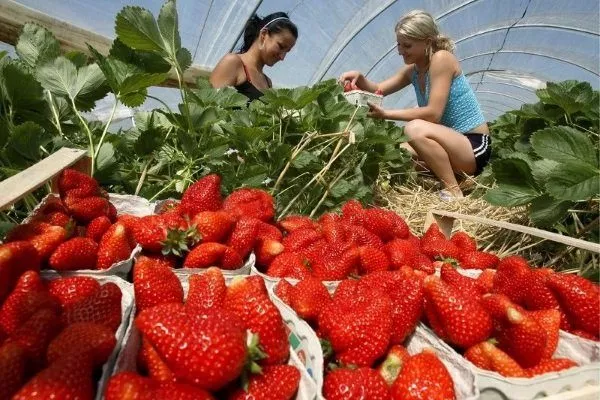
Marketing options:
- Serve in shops, supermarkets and other retail outlets.
- Hand over to processing plants.
- Sell to restaurants, cafes, etc.
- Organize your own strawberry sales points.
- Delivering strawberries to your home is only an option for large cities.
When and how much profit to expect?
If you choose the right variety, you can harvest up to six times a year. The price per kilogram depends on the time of year. Let's calculate the approximate profit based on the previously agreed-upon conditions: three greenhouses.
Estimated income:
- In spring and summer, 1 kg of berries costs 100 rubles. If one greenhouse produces 360 kg, then three greenhouses can yield over 100,000 rubles.
- In autumn and winter, the price of berries is three times higher – 270-300 rubles per kilogram. Consequently, income increases to 270,000 rubles.
As we can see, growing strawberries in greenhouses can bring colossal profits, and all investments pay off in a maximum of two years.
Strawberries are a sought-after berry, and selling them can be a lucrative business opportunity. However, several conditions must be met: investing a significant amount of money in business development, finding markets, selecting a successful variety, and properly organizing greenhouse cultivation and maintenance.