
Strawberries—whether garden or wild—have a soft texture and release juice under the slightest pressure. To ensure their berries reach their destination safely and securely, gardeners strictly adhere to the rules for harvesting, transporting, and storing them.
When to pick strawberries?
The time to harvest garden strawberries depends on the variety, local climate, and weather conditions. Most often, the first berries appear in mid-June, in the south – in late May, and in the north – in July. They are picked as soon as they turn red.
- ✓ Consider the moon phase: picking during the waxing moon helps preserve the berries better.
- ✓ Avoid picking at midday: high temperatures increase the risk of rapid spoilage of berries.
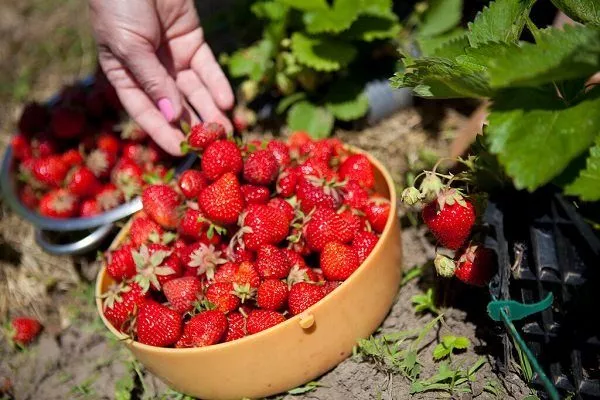
Wild strawberry lovers also need to be on the lookout for the sweet berries—the forest is full of those eager to enjoy them. Birds and animals eat them. In the summer heat, strawberries spoil quickly—they become soft and rot—so delay is unacceptable.
Berries are considered ripe when they're completely red. If the fruit has a green tip, it's not yet ripe. Soft berries are overripe. These are not suitable for transportation or storage.
What to collect in?
Garden strawberries are much softer than wild strawberries. Care must be taken when picking them. To prevent bruising and leaking juice, it is recommended to collect garden and wild strawberries in shallow plastic bowls.
When picking berries, it's best to use transparent bowls with ventilation holes—they allow you to monitor the condition of the berries. If there are too many berries, drops of juice will appear at the bottom—a sign that the container is full.
Strawberries are easily crushed, so tall, hard-sided containers are not recommended. The following containers are not suitable for harvesting:
- aluminum and galvanized buckets;
- metal cans;
- glass jars.
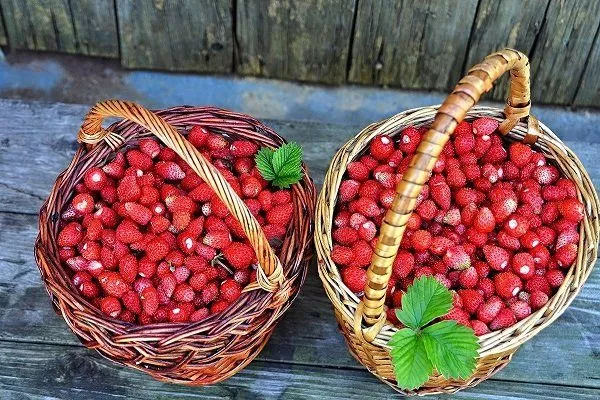
When picking strawberries, it's convenient to use classic berry-picking containers, familiar to people for centuries. These wicker baskets prevent the berries from being crushed or spoiled thanks to natural ventilation.
Suitable containers for picking and transporting strawberries are plastic baking containers. Before picking, poke 20-30 holes in them.
If you're going into the forest to pick strawberries, bring several bowls or containers with you. This will greatly increase your chances of bringing back whole, beautiful berries.
How to pick strawberries?
The key to properly picking strawberries is picking the berries with the green calyxes still attached. This method requires time and painstaking work. It's used if the berries will be transported.
Tips for picking strawberries:
- When picking strawberries for food or jam, pick them in small "bunches," several at a time. This method significantly speeds up the harvesting process. When picking the berries, try not to force them to the ground, as this can easily happen in loose soil.
- Pick berries only in dry weather, in the morning or evening.
- If you don't want to sort the berries later, sort them immediately during harvesting. Place the large berries in one container, and the small or defective ones in another. Compost any rotten or overripe berries.
- Place the berries in a container in no more than two or three layers.
- Clean the berries from debris and sand not with your hands, but with a soft brush, so as not to damage them.
- If you're caught in the rain while picking berries (this often happens in the forest), spread the strawberries out in a cool room to dry. Once they're dry, store them in containers.
Some particularly meticulous gardeners use scissors when picking berries. They carefully cut off the stems (either long or just below the calyx, whichever is more convenient). These berries don't bruise or release juice for a long time, and the stems make sorting easier.
Strawberries are mostly picked by hand, even when grown on a large scale. If the berries are to be processed, such as into jam, it's convenient to use specialized harvesting tools—berry pickers or fruit pickers.
How to preserve the harvest?
Strawberries are perishable. If stored incorrectly, they quickly lose their shelf life. To extend their shelf life, do not wash them beforehand. Do this immediately before eating or when freezing.
How to store strawberries:
- Discard all poor-quality berries—anything rotten, moldy, or soft. A single bad berry in a container can spoil dozens of neighboring berries.
- For transport, use wooden containers—they allow the berries to breathe better. Strawberries spoil faster in plastic containers. Store berries in containers with ventilation holes for no more than 2 days.
- To preserve strawberries for up to a week, place them in a container lined with a paper towel. Store the berries at a temperature of 0 to 2°C. The higher the temperature, the shorter the shelf life.
- To keep strawberries fresh in the refrigerator for two weeks, soak them in a vinegar solution for 5 minutes. To prepare, mix 1/4 cup of vinegar with 1.5 cups of water. After soaking the berries, rinse them, dry them, and place them in a container lined with a paper towel.
- For long-term storage, freeze them. Once thawed, strawberries are perfect for baking, compotes, smoothies, and other treats.
- If you want to dry strawberries, cut them into equal-sized pieces to ensure even drying. Spread the berries in an even layer on a baking sheet and place the baking sheet in a dehydrator. Set the temperature to 135°C and dehydrate for 8 hours.
- ✓ Maintaining a constant temperature within 0…+2 °C is critical to preventing mold development.
- ✓ Using paper towels to absorb excess moisture prolongs the freshness of berries.
Strawberry picking only seems simple at first glance. The process requires not only time and effort, but also adherence to certain rules. The quality of the berries and the shelf life of the harvest depend on these rules.