
The Festivalnaya strawberry was the most popular variety in Soviet gardens. This variety is a true gardener's dream: it's high-yielding, adapts to any climate, and is completely undemanding. Let's learn about the planting and growing of this legendary strawberry.
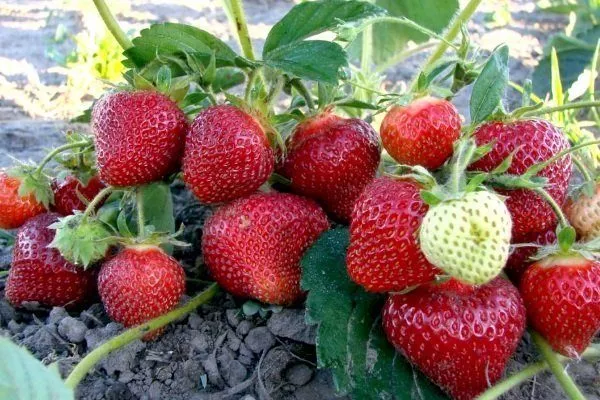
garden strawberry variety "Festivalnaya"
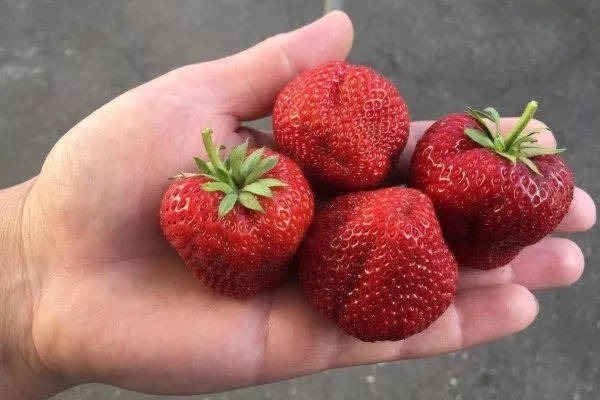
The first berries of the Festivalnaya variety are quite large, their weight reaching up to 40 grams.
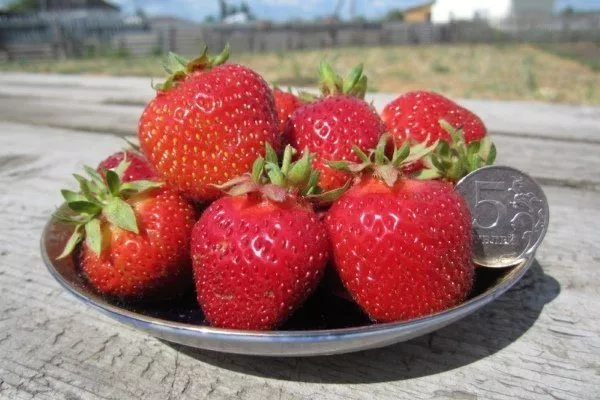
During harvesting, the berries of the Festivalnaya variety are not damaged and remain dry and clean.
Origin of the variety
The variety was developed in 1954 by breeders at the Pavlovsk Experimental Station of the All-Russian Research Institute of Plant Growing. The new variety was a cross between the Premier and Obilnaya strawberries. The name was given in honor of the Youth and Student Festival held in 1957.
The Festivalnaya strawberry is actually a garden strawberry. At least, botanically, it belongs to the large-fruited garden strawberry family, and is listed as such in the State Register.
Description of strawberries
Brief botanical description:
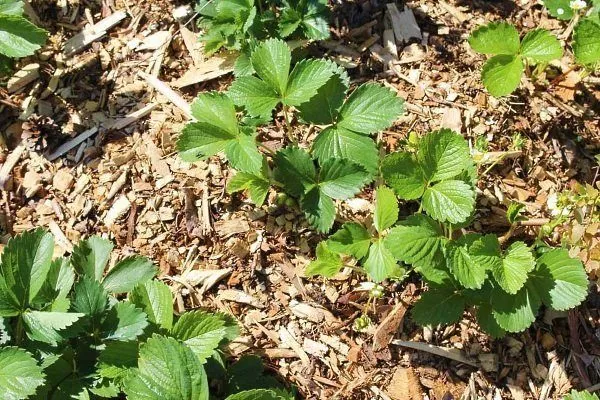
- Bushes. Vigorous, well-foliated, compact plants with abundant, upright foliage.
- Leaves. Large, dark green, matte. The surface is wrinkled and ribbed.
- Mustache. Reddish in color. They grow vigorously, producing numerous rosettes—up to 30 per bush.
- Peduncles. There are more than 15 berries on a single bush. They are strong and thick, located at or below the leaf level, and bend under the weight of the berries.
- Inflorescences. They contain several large white flowers, with 40-50 ovaries per bush.
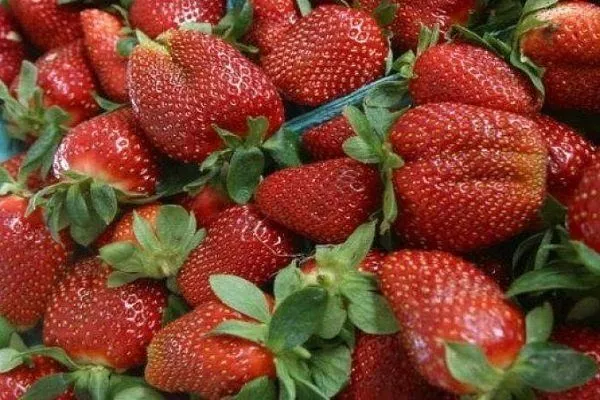
- Fruit. The shape is oval, slightly flattened. The surface often has longitudinal grooves on both sides. Ripe berries are bright red. The surface is shiny and glossy. They separate easily from the stems. The flesh is juicy and moderately firm.
The main value of the Festivalnaya berries lies in their nutritional value. This variety is a leader in vitamin C content. The biochemical composition of the berries:
- sugar – 5.7-11.5%;
- acid – 1.1-1.8%;
- Vitamin C – 73.5-85%.
Main characteristics
This variety is not everbearing, producing a single, but long-lasting harvest. Fruiting begins in June and gradually declines, continuing until autumn. Table 1 lists the main characteristics of the Festivalnaya garden strawberry.
Watch the video below for a review of the 'Festivalnaya' garden strawberry variety:
Table 1
| Characteristics | Meaning/Description |
| Ripening time | mid-season variety (first fruits – mid-to-late June, peak harvest – July) |
| Fruiting | one, long |
| Productivity | 1 kg per bush |
| Weight of berries | The largest berries are in the first harvest (their weight is 35-45 g), and then the fruits become smaller to 10-25 g |
| Life cycle | 3-4 years |
| Resistance to diseases and pests | average
(there is resistance to white spot and gray mold, but it is often affected by strawberry mites) |
| Drought resistance | not tall |
| Frost resistance | up to minus 25 °C |
| Taste | sweet and sour |
| Tasting evaluation | 4.4-4.5 (out of 5 points) |
| Purpose | universal |
| Transportability | high |
| Safety | high |
Planting Basics
The yield and flavor of berries depend not only on the variety but also on growing conditions—soil composition, fertility, and site conditions. Let's learn how to choose and prepare a site for garden strawberries and how to properly plant seedlings.
- ✓ Soil pH should be between 5.5-6.5 for optimal nutrient absorption.
- ✓ The organic matter content of the soil should be at least 3% to ensure good structure and water-holding capacity.
Suitable conditions and soil
This variety thrives in light, loose soils. Unlike most garden strawberry varieties, Festivalnaya can bear fruit not only in sunny areas but also in partial shade—for example, under the spreading canopies of garden trees.
The variety is frost-hardy and thrives in temperate climates. Regions where the Festivalnaya variety can be grown include:
- Northern;
- Northwestern;
- Central;
- Central Black Earth;
- North Caucasian;
- Middle Volga;
- Lower Volga;
- West Siberian;
- East Siberian.
Selecting and preparing a landing site
Optimal site characteristics:
- The soils are loamy and sandy loam, with a slightly acidic reaction.
- Good sun exposure.
- Protection from winds.
- The groundwater table is shallow. The water level should be 2-2.5 meters.
- Acidity – neutral.
- The best predecessors are legumes, radishes, beets, carrots, parsley, and dill.
- Avoid planting after tomatoes, potatoes, and raspberries. These plants also make poor neighbors.
- After strawberries have been planted on a plot, they can be grown again in 6-7 years.
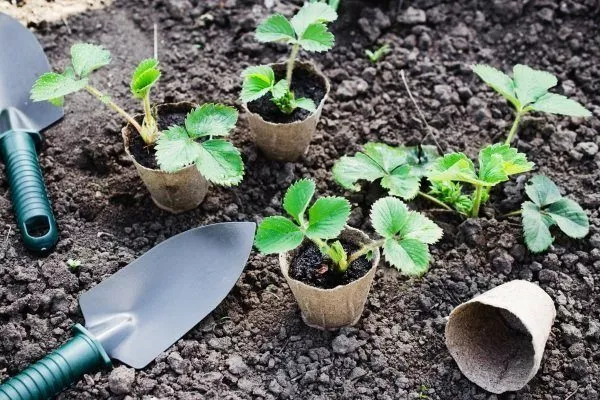
Site preparation:
- After the predecessors, the area is weeded to a depth of 5-6 cm.
- Dig the area to a depth of 25-30 cm. While digging, remove weed roots.
- Fertilize the area by adding 5-6 kg of manure or peat per 1 sq. m, as well as potassium fertilizers (20 g) and superphosphate (50 g).
- In the spring, the soil is harrowed with a rake and then weeded as weeds appear.
The timing of planting seedlings depends on the availability of planting material. Gardeners can purchase them from nurseries or grow them themselves.
Planting of garden strawberries can be done at any time – from spring to late autumn.
Selection of seedlings and their preparation for planting
Only high-quality, sorted seedlings are used for planting. Tips for choosing seedlings:
- seedlings are dense, not wilted;
- without mechanical damage;
- color – dark green;
- height – 3-5 cm;
- thickness of the central stem – 4-5 mm;
- well-developed root system, root length – from 7 cm.
Plant the seedlings on a cool, cloudy day. Water them an hour to an hour and a half before transplanting. You can use a warm humus solution instead of just water. Soak the roots of the dug-up seedlings for 1.5-2 hours in a growth stimulant, herbal starter, or garlic solution. Before planting, it's recommended to soak the roots in a clay slurry.
The easiest way to plant seedlings is to use the cassette method. Each seedling is then simply transplanted with a lump of soil into a prepared hole. This method ensures the highest survival rate.
Planting methods
Garden strawberries are planted:
- In separate bushes. Seedlings are planted at a distance of 55-60 cm from each other.
- Nests. One bush is planted in the center, and 6 bushes are planted around it.
- Carpet method. The bushes are planted in rows, and the tendrils are not trimmed. This type of planting prevents strawberries from producing large berries.
But the most popular planting method is row planting. Most often, seedlings are planted in 1 or 2 rows, but some gardeners plant 3, 4, or more rows. Row planting methods:
- Single row. The distance between rows is 60 cm. Between adjacent plants, 20 cm. This method is usually chosen for fall planting. During the first year, the seedlings do not bear fruit, but only send out tendrils that fill the space between the rows.
- Double row. This option is more suitable for spring. Leave 15 cm between seedlings, 30 cm between rows, and 70 cm between rows. If desired, the bushes can be planted more closely together to remove those that don't bloom in the first year or are susceptible to disease.
The recommended planting time for the Festivalnaya variety is early April and early September. This strawberry prefers moist soil, so summer planting is not recommended.
The landing process
Before planting, it's recommended to cover the beds with an opaque covering material. After covering the edges with soil and pressing it down with something heavy, make holes in it for the seedlings. Mulch—straw, hay, or sawdust—can also be used to control weeds and prevent moisture evaporation.
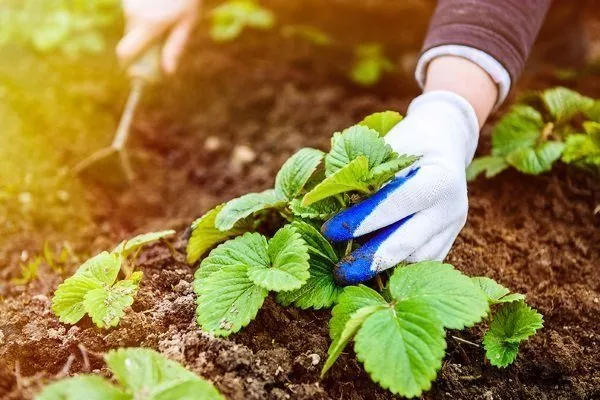
The procedure for planting strawberry seedlings in open ground:
- The area is marked out using twine to dig holes.
- Add a nutrient mixture to the holes – a handful of rotted manure and superphosphate (1 teaspoon).
- Pour 0.5-1 liter of warm water into the hole.
- Place the seedling's root system into the center of the hole, making sure the roots are spread out. Cover the roots with soil and compact it with your hands.
- Water again – 0.5-1 liter of water.
Garlic or onions are often planted between the strawberry beds, and caraway, dill, marigolds, chamomile, and calendula are used to repel insects.
Basic Care for Festival Strawberries
The Festivalnaya variety produces vigorous bushes with numerous berries and runners. The berry requires regular watering, especially during the formation of flower stalks. Moreover, during the first year of growth, runners and flower stalks are removed to ensure the plant establishes a strong root system.
When and how to water?
This variety loves moisture and requires regular watering. Watering regimens are especially important immediately after planting. Young plants are watered every two days. The recommended watering rate is 9-10 liters per square meter. In the second year, water the bushes once a week, at a rate of 12-15 liters per square meter. The best time to water is early morning.
Strawberries are watered primarily at the roots. Watering the plants during flowering and fruiting is especially undesirable. However, before flowering, overhead irrigation can be used to promote better foliage growth. Drip irrigation is recommended.
Weeding and mulching between rows
Weeding is carried out as weeds appear. They must be removed promptly to avoid wasting nutrients and moisture. Simultaneously with weeding, the soil is loosened—mechanically crushed soil loses less moisture and allows more oxygen to reach the roots. The weeding and loosening depth is 2-3 cm.
A simple but extremely effective agricultural technique helps reduce moisture evaporation and weed growth: soil mulchingMulch – peat, straw or other suitable material – is sprinkled on the soil between the rows.
Feeding schedule
Fertilizing strawberry plants begins in the second season. Fertilizing follows this schedule:
- Once the snow melts and the temperature rises to 2-3°C, the plants are fed with ammonium nitrate. The fertilizer is simply scattered over the area at a rate of 30-35 g per square meter.
- Half a month after the first feeding, apply liquid mullein. Use 1.5 liters of mullein per 13-14 liters of water. Water the space between the rows with the solution at a rate of 3-4 liters per square meter.
Read more about spring feeding here.
- Before flowering, the bushes are sprayed with an iodine solution (7-8 drops of iodine per 10 liters).
- After the plants have finished flowering, add a solution of ammophos (20 g per bucket). The watering rate is 5-6 liters per square meter.
- After harvesting, add a solution of chicken manure – 3-4 liters per square meter.
- Apply nitrogen fertilizer early in the growing season to stimulate leaf growth.
- Before flowering, add phosphorus-potassium fertilizers to improve the quality of the fruit.
- After harvesting, use complex fertilizers to restore plants.
Preparing for winter
Preparations for winter begin immediately after harvesting and continue until the cold weather sets in. Pre-winter preparation includes the following activities:
- Trimming the above-ground part of the bushes – removing all the leaves.
- Water once a week.
- Fertilizers are applied according to the fertilizing calendar.
- The beds are insulated with peat or straw.
- They lay out bait for rodents - they can hide in straw/peat during the winter.
Diseases and pests
The Festivalnaya strawberry variety is susceptible to various fungal diseases. Predisposition to infection is increased humidity and shade. Table 2 lists the most common diseases and pests of the Festivalnaya strawberry and measures to combat them.
Table 2
| Disease/pests | Symptoms/damage caused | Treatment and prevention |
| Root rot | Black spots appear on young roots. The roots turn black, and then the entire bush turns black. |
|
| Black rot | The berries are affected - they turn brown and become watery. |
|
| Phytophthora root rot | The roots turn orange, the bushes turn yellow and become covered with brown spots. |
|
| Gray mold | A grey fluffy coating appears on the berries. | Similar to the treatment and prevention of late blight |
| White and brown spot | White/brown spots appear on the leaves. | Similar to the treatment and prevention of late blight |
| Strawberry weevil | They overwinter in the soil, under leaves. They lay eggs in flower buds. The ovaries fall off. The larvae, emerging in July, eat the leaves. |
|
| Strawberry leaf beetle | Beetles feed on strawberry leaves. |
|
| May beetle larvae | Damage the roots. | Spray with insecticides - Zolon, Aktara, Bazudin. |
Harvesting, storage and transportability
Rules for harvesting and storing crops:
- The berries are picked every 1-2 days. Avoid overripening the berries, as they will be unsuitable for transportation and storage.
- Harvesting is carried out only in dry weather. Berries stored in containers must be completely dry.
- Berries showing signs of rot or other diseases are set aside.
- If the berries are intended for storage or transportation, it is better to pick them with the stalk.
- The harvested berries are immediately placed in containers for storage/transportation—the fruit should not be moved unnecessarily. Suitable containers include plastic or wooden crates.
- The harvest is stored at a temperature of no more than +4 °C.
Similar varieties
Today, a modern analogue of the Festivalnaya variety, Festivalnaya Florida, has been developed. This high-yielding variety is distinguished by large berries, very similar to those of the old Soviet variety. This improved analogue was developed at the University of Florida. During the famous Strawberry Festival, Festivalnaya Florida took first place in a comparison of all characteristics.
Festivalnaya is a mid-season variety. These are the most productive. Garden strawberries that ripen mid-season include Lord, Urozhaynaya, Holiday, Mashenka, and many others.
Reviews of the Festivalnaya strawberry
The Festivalnaya garden strawberry is an old, undeservedly forgotten variety. Its berries will appeal to lovers of true strawberry flavor. While producing a single harvest, this variety is distinguished by its long fruiting period, extending throughout the summer. Its only problem is its susceptibility to fungus, but modern fungicides effectively combat this.