
Elsanta is a Dutch variety that has long been the benchmark for strawberry flavor and yield. Developed for commercial cultivation, this easy-to-grow and productive garden strawberry (commonly known as a strawberry) quickly became popular with gardeners and farmers. Let's learn how to grow Elsanta in our climate.
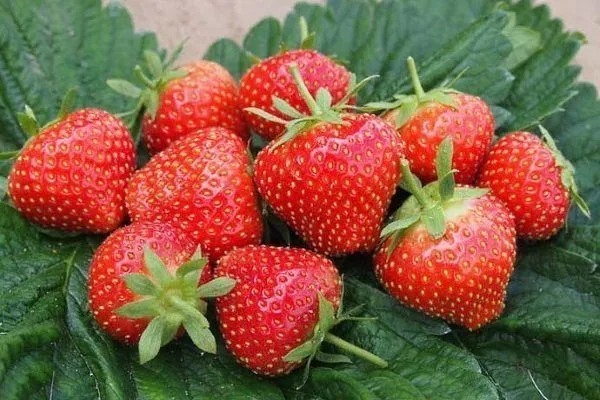
"Elsanta" is considered an elite strawberry and has high taste qualities.
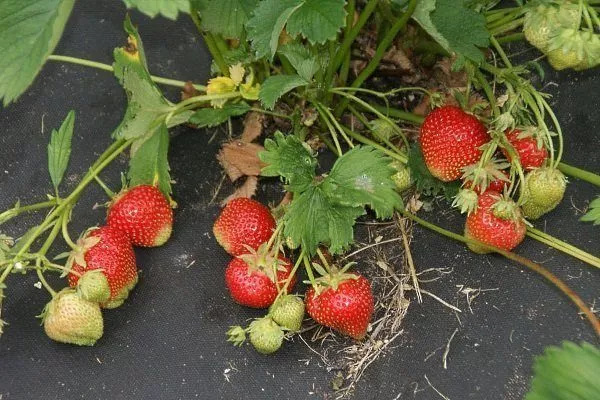
The Elsanta strawberry variety is one of the first berries to appear in summer.
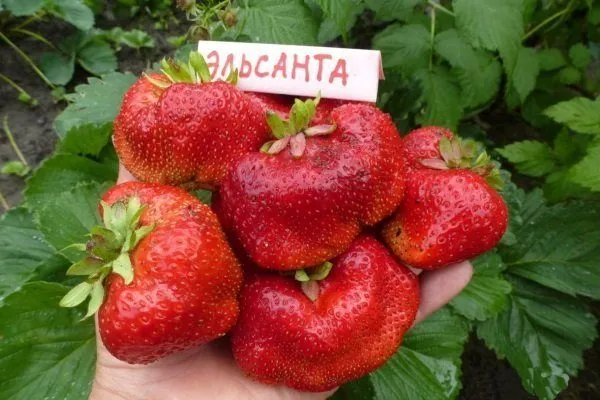
Some Elsanta strawberries are this size
Brief history of the variety
Elsanta is a relatively new variety. It was developed in the Netherlands at the end of the last century. Its parent varieties are Holiday and Gorella. It was added to the State Register of the Russian Federation in 2007. This garden strawberry, meeting the highest European standards, has become a benchmark for commercial varieties. In the Netherlands and Belgium, Elsanta is still actively planted in greenhouses.
Description of strawberries
Brief botanical description:
- Bushes. Medium-sized, spreading, well-foliated. Few rosettes and runners are formed. The plants require ample space—overcrowding dramatically reduces productivity. The bush bears numerous ovaries, evenly distributed. The flower stalks are strong and level with the foliage.
- Fruit. Small, bright red, and neckless, the berries are broadly conical and rounded. The surface is glossy and shiny. They are easily separated from the stems. The berries contain numerous yellow, slightly depressed seeds. The flesh is juicy and firm.
- ✓ Optimum soil acidity for Elsanta: pH 5.5-6.5.
- ✓ Minimum distance between bushes: 30 cm to prevent thickening.
The main qualities of Elsanta
Characteristics of the Elsanta strawberry:
- Ripening category: mid-season.
- The yield is 1.5 kg per bush. Up to 70-80 centners are harvested from 1 hectare.
- This is not a remontant variety. It bears fruit for about 2-3 weeks.
- Elsanta berries not only look delicious but also have an excellent taste. The juicy, scarlet flesh has a sweet, slightly tart flavor.
- Average weight of berries is 45-50 g.
- The pulp is dense, so the fruits are easy to transport.
- Excellent storage properties – at room temperature, the berries do not lose their commercial qualities for 3 days.
- The variety is resistant to viral diseases, but is susceptible to powdery mildew and root rot.
- Winter hardiness down to minus 14°C. Weak winter hardiness is one of the variety's drawbacks.
- Drought resistance is low. During periods of extreme heat, it is recommended to erect a tarp over the plantings. Drip irrigation is recommended.
- The growing cycle is 4 years. The plantings are renewed every 3-4 years.
- The berries are versatile. They can be eaten fresh, made into jam, or frozen.
- The variety is suitable for open ground and greenhouses.
- This variety is recommended for the Volga-Vyatka, West Siberian, and North Caucasus regions. It thrives in temperate climates.
An overview of the Elsanta variety can be seen in the video below:
The nutritional content of Elsanta berries is shown in Table 1.
Table 1.
| Substance | Content |
| Sugar | 4.5-7.9% |
| Acid | 0.78% |
| Vitamin C | 53.2-86.5 mg per 100 g |
| Vitamin P | 80-126.4 mg per 100 g |
Site selection and preparation
When it comes to site selection, the Elsanta variety breaks the mold. Strawberry plantings are typically chosen in the sunniest, most well-heated areas. But this Dutch variety grows well even in partial shade.
Unlike most varieties, Elsanta is completely undemanding regarding soil conditions. Furthermore, this unique variety is not recommended for fertilizing with mineral fertilizers during planting. The plant needs to be hardened off to ensure it grows well and produces good yields even in poor soils.
Site preparation procedure:
- Dig over the soil, breaking up clods.
- When digging, remove weed roots and plant debris.
- Fill the area with ammonia solution (10 ml per bucket).
- When the area dries out – in about a day – loosen it and prepare the holes.
Elsanta is best planted in the fall, but not before the second half of September. Seedlings planted in the spring will produce small berries. Avoid planting this variety in hot weather, as the seedlings begin to wilt at high temperatures. This leads to smaller berries or even death of the bushes.
Elsanta seedlings shouldn't be planted in the heat; it's best to wait until a cloudy or even rainy day. Bushes planted in the heat will quickly wilt and die.
Step-by-step instructions for planting
The order of planting seedlings:
- In the prepared beds, dig holes 20 cm deep.
- Add organic matter to the holes, such as humus or well-rotted compost. Apply 3 kg per square meter. You can also fertilize the soil with superphosphate and potassium chloride.
- Pour water into the hole and place the seedling in the center, placing the roots strictly vertically - the bush should not be tilted.
- Cover the roots with soil and compact it with your hands.
- To prevent weed growth, mulch the planting. Straw (wheat or rye), pine needles, or sawdust are all suitable. First, pour boiling water over the mulch to kill any pests it may contain.
Elsanta seedlings are most often planted in two rows. The distance between rows is 30-40 cm. The distance between bushes is 20-30 cm. The bushes grow extensively, so this must be taken into account when planting.
Features of agricultural technology
The Elsanta strawberry has a number of unique characteristics that must be taken into account when caring for it. Let's learn how to properly care for this iconic Dutch variety.
Watering and loosening
The variety doesn't tolerate drought well. Elsanta requires regular watering, which is especially important during dry periods.
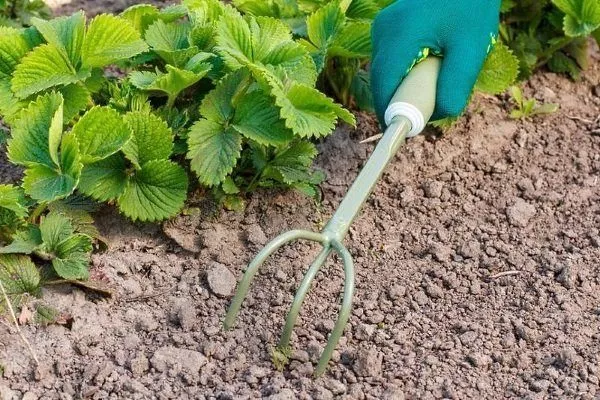
Features of watering Elsanta strawberries:
- Young seedlings are watered daily for a month, in the evenings. Subsequently, the frequency of watering is reduced to once a week.
- Once fruiting begins, don't allow the soil to dry out. Watering during hot periods should be done once every 4-5 days.
- The watering rate in hot weather is 10 liters of water per 1 sq. m.
- The best method of watering is drip irrigation.
- On particularly hot days, the plantings are covered with an awning.
Every two weeks the plantings are loosened and weeds are removed.
Spring and autumn feeding
The Elsanta variety requires a special fertilization schedule. Gardeners advise against applying mineral fertilizers until the third year of growth—by this time, the plant is already depleted and will not produce a good harvest without additional feeding. Organic fertilizer applied in the spring is sufficient for the plantings until the third year. Read more about spring feeding for strawberries. Here.
Frequency of feeding:
- Autumn. At the end of September, Elsanta is fed with organic and complex fertilizers.
- Spring. When the snow melts, they feed urea or ammonium nitrate.
When using mineral fertilizers, water the spaces between the rows so that the composition does not get on the leaves.
Trimming
After harvesting the last berries of the season, experienced gardeners always trim the foliage of their strawberries. This is done to reduce the risk of disease. Leaves are cut back 1-2 cm above the bud level. The foliage is trimmed with pruning shears or pruning shears.
Gardeners have long debated the issue of strawberry pruning. There are two opinions:
- Against pruning. The reasoning is that pruning isn't a natural process for strawberries. The foliage provides additional cover for the buds.
- For trimming. Removing leaves stimulates strawberry growth and increases future yields.
Strawberry leaves are trimmed in August. The stems are left untouched—only the foliage is removed. At the same time, the soil is loosened, weeds are removed, and the bushes are hilled.
Mulching
Before winter, strawberries are a must mulch – peat, pine needles, or dry grass. This procedure is carried out after pruning the leaves and loosening the soil. Mulch will prevent moisture evaporation and weed growth. Cover the strawberries later, when the real cold weather arrives.
Strawberry wintering
Preparing strawberry plants for winter begins in the fall and involves several steps. Once the leaves have been trimmed, the soil loosened and mulched, the plants are watered – this will be the final moisture-replenishing watering.
Strawberries are covered only after the first frosts—the plants need to be well-hardened to better survive the winter. Gardeners prefer to cover their plants with natural materials:
- straw;
- dry leaves;
- spruce branches.
| Material | Thermal insulation | Durability |
|---|---|---|
| Straw | Average | Season 1 |
| spruce branches | High | 2-3 seasons |
| Agrotex | High | 5+ seasons |
Special industrial covering materials are also used for covering, such as spunbond, agrotex, etc. They are stretched over arches placed over strawberry beds covered with mulch.
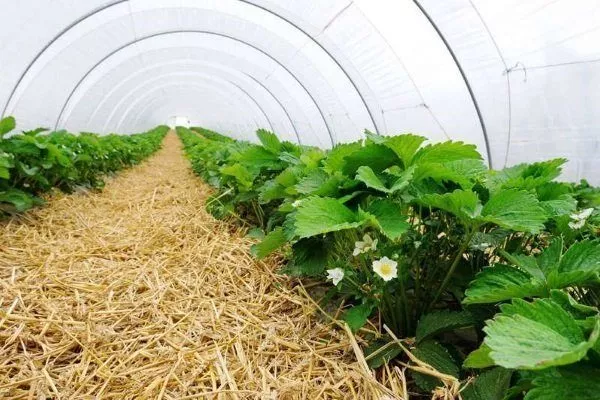
The best natural shelter is considered to be spruce branches – strawberries do not rot under them.
Diseases, pests and their control
Elsanta is highly resistant to viral diseases, verticillium wilt, and spider mites. Like most popular varieties, it is susceptible to powdery mildew and bacterial spot. The roots are the most susceptible; they can rot and be attacked by fungi. Treatment for such damage is often ineffective, and the bushes are removed completely.
Prevention of root diseases:
- Before planting seedlings, disinfect the roots;
- avoid over-watering the soil;
- Control over the application of fertilizers – it is important not to provoke the proliferation of parasites.
Table 2 lists common diseases and pests that can cause serious damage to Estelle strawberry plantings.
| Pests and diseases | Symptoms | What to do? |
| Powdery mildew | The leaves curl into tubes and turn purple, developing a white coating. The fruits become deformed, and their flavor deteriorates. | The beds are treated with a copper sulfate solution. The plantings are sprayed with an iodine solution. |
| Late blight | Leaves and petioles turn brown, leaf edges curl upward. Berries become scarce, and when the roots die, the plant dies. | The disease is incurable. Bushes are pulled out and destroyed. Prevention is the only option: buy seedlings from reputable nurseries, disinfect the roots before planting, and treat with a growth stimulant. Treat the soil with an iodine solution. |
| Mole cricket | Damages the roots, causing the bushes to die. | Setting traps in the garden beds. Mole crickets emerge from their burrows in response to a soap solution. Planting calendula and marigolds near the beds. |
| Slugs | They appear when there is high humidity and eat berries and young leaves. | Cover the beds with agrofibre, mulch with sawdust, sprinkle with wood ash, and spray with a saturated solution of table salt. |
Disease and pest prevention:
- destruction of dry, diseased strawberry leaves;
- digging up and destroying diseased bushes;
- relocation of plantings after 3-4 years of cultivation;
- weeding and mulching;
- autumn soil treatment with Bordeaux mixture or copper emulsion.
Most strawberry diseases and pests can be controlled with herbal infusions and decoctions and other household remedies. Chemical treatments are used only as a last resort—when the problem has become severe.
Reviews of Elsanta
The uniqueness of the Dutch Elsanta variety lies in its undemanding nature. This strawberry grows in any soil and climate, requiring virtually no fertilizer. By planting Elsanta, you'll reap a bountiful harvest of berries with exceptional flavor, with minimal effort and expense.
Large-fruited garden strawberries aren't strawberries. They're varieties of pineapple strawberries. Muscat strawberries are actually strawberries. These are different species, and their flavors differ.
Yes, botanically speaking, the garden strawberry (also known as the pineapple strawberry or large-fruited strawberry) is one type of berry. And the garden strawberry (also known as the musk strawberry or nutmeg strawberry) is a different species. However, in everyday speech, gardeners often refer to the plant as a strawberry rather than a garden strawberry. That's why the article includes this caveat.
Tatyana, I have a lot of friends who successfully grow different varieties of strawberries. And everyone calls them by their own names. I've noticed that most people call all varieties with berries 3 cm or larger "strawberries," and if the berries are small, they call them "wild strawberries." Even though everyone knows that's not true.
As for me, I remember going wild strawberry picking with my grandmother as a child. Their taste is completely different from the strawberries we grow. So I can't even bring myself to call them strawberries... just wild strawberries.