
Elizaveta 2 is one of the most popular everbearing garden strawberry varieties. With proper care, it produces three harvests. Let's find out what makes this variety attractive to gardeners and how to grow large, sweet berries in a temperate climate.
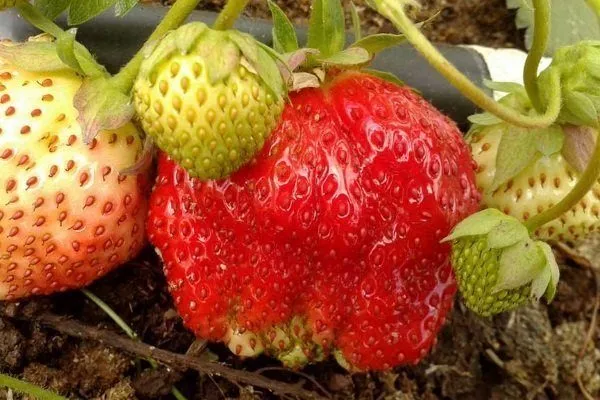
garden strawberry variety "Elizabeth 2"
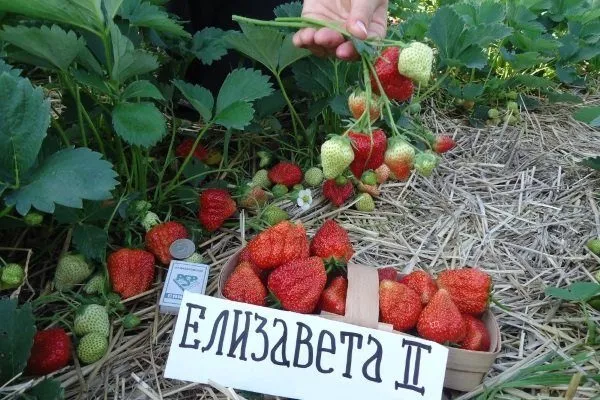
Delicious and aromatic strawberries of the "Elizabeth 2" variety can be picked from the bush until autumn
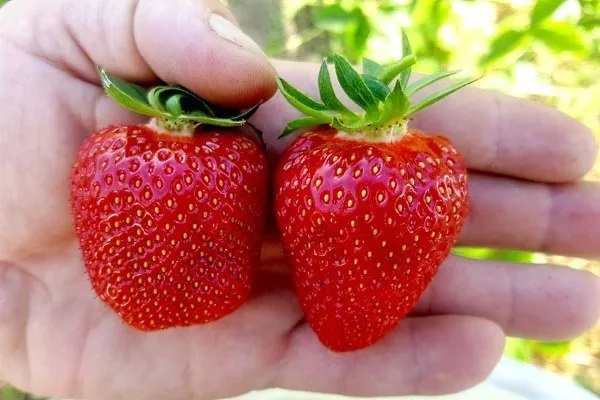
Garden strawberry variety "Elizabeth 2" is distinguished by its good keeping quality and suitability for transportation
Description of strawberries and their origin
Elizaveta 2 thrives in the southern and central regions of Russia. This variety was bred in 2001 at the Donskoy Nursery. Having successfully passed testing in various climate zones, it has proven its adaptability to the variable climate of the temperate zone. It tolerates winter temperatures, spring frosts, and prolonged rains—all of which typically hinder normal fruiting of garden strawberries in temperate climates.
Brief botanical description of the Elizabeth 2 variety:
- Bushes. Powerful and spreading, well-foliated.
- Leaves. Large, shiny, ribbed edges provide excellent protection for the fruit from precipitation and pollution. The leaves are a rich emerald green.
- Flowers. White, core is bright yellow.
- Fruit. Dense, "varnished." Large, weighing 40-50 g. With proper cultivation, larger berries are obtained – 60-65 g. Individual record-breaking specimens reach 100 g. Color – bright red. Shape – bumpy cone. Taste – sweet, dessert-like, aroma – honey notes. Seeds are beige, deeply planted.
Pros and cons of the variety
Advantages of the Elizabeth variety:
- The fruits transport and store well. They are moderately firm and are virtually unaffected by heavy watering.
- Early ripening period.
- Berry picking throughout the summer.
- The berries have an excellent presentation and good taste, making them in demand on the market.
- High immunity to diseases.
Flaws:
- After 2-3 years of cultivation, the yield decreases.
- Demanding to growing conditions.
Elizabeth II produces good harvests only on fertile soils fertilized with modern fertilizers.
Characteristics of Elizabeth II
The main advantage of the Elizaveta 2 variety is its remontant nature. It bears fruit almost continuously. The first berries appear in early summer, and the fruiting season lasts until mid-autumn. The most delicious harvest is that picked during the hot summer days of June and July. Berries harvested in September are less sweet.
The berries ripen in waves. Several harvests are collected during the season:
- the first one is at the beginning of June;
- the second - in the first ten days of July;
- the third - in mid-August.
The pros and cons of the "Elizabeth 2" variety are presented in the video below:
Characteristics of the Elizabeth 2 variety:
| Parameter | Description |
| Productivity | In open ground – 3.5 kg per 1 sq. m, under film and in greenhouses – up to 10 kg per 1 sq. m, one bush produces 2-3 kg of berries per season |
| Resistance to diseases and pests | high |
| Drought resistance | average |
| Frost resistance | average, up to minus 23 degrees, can freeze in severe frosts (even under film and sawdust) |
| Ripening time | from the end of May until the 20th of September |
| Taste characteristics | The taste is sweet, dessert-like, tasting score is 4.7 out of 5, sourness appears in the fall or when not fully ripened |
| Aroma | nice, strawberry |
| Transportability | good, dense pulp, berries do not release juice during transportation |
| Purpose | universal – eaten fresh, preserved (can be frozen, made into compotes – the berries do not fall apart when cooked) |
If you do not remove the flower stalks, this remontant variety forms 3-5 tendrils, each of which has 2-3 rosettes.
Landing features
If using store-bought seedlings for planting, they should be purchased in the spring or late summer. Strawberry bushes are purchased from nurseries or specialty stores. The seedlings should not show any suspicious symptoms, such as spots or other damage. Planting is spread out—Elizabeth 2 can be planted anytime from early spring to September.
A site is selected for planting:
- level, slight slope is allowed;
- with good lighting;
- windproof.
The soil for planting is prepared in advance:
- the garden bed is dug up, removing the roots of weeds;
- acidic soils are deoxidized with lime for three years before planting, adding 300 g of ash per 1 sq. m;
- During digging – 1-2 months before planting, a fertile mixture is added to the soil:
- humus – 1 bucket;
- peat – 1 bucket;
- superphosphate – 40 g;
- potassium fertilizers – 20 g.
Select the appropriate landing option:
- The bushes are planted at intervals of 15-20 cm, the width between rows is 60-80 cm.
- The bushes are planted in a bed in two rows. The distance between adjacent beds is 70 cm, between rows – 40 cm, between bushes – 20 cm.
When planting on both sides, black film is often used to cover the spaces between rows. This agricultural practice retains soil moisture and prevents weeds from growing.
Planting order:
- Dig small holes, 7-8 cm deep.
- Pour non-cold water into the holes – about 0.5 l.
- Form a small mound inside the hole.
- When lowering the bush into the hole, carefully straighten the roots.
- Cover the roots with soil so that the root bud is above the surface of the soil.
- Pour 0.5 liters of water under each planted bush. Mulch the soil around the bushes with humus or other mulch.
The planted seedlings must have at least 5 full leaves, otherwise the plant has little chance of taking root.
How to care for Elizabeth 2?
The Elizaveta 2 variety requires a little more attention than the non-everbearing garden strawberry, as this plant produces three harvests per season instead of one. To ensure the bushes have enough strength to bear fruit three times, it's important to provide them with adequate watering and fertilizing.
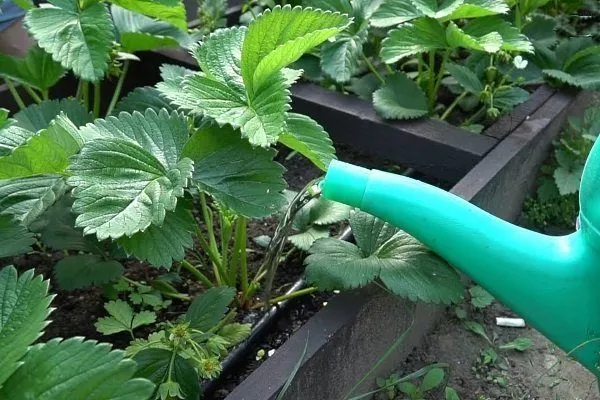
Watering
Watering features:
- Watering should be frequent but small.
- Water should evenly saturate the soil without creating a favorable environment for root rot.
- During hot periods, the frequency of watering increases.
- It is not recommended to water strawberries using sprinklers, as this can cause fruit rot.
- The optimal method of watering is drip irrigation.
- When watering, the soil should be moistened to the full depth of the roots – approximately 30 cm.
- Watering requirements are determined based on soil conditions. For example, if the soil is dry to a depth of 2 cm, 0.5-1 liter of water is sufficient. If you need to completely wet the soil to the depth of the roots, pour 3-5 liters under each bush.
- ✓ Use of soil moisture sensors to accurately determine the need for watering.
- ✓ Taking into account the plant’s development phase when determining the amount of watering: increase during flowering and fruiting.
Lack of water has a negative impact on the berries – they grow small, dry, and taste bland.
Top dressing
To harvest a good strawberry crop, it's important to fertilize the plants with nitrogen, phosphorus, and potassium on time. Fertilizers, one of which is applied to the roots every two weeks, include:
- agrophoska;
- sodium or calcium nitrate;
- superphosphate;
- organic matter – humus, compost;
- ash;
- herbal infusions.
You can find out more information about spring feeding of strawberries from this article.
Foliar feeding is recommended. It is especially beneficial during fruiting. Plants can be treated with:
- A mixture of boric acid (1 g), potassium nitrate (2 g), and potassium permanganate (2 g). The indicated doses are dissolved in 1 liter of water.
- Wood ash solution. Add one cup of ash to one liter of boiling water. Cool and strain the infusion and use it for spraying.
- Yeast solution. Dissolve 1 kg in 5 liters of water. Let the yeast sit for 24 hours, then dissolve 0.5 liters of starter in 10 liters of water.
Spray garden strawberries in the evenings to prevent the sun from burning wet leaves.
Loosening
Everbearing strawberries require regular loosening. It's recommended to loosen the soil before each watering, as this will allow moisture to penetrate the root system more quickly. During loosening, remove weeds, and you can also add organic fertilizer—it's difficult to overfeed garden strawberries with it. After loosening, the soil is mulched.
Strawberry propagation
The Elizabeth 2 variety, like any garden strawberry, is propagated in three ways:
- Seeds. Prepare containers no more than 12 cm high and fill them with soil. Moisten the seeds with water and lightly plant them in the soil. Cover the containers with plastic or glass. Air the plantings daily by lifting the glass or plastic for 10 minutes. Moisten the soil as needed.
After two weeks, the seeds will germinate; ventilation is increased to half an hour. After the first leaves appear, the plants are transplanted into individual containers. Two weeks before planting, harden off the plants by moving them outside. Four months pass from the first sprouts to planting. - With a mustache. The bushes that produce the heaviest yields are selected. The runners on which the rosettes have formed are covered with soil. Once the rosettes have rooted, they are replanted. This is usually done at the end of July.
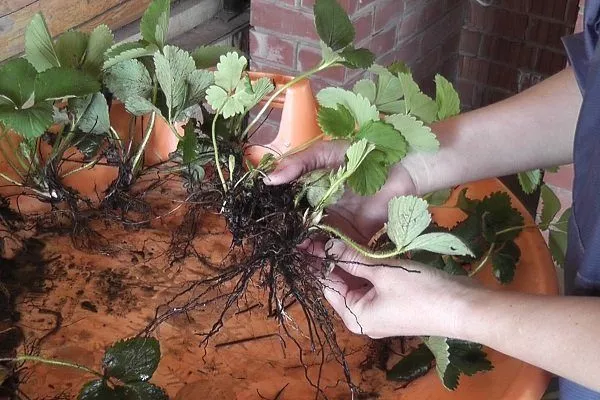
- By dividing the bush. When young plants are planted, they have a single growing point, but later they grow into many, sometimes more than a dozen. Therefore, the bush is easily divided into several smaller bushes. This is usually done in spring or summer. The resulting bushes are immediately planted in the ground. Experienced gardeners recommend first planting the divisions in the shade, and after a month, in the garden beds.
Read all about growing everbearing strawberries from seeds. here.
Diseases, pests and their control
Immunity to most diseases affecting garden strawberries is one of the main advantages of the Elizaveta 2 variety. However, it's always a good idea to be on the safe side; several sprayings are recommended as a preventative measure. After the snow melts, garden strawberry plantings are sprayed with a 1% copper sulfate solution or Bordeaux mixture.
To repel pests, the free space between strawberry beds is planted with garlic or flowers with a strong smell - marigolds or nasturtiums.
Pests of garden strawberries and measures to control them:
| Pests/diseases | How to fight? |
| Gray mold | Spraying with iodine solution – 3 times at intervals of once every 10 days (10 ml per bucket). |
| Powdery mildew | Spraying with a solution of colloidal sulfur (80 g per 10 l). |
| Strawberry nematode | Remove plants along with the soil lump. |
| Slugs | Sprinkling the soil between the rows with slaked lime or ash. |
| Strawberry mite | Spraying with Agravertin (2 ml per 1 liter of water). |
Transportability
This variety is especially valuable for those growing strawberries for commercial use. Elizaveta 2 successfully combines commercial qualities with transportability. The berries, with their firm texture, transport well without bruising or leaking. They retain their attractive appearance for a long time, maintaining their integrity and flavor.
Reviews
Getting three harvests per season requires some effort—everbearing varieties require extra care. The Elizaveta 2 variety successfully combines excellent commercial qualities with high productivity—it's ideal for amateur cultivation, including commercial use.