
Garden strawberries are a demanding crop that requires constant preventative protection against a wide variety of diseases and pests. Let's learn about the diseases that affect strawberry plants, the insects that feed on them, and how to combat them.
Strawberry diseases
Strawberries are susceptible to viruses, fungi, and bacterial infections. All of these lead to yield losses, and many even lead to the death of the berry plants.
Withering
Strawberry wilt is caused by various fungal pathogens. The leaves of the bushes first turn yellow, then brown, and die after about a month. The disease is especially common in hot weather.
There are two types of wilting:
- Verticillium. The bushes' leaves decrease in number, and their growth slows. The plants become low and flattened. First, the lower leaves die, and then the entire strawberry plant.
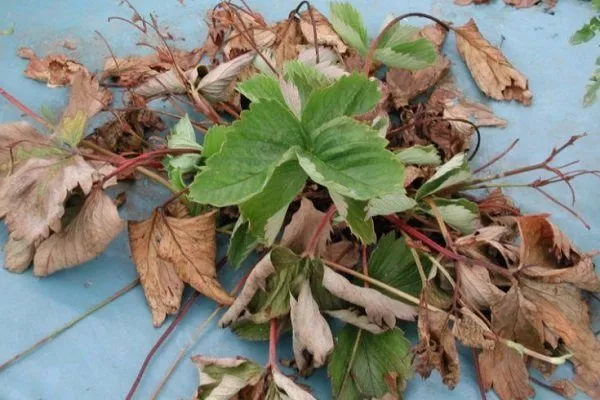
- Late blight. The chronic form is characterized by stunted growth and curling, graying leaves. Death occurs in the second year. The transient form is diagnosed by red roots and the death of lateral shoots. Such bushes cannot be cured; they are removed and burned.

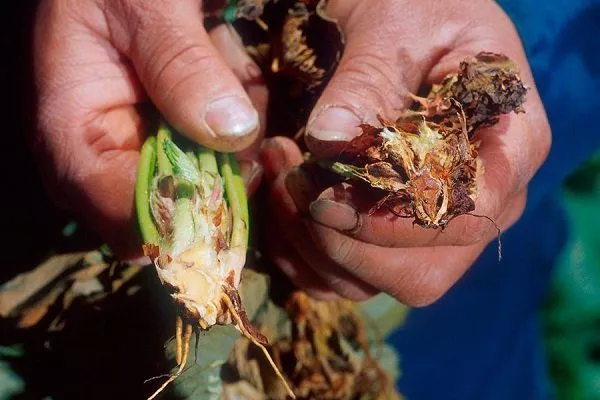
Wilting destroys berry bushes especially quickly in sandy soils – all plants die within 3-4 days.
What to spray with:
- before flowering – with Ridomil, Quadris, Metaxil or similar fungicides;
- repeat treatment – in autumn, after berry picking.
Powdery mildew
The causative agent is a fungus that becomes active in damp weather and overwatered soil. The main symptom is a white-gray coating on the leaves, which leads to leaf necrosis. Plants weaken, and yield declines, with up to 50% of berries lost.
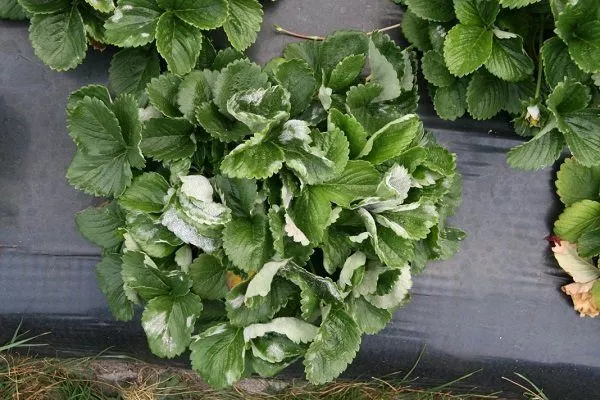
Other symptoms:
- the edges of the leaves turn red, red-brown spots appear on the leaf blades;
- twisting leaves into a "boat" shape;
- dying off of affected flowers and fruit buds;
- The berries become covered with a loose coating and are unsuitable for either eating or processing.
The source of infection is fungal spores that spread through the air and overwinter on leaves.
There are varieties of garden strawberries that are particularly resistant to powdery mildew: Zenga Zengana, Marmelada, Kama, Dukat and others.
- ✓ The Zenga Zengana variety has thick leaves, which makes it difficult for fungus to penetrate.
- ✓ Marmalade has a high rate of regeneration of damaged tissues.
What to spray with:
- ash solution (300 g per 100 l) with the addition of soap or soda (50 g);
- Topaz, Signum, Domark and other fungicides with similar action for preventive purposes.
Gray mold
A common disease caused by the pathogenic fungus Botrytis. Its spores mature in two days and can spread rapidly over large areas. The spores are carried by the wind to neighboring plots, resulting in a loss of up to 60% of berries.
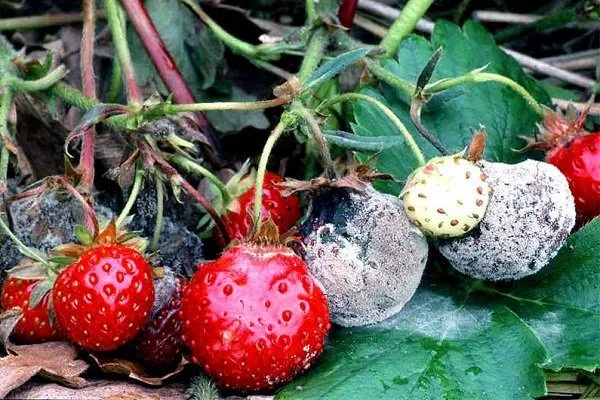
Symptoms:
- leaves, ovaries, berries are covered with brown spots;
- a grey coating appears on the berries;
- At a late stage, infected surfaces become covered with sclerotia.
Prevention of gray mold includes maintaining watering standards, thinning plantings, and removing weeds.
Gray mold can be treated, but requires 3-5 sprays with chemicals such as Signum, Barrier, and Fitosporin. For prevention, spray the bushes with Bordeaux mixture or cuproxate (0.3%) before and after flowering.
White rot
The causative agent is an ascomycete fungus, whose spread is facilitated by warm, humid weather with limited sunlight. Infection occurs through wind-borne spores. The disease manifests itself during the ripening stage of the berries.
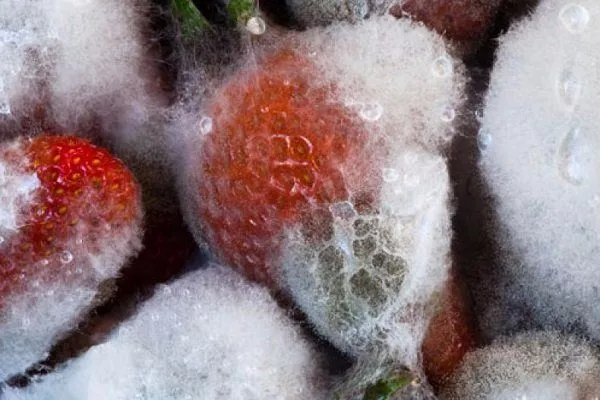
Symptoms:
- first the fruits rot, then become covered with a white fluffy coating;
- the leaves turn lighter and dry out.
When white "fluff" appears on the berries, the bushes are sprayed with chemical fungicides, such as Derosal or similar products. After spraying a fruiting berry bush, you must abandon harvesting the berries, as the treatment makes the fruit toxic.
Brown leaf spot
This fungal disease attacks leaves, stunts growth, and causes widespread dieback. It negatively impacts fruit quality and yield. The fungus becomes active in early spring, and the disease itself is most prevalent at temperatures above 20°C and high humidity.
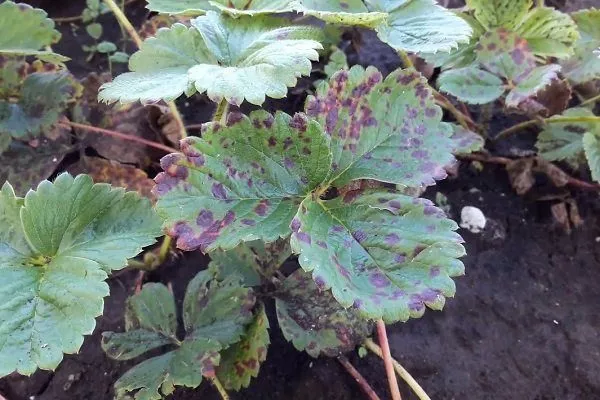
Large-scale infestation occurs in early autumn with the onset of rainy weather. The disease affects all above-ground parts of plants.
Symptoms:
- the leaves are covered with small red spots;
- dark, point-like thickenings appear on the affected tissues;
- As the disease progresses, the spots merge into extensive necrosis, and the diseased leaves die off.
For prevention, antifungal drugs are used, for example, Vaxiplant SL, or 1% Bordeaux mixture.
Rhizoctonia (root rot)
It occurs when crop rotation is improper and plants are planted after nightshades. The disease is considered incurable. Its symptoms appear when the plant's roots are irreparably damaged.
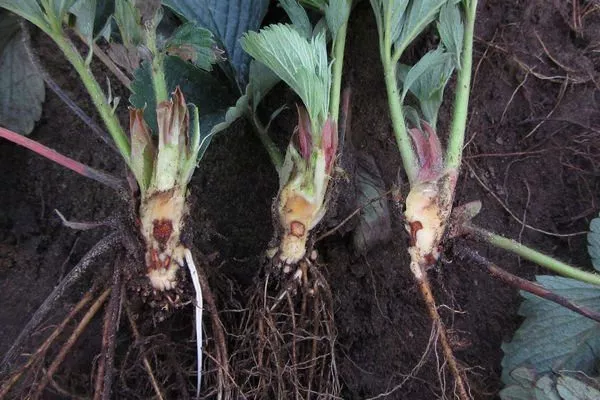
Symptoms:
- the roots are affected - they turn black, become brittle and slippery to the touch;
- Over time, petioles and horns become damaged.
For prevention it is recommended:
- observe agricultural practices and crop rotation;
- immersing the roots of seedlings for 2-3 minutes in hot water (+45 °C) or for 10 minutes in a solution of Fitosporin.
Diseased plants are dug up and burned. The soil is watered with a 3% copper sulfate solution or Bordeaux mixture, then sprinkled with Trichodermin granules.
Strawberry bushes affected by root rot are easily removed from the soil.
Fusarium
This fungal disease can affect any garden crop. It develops especially rapidly in hot and dry weather.
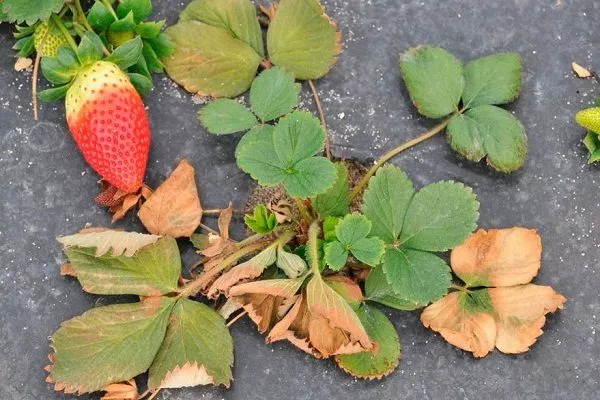
Sequence of development of symptoms:
- the castings are covered with small brownish spots;
- petioles and tendrils turn brown;
- the leaves dry out and curl up;
- the bushes are “creeping”, the rosettes seem to fall into the soil;
- After 4-5 weeks the plants dry out completely.
Folk remedies for fusarium wilt are ineffective; biofungicides are needed. How to combat it:
- plant varieties resistant to fusarium;
- preventive spraying with Trichodermin, Fitosporin, etc. every 10-15 days;
- soaking the roots of seedlings in solutions of the above-mentioned biofungicides;
- In case of widespread infestation, plantings are treated with Fundazol or Horus.
If the disease cannot be eradicated, the plantation is cleared of plants and disinfected with a 2% Nitrafn solution. Strawberries in such a plot are not planted before five years.
Ramularia (white spot)
The fungus spreads rapidly in damp weather. Infections develop around mid-season and rarely result in plant death, but they significantly reduce yields.
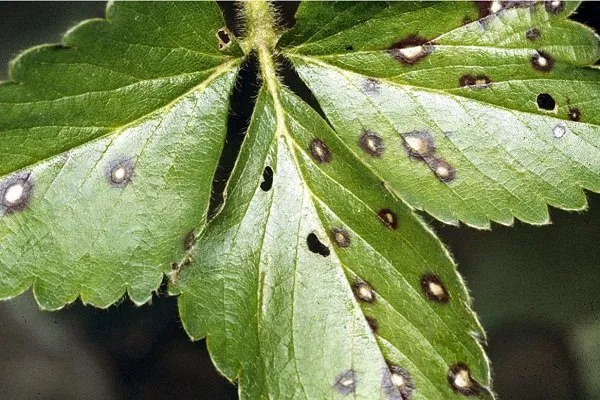
Symptoms:
- The leaves become covered with small red spots, which, as they grow, become white, gray, or beige.
- Holes form where the spots appear. Affected leaves dry out.
- The berries become covered with brown spots. Fungal spores penetrate the fruit, spoiling its flavor.
Methods of control:
- for prevention, the bushes are sprayed with 1% Bordeaux mixture, Zineb or Falcon;
- If the berry bush is heavily affected, it is sprayed with Horus or similar products.
Anthracnose
This fungal disease is also known as black spot. The pathogen is activated by heat and high humidity. The infection affects all parts of the plant, including the berries. Yield losses can reach up to 80%. If the infection is widespread, the berry plant is destroyed.
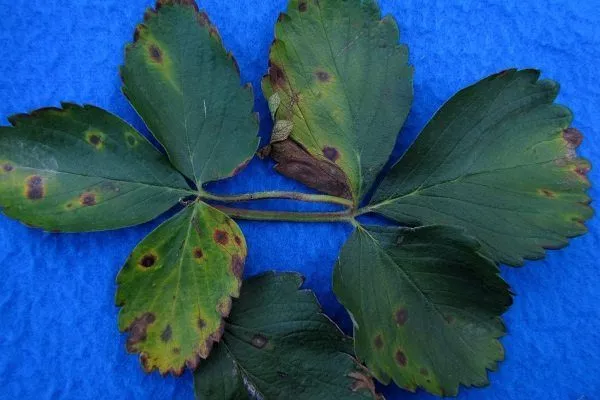
Symptoms:
- leaves are covered with brown spots;
- small ulcers appear on the stems;
- the fruits rot and mummify;
- the roots are rotting.
What to spray with:
- for prevention - during budding, treat the bushes with the fungicide Scorpion 325 SC;
- at the beginning of the disease – Ridomil Gold, Quadris or 1% Bordeaux mixture.
Verticillium wilt
The fungus becomes active in warm weather and high humidity. It causes the death of lower leaves and attacks the roots and all above-ground parts.
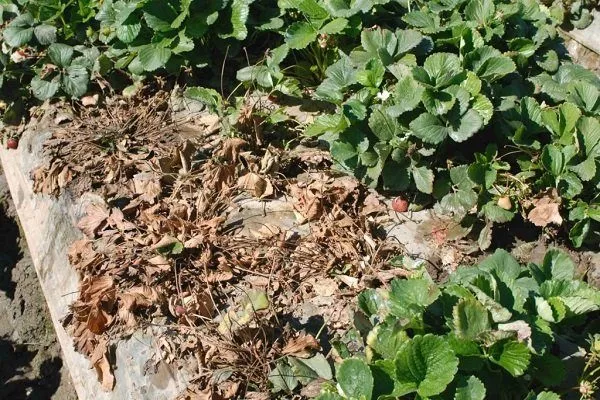
Symptoms:
- the leaves turn brown at the edges, wither and dry out;
- new leaves grow small;
- petioles turn red in autumn;
- the growth of bushes slows down;
- the root inside turns brown and dies;
- stem cuts are brown.
Methods of control:
- preventive spraying with horsetail extract;
- Before and after flowering, as well as after harvesting, berry bushes are treated with a Topsin solution (25-30 ml per 8 liters of water).
Overgrowth
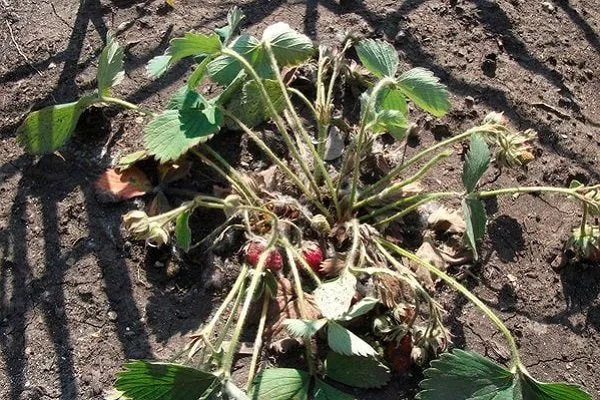
The disease is caused by a viral infection. It is easily recognized by thinned petioles and flower stalks, which become elongated and thread-like. Fruit ovaries fail to develop on affected bushes. Control of the viral infection involves eliminating aphids and weeds.
Mottling
The disease is caused by a virus spread by insects, primarily aphids. Infection also occurs through planting material.
Symptoms:
- the leaves are covered with light green spots;
- the plants are weakened, the tendrils do not grow;
- ovaries are not formed.
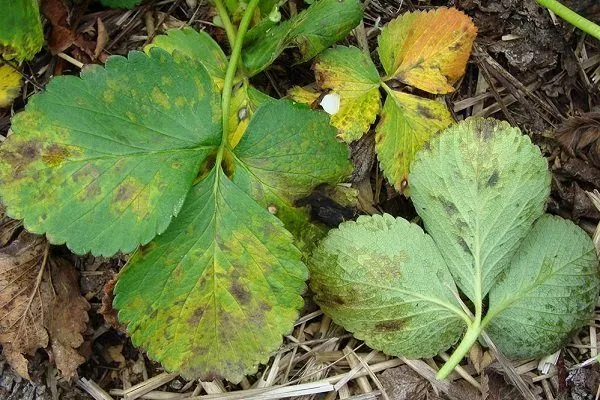
The fight against the virus comes down to the timely destruction of aphids and weeds that may attract them.
Yellowing of leaf edges
The disease is caused by a strawberry virus, which is part of a complex called yellows or xanthosis. The disease slows plant growth.
Symptoms:
- dwarfism of bushes;
- yellowing of leaves located in the center of the plant;
- the tops of the leaves are dying off.
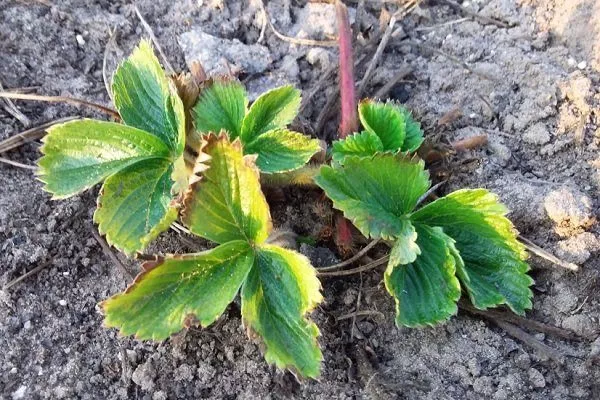
How to fight:
- uprooting and burning diseased bushes;
- destruction of aphids, the main carrier of the virus.
Strawberry leaves turn yellow due to a deficiency of magnesium, iron, nitrogen, or boron. Applying complex mineral fertilizers can correct the situation.
Pests
All parts of the garden strawberry plant are susceptible to pest attacks. Some suck the juices from the roots or leaves, others eat the berries, but in any case, the yield drops.
Nematodes
Garden strawberries are susceptible to root-knot, stem, and strawberry nematodes. These pests are thin, transparent worms that live in the soil. They penetrate all plant tissues and suck out the plant's vital juices.
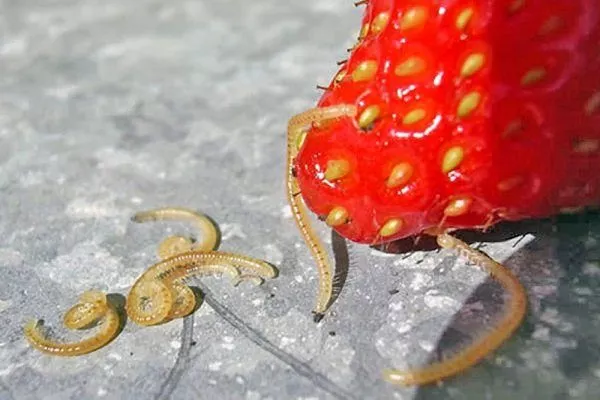
Symptoms of damage:
- darkening of leaves and petioles;
- thickening and bending of peduncles;
- crushing berries.
Nematodes are very difficult to control. It is recommended to remove affected plants and then treat the soil with 5% ferrous sulfate. In the fall and early spring, treat the soil with Actellic.
Strawberry mite
This microscopic insect, about 2 mm in size, is extremely difficult to see. The mites suck the sap from leaves, slowing plant growth. Infestations peak in July and August during warm, humid weather.
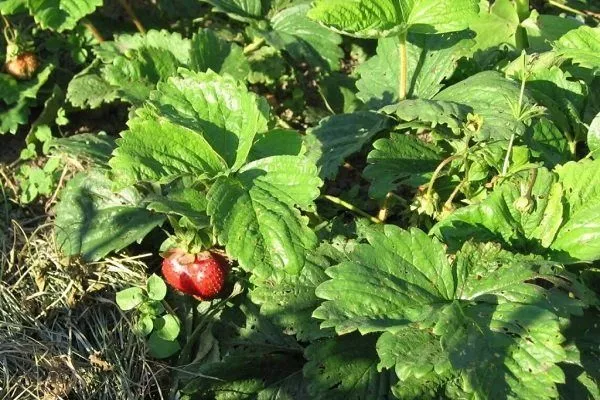
Symptoms of damage:
- wrinkling of leaves;
- dwarfism of bushes.
Control measures:
- at the beginning of the growing season, spray the strawberry plant with Kelthane (2%) or Karbofos (3%);
- In autumn, plantings are treated with Actellic.
Spider mite
This tiny insect is impossible to see without a magnifying glass. Its presence is indicated by the characteristic webbing covering the leaves.
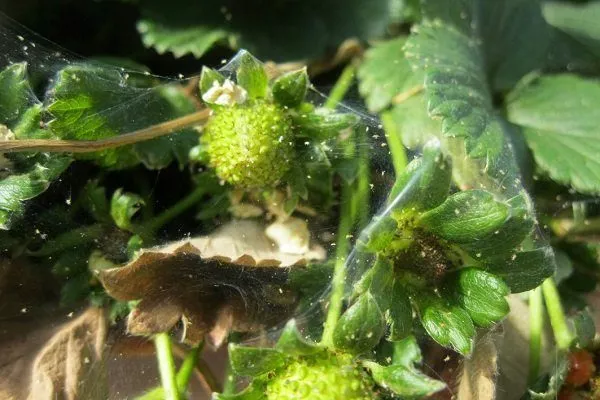
If there are spider mites on strawberries:
- the underside of the leaves is covered with small light spots;
- The bushes grow slowly and then stop developing altogether.
How to fight:
- removing weeds, as the tick appears on them first;
- spraying in spring and after harvesting berries with Actellic, Ortus, etc.
Raspberry and strawberry weevil
The gray-black beetle, 2-3 mm long, eats leaves, buds, and flower stalks. The pest's presence is detected during flowering, by the flowers it eats.
Beetles are particularly damaging to early strawberries, where they attack the flower stalks that produce the largest fruits. They lay eggs in these stalks, which hatch into larvae a month later, which then eat the buds.
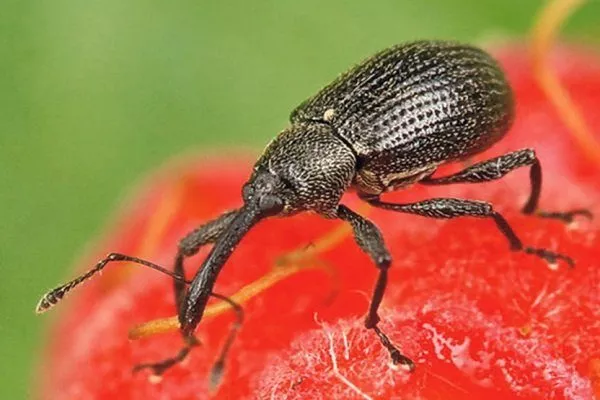
Symptoms of damage:
- eaten out buds;
- holes in leaves eaten by larvae.
Control measures:
- the larvae overwinter in the soil, so it is treated with Actellic, Zolon and other insecticides in early spring and autumn;
- deep digging between rows and timely collection of plant residues.
Strawberry leaf beetle
This is a brown beetle, 4 mm long. It feeds on strawberry leaves, boring holes and tunnels into them. Females lay eggs on the undersides of the leaves. After two weeks, the eggs hatch into larvae, which quickly destroy the young leaves.
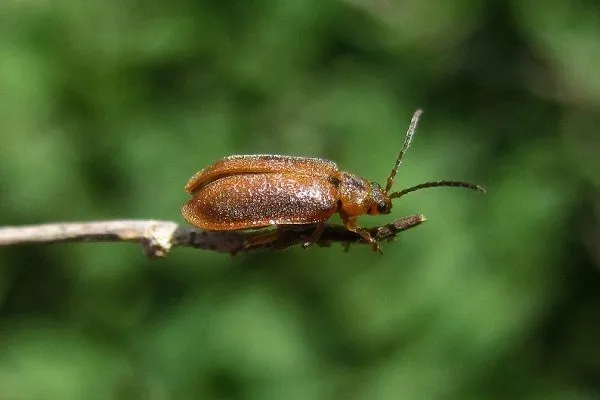
Symptoms of damage:
- eaten leaves that dry out over time;
- underdevelopment of fruits.
Control measures:
- clearing leaves and deep digging;
- treatment of berry bushes with Actellic, Sharpei and other insecticides.
Strawberry whitefly
The strawberry's most dangerous enemy. The butterfly is only 1.5 mm long. Its wings are white with a matte finish. The microscopic insects gather in colonies on the undersides of leaves. The pest's larvae suck the sap from the plants, weakening them.
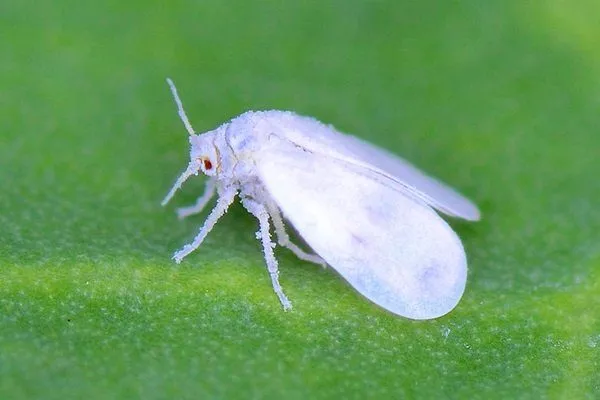
Symptoms of damage:
- the leaves are covered with a sticky coating;
- the bushes do not grow, turn yellow and wither.
How to fight:
- do not allow the plants to become too thick – whiteflies do not like light;
- wash off the pest with water and then loosen the soil;
- set up glue traps for butterflies;
- spraying with soap solution;
- in case of mass damage – treatment with Actellic or Confidor.
Encarsia helps control whiteflies. This parasite lays eggs in the larvae's bodies. The recommended release rate is 3 insects per square meter.
May beetle
It's not the beetle itself that poses a danger to strawberry bushes, but its larvae. These large, plump larvae hatch from eggs laid by females at a depth of 20 cm. The larvae are 6 cm long. They first feed on humus and then on plant roots.
Strawberry leaves withered when larvae eat the roots. The plant itself then dies. The larvae develop for about four years and only then pupate to transform into beetles.
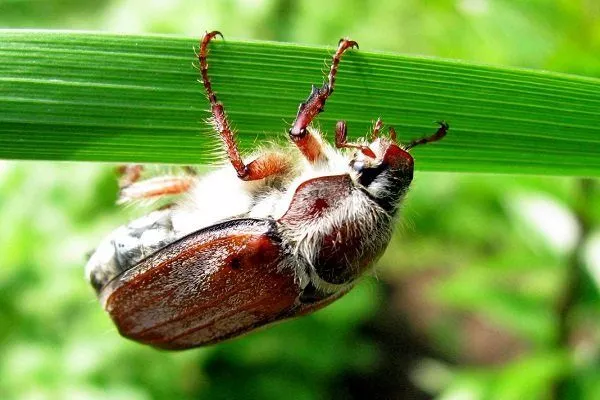
Controlling the larvae is made easier by the fact that they stay in one place and don't crawl away. What to do:
- dig the ground deeply;
- treat the roots of the seedlings with Antikhrushch or Aktara.
Slugs
These gastropods eat berries, destroying a significant portion of the harvest. They emerge at night and become active in damp weather. Besides the fruit, the slugs are also attracted to young strawberry leaves, gnawing large holes in them.
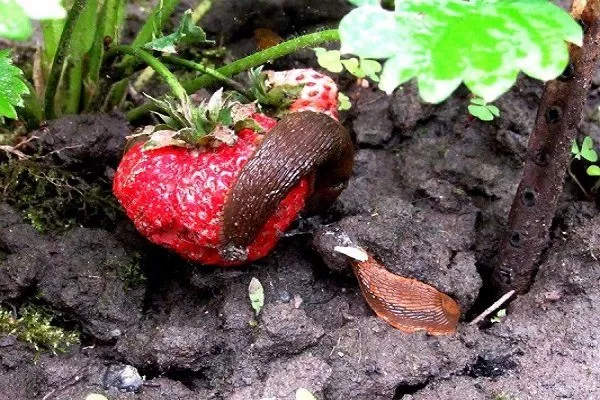
How to fight:
- preventing the thickening of berry bushes;
- sprinkling the soil with wood ash;
- covering the beds with black film;
- scattering special repellents, such as Metaldehyde;
- scattering crushed superphosphate.
Aphid
A small green insect that lives in colonies on young leaves and shoots. It sucks the sap from plants and weakens them. Aphids not only destroy plants themselves but also transmit viral diseases.
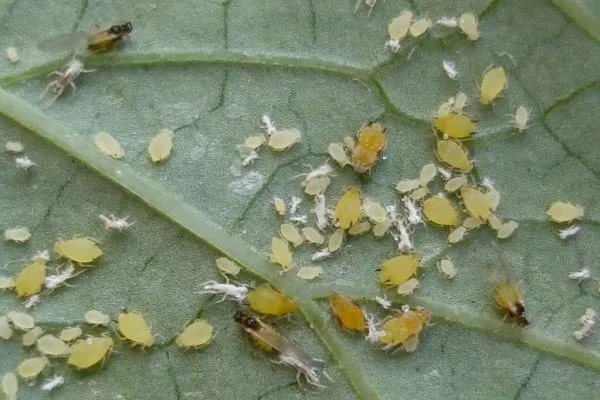
Symptoms of damage:
- leaves curl and wither;
- honeydew appears on plants;
- the tops of the shoots are modified.
How to fight:
- weed removal;
- treatment with Shar Pei, Actellik, Karate during the growing season and again in the fall;
- spray with an infusion of garlic and onion peel;
- fennel and dill are planted near berry bushes.
Pennitsa
This winged insect is also called a spittlebug. The butterfly has light yellow wings with white spots. It lays eggs in the petioles of bushes. The larvae are enveloped in a foamy liquid.
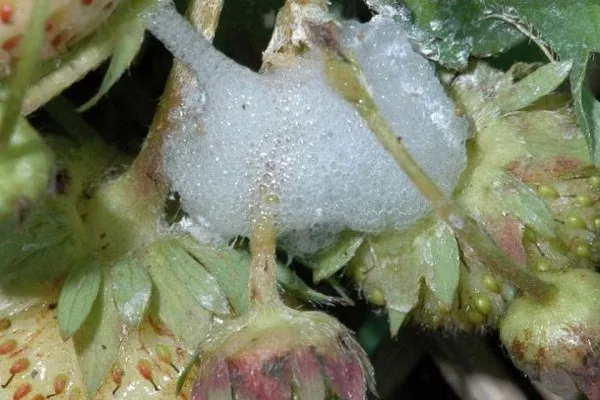
Symptoms of damage:
- the leaves wrinkle and wither;
- the ovaries are deformed.
They fight spittlebug by spraying strawberry plants with a solution of laundry soap.
Wasps
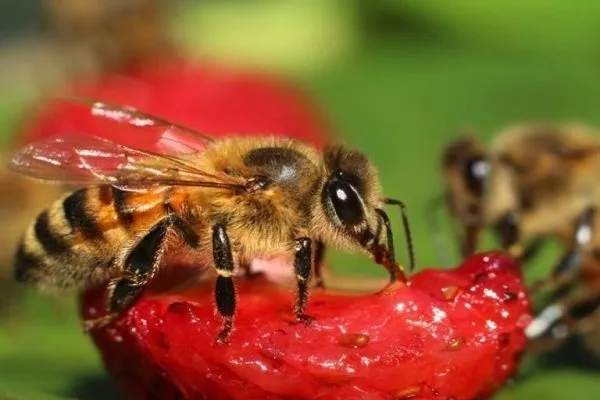
Wasps attack berry patches as soon as the berries ripen. To save their harvest and protect themselves from stings, gardeners place jars of sweetened compote, plastic bottle traps, and other devices around strawberry patches.
Ants
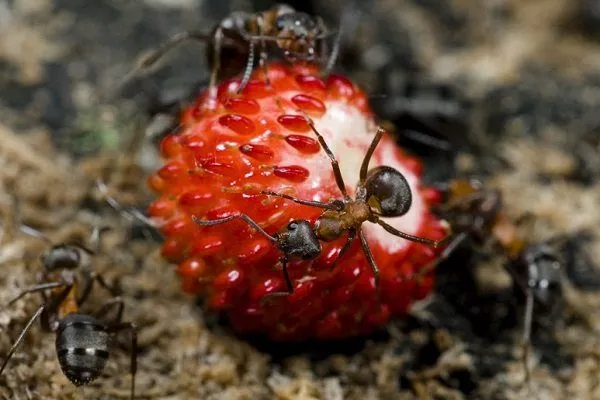
Red and black ants can cause significant damage to strawberry beds. They dig numerous tunnels, damaging plant roots.
There are many ways to combat ants, from radical methods such as extermination to repellents. The simplest option is to sprinkle wood ash on the beds and plant fragrant plants (tansy, anise, mint). For large infestations, special products (Grom-2, Muravyed, and others) are used.
Scaly beetles
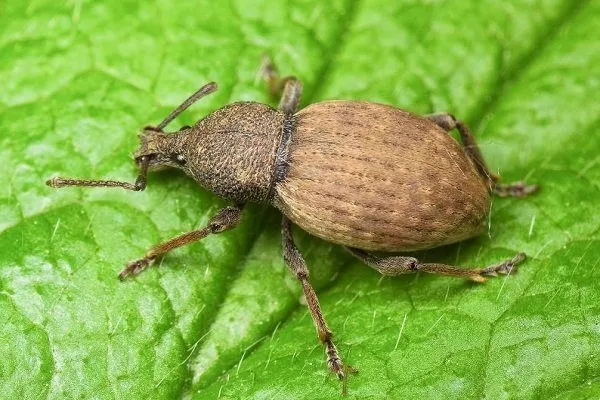
These small, light-brown beetles reach 1 cm in length. The larvae, which feed on strawberry roots, cause the most damage.
Symptoms of damage:
- wilting and dying of plants;
- When the bushes are pulled out of the ground, larvae, pupae, and adult beetles are visible on the roots.
To control grasshoppers, use products containing chlorpyrifos or diazinon. Before flowering and after harvest, the product is scattered in granular form or poured as a solution.
To prevent damage to strawberry plantations by grasshopper beetles, it is not recommended to place them in areas where legumes were grown.
Birds
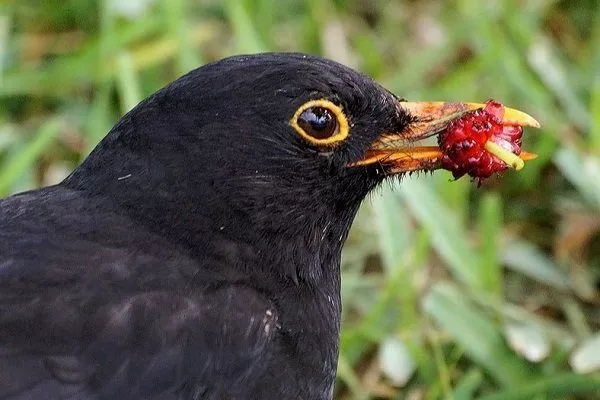
A flock of birds, such as starlings, can devour a crop in minutes. To repel the birds, red reflective balls are placed near the bushes (these are usually used in interior arrangements). Other options include netting the plantation or repellents, such as STOP2FLY gel.
Prevention of strawberry diseases
Once viruses, fungi, or insects have become active, crop losses are inevitable. Preventative measures are needed to prevent losses.
General measures to prevent diseases and pests:
- Timely weeding and destruction of weeds. Remove plant debris at the end of the season and trim leaves in the fall. Weeds and old leaves can harbor insects, fungal spores, and bacteria.
- Crop rotation. Rotate the site every three years. Avoid planting after unfavorable predecessors such as potatoes, tomatoes, and pumpkins.
- Purchasing planting material from trusted suppliers. Often unscrupulous sellers sell strawberries that are already infected with something.
- Compliance with the norm and frequency of watering, timely application of fertilizers - ash, mullein solution, complex mineral fertilizers.
The most effective protection for strawberry beds against most diseases and pests is preventative measures, including proper agricultural practices and timely spraying. Failure to protect berry plantations can result in complete crop loss.